Culture

Culture

The good, the bad and the ugly in books, exhibitions, cinema, TV, dance, music, podcasts and theatre.

The last great purveyors of a vanishing art form: Green Day’s Fathers of All… reviewed

The Listener

Grade: B+ It is an eternal mystery to me why Britain has never had much time for power pop, seeing as we gave this often charming genre to the world through the Beatles and, to a lesser extent, Badfinger. But we never really swung for it, post-Abbey Road. When power pop had its mild renaissance in late ’78, we looked away, bored, tugged by disco on the one hand and po-faced boring angular post-punk on the other. The Knack’s ‘My Sharona’ — the epitome of power pop — got in the charts, sure. But there was no groundswell. In the USA it was different. Almost everything labelled punk that wasn’t art rock (i.e. Television and Talking Heads) was actually power pop, none more so than the Ramones. We remained aloof.

Unimpressive: The Prince of Egypt reviewed

Theatre

The Prince of Egypt is a musical adapted from a 1998 Dreamworks cartoon based on the Book of Exodus. So the original writer is God. The show opens with a troupe of fit young athletes working on Pharaoh’s latest tomb. And they look like the best-fed slaves in history. A meat-rich diet and round-the-clock access to a gym and a sauna must have been written into their contracts. The tanned abs of the male slaves ripple and gleam. The lithe females are bendier than hosepipes. Presumably these cartwheeling ballerinas are able to limber up in an air-conditioned dance studio before each shift. The only drawback is lugging blocks of stone up and down half-finished pyramids but these exertions barely interrupt their main task: singing and dancing about their pitiful lot.

An algorithmic zero-to-hero narrative: Military Wives reviewed

Cinema

Military Wives is a British comedy drama starring Kristin Scott Thomas and Sharon Horgan. It is based on the true story of the service spouses who formed a choir (and were the subject of a BBC documentary series in 2011) and it’s wholly in the style of Calendar Girls, The Full Monty, Brassed off, Kinky Boots etc, but that’s OK as we love all those films. This does shamelessly play you — you’ll laugh; you’ll cry! You may even cry from four minutes in! Like I did! — but you’d be disappointed if it didn’t, just as you’d be disappointed if it didn’t end with Sister Sledge belting out ‘We Are Family’. Oh, God — is that a spoiler? Sorry.

Too edgy and clever to be wasted on kids: Netflix’s Locke & Key reviewed

Television

One of my perpetual gnawing terrors is that I’ll recommend a series that looks initially promising but turns out to be total rubbish, meaning I’ll for ever have thousands of viewers’ wasted lives and disappointment on my conscience. But my even greater fear is that I’ll peremptorily condemn something after one or two episodes which subsequently reveals itself to be a near-masterpiece. This almost happened with Locke & Key (Netflix). ‘You realise I’m watching this on sufferance. The second you’ve seen enough to review, we’re moving on to something else,’ declared the Fawn. And I could sort of see her point.

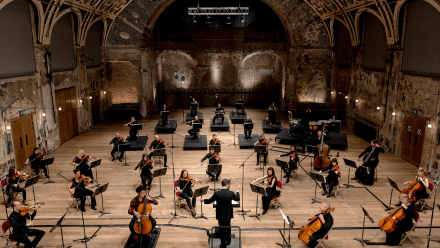
Antonio Pappano on diversity, a new Ring cycle and defending Verdi from dodgy directors

Arts feature

The horse beats me to the stage door by a short nose. Known as Tiz, it’s an opera specialist who comes up from Norfolk for 10 a.m. rehearsal and is driven back home each night. Tiz is on call right through the Fidelio rehearsals — unlike, as Sir Antonio Pappano points out, the star tenor who does not show up for the first act. This is a fairly sore point, and I wait until late in our conversation to probe it. There has been a media hoo-hah about Fidelio tickets going to ROH friends, leaving hardly any for the general public. Pappano, the quiet man of opera, suddenly shoots up an octave. ‘That’s not particularly true,’ he cries. ‘In October, we released several hundred tickets. They were snapped up.

Strange, sinister and very Belgian: Léon Spilliaert at the Royal Academy reviewed

Exhibitions

The strange and faintly sinister works of the Belgian artist Léon Spilliaert have been compared — not unreasonably — to those of many writers, Edgar Allan Poe among them. But as I walked round the Spilliaert exhibition at the Royal Academy, it was not any of these that came to my mind. It was the Father Brown detective stories by G.K. Chesterton. I wasn’t thinking of the neatly paradoxical plots, but rather of Chesterton’s mastery of atmosphere. Consider The Absence of Mr Glass (1914), which takes place in a ‘desolate’ seaside resort. As Father Brown investigates, ‘…the afternoon was closing with a premature and partly lurid twilight; the sea was of an inky purple and murmuring ominously’.

Eurotrash Verdi: ENO’s Luisa Miller reviewed

Opera

Verdi’s Luisa Miller is set in the Tyrol in the early 17th century, and for some opera directors that’s a problem. After all, they’re busy people. They probably never had time to read Wolf Hall, or to speak to any of the 100 million people worldwide who watched Game of Thrones. It’s self-evident to them that modern audiences will be unable to empathise with anything involving swords, castles or feudal hierarchies. Which is why they work hard to imagine new contexts that can make these hopelessly dated dramas address contemporary life as we live it, right here, right now. Counts, village maidens and men in ruffs? Baffling. But a clown strapped to a gyrating crucifix being stabbed with arrows by a group of dancers in flesh-coloured swimming caps and black fetish wear?

Grimes has talent – but not at writing songs: Miss Athropocene reviewed

Music

Grade: B The old axiom no longer applies. In modern popular music, it is possible not only to gild a turd, but to gild it so copiously that consumers scarcely catch a whiff of the ordure underneath. The studio is everything: you no longer need to be able to sing, write a tune or play an instrument — with enough electronic manipulation your turd can still become an epic and convince the perpetually gullible rock and pop press that something Important is taking place. In a sense, then, the other old axiom is also redundant: in pop music today, you can fool all of the people all of the time. The Canadian musician Grimes is not quite at turd level: there is some talent there, although I’m not sure quite what it is.

Deeply romantic and wildly sexy: Portrait of a Lady on Fire reviewed

Cinema

Céline Sciamma’s Portrait of a Lady on Fire is set on a remote, windswept Brittany island in the late 18th century. It’s about two women falling in love and it’s rapturous, scorching, ravishing and will lock your eyes to the screen. I’ve seen it three times and on each occasion my eyes were locked to the screen. At this point I could also say it’s a film that tells the male gaze to go take a running jump, then follow up with one of my lectures on post-structural feminism, as I know you are keen on all that, but ‘rapturous, scorching and ravishing’ will do for now. Plus it is deeply romantic. And wildly sexy. And, my God, so full of feeling. So let’s just go with all that.

A bruising encounter: Pina Bausch’s Bluebeard reviewed

Dance

Pina Bausch’s best work always hovered between the familiar and the unknown. The late choreographer revelled in borders and thresholds, the hinterlands where fantasies collide with reality. The gulf between men and women — their conflicting desires, instincts, clout — was one of her favourite trenches to plumb, so it’s no wonder she was drawn to Bluebeard. Her 1977 production was shown for the first time in the UK this month. The show’s full title — Bluebeard. While Listening to a Tape Recording of Béla Bartók’s Opera ‘Duke Bluebeard’s Castle’ — is the first hint at its tangled drift.

Sharp family saga with a thriller uneasily attached: ITV’s Flesh and Blood reviewed

Television

As in many thrillers, the characters on display in Flesh and Blood (ITV, Monday to Thursday) often seemed locked in a fierce competition as to which of them we could trust the least. The early front runner was Mark (Stephen Rea), a retired surgeon whom the not-long widowed Viv (Francesca Annis) introduced to her three grown-up children as her new boyfriend. But was Mark all he appeared to be? And if not, was this necessarily a bad thing — given that what he appeared to be was spectacularly shifty? Soon, though, the grown-up children had plenty of other people to worry about, including themselves, as they messed up their lives in an impressive variety of ways.

Comedy gold: The Upstart Crow at the Gielgud Theatre reviewed

Theatre

A Moorish princess shipwrecked on the English coast disguises herself as a boy to protect her virtue. Arriving in London, she’s hired by William Shakespeare as an assistant to his maidservant Kate, who instantly falls in love with the exotic cross-dressing newcomer. This absurdity, familiar to fans of Twelfth Night, is the opening move in Ben Elton’s exquisite Shakespearean remix, The Upstart Crow. It’s 1604 and the Bard is in poor creative form. ‘I have banged out a few clunkers of late,’ he admits, referring to Measure for Measure and All’s Well That Ends Well. ‘Should have been All’s Well That Ends Crap,’ suggests a lackey.

I regret my bust-up with the Bee Gees: Clive Anderson interviewed

Arts feature

‘The really tricky thing,’ says Clive Anderson as we discuss the topic of being recognised in public, ‘is when they say, “I love your programmes —that thing you did with Margarita Pracatan…” Do I say now that that wasn’t me? Because if you let them carry on about how they loved your Postcards From…, and the Japanese game show, and then you tell them, they get very indignant and say, “Well, why did you let me give you all that praise?”’ It’s easy to understand the mistake in the abstract — indeed The Spectator’s arts editor made it himself in his email to me: ‘Could you interview Clive James for us?’ (If I could manage that, Igor, I wouldn’t be writing for a living.

Weill’s Broadway opera is made for telly: Opera North’s Street Scene reviewed

Music

It’s a sweltering night in Manhattan, circa 1947, and on the doorstep of a brownstone tenement three women are waiting for their menfolk to return. There’s plenty to gossip about. The Hildebrands upstairs are being evicted tomorrow, and the Buchanans are expecting a baby. And what’s the deal with Mrs Maurrant and Steve the milkman? Old Mr Kaplan reads the newspaper and denounces the bourgeoisie. A kid cadges a dime and big, kind Lippo Fiorentino arrives home from work with ice creams for everyone. At which point it becomes fairly safe to conclude that the America of Kurt Weill’s Street Scene is not the America of his Mahagonny. Forget the acid harmonies and hard-left caricatures of his Berlin collaborations with Bertolt Brecht.

Why foreign-language series will always have the edge over American ones

Theatre

An office worker stands on the ledge of an open window about to leap. Two colleagues enter, ignoring him completely. They sit at symmetrical desks and read reports about the man’s background while he clings to the window frame, poised between life and death. This is the opening of Samuel Beckett’s Rough for Theatre II, starring Daniel Radcliffe and Alan Cumming. Stewart Laing’s beautiful design places the window centre-stage with the man standing in isolation between his two colleagues, like Christ and the thieves at Calvary. Beckett would have approved. For the first ten minutes of this bizarre play, the Old Vic audience sat in polite silence tittering only at expletives like ‘cunt’, ‘bugger’ and ‘dogshit’.

In this instance, greed isn’t good: Greed reviewed

Cinema

Greed is Michael Winterbottom’s satire on the obscenely rich and, in particular, a billionaire, asset-stripping retail tycoon whose resemblance to any living person is purely intentional. (Hello, Sir Philip Green.) Plenty to work with, you would think. Low-hanging fruit and all that. But as the characters are so feebly sketched and the ‘jokes’ — ‘jokes’ in quotation marks; always a bad sign — are so heavy-handed it drags (and drags) rather than flies. Greed is good, greed works, Gordon Gekko famously said in Wall Street. But in this instance it isn’t. And doesn’t. Greed is good, Gordon Gekko famously said in Wall Street.

The appeal of psychopaths

Television

Ever since the end of Gomorrah season four (Sky Atlantic) I have been bereft. I eked it out for as long as I could, going whole weeks without watching an episode — rationing it and savouring it as you do when you’re down to your last Rolo. But eventually I could put off the climax no longer, I watched them all die — as everyone always does in Gomorrah, so I’m not spoiling anything — and now I’m on the hunt for a substitute. So far the most obvious candidate is Narcos: Mexico season two (Netflix). This contains most of the same key ingredients: bling, convoys of vehicles ripe for ambush, drugs shipments, betrayal, tense stand-offs that could end up either in extreme violence or a cunning, game-changing new arrangement, torture, etc.

The rancid meanderings of a long-spent wankpuffin: Justin Bieber’s Changes reviewed

Music

Grade: D– For my first review of popular music releases in 2020 I thought I’d deposit this large vat of crap over your heads. This is the fifth album from Canada’s androgynous, tattooed bratlette — purveyor of corporate trap dross to the world’s pre-pubescent thots, skanks and wannabe hos. Trouble is, even for the dumbest of the world’s unter-mädchens, Bieber’s schtick has long since worn a little thin. So his new album is called Changes, which is the only echo of David Bowie you will find within. But as Justin puts it on the title track: ‘Tho I’m goin thru changes, don’t mean that I’ll change.’ No indeed, well put.

Some of the best Austen adaptations are the most unfaithful

Arts feature

The new Emma film by Autumn de Wilde is the latest in a very long line of Austen adaptations, but by no means the strangest. Even in Austen’s lifetime there were pirated editions and translations of her books that took liberties with the originals, and the first illustrated editions raised howls of objection, too, at their ‘lamentable’ interference (as E.M. Forster thought) with the sacred text. Early stage versions all made free with ‘Divine Jane’ according to whim.

Are we going to have to start taking Calixto Bieito seriously? ENO’s Carmen reviewed

Opera

Calixto Bieito’s Carmen: three words to make an opera critic’s heart leap. Until quite recently, Bieito was the operatic provocateur of the century — the director who opened Verdi’s Un ballo in maschera with a row of men defecating on stage, and who presented Mozart with a side order of torture porn. Veterans of his Carmen told of fellatio and gratuitous nudity; it all sounded very promising. Add the malicious pleasure of seeing what unrevivable horrorshow ENO had lumbered itself with now — what steaming paella of body fluids it was about to dish up to an audience who’d paid for an evening of good tunes and sultry senoritas — and the review practically writes itself.

Odd but gripping: BBC1’s The Pale Horse reviewed

Television

Not much was clear in the opening scenes of The Pale Horse (BBC1, Sunday), which even by current TV standards were admirably committed to confusing us with a series of baffling fragments. One thing that did seem apparent, though, was that Mark Easterbrook (Rufus Sewell) wasn’t having much luck with the ladies. In one fragment, he cradled the corpse of his new wife who’d just electrocuted herself in the bath. A few fragments later — some of them featuring an old woman lying in bed with her hair falling out — he woke up in a Soho starlet’s flat to find a rat dead in the sink and the starlet dead in the bed.

This is how theatre should work post-Brexit: Blood Wedding reviewed

Theatre

Blood Wedding, by the Spanish dramatist Federico Garcia Lorca, is one of those heavyweight tragedies that risks looking a bit ridiculous when you take it out of its period setting. With rival families, murdered patriarchs and Albanian-style blood feuds — not to mention a talking moon — modern adaptations often come across as implausibly melodramatic. Hats off, then, to Barney Norris for his decision to strip back much of the excess drama for his West Country rewrite of Blood Wedding. Norris stays loyal to the play’s central arc — a frenzied bride torn between her husband-to-be and her bad-boy ex-boyfriend — but decides to dispense with much of the baggage (not to mention half of the characters). It’s a bold move, but one that pays dividends.

You’ll laugh, cry, cringe and covet the hats and bedspreads: Emma reviewed

Cinema

‘Too pretty,’ blithers Miss Bates in the Highbury haberdasher as she plucks at a silken tassel. ‘Too pretty’ goes for all of Autumn de Wilde’s adaptation of Jane Austen’s Emma. If there were an Academy Award for patisserie and passementerie, Emma would win it. The look is Tinkerbell Regency. Emma’s Hartfield is a Barbie Dreamhouse by way of Robert Adam. Her earrings should have their own Instagram account. Any risk of sweetness is salted by exaggeration. This is Emma styled by Gillray, not Gainsborough. The first we see of Mr Knightley is the fly of his breeches, then his boots, then his fine, bare gentleman-farmer’s bottom. Emma lifts up her petticoats to warm the backs of her thighs by the fire.

A brilliant, unrevivable undertaking: Tom Stoppard’s Leopoldstadt reviewed

Theatre

History will record Leopoldstadt as Tom Stoppard’s Schindler’s List. His brilliant tragic-comic play opens in the Jewish quarter of Vienna in 1899. We meet a family of intellectuals and businessmen who are celebrating their very first Christmas. The eldest son, Hermann, has married a Catholic and become ‘Christianised’ in order to smooth his path through Austrian society. ‘The Jews know a bargain when they see it.’ The family are amusingly puzzled by the distinction between ‘papist’ and ‘Protestant’ and they’re also keen to honour their ancient traditions. This generates plenty of foreskin gags. (‘Are we on or off with the circumcision?

How Jan van Eyck revolutionised painting

Arts feature

We know tantalisingly little about Jan van Eyck, but one thing is sure. He once spent a week in Falmouth. In 1428 Philip the Good, Duke of Burgundy, sent a formal delegation of nobles and courtiers to negotiate his marriage with Isabella, daughter of the King of Portugal. One of these was Van Eyck. The official party set off from the port of Sluis in Flanders on 19 October, and arrived the next day in Sandwich, where they then spent a fortnight waiting for two Venetian ships to get there from London. Once embarked, they were driven by gales to take refuge in ports on the English coast, including Falmouth. In the surviving account of the trip, Van Eyck (d.1441) is described as ‘an exquisite master of the art of painting’.

My step-grandmother would have loved this show: Unbound At Two Temple Place reviewed

Exhibitions

My step-grandmother Connie was an inspired needlewoman. For ten years, as a volunteer for the charity Fine Cell Work, she taught embroidery to inmates at HM Prison Wandsworth. She once told me that she was tired of being a ‘committee woman’: ‘I wanted to be down in the arena with the sawdust.’ She believed in rehabilitation, not punishment. She never asked what her pupils had done; she didn’t want to know. All that mattered was finding calm and purpose in the next stitch. Picture her, silver-haired, elegant, teaching her chaps to embroider pheasants, artichokes and, her favourite, pineapples on to cushions. She was a member of the Royal School of Needlework at Hampton Court and one of the embroideresses who remade the Royal Opera House curtain.