Culture

Culture

The good, the bad and the ugly in books, exhibitions, cinema, TV, dance, music, podcasts and theatre.

Holds out huge promise for future seasons: If Opera’s La Rondine reviewed

Classical

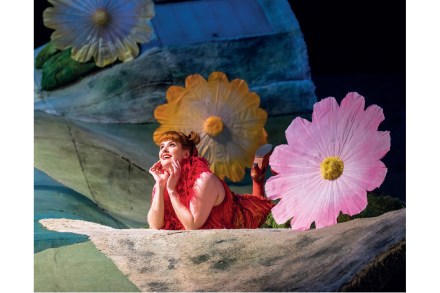
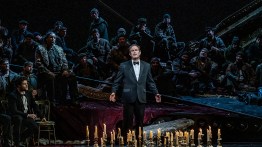
One swallow might not make a summer, but it certainly helps rounds the season off. ‘Perhaps, like the swallow, you will migrate towards a bright land, towards love,’ sings the poet Prunier to Magda, the heroine of La Rondine, but love itself is the real bird of passage in Puccini’s gorgeous Viennese operetta-manqué. Magda trades in her old lover for a younger, cuter model and after a summer of happiness leaves him too, without undue regret. That’s basically it. No death leaps from battlements, no ritual disembowelling; none of that stuff that we’re meant to find so regressive and problematic in an opera house, and so visceral and cool in an HBO drama. Just a simple, plausible romance, played out to glowing waltz melodies.

Confounding and fantastic: 100 Gecs, at O2 Forum Kentish Town, reviewed

Pop

Let me introduce you to the two poles in pop and rock. One is marked by authenticity, musicianship, a certain traditionalism. This is the pole that in critics’ discourse is called ‘rockism’ – the assumption that rock (or, at least, real people playing real instruments) is the normative state of music. The other is artificiality, brashness, a disdain for heritage – a celebration of everything that is inauthentic, where a good idea is worth 100 guitar lessons. And that pole is known as ‘poptimism’. Poptimism is why you end up with learned essays in the New Yorker analysing the singer Ariana Grande nicking a doughnut from a shop with reference to the work of John Ruskin. (Yes, that really happened.

Nureyev deserves better: Nureyev – Legend and Legacy, at Theatre Royal Drury Lane, reviewed

Dance

I was never Rudolf Nureyev’s greatest fan. I must have seen him dance 30 or 40 times, starting with a Bayadère in the mid-1960s, and while his sheer presence remained so potent that he was always exciting to witness, I became increasingly aware of how fiercely willed his dancing was – a struggle with or against his own body, almost self-punishing (he believed that he performed at his best when he was totally exhausted). His final appearances, when he was showing symptoms of the Aids that killed him in 1993, were truly painful to watch on that score. He really had nothing left to give, but the compulsion remained.

Rhapsodic banalities: I, Joan, at the Globe, reviewed

Theatre

‘Trans people are sacred. We are divine.’ The first line of I, Joan at the Globe establishes the tone of the play as a public rally for non-binary folk. The writer, Charlie Josephine, seems wary of bringing divinity into the story too much, and he gives Joan a get-out clause to appease the agnostics. ‘Setting aside religiosity we’ll settle for more of a street god, a god for the queers and drunks… a god for the godless.’ What can ‘a god for the godless’ mean? No idea. Joan throws in a few more hipster platitudes about ‘elevating our humanity, finding the unity hidden inside community, remembering our collective connectivity fuels courageous creativity [sic]’.

Gore-fest meets snooze-fest: Crimes of the Future reviewed

Cinema

You always have to brace yourself for the latest David Cronenberg film, but with Crimes of the Future it’s not the scalpels slicing into flesh or the mutant dancer with sewn-up eyes (and mouth) or even the filicide (oh, boy) you have to brace yourself for. In this instance, the most shocking thing is that it’s so muddled and dreary. It’s a gore-fest, true enough, but it’s a gore-fest that is mostly a snooze-fest. That’s what you need to brace yourself for.

The uncomfortable lessons of the new Fourth Plinth statues

Arts feature

The Revd John Chilembwe – whose statue now adorns Trafalgar Square – is notorious for the church service he conducted beneath the severed head of William Jervis Livingstone, a Scottish plantation manager with a reputation for mistreating his workers. The night before, Chilembwe’s followers had broken into his house and chased him from room to room as he tried to fend them off with an unloaded rifle. Eventually, they pinned him down and decapitated him in front of his wife and children. It was the most significant action in the 1915 Chilembwe rebellion, a small, short-lived affair in an obscure corner of the British Empire today known as Malawi. It says a lot about our times that a figure with Chilembwe’s record should be vaunted with a public statue.

Emily Maitlis tries too hard not to be teachery on her new podcast

Radio

The competition between news-led podcasts is nearing boiling point. If you tuned in to The Media Show on Radio 4 last Wednesday, you’d have felt the tension between the podcasters leading the guard: Alastair Campbell of The Rest Is Politics, Jon Sopel of The News Agents, plus his executive producer, Dino Sofos, Nosheen Iqbal of the Guardian’s Today in Focus, and Adam Boulton, who has just launched a politics show with Kate McCann on Times Radio. Kiran Moodley and Minnie Stephenson might reasonably have joined this line-up as they launch a new series of their news pod with Channel 4 this week.

A compelling, if pitiless, journey: The Forgiven reviewed

Cinema

The Forgiven is based on the novel by Lawrence Osborne and stars Ralph Fiennes (terrific) and Jessica Chastain (ditto) as a wealthy British-American couple driving to a weekend-long party in a luxurious Moroccan desert villa when they hit and kill a young local boy on the road. Oops. What the film adds up to, I cannot say, as it isn’t clear. Who is forgiven? Is anybody? It’s ethically ambiguous and you have to do your own moralising, which is always a drag. (Note to filmmakers: I’m old, I’m tired, please spoon-feed me.) But it’s a compelling, tense journey even if it’s a pitiless one. Human nature doesn’t come out of this at all well. https://www.youtube.com/watch?

‘Good’s never going to triumph’: the makers of BBC show Industry on bad bankers

Arts feature

Finance in screen fiction is a realm of monsters. From Gordon Gekko in Wall Street and Patrick Bateman in American Psycho to the crazed party animals of The Wolf of Wall Street, the arena of deal-making is portrayed – particularly in America – as winner-take-all without trace of empathy or redemption. Industry – the British-made television drama that follows a group of young bankers competing on a City trading floor whose second series airs on BBC1 later this month – is a more subtle example of the genre. Its characters are not monstrous but they are all flawed, ruthlessly transactional in their dealings with each other, and frankly hard to like. There aren’t any nice guys.

Apocalyptic minimalism: Carl Orff’s final opera, at Salzburg Festival, reviewed

Music

‘Germany’s greatest artistic asset, its music, is in danger,’ warned The Spectator in June 1937. Reporting from the leading new-music festival in Darmstadt, the correspondent mentioned only one première of the two dozen on offer: ‘The most important achievement was the scenic cantata Carmina Burana by Carl Orff, a piece that would have been impossible without the influence of the “cultural Bolshevik” Stravinsky.’ He’s not wrong: give Stravinsky’s Les Noces some nail clippers and a face scrub and you get Orff. Carmina Burana can today seem irredeemably boorish and kitsch. But you can see how the piece’s hiccupy primitivism might have once startled.

The new master of the American Whine: Ezra Furman, at Edinburgh Festival, reviewed

Pop

The American Whine is one of the key vocal registers in rock and roll. You can trace that thin disaffected quaver through the decades from the Shangri-Las to Lou Reed, from Jonathan Richman to Neil Young. Inveigling, needy, smart-assed, it’s as vital a part of the DNA of the medium as a black leather jacket and a souped-up Chevrolet. Ezra Furman, I’m pleased to report, is in possession of a vintage whine. Furman is a Jewish transgender woman who composes with compassion, wit, empathy and anger from those particular personal viewpoints. She wrote the soundtrack to Netflix blockbuster Sex Education and has just released an eloquent sixth solo album, All Of Us Flames.

The joy of Franck’s Symphony in D Minor: BBCSO/Gabel, at the Proms, reviewed

Classical

In the Rodgers and Hart musical On Your Toes, a Broadway hoofer is forced to work at a community college, teaching classical music like some kind of square. He picks out a melody on the piano: ‘Whom was this written by?’ ‘By Caesar Frank!’ chorus the students. ‘Pronounce it Fronk,’ he corrects them; and the audience, presumably, laughed in recognition. This was 1936, and César Franck’s Symphony in D minor was a hugely popular concert hall warhorse. Now: not so much. According to the stats in the programme book for this BBC Prom, it was performed 36 times in 50 years at the Proms, before falling off a cliff in 1959. This performance by the BBC Symphony Orchestra under Fabien Gabel was only its seventh Proms outing in as many decades.

Our prison culture is more barbaric than it was in 1823: Elizabeth Fry ‘The Angel of Prisons’ reviewed

Theatre

The Angel of Prisons dramatises the life of the penal reformer Elizabeth Fry, who lived near Canning Town. She married a wealthy Quaker, Joseph Fry, who encouraged her philanthropic work which she managed to pursue while raising 12 children. Early in life, Fry had been a party girl who loved dancing, and this production shows her practising her moves to a soundtrack of thumping contemporary music. The script, by James Kenworth, blends present-day London vernacular with the dialect of the early 19th century. It’s easy to watch and it delivers heaps of information without any hint of lecture-hall formality. When Fry visited the mixed-gender Newgate Prison near the Old Bailey she found her vocation.

‘Ray of Light made me, and I didn’t know what I was doing’: William Orbit on Madonna, being sectioned and resurrection

William Orbit is an electronic musician living a jazz life. ‘I like to make it up as I go along,’ he says. ‘It’s one long improv session.’ For most of his 65 years, the music skipped along well enough. In the late Nineties, Orbit was the man with lightning at his fingertips. He co-produced (and co-wrote) Madonna’s best album, Ray of Light, followed in 1999 by Blur’s best album, 13. He created big hits for big movies, including The Beach, which featured his song ‘Pure Shores’. Recorded by All Saints, it became the second most successful British single of 2000.

Schlocky and silly but fun: Beast reviewed

Cinema

Beast is, the blurb tells us, a ‘pulse-pounding thriller about a father and his daughters who find themselves hunted by a massive rogue lion intent on proving that the savannah has but one apex predator’. Whether this was ever intended to be a serious film, I cannot say, but it’s fun in its schlocky, gory, silly way, doesn’t outstay its welcome (it’s barely 90 minutes) and will satisfy anyone who has ever yearned to see Idris Elba wrestle a lion and then punch it full in the face. Not my dream especially, but each to their own. https://www.youtube.com/watch?

The fiasco of Operation Yewtree: C4’s The Accused – National Treasures on Trial reviewed

Television

At 4.38 a.m., one morning in October 2013, the radio presenter Paul Gambaccini was understandably asleep when the doorbell rang. He was then arrested for sexually assaulting a minor on what proved to be the word of a drug addict with a history of making false accusations. The trouble for Gambaccini, though, was that this wasn’t proved for another 11 months. In the meantime, the allegations were all over the news, he was dropped by the BBC, lost around £100,000 in earnings and started having panic attacks. And Gambaccini, of course, wasn’t alone in being arrested and publicly named like this – not merely without being charged, but before any investigation had taken place.

Why we must defend Radio 3 from threatened cuts

Radio

Who doesn’t love Eurovision? All that razzmatazz. The ghastly frocks and gloopy pop songs, the false bonhomie and bare-faced bias when the voting comes around. It’s an irresistible annual event, guaranteed to put a smile on your face and provide the pretence that we are all one happy European family. But all that showbiz comes at a cost (€6.2 million, and rising), with the host country’s broadcaster expected to cough up about one-third of that. What might have to be lost by the cash-strapped Corporation in the next year, or curtailed, to ensure that we put on the biggest and best show ever next year? The BBC budget has become a hot topic in recent weeks.

The show works a treat: Globe’s The Tempest reviewed

Theatre

Southwark Playhouse has a reputation for small musicals with big ambitions. Tasting Notes is set in a wine bar run by a reckless entrepreneur, LJ, whose business bears her name. In real life, LJ’s bar would go bust within weeks. It serves vintage wines to a clientele of wealthy tipplers who chug back large tureens of Malbec and claret but who eat no food. The staff help themselves to free champers and Burgundy whenever they choose, and the boss fusses around like a mother hen making sure her brood are safe and content. Bad punctuality is never punished and the staff improvise each shift as they go along. But the emotional atmosphere of LJ’s feels right.

The company has a hit on their hands: Scottish Ballet’s Coppélia reviewed

Festivals

With the major companies largely on their summer breaks, the Edinburgh International Festival struggles to programme a high standard of dance (though, having said that, I have memories of being taken in short trousers to the 1967 festival and seeing New York City Ballet during its glorious prime). The dearth tends to be masked by falling back on what used to be called ‘ethnic’ product and that peculiarly French phenomenon, the multimedia event spanning circus, mime, video and spoken text, usually sewn up with some thread of an over-arching theme thrown in. This year it’s the turn of something called Room, presented by La Compagnie du Hanneton, whose chief cook and bottlewasher is James Thierrée, formerly of the whimsically charming Le Cirque Imaginaire.

There’s much more to Winslow Homer than his dramatic seascapes

Arts feature

Until the invention of photography war reportage depended on old-fashioned illustration, and even after that the illustrated press took a while to catch up. Photographic reproduction didn’t work on cheap newsprint, which demanded a crispness of definition that early photography couldn’t provide. So reports on the American Civil War in the new illustrated periodicals aimed at the middle classes continued to rely on wood engraving, and it was as a print designer that the 25-year-old Winslow Homer was sent by Harper’s Weekly to cover the fighting in 1861. Apprenticed to a commercial lithographer at the age of 19, Homer had no formal training as an artist but he had a nose for the decisive moment that added drama to a reporter’s copy.

House of the Dragon: So far, so unexciting

About halfway through the first episode of House of the Dragon I found myself squirming in my chair, covering my eyes and muttering ‘Why the hell am I watching this vile schlock?’ I think this is probably a good sign. One of the main attractions of its predecessor Game of Thrones was that it kept taking you to places you didn’t want to go – incest, crippled children, mass murders at weddings, sacrificial daughters, lead characters culled long before their time – and on this score at least, House of the Dragon looks unlikely to disappoint. But I’m less sure, so far, about the court intrigue.

Identity politics is in retreat in Hollywood

Television

‘Diversity is woven into the very soul of the story.’ If those words of praise from a rave review in a left-leaning journal sound to you about as inviting as a cup of cold sick, then my advice would be to stay well clear of The Sandman. Neil Gaiman’s epic graphic novel series (launched in 1989), set in the world of dreams, was relentlessly inclusive long before it became the norm. ‘I wanted to change hearts and minds,’ Gaiman has said in an interview. ‘I had trans friends and still do, and it seemed to me that no one was putting trans characters into comics. And I had a comic.’ If this TV version had been made five years ago, it would probably have been considered very cutting edge.

In praise of character actors

Arts feature

The star system is a false hierarchy: the best rarely make it to the top. I thought of this recently when it was announced that David Warner had died. Few outside acting could name him, though you may have seen his head flying off in The Omen, a film in which heads are cheap. Warner was a Manchester-born jobbing actor: a character actor, better defined by what he is not, which was a star. I could write pages about why a star is a star, and a character actor remains a character actor, but the most significant reason is simple. Warner was brilliant but he was not handsome.

Guston is treated with contempt: Philip Guston Now reviewed

Exhibitions

Philip Guston is hard to dislike. The most damning critique levied against the canonical mid-century American painter is that he is too uncontroversial, his appeal too broad, his approach altogether too winsome. None of that stopped the team behind Philip Guston Now – a travelling mega-survey of his work, which will reach Tate Modern in 2023 – from announcing otherwise. In 2020, the year the show was due to open, the curators announced that in light of the ‘racial justice movement’, the artist’s works might now legitimately be read as racist, and the show could not go forward as planned. This was and is quite obviously nonsense. The works in question are marshmallow-like renderings of Klansmen in absurd, mundane scenes.

A four-way race between poet, actor, video artist and sound engineer: Edinburgh Festival’s Burn reviewed

Festivals

In a new hour-long monologue, Burn, Alan Cumming examines the life and work of Robert Burns. The biographical material is drawn from Burns’s letters, and the poems are read out in snatches. You won’t learn much except that Burns was a poor farmer who later worked as a taxman. To represent his many flings with women, a few high-heeled shoes are dangled on strings above the stage but this looks strangely cheap given that huge sums have been lavished on graphic imagery projected onto a big screen at the rear. Flashing lights and surges of music add to the sense of distraction. Cumming’s performance centres on dance, which looks like a new departure for him.