Culture

Culture

The good, the bad and the ugly in books, exhibitions, cinema, TV, dance, music, podcasts and theatre.

Why I admire Saudi Arabia’s monstrous new city

Arts feature

The Kingdom of Saudi Arabia wants me to know that it is building a new city. Its adverts follow me around the internet. ‘Imagine a traditional city and consolidating its footprint, designing to protect and enhance nature.’ I’m imagining. Their city ‘will be home to nine million residents, and will be built with a footprint of just 34 square kilometres. And we are designing it to provide a healthier, more sustainable quality of life’. According to its website, this new town ‘is a civilisational resource that puts humans first’. Which all sounds vaguely nice, if also nicely vague (although as I happen to be a human myself, I do appreciate the gesture). That is, until you see what they actually mean by this.

Unforgettable story, forgettable film: The Lost King reviewed

Cinema

The Lost King is a comedy-drama based on the 2012 discovery of the remains of King Richard III beneath a Leicester car park. It’s a terrific story, an unforgettable story, but a fairly forgettable film. It’s directed by Stephen Frears, stars Sally Hawkins (as Philippa Langley, the amateur enthusiast who was proved right despite being sneered at by archaeology experts), and yet it’s somehow underpowered. https://www.youtube.com/watch?v=Bgv6KHeAFeY There’s King Richard, in his cloak and crown, sitting at her kitchen table with his really bad hair True, it offers one of my favourite lines of the year – ‘Boys… Mum’s found Richard III!’ – yet it never quite springs into life.

The genius of More or Less

Radio

In a week of slim audio pickings, I spent time reacquainting myself with some of the BBC classics and can confirm that, yes, More or Less still warrants a place in that category. Like Thinking Allowed, which also drew me back, the programme works wonders with data and statistics, and benefits from having a calm and unobtrusive presenter. While most of the questions put to the stoical Tim Harford are delightfully pedantic, some have that special quality of convincing you that, while you’ve never given the topic a second thought, you are in fact deeply invested in it, and absolutely must know whether or not the thing that’s been alleged is correct.

Brilliant and distinctive but also relentless: William Kentridge, at the RA, reviewed

Exhibitions

William Kentridge’s work has a way of sticking in the mind. I can remember all my brief encounters with it, from my first delighted sight of one of his charcoal-drawn animations, ‘Monument’ (1990), in the Whitechapel’s 2004 exhibition Faces in the Crowd to my awestruck confrontation with his eight-channel video installation I am not me, the horse is not mine (2008) in Tate Modern’s Tanks in 2012. That marked a high point for the Tanks, since when they’ve tanked.

A show for politicians: John Gabriel Borkman, at the Bridge Theatre, reviewed

Theatre

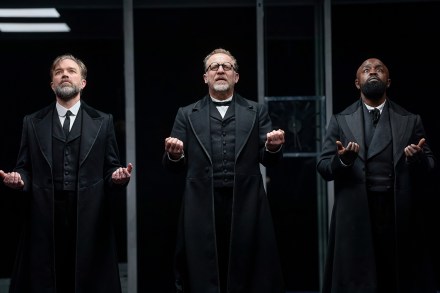
Clunk, clunk, clunk. John Gabriel Borkman opens with the obsessive footfalls of a disgraced banker as he prowls the attic of a shabby townhouse. On a beaten-up sofa lies Gunhild, his estranged wife, who guzzles Coke and watches TV game shows. The whole place stinks of stagnation and failure. The reclusive Borkman was once the country’s best-known banker until envious colleagues accused him of embezzlement and got him sent to jail for five years. After his release, he began a life of self-destructive solitude. The family are more riven with feuds than the royals. Gunhild loathes her twin sister, Ella, while Borkman blames both women for his downfall. His one hope, his son Erhart, openly shuns him and prefers the company of a sexy local seductress.

The art of menus

Arts feature

There is, of course, no endeavour, no craft, no profession, no trade that neglects to ‘reflect society’. This is a commonplace. The collective narcissism of considerate builders, for instance, claims that hod carriers and brickwork reflect society. The contention of Menu Design in Europe is kindred. Graphic artists, restaurateurs, decorators and chefs have, through two centuries, expanded their capabilities according to the milieux in which they have practised. Menus are, then, not merely functional lists, they are self-advertisements, exhibitions, seductions and, occasionally, desirable objects that are apparently collectible. Indeed this book has the unmistakable feel of an obsessive’s scrapbook, a completist’s trophy.

Pleasantly untaxing: Mrs Harris Goes to Paris reviewed

Cinema

Mrs Harris Goes to Paris is a comedy-drama based on the 1958 novel by Paul Gallico about a cheerful, kind-hearted Battersea charlady who falls in love with a couture dress from Dior, decides she must have one of her own, and off she goes. https://www.youtube.com/watch?v=iO9JcPbbmAA If you are in the mood for something pleasantly untaxing you will be pleasantly untaxed This is a familiar type of British film. It’s similar in spirit to, say, Florence Foster Jenkins or Paddington or The Duke or that golf one with Mark Rylance. It isn’t but could have been directed by Stephen Frears. It stars Lesley Manville but it could have starred Julie Walters. We know the ingredients and how the recipe will turn out.

Why does opera always feel the need to apologise for its plots?

Classical

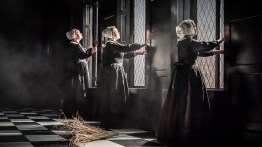
Leos Janacek disliked long operas, and the first act of The Makropulos Affair is a masterclass in how to set up a drama without an ounce of fat. There’s a prelude: driving motor-rhythms, surges of emotion, and somewhere in the distance – far away (or long ago) – the sound of trumpets. The curtain rises and we’re tipped brusquely into a lawyers’ office in the early 20th century. The lawsuit they’re discussing is long-winded and complex: aren’t they always? No matter. By the end of the act, these blustering professional men have been interrupted by the magnetic and imperious diva Emilia Marty, who knows things about the century-old case of Gregor vs Prus that no living person could possibly know. We’re intrigued. End of Act One.

The makers of Fauda have another hit on their hands: Sky Atlantic’s Munich Games reviewed

Television

You’d have to pay me an awful lot more than I get for this column to review Monster: The Jeffrey Dahmer Story. As I write, it’s the number one trending show on Netflix, but the most I’m prepared to stomach is that snatch of footage you get forced to watch (because of Netflix’s impertinent and intrusive automatic play function) if you linger over the title image for too long. It shows two cops at an interview desk gradually revealing to Dahmer’s increasingly aghast dad (Richard Jenkins) that his son Jeffrey might not be quite the straight upstanding citizen he imagined. https://www.youtube.com/watch?

Simple songs; voice like the grand canyon: George Ezra, at OVO Hydra, reviewed

Pop

It would be easy to be a little dismissive of George Ezra. A wholesome late twentysomething hailing from the rock and roll badlands of Hertfordshire, Ezra is the kind of pop star you could happily take home to meet your grandparents. A graduate of the British and Irish Modern Music Institute, good-looking in that long, toothy Prince William way, he seems to be laboratory designed not to offend or challenge even the most prickly sensibilities. His music is harder to pin down. With its repeated calls and refrains, it blends folk, pop, soul, blues and calypso styles into an uncomplicated feelgood mix that is both old-fashioned and summer-fresh. The melodies are bright crayon drawings; immediate and insistent.

Biomorphic forms that tempt the viewer to cop a feel: Maria Bartuszova, at Tate Modern, reviewed

Exhibitions

Art is a fundamentally childish activity: painters dream up images and sculptors play with stuff. It was while playing with an inflatable ball with her young daughter in the early 1960s that Maria Bartuszova had the idea of filling balloons with liquid plaster instead of air. The inspiration fed her muse for 30 years, seeding the mixed crop of biomorphic forms currently filling five rooms at Tate Modern. Trained in ceramics at Prague Academy of Arts under communism, Bartuszova turned to plaster after moving with her sculptor husband Juraj Bartusz to the industrial city of Kosice, now in Slovakia, in 1963. Plaster was cheap and plentiful: a 1987 photo in this exhibition, the first to bring her work to a British audience, shows her with stacks of sacks of it in the studio.

Worthy of Wilde: Eureka Day, at the Old Vic, reviewed

Theatre

Eureka Day is a topical satire set in a woke school in America. An outbreak of mumps has led to calls for a vaccination programme that will prevent the school from being quarantined and shut down entirely. The script, written in 2018, has acquired new layers of meaning since the Covid terror. It opens with a playful sketch in which four white teachers and a black parent try to agree how many ethnic categories should be recognised by school officials. Their friendly conversation conceals a toxic seam of racial suspicion and hostility. The writer, Jonathan Spector, is probably a rock-sold liberal who wants the world to know that the woke cult has gone too far. The play’s highlight is a 20-minute passage of comedy which reaches a peak of hilarity that would make Oscar Wilde envious.

Why the Arts Council should kill off ENO and ENB

Arts feature

Pity Arts Council England, least loved of our NGOs, understaffed and under-resourced, its arm’s-length status gnawed to the shoulder by DCMS ukases, the stinginess of the Treasury and the government’s (in some respects, welcome) indifference to our higher culture. In return for its annual grant-in-aid (currently £336 million), it is obliged to cheer-lead policies of inclusivity and diversity and step gingerly over the eggshells of elitism, racism, gender politics and decolonisation. Its hands are further tied by the requirement to operate as extensions of the social services. The diktats of Levelling Up have to be honoured. The disabled and the disadvantaged, the young and the old are all crying out to be championed.

A masterpiece: Rose, at Park Theatre, reviewed

Theatre

Look at this line. ‘I’m 80 years old. I find that unforgivable.’ Could an actor get a laugh on ‘unforgivable’? Maureen Lipman does just that in Rose, by Martin Sherman, a monologue spoken by a Ukrainian Jew who lived through the horrors of the 20th century. In the opening sections, Lipman plays it like a professional comic and she fills the theatre with warm, loving laughter. Rose’s dad is a hypochondriac who spends all day in bed. ‘He never stopped dying but as far as we could tell there was nothing wrong with him.’ Eventually he loses his life when a wardrobe stuffed with pills topples on to him. ‘He was crushed to death by medicine.

I’m too tired for Lena Dunham: Catherine Called Birdy reviewed

Cinema

Catherine Called Birdy is written and directed by Lena Dunham and it’s a medieval comedy about a 14-year-old girl resisting her father’s attempts to marry her off while yearning to do all the things women aren’t allowed to do. (She would especially like to attend a hanging, for example. And also ‘laugh very loud’.) It most put me in mind of Monty Python and the Holy Grail, as it has that spirit, but it does not share that timeless brilliance. It’s fun, and endearing, and the patriarchy gets a good kicking which, as you know, is my favourite thing. But it feels like one joke or sketch that’s been dragged out for nearly two hours. It’s fine, yet forgettably so. https://www.youtube.com/watch?

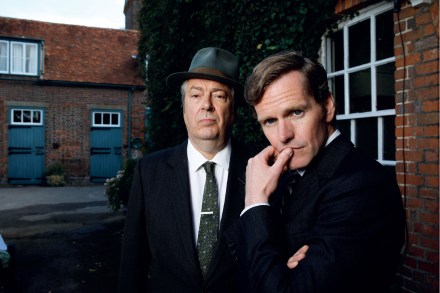
Well-meaning thriller with moments of implausibility: BBC1’s Crossfire reviewed

Television

Crossfire was a three-part drama in more ways than one. Running every night from Tuesday to Thursday, it brought together a Die Hard-style thriller, an exploration of the complexities of family life (with particular reference to middle-aged womanhood) and a meditation on the nature of time. Odder still, it worked pretty well on the whole – though it was not without moments of frank implausibility. https://www.youtube.com/watch?v=4-oS6WIJFdw Keeley Hawes played Jo, whose decision to book a holiday in the Canary Islands for her family and two others seemed a good idea at the time. Granted, her marriage wasn’t in top shape, what with her habit of falling for any man who paid her more attention than her husband did (making it not her fault really).

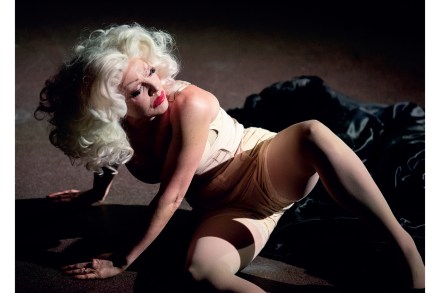
More depravity, please: Salome, at the Royal Opera House, reviewed

Opera

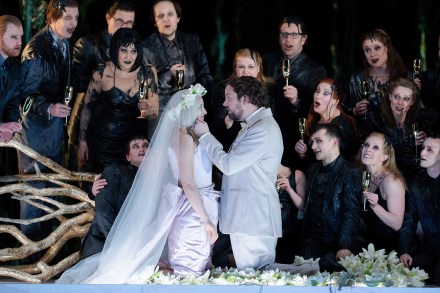
The first night of the new season at Covent Garden was cancelled when the solemn news came through. The second opened with a short, respectful speech from Oliver Mears, the director of opera, and a minute’s silence in which the houselights were lowered and we could gaze at the curtains, from which the huge gold-embroidered EIIR cypher had already been removed. For the first time in King Charles’s reign, we sang the national anthem to unfamiliar new words. There were shouts of ‘God Save the King!’And then the lights dimmed once more and we proceeded with the business of the evening, and the life of the Royal Opera.

Exhilarating, frightening and hilarious: Made in Leeds – Three Short Ballets reviewed

Dance

Good, better, best was the satisfying trajectory of Northern Ballet’s terrific programme of three original short works, which moves south to the Linbury Studio at the Royal Opera House at the beginning of November. The company has a new director in the amiable Federico Bonelli, formerly a principal with the Royal Ballet, and he has several problems to address, not least the shortage of richly characterful dancers among the senior ranks. But this triple bill should boost everyone’s morale, and the audience at the Leeds Playhouse was enthralled. First up was Wailers, Mthuthuzeli November’s elegiac return to the world of his childhood in a parched South African township.

Fresh and dreamy: Edward Lear, at Ikon Gallery, reviewed

Exhibitions

‘It seems to me that I have to choose between 2 extremes of affection for nature… English, or Southern… The latter – olive – vine – flowers… warmth & light, better health – greater novelty – & less expense in life. On the other side are, in England, cold, damp & dullness, – constant hurry & hustle – cessation from all varied topographical interest, extreme expenses…’ That choice was effectively made for Edward Lear in 1837 when he gave up the natural history studies by which he had made his name in his teens and headed south to Rome on doctors’ advice, aged 24. Prone to asthma and epileptic seizures, the myopic artist was now also suffering from eyestrain.

A David Bowie doc like no other: Moonage Daydream reviewed

Cinema

Moonage Daydream is a music documentary like no other, which is fitting as the subject is David Bowie. If it’s David Bowie, make it special or just don’t bother. And this is special. It’s an immersive, trippy, hurtling, throbbing two hours and 15 minutes. If Disneyland did a Bowie ride, this would be it. Yet it isn’t shallow. There are some real insights. Bowie was cool and sexy and beautiful, but also somehow aloof and otherworldly, an enigma, never everyday. I can imagine Paul McCartney at home and I can imagine Mick Jagger at home. But I have never been able to imagine David Bowie at home, turning to Iman and saying: ‘What shall we do for dinner? Fish again?

A tremendous show that will attract serious attention from the West End: Rehab – The Musical reviewed

Theatre

Rehab: The Musical opens with a boyband star, Kid Pop, getting busted for possession of cocaine. The judge sentences him to a course of treatment at the Glade which he attends with great reluctance. Giving up marching powder is the last thing on his mind. ‘I said no to drugs but they just wouldn’t listen.’ His sharky agent, Malcolm Stone, wants to prolong Kid Pop’s notoriety by sending an undercover ‘addict’ to the Glade to spy on him and leak stories to the press. Stone hires a luscious sex bomb, Lucy, to take on the job, and it’s obvious that Kid Pop will seduce her and their affair will end in redemption for both parties. Predictable enough, perhaps, but the couple’s journey is a joy to experience.

BBC radio has excelled itself over the past week

Radio

Listening to BBC Radios 3 and 4 over the past week has been like meeting an old friend who, after decades of squeezing into age-inappropriate designer clothes, has suddenly reverted to a sensible wardrobe. It’s a pity that it took the death of our beloved Queen for this to happen, but I’ve been enjoying it while it lasts – because, like the miracle drug that Robin Williams gives his dementia patients in the film Awakenings, this dose of sanity will quickly wear off. Radio 4’s long-prepared tributes to Elizabeth II were, by the BBC’s standards, remarkably impartial. Even Saturday’s Today programme rose to the occasion.

The political cunning of Elizabeth II: BBC1’s The Longest Reign – The Queen and Her People reviewed

Television

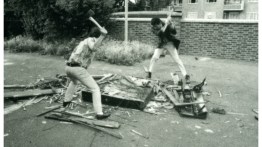
In all the tributes to Her late Majesty’s constancy, dignity, wisdom and devotion to duty, not enough has been said about her political cunning. But BBC1’s The Longest Reign: The Queen and Her People made a compelling case that Elizabeth II knew just how to tilt the balance. When she toured the new towns of the 1950s (see image), waving at the crowds with their little Union Flags and taking tea with the young families on the just-built housing estates, she was giving her wordless blessing to the welfare state.

The art of the monarchy

Arts feature

Elizabeth II spent virtually all her life surrounded by one of the world’s greatest art collections. Even when she was a child, and the likelihood of her inheriting the throne still seemed remote, visits to her grandparents at Buckingham Palace involved looking at pictures, since George V enjoyed showing her the Victorian narrative paintings that hung there, such as William Powell Frith’s ‘Ramsgate Sands’. Nobody knows exactly how many works of art there are in the Royal Collection, but at the end of Elizabeth II’s reign nearly 300,000 objects had been catalogued online, probably just under a third of the whole.

Will you be able to get through the ponderous aphorisms without giggling? The Lord of the Rings: The Rings of Power reviewed

Television

Amazon’s much-heralded Tolkien prequel The Lord of the Rings: The Rings of Power began by answering a question that has puzzled humankind – and possibly elves – these many millennia. Why is it that a ship floats and a stone doesn’t? The reason apparently is because ‘a stone sees only downward’, whereas a ship has ‘her gaze fixed upon the light that guides her’. And this, I’m afraid, set the tone for much of the dialogue that followed in the two episodes released so far – as, to their credit, the characters managed to exchange an endless series of ponderous aphorisms without giggling.