Culture

Culture

The good, the bad and the ugly in books, exhibitions, cinema, TV, dance, music, podcasts and theatre.

Heartbreakingly tender: Living reviewed

Cinema

Living is a remake of one of the great existential masterpieces of the 20th century, Kurosawa’s Ikiru (1952), which didn’t need remaking, many will grumble, but once you’ve seen this you’ll be glad that it was. It is as profoundly and deeply felt as the original and as heartbreakingly tender. It asks the same question – what makes a life meaningful? – but this time with Englishness, bowler hats, the sweet trolley at Fortnum’s and Bill Nighy. Really, what more could you want? https://www.youtube.com/watch?v=t2L8CP31-14 The film is directed by Oliver Hermanus with a screenplay by Kazuo Ishiguro, who first mooted the idea.

One long moan of woe: Crystal Pite’s Light of Passage, at the Royal Opera, reviewed

Dance

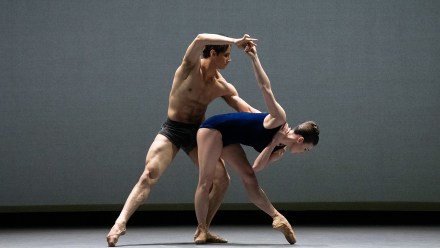
I was moved and shaken by Crystal Pite’s Flight Pattern when I first saw it in 2017. In richly visualised imagery, it proposed two ways of interpreting the horrific footage of the refugee crisis of 2016: either as a matter of anonymous, voiceless masses, portrayed as a body of dancers moving across the stage like a skein of migrating swallows beyond reason or control; or as a ragtag of desperate, furious individuals with every dignity and possession taken from them – somebody’s husband or wife, somebody’s daughter or son, fighting for survival – a plight conveyed in the impassioned dancing of Marcelino Sambé and Kristen McNally.

Kids will enjoy this new show at the West End’s newest theatre more than adults: Marvellous, @sohoplace, reviewed

Theatre

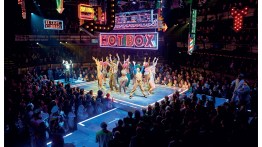
London has a brand-new theatre – yet again. Last summer, a cabaret venue opened in the Haymarket for the first time. More recently, the Marylebone Theatre near Regent’s Park held its debut show. And now Nica Burns of Nimax Theatres has announced a new venture, @sohoplace, which she says is the first West End venue to open for 50 years. The playing area is a hoop-shaped enclosure with rising tiers of seats overlooking a deep oblong pit. Cage fighting and mud-wrestling could be staged here to great advantage. The poster for the debut show, MARVELLOUS, features the title in bright pastel letters with a yellow balloon, a pair of clown’s shoes and a perky budgerigar.

A Soviet version of Martin Parr: Adam Curtis’s Russia 1985-1999 –TraumaZone reviewed

Television

Russia 1985-1999: TraumaZone – even the title makes you want to scream – is Adam Curtis’s Metal Machine Music: the one where he frightens off his fans by abandoning the trademark flourishes that made him so entertaining and instead goes all pared-down and raw and grim. If you don’t know or remember what those trademark flourishes were, let me refer you to a cruelly funny pastiche which you can easily find on YouTube called The Loving Trap. This sends up poor Adam as a pioneer of the collage-umentary, a genre resembling ‘a drunken late-night Wikipedia binge with pretence to narrative coherence’ which ‘vomits grainy library footage onto the screen to a soundtrack of Brian Eno and Nine Inch Nails.

Tenderness and menace: Bob Dylan, at the London Palladium, reviewed

Pop

Bob Dylan has always toyed with audiences. He plays what he wants, how he wants, letting his mood dictate tempo and often key (sometimes switching songs to the minor). On Dylan’s return to London for the first time in five years, he summed it up early. ‘I ain’t no false prophet/ I just know what I know,’ he gruffly sang. Dylan spent the night at the Palladium doing what he knows best, singing songs of love, loss and immortality. Covid temporarily ended his ‘Never-Ending Tour’, which had seen Dylan play more than 3,000 shows since 1988. Now it’s billed as ‘The Rough and Rowdy Ways Tour’, with the strapline: ‘Things aren’t what they were’.

Pure scorn without wit or insight: Triangle of Sadness reviewed

Cinema

The latest film from Ruben Ostlund received an eight-minute standing ovation after its screening in Cannes and also won the festival’s top prize, the Palme d’Or, and this has left me entirely baffled: what, the film I’ve just seen? The one where every scene is far too long? The one billed as a ‘satirical black comedy’ even though the targets are easy and it doesn’t say anything and I didn’t laugh once? That film? I should add, it’s not for the emetophobic. One of the scenes that goes on far too long involved so much vomiting that I could only watch the bottom 5 per cent of the screen. Ostlund needs someone like my mother in his life to tell him it’s not clever, it’s not funny, pack it in.

The genius of Cezanne

Exhibitions

Pity the poor curators of major exhibitions struggling to find fresh takes on famous masters. The curators of Tate Modern’s new Cezanne blockbuster have begun by dropping the acute accent from his surname, apparently a Parisian affectation not in use on the artist’s home turf. Anticipating grumbles about another major exhibition devoted to a dead white male artist, they have emphasised Cezanne’s outsider status by painting him as a provincial from Provence. It was a role the artist liked to play in Paris, once famously excusing himself from shaking Manet’s hand on the grounds that he hadn’t washed in a week. Cezanne’s peers put their money where their mouths were, creating an artists’ market for his work With or without his accent, Cezanne remains French.

Bold, self-assured reimagining of Monteverdi: Opera North’s Orpheus reviewed

Opera

You wouldn’t like Tamerlano when he’s angry. ‘My heart seethes with rage,’ he sings, in Act III of Handel’s opera – spraying coloratura about the stage like Silly String on a 1980s kids’ TV show. That’s the deal with baroque opera: the emotional register is extreme and you’re either in the moment or you might as well leave the theatre. Literal realism, clearly, is not the point – making it even more necessary for a modern director to sketch in some hint of a social or cultural framework in which we can locate and comprehend these hyper-real characters. The music is too hot and too strong to work as drama in a purely abstract setting. Pare it back too far and you’re left with five maniacs screaming at each other in a black box.

War games do something seriously unpleasant to our brains

Arts feature

Three years ago, I killed several thousand people over the course of a single weekend. Late into the night, I ran around butchering everyone I saw, until by the end I didn’t even feel anything any more. Just methodically powering through it all, through the wet sounds of splattering heads, bodies crumpling, shiny slicks of blood. I thought I was past caring. But when I finally went to bed, I couldn’t sleep, and in my dreams I was haunted by all the men I’d killed. I saw their brains exploding, again and again and again. In my defence, I’d had a bad week. It was December: a grotty English winter, not particularly cold but still utterly grim. The kind of winter that seems to stick to everything, like a layer of congealed grease. I was worried about money.

Do we need another Lucian Freud exhibition?

Exhibitions

Do we need another Lucian Freud exhibition? After years of exposure to his paintings of naked bodies posed like casualties of a car crash in a nudist camp, we might have reached the ‘move along, nothing to see here’ point. But it seems we can’t get enough of the monstre sacré. To mark the centenary of his birth in 1922, London is being treated to a Freud fest of no fewer than seven exhibitions, the most prestigious of which is at the National Gallery.

We should take Robbie Williams more seriously

Pop

Oh, nostalgia – so much better than it used to be! You’d never have guessed pop music was once the preserve of teenagers had you been visiting the Greenwich peninsula last week – not from the crowds, or from the artists. Here were Roxy Music, whose four core members boast a combined age of 295, playing what might be their last ever show. Here were the Tops and the Temps, bands each with just one original member left – 86-year-old Duke Fakir of the Tops, 80-year-old Otis Williams of the Temps. And here was the absolute youngster of the lot, Robbie Williams, a stripling of 48, but 32 years into his pop career. Blimey, I know we keep being told retirement at 65 is a thing of the past, but this was ridiculous.

A miniature rite of a very English spring: a Vaughan Williams rediscovery in Liverpool

Classical

Imagine a folk dance without music. Actually, you don’t have to: poke about on YouTube and you’ll find footage from 1912 (there’s music dubbed on, but it’s a silent film) of Vaughan Williams’s friend George Butterworth in full Morris fig, going through the moves with Cecil Sharp and a pair of pinafore-wearing gals. Note the precision of his movements, that big Kitchener moustache: how seriously Butterworth is taking it, four years before he stopped a bullet on the Somme. And they really were sincere, those folk song pioneers.

This production needs more dosh: Good, at the Harold Pinter Theatre, reviewed

Theatre

Good, starring David Tennant, needs more dosh spent on it. The former Doctor Who plays John, a literary academic living in Germany in 1933, whose cosy life is disrupted by troublesome females. His mum is a cranky basket case dying in hospital and his wife is a manic depressive who can’t look after their kids. Both women speak with Scottish accents. John has a fling with a third Scotswoman who studies Goethe at his university. Weirdly, all three women – mum, wife and girlfriend – are played by the same actress. Couldn’t the producers fork out for a proper cast? They certainly didn’t spend more than a fiver on the set, which looks like an abandoned bomb shelter made of cardboard.

Harry Styles’s behind is the only draw: My Policeman reviewed

Cinema

My Policeman is a forbidden love drama starring both Harry Styles – whose bid for movie stardom continues apace – and his naked bottom. The bottom is good. Ten out of ten for the bottom, particularly during a scene in Venice when the light from the window casts it in a golden, buttery glow. But otherwise, this is an average, meek and soporific endeavour which hits quite a few bum notes of the kind that aren’t ideal. It is based on the novel by Bethan Roberts, which in turn was inspired by the romantic life of E.M. Forster, who had a long-term relationship with a married policeman who suffers a stroke and is nursed by his wife, May. (Big shout out for May, I think.

Touchingly free of cynicism: C4’s Somewhere Boy reviewed

Television

At the start of Somewhere Boy, an 18-year-old boy is rescued from an isolated house by his aunt Sue following his father’s suicide – and what she, the police and social services regard as a lifetime of abuse. Since he was small, Danny’s father, Sam, had forbidden him from going outside, telling him the world was full of monsters who’d kill him if he did. He’d therefore grown up listening to old songs and watching old films – all the while believing that his beloved dad was keeping him safe. Yet once Danny was installed in Sue’s house, sharing a bedroom with his cousin Aaron, it soon became clear that this was by no means a simple tale of parental cruelty.

The rise and fall of Tammy Faye

Arts feature

Tammy Faye Bakker was a chirpy, perky televangelist noted for her lavish mascara and her barrel-stave eyelashes. She once conducted an interview on her PTL (Praise the Lord) chat show for which she remains revered among gays. It was in 1985 and she was talking to Steve Pieters, a soft-spoken church pastor with a soup-strainer moustache. He had Aids, a disease that killed Rock Hudson that year and was scything through Reagan’s America. Tammy wanted to know all about Steve’s faith, his health and his orientation. ‘Have you given women a fair try?’, she asked rather naively. The pastor told his story and the interview deepened into an extraordinary confessional.

Watch white women being shamed while they dine: CBC’s Deconstructing Karen reviewed

Nothing heightens the sense of the unpalatable better than a dinner scene. Think of the violence meted out at the dining table in Pasolini’s Salò (1975). Think of André Gregory lecturing Wallace Shawn on his solipsism – much to our discomfort – in Louis Malle’s My Dinner with Andre (1981). CBC's documentary Deconstructing Karen accidentally borrows from the form. Eight white women are chided ceaselessly at dinner by two activists – failed Congressional candidate Saira Rao (who is Indian-American) and hitherto unknown Regina Jackson (who is African-American) – until the white women admit that they are racist.

Shocked and moved me far more than I anticipated: Hoaxed reviewed

Radio

I shied away from conspiracy stuff during the Trump era. Not the theories themselves, but the huge volume of content proclaiming that we lived in a post-truth age of misinformation and conspiracy. It wasn’t that I disagreed with the idea that something like this was happening, or the idea that it was bad. It was more a certain tone these podcasts, essays and articles shared – almost a shared idiom and turn of phrase. People talked about ‘truth’ and ‘facts’ and ‘evidence’ with unwavering self-certainty.

An enjoyable new Ageing Dad drama: Disney+’s The Old Man reviewed

Television

We men all think we’ve still got it, even when we’re well past 50 and young women look straight through us and every time we get up or sit down or lift something off a shelf we sigh or grunt with the effort. But sure, if push came to shove and we had to defend our loved ones, we’d definitely be able to fight off our attackers with our bare hands, no problem. It’s for people like us that The Old Man was created. It belongs to that venerable tradition of Ageing Dad movies which stretches from Taken (featuring Liam Neeson and his particular set of skills) through to James Bond (Daniel Craig is now 54) and the Mission Impossible series (Tom Cruise is now 60).

Apocalypse chic: Autechre, Last Days and Southbank’s Xenakis day reviewed

Music

It was so dark, my friend noted, you could have had sex or done a Hitler salute. No stage lights, no stair lights, no desk lights, no door lights, no usher lights, no exit signs. The few wisps of illumination that did steal in created colossal shadows, giants freeze-framed on the walls. In these snatches the wooden ribcage interior of the Barbican Hall looked demonic. A few photons lit up the Autechre boys, Rob Brown and Sean Booth, who flickered like blue flames rising from a hob. A few more nudged into view the ceiling that had become a vast charcoal grisaille. When, occasionally, someone left, the tiny glowing portal that appeared made it feel as though we were at the bottom of a cavernous well.

The death of the pop star

Pop

The definition of ‘pop star’ in the Collins English Dictionary is unambiguous: ‘A famous singer or musician who performs pop music.’ Well, that seems fairly self-explanatory, doesn’t it? It also seems way wide of the mark, because being a pop star (or a rock star, its longer-haired cousin) encompasses a great deal more than being famous for singing pop songs. As Nik Cohn wrote, describing the first flush of idols of the rock’n’roll age, they were ‘maniacs, wild men with pianos and guitars who would have been laughing stocks in any earlier generation… They were energetic, basic, outrageous. They were huge personalities and they used music like a battering ram.

Mirthless, artless farrago of jabber: The Doctor, at Duke of York’s, reviewed

Theatre

The Doctor is an acclaimed drama from the pen of writer-director Robert Icke. We’re in a hospital run by a famous medic, Dr Ruth, whom the Cockney characters call ‘Dr Roof’. Two major problems beset Dr Roof who has to raise funds for a new private wing while grappling with her partner’s early-onset dementia. A Catholic priest barges in and demands to visit a dying patient. Dr Roof refuses. Then she punches him in the face to prove who’s boss. Her ill-advised left hook plunges the hospital into crisis, and the senior staff gather in the boardroom to sort out the mess created by Dr Roof’s violent temper. All the doctors wear white coats, like pantomime boffins, which seems an unlikely costume nowadays.

How politics killed theatre

Arts feature

Hope can be remarkably persistent. And so, despite several years of experience pointing in starkly the other direction, a recent weekend saw me at Who Killed My Father at the Young Vic, the latest from ubiquitous Belgian director Ivo van Hove. A young friend had gone with his father the previous week and both described it as ‘excellent’. Intense, but in a good way. Worthy broadsheet publications gave it four stars. I had my doubts: Édouard Louis, on whose angry memoir about growing up in a working-class, homophobic home in northern France the play was based, is not my cup of tea.

lincoln project steve schmidt

Showtime lets the Lincoln Project off the hook

Showtime’s latest docuseries follows the Lincoln Project, the anti-Trump Super PAC, during the end of the 2020 campaign as the organization blew up in notoriety. The series displays the shallowness within modern day American politics. What starts as a hero’s journey, with former Republican consultants disavowing the racism of the GOP, proves to be more of a Greek tragedy as one-by-one they ultimately become everything they claimed to hate. The show centers around Lincoln Project co-founders — Reed Galen, Jennifer Horn, Mike Madrid, Ron Steslow, Steve Schmidt and Rick Wilson — as well as principal members of the organization such as Keith Edwards, Sarah Lenti, Conor Rogers, Stuart Stevens and Ryan Wiggins.

Incredibly his new songs were the best songs: Lindsey Buckingham, at the London Palladium, reviewed

Pop

Lindsey Buckingham, at 72, still has cheekbones that cast shadows. He has the upright shock of hair, too, though now it makes him look less like the kohl-eyed pop god of 1980 and more like Malcolm Gladwell’s cooler, angrier brother. He still has fire, too. A couple of solo renditions of Fleetwood Mac songs won the crowd over, but it was the following run of three numbers from his newest album, played with his three-piece band, that put the spark to the show. It proved he’s not yet a heritage act. He had no choice, really, but to forge ahead. In 2018, he was booted out of Fleetwood Mac, for various reasons, chief among them appearing to be that Stevie Nicks couldn’t stand the sight of him any longer, and it was her or him.

Fairly desperate: BBC1’s Unbreakable reviewed

Television

On first impression, you might have thought that Unbreakable was just a fairly desperate reality show cobbled together from I’m a Celebrity, Mr and Mrs, Taskmaster and It’s a Knockout. After all, the format is that people of varying degrees of fame – from Simon Weston to, er, the bloke who presents MTV’s Celebs on the Farm – arrive with their partners at what presenter Rob Beckett calls ‘a big posh gaff in the country’. Once there, they’re made to perform a series of game-like tasks as Rob looks on and guffaws. Naturally, the series does make a few cunning tweaks to its obvious forebears. Unlike in Taskmaster, for example, some of the tasks are extremely boring.