Culture

Culture

The good, the bad and the ugly in books, exhibitions, cinema, TV, dance, music, podcasts and theatre.

A sex farce reminiscent of Alan Clark’s diaries: Phaedra, at the Lyttelton Theatre, reviewed

Theatre

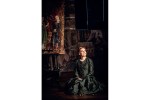
Simon Stone claims that his new comedy, Phaedra, draws on the work of Euripides, Seneca and Racine. In fact, the porn-mag narrative resembles a passage in Alan Clark’s diaries where the priapic scribbler seduces a mother and daughter in rapid succession. That’s what happens to Sofiane, a homeless Moroccan lecher, aged 41, who has the looks of George Best and the sexy drawl of a Riviera gigolo. He befriends Helen, a senior Labour MP, who shares her picture-perfect London home with her two brattish children and her high-flying husband Hugo, who speaks 15 languages. Helen appears to be starved of sex and male attention, which seems rather improbable for a Westminster insider.

Bravely shows that depressed people can be quite annoying: The Son reviewed

Cinema

For my money – and lots of other people’s – Florian Zeller’s 2020 film The Father was pretty much a masterpiece. Oscar-winningly adapted from his own play by Zeller and Christopher Hampton, it plunged us into the fractured world of Anthony, an old man with dementia (as Oscar-winningly played by Anthony Hopkins). With different actors playing the same characters and perfectly coherent scenes that kept contradicting each other, we shared Anthony’s struggle to work out who was who and what was what. The result provided a rare combination of tricksy intelligence and emotional punch. Now, with The Son, adapted with Hampton from another of his plays, Zeller brings us another domestic catastrophe.

Down with the Rock and Roll Hall of Fame!

Pop

There is footage on the internet of Robert Smith, lead singer in the Cure, being interviewed on the occasion of his band being inducted into the Rock and Roll Hall of Fame in 2019. At high pitch and tremendous volume, the host yells up a storm about the incredible honour being bestowed upon the group, while Smith claws at his face, grimaces, and rolls his eyes. ‘Are you as excited as I am?’ she shouts. ‘By the sounds of it, no,’ Smith mutters – speaking, surely, for all of us. Of all the many reasons to dislike the RRHOF – some of which we’ll get to shortly; and yes, the acronym is one of them – it is the jarring mix of shrieking self-love and august earnestness which rankles most.

The musical émigrés from Nazi-Europe who shaped postwar Britain

Exhibitions

Halfway up the stairs to the Royal College of Music’s exhibition Music, Migration & Mobility is a map of NW3, covered in red dots. It’s centred on the Finchley Road north of Swiss Cottage, and every dot (there are nearly 50) represents a business or an institution associated, in the middle years of the last century, with a refugee from the Nazis. Herr Zwillenberg offers upholstery repairs; a grocer stocks sauerkraut ‘and all Continental Delicacies’. There are adverts for fundraising concerts and political lectures; a Blue Danube Club and a Café Vienna. It’s urban Mitteleuropa in miniature, uprooted, transplanted, and clinging together for comfort and mutual support. They called it ‘Finchleystrasse’.

How Vermeer learnt to embrace the everyday – and transfigured it

Arts feature

Has any artist ever painted fewer pictures than Johannes Vermeer? At the last authenticated count there were 37 still in existence, and five more are known from references in early sources. With allowance for wastage and disappearance historians estimate that he produced no more than 50, a rate of two a year over a career spanning two decades. So when 28 are assembled in one exhibition, as currently at the Rijksmuseum, it counts as a blockbuster. Astonishingly, this is the museum’s first Vermeer exhibition. Holland’s national gallery has not always valued its most popular master: when it opened in 1885, the only Vermeer on show, ‘Woman in Blue Reading a Letter’ (c.1663-64), was a loan.

Close to perfection: Opera North’s The Cunning Little Vixen reviewed

Opera

Opera North has begun 2023 with a couple of big revivals, and it’s always rewarding to call in on these things and see how they’re holding up. The long-lived, endlessly revived classic production is one of the quirks of operatic culture. It actually feels disconcerting, as a regular operagoer, to go to the conventional theatre (you know, the vanilla kind where they don’t sing) and discover that they’ve started again from scratch. A completely new Tempest? What was wrong with the 2016 staging? Possibly it’s to do with the financial realities of an art form that needs to keep a full orchestra and chorus on the payroll. A Year Zero policy every other season simply isn’t economically viable.

Pam Tanowitz is the real deal: Secret Things/Everyone Keeps Me, at the Linbury Theatre, reviewed

Dance

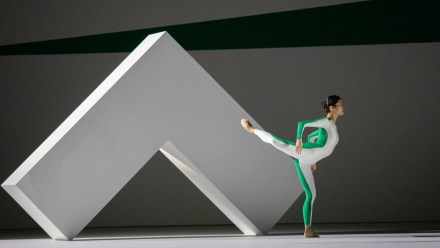
Civilisation has never nurtured more than a handful of front-rank choreographers within any one generation, with the undesirable result that the chosen few end up excessively in demand, careering around the globe and overworking, delegating or repeating themselves. Please can someone up there ensure that Pam Tanowitz doesn’t suffer such a fate. This fifty-something American has recently matured as one of the best in field, producing dance of rigorous clarity, austere yet richly nuanced, that makes the work of certain other big names look fuzzily derivative or gimmicky. Just don’t ask too much of her, because she works through fine detail, not a broad brush.

Listen to the world’s first radio play

Radio

Radio works its strongest magic, I always think, when you listen to it in the dark. The most reliable example is the Shipping Forecast, that bracing incantation of place names and gale warnings, which – with the lights out – can transform even the most inland bedroom into a wind-battered coastal cottage. But darkness can heighten disturbance, too, as I was reminded when listening to Danger by Richard Hughes, billed as the BBC’s first-ever radio drama. It was first broadcast in 1924, with the audience at home under instructions to maximise its effect by turning off all their lights.

Widescreen pop-rock that deserves to be better known: Metric, at the Roundhouse, reviewed

Pop

Why aren’t Metric stars? In their native Canada, several of their albums have gone platinum, but the rest of the world? Not so much. Twenty-five years after Emily Haines and James Shaw formed the band, here they still are, playing to a not-quite-full Roundhouse to promote their eighth album, Formentera. It was a pretty good turnout – about 3,000 people on a Wednesday night in January – but I doubt anyone ever formed a band thinking: ‘In a quarter of a century, we might be able to not quite fill one of London’s mid-sized venues!’ Writing very good songs isn’t enough to take a band to the top, but Metric do write very good songs All of which is a shame because they were flatly brilliant.

Much more gripping than it sounds: Women Talking reviewed

Cinema

Women Talking, which has received Oscar nominations for best picture and adapted screenplay, is one of those films that, on paper, is a hard sell. It is women talking, and talking and talking, after enduring the most horrifying experience at the hands of men. All of which sounds barely cinematic and even less entertaining. But as written and directed by Sarah Polley, it is compelling, gripping, powerful, as tense as a thriller. Think of it this way: it’s like Twelve Angry Men, but in this instance it’s Eight Angry Women (in a hayloft) who must reach a unanimous decision. https://www.youtube.com/watch?

Sky’s Funny Woman is no laughing matter

Television

Nick Hornby’s 2014 novel Funny Girl was both a heartfelt defence and a convincing example of what popular entertainment can achieve. Telling the story of Barbara Parker, a fictional 1960s TV star, it took a stern line on highbrows who prize the punishing over the pleasurable, while delivering a lot of pleasure itself. My only reservation was that Hornby was a little too obviously smitten with his heroine: a ‘quick-witted, unpretentious, high-spirited, funny, curvy, clever, beautiful blonde’, whose attitudes occasionally seemed to owe a suspicious amount to contemporary feminism.

Unmissable: Donatello – Sculpting the Renaissance, at the V&A, reviewed

Exhibitions

‘Donatello is the real hero of Florentine sculpture’, so Antony Gormley has proclaimed (hugely though he admires Michelangelo). It’s hard to disagree. But the full range of his work is hard to see, spread out as it is on altars and tombs through Florence and elsewhere in Italy. This makes Donatello: Sculpting the Renaissance at the V&A an unmissable treat. Donatello was versatile, prolific, inventive, influential and long-lived Throughout much of the Quattrocento, Donato di Niccolo di Betto Bardi (c.1386-1466) – or ‘Donatello’ – turned out new notions about what art could look like and how it might be made. In origin he was, as the V&A show emphasises, a goldsmith.

Why are roses romantic?

Arts feature

You may think that roses have always symbolised courteous romance, but art history describes their smuttier private life. Consider the pouting red blooms in Dante Gabriel Rossetti’s ‘Venus Verticordia’, which the art critic John Ruskin considered so obscene that he refused to continue his friendship with the painter. Ruskin admired the execution when he first saw ‘Venus Verticordia’ in Rossetti’s studio in 1865, but later reviled the crude suggestiveness. ‘I purposely used the word “wonderfully” painted about those flowers,’ he later wrote to Rossetti with deep concern. ‘They were wonderful to me, in their realism; awful – I can use no other word – in their coarseness.’ Ruskin’s anxiety reflected a common understanding of the red rose as a symbol of lust.

Classy but constrained by its video game origins: Sky’s The Last of Us reviewed

Television

The Last of Us is widely being hailed as the best video game adaptation ever. Maybe. But it’s still a video game adaptation. On one of the early levels, for example, you have to escape from a zombie apocalypse that has broken out in Houston, with your truck and your guns, being careful also to avoid the military authorities who will shoot you on sight. Later, your mission is to climb through some sewers, up a ladder and into the hidden entrance of an apartment complex to retrieve the car battery you need to effect your escape from the dystopian hellhole that is post-apocalypse Boston. Instead of a virus, the deadly, world-changing threat is a fungus.

These drag queens haven’t a clue how banal their problems are: Sound of the Underground, at the Royal Court, reviewed

Theatre

Sound of the Underground is a drag show involving a handful of cross-dressers who spend the opening 15 minutes telling us who they are. Then, rather ominously, they announce: ‘We’ve written a play.’ But they haven’t really. The scene shifts to a kitchen where the drag queens meet to discuss their pay and conditions, and the show turns into an advertisement for their woes. Drag is facing a crisis, we hear, caused by its sudden popularity. Drag queens are in demand from TV bosses and corporate executives but the artistes feel dismayed and traduced by this surfeit of opportunity. They loathe RuPaul, a cross-dresser favoured by the BBC, and they blame him for betraying the true spirit of drag, whatever that may be. One of them calls RuPaul ‘exclusionary’.

Nursery-level music: Sam Smith’s Gloria reviewed

The Listener

Grade: D Yes, it’s porky Sam from Essex, with his body issues and his complex gender pronouns and his endless narcissistic banalities, his depthless self-importance. This is Smith’s fourth studio album in a career that seems to be nosing a little downhill, mercifully – although it will still sell by the million worldwide. He has recently decided he is genderqueer, rather than just gay. He says he feels like a woman. Me too, mate – but what’s a boy to do? The good things? Just one. He has a pleasant and flexible tenor voice which, when unadulterated, is capable of carrying a tune – if there were, y’know, tunes. And that’s it.

Still ugly but worth catching for the chorus and orchestra: Royal Opera’s Tannhäuser reviewed

Classical

A classical concert programme is like a set menu, and for this palate the most tempting orchestral offering in the UK this January came from the Slaithwaite Philharmonic under its conductor Benjamin Ellin. They opened with a suite from Bernard Herrmann’s Vertigo, and the inclusion of Hollywood film music in a ‘straight’ classical programme was interesting in itself. Film music has been around for more than a century now. Many scores are fully as effective in concert as (say) Schubert’s Rosamunde or Beethoven’s Egmont, and yet this almost never happens. Film scores (unless by a big beast of the classical world) are generally hived off into ‘pops’ nights. Snobbery is the most adaptable of vices.

Two of Scotland’s most inventive solo musicians: Fergus McCreadie, Maeve Gilchrist + Mr McFall’s Quartet reviewed

Pop

Folk is the Schiphol of Scottish music. Eventually, every curious traveller passes through. From arena rockers to rappers, traditional music remains an undeniable source. Which is why the second word in ‘Celtic Connections’ is at least as significant as the first. Now in its 30th year, lighting up the otherwise unpromising prospect of a Glasgow January, this year’s instalment of the roots festival features artists from all corners of the globe. Many of them would regard folk only as their second or third musical language, rather than the mother tongue. One of the early highlights makes the point rather beautifully. It’s a homegrown affair, showcasing pianist Fergus McCreadie and harpist Maeve Gilchrist, two of Scotland’s most inventive solo musicians.

The county that inspired a whole way of painting: Sussex Landscape, at Pallant House, reviewed

Exhibitions

In a national vote on which county’s landscape best embodies Englishness, every county would presumably vote for itself. But when the War Office commissioned Frank Newbould in 1942 to design a poster with the patriotic slogan ‘Your BRITAIN – fight for it now’, it featured Sussex, with a shepherd herding sheep in the foreground and Belle Tout lighthouse on the distant horizon. In the ‘green and pleasant’ stakes, Sussex holds the advantage that the seeds of our alternative national anthem ‘Jerusalem’ were sown during William Blake’s stay from 1800 to 1803 in the coastal village of Felpham near Bognor Regis. But while it has prompted the occasional poem, Sussex has inspired more than its share of art.

My hunt for the Holy Grail: Damned drummer Rat Scabies interviewed

Arts feature

Most former punks end up touring the nostalgia circuit or cropping up at conventions. Not Christopher John Millar, aka Rat Scabies. When Scabies hit middle age, the legendary drummer with the Damned began to hunt for the Holy Grail. ‘We all started off criticising government and I’ve ended up looking for pixies,’ explains Scabies. In 2005, the music journalist Christopher Dawes wrote a rollicking account of a trip he took with Scabies to the epicentre of it all, Rennes-le-Château, a tiny village atop a rock overlooking the River Aude in the Languedoc. Rat Scabies and the Holy Grail has taken its place as a minor gonzo classic. Dawes lived across the road from Scabies in Brentford and gradually got drawn into a world of odd theories and strange coincidences.

Still fabulous: Savage Love podcast reviewed

Two podcast MOTs this week. I am a long-term listener of sex and relationships podcast Savage Love, hosted by Seattle-based Dan Savage. And tuning in to his most recent instalment, I can confirm it is still fabulous. A quick primer for those not familiar: Savage is famous for giving the world such gems as 'monogamish' (mostly monogamous; Savage and underwear model husband Terry were monogamish before becoming poly),  'fuck first' (do the deed before, not after, your huge romantic meal), and 'DTMI' (dump the motherfucker).

The art of art restoration    

Arts feature

When I first saw ‘The Triumph of Death’ (1562-63), by Pieter Bruegel the Elder, the painting throbbed: this land was sick, smothered in smoke; the fires on the horizon had been burning for ever, turning earth into dirt, air into haze. All was dull, lethargic, ill. When I saw the painting again some years later, the smoke had cleared. Patches of green pushed up from the canvas; the peasantry’s clothes were suddenly bright; the sun appeared to exist. In its new clarity, some of the painting’s jaded horror had been replaced by a sort of comedy. The work had been restored, but something had been lost.

A brilliant show : The 1975, at the O2, reviewed

Pop

The great country singer George Jones was famed not just for his voice, but also for his drinking. Once, deprived of the car keys, he drove his lawnmower to the nearest bar. In the very good Paramount+ drama about Jones and Tammy Wynette – entitled George and Tammy, so there’s no excuse for forgetting – Michael Shannon, playing Jones, is asked time and time again why he keeps on making such a mess of his life and his career. ‘That’s what the people want from me,’ he shrugs in reply. That came to mind watching the 1975’s return to British arenas, in a tour grandiosely and amusingly billed as ‘In Show and In Concert – The 1975 At Their Very Best’.

A ‘look at these funny people’ doc that could have been presented by any TV hack: Grayson Perry’s Full English reviewed

Television

For around a decade now, Grayson Perry has been making reliably thoughtful and entertaining documentary series about such things as class, contemporary masculinity and modern secular rituals. (All a lot more fun than they sound, I promise.) Equipped with an infectious Sid James laugh and an impressive commitment to affability, he’s demonstrated a willingness to listen to opposing views, even to the extent of allowing his mind to be changed. He’s then turned his findings into both a convincing thesis and an art exhibition of some kind. So what’s gone wrong in Grayson Perry’s Full English? The main problem, I think, was inadvertently laid bare right at the start of Thursday’s opening episode.

Mel C’s debut as a contemporary dancer is impressive: How did we get here?, at Sadler’s Wells, reviewed

Dance

‘We hope you enjoy the performance,’ announced the Tannoy before the lights went down for How did we get here? – the accent being put on ‘hope’, as though enjoyment was unlikely. I took a deep breath in anticipation of modern dance at its most portentous and pretentious, my expectations already depressed after imbibing some hot air from a note in the programme – ‘we feel our power, all the way to the edges of ourselves’ and so forth. How did we get here? Or should that be What am I doing here? But what transpired was a thing of simple beauty: spare, precise, lucid, free of wanton gimmicks or histrionics.