Culture

Culture

The good, the bad and the ugly in books, exhibitions, cinema, TV, dance, music, podcasts and theatre.

A crash course in all things Hispanic: RA’s Spain and the Hispanic World reviewed

Exhibitions

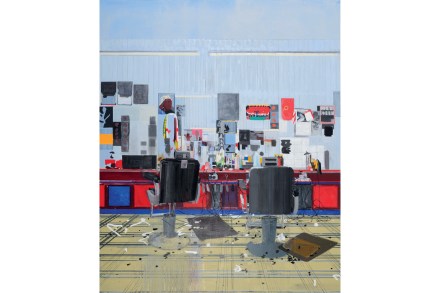
‘Spain must be much more interesting than Liverpool,’ decided the 12-year-old Archer M. Huntington after buying a book on Spanish gypsies in the port city. The family of American railroad magnate Collis P. Huntington had just docked at the start of an 1882 European tour that would introduce Archer to the National Gallery and the Louvre. ‘I knew nothing about pictures,’ he later admitted, ‘but I knew instinctively that I was in a new world.’ It was the Hispanic world to which he was most attracted, and he hatched a plan to create a museum devoted to its study. His preparations were thorough; he learned Arabic as well as Spanish before setting off in 1892 on the first of three explorations of the Iberian Peninsula.

Cheesy but full of love: The Fabelmans reviewed

Cinema

There can’t be anyone anywhere who hasn’t somehow been touched by a Steven Spielberg film. Some of us, for example, haven’t  dipped their toe into the sea for going on 40 years now. (Thanks for that, Jaws.) He has thus surely earned the right to finally turn the camera on himself, as he does with The Fabelmans, a memoir based on his childhood and discovery of filmmaking. This could have been sentimental and soggy, a ‘magic of the movies’ endeavour. There is some of that, but this is more than that. It’s about family, and the complexity of family, and it’s intensely personal, moving, absorbing and full of love. He is a master storyteller, and I say that even though I’ve seen Indiana Jones and the Kingdom of the Crystal Skull, unfortunately.

Stirring and sophisticated: RLPO, Chooi, Hindoyan, at the Philharmonic Hall, reviewed

Classical

Daniel Barenboim was supposed to perform with the Royal Liverpool Philharmonic Orchestra earlier this month. His recent health concerns made that impossible, but it was a reminder that for the first time since the appointment of the late Libor Pesek in 1987, the RLPO is under the direction of a conductor soaked in the German tradition. Domingo Hindoyan, the orchestra’s chief conductor since autumn 2021, was born in Venezuela and has a soft spot for French music, but Barenboim is his mentor and there’s a gravity – an intellectual centre – to his conducting that made me eager to hear him get to grips with the sacred monsters of German romanticism. It’s something of an RLPO tradition, after all.

Reduced me to a tearful, choked-up mess: Royal Opera’s Magic Flute reviewed

Opera

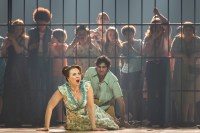
‘The rays of the sun conquer the night’ sings Sarastro, at the end of Mozart and Schikaneder’s Die Zauberflöte. It was the Royal Opera’s first performance of January 2023 and there’s something profoundly consoling about seeing this of all operas at the midnight of the year. The lights dim; five chords ring out and that first triplet from the violins falls quietly into place as Mozart engages the gears and together we move off on our long, sweet journey towards light. In David McVicar’s staging, robed figures process down the auditorium bearing glowing orbs, while Tamino, in late 18th-century frock-coat and knee-boots, clambers out from the boxes and vanishes through a portal in the front-cloth. There is a world elsewhere. And then we’re off.

Comes close to perfection: Watch on the Rhine, at the Donmar Warehouse, reviewed

Theatre

Watch on the Rhine is the curiously misleading title chosen by Lillian Hellman for a wartime family drama that became a film starring Bette Davis. The location is not Europe but America and the show opens with Fanny Farrelly, a member of the New England gentry, arriving in her sumptuous drawing room for breakfast. The character of Fanny is an instant classic. A crashing snob, a bundle of nerves, a lethally bitchy matriarch, she dominates her household by cultivating favourites and crushing enemies with her venomous tongue. And yet her servants treat her with tolerance and affection. To them she seems a tricky but essentially decent oddball who needs careful handling. When they complain about her behaviour, she graciously accepts their chastisement and apologises for overstepping the mark.

Beautiful bleakness crowned with slivers of hope: John Cale’s Mercy reviewed

Pop

There’s a case to be made for John Cale being the most daring ex-member of the Velvet Underground. Lou Reed redefined the transgressive possibilities of literate three-chord rock’n’roll. Cale, arguably, has travelled even further. A Welsh miner’s son who won a scholarship to Goldsmiths, Cale engaged with the early flowerings of Fluxus before mixing with John Cage and La Monte Young’s Theatre of Eternal Music in New York’s downtown avant-garde scene. His droning viola, hammering piano and relentless bass brought the serrated edge to the Velvet Underground’s art music. More than anyone in the band, he rendered Reed’s whiplash words in sound.

Is Matthew Parris the modern Plutarch? Radio 4’s Great Lives reviewed

Radio

Whenever I listen to Great Lives on Radio 4, which is often, I am reminded of the gulf between fame and achievement. How is it that some people do so much, yet remain obscure, while others seem to be carried forward with perpetual momentum after doing just one thing? A good many of the lives dissected on the programme over the years have been completely unfamiliar to me. I’ll spend the half hour puzzling over why they are not better known. Where would we be without Great Lives? There is minimal appetite in trade publishing for books about esoteric figures. And just imagine pitching a biopic of Hertha Ayrton, Eleonora Duse or Jayaben Desai to Hollywood today. Radio is probably the only place left for forgotten souls.

Formulaic and untrue: Bank of Dave reviewed

Film

Bank of Dave is the ‘true(ish)’ story, as this puts it, of Dave Fishwick, the Burnley businessman who wanted to set up a high street bank to help the local community. He was, Fishwick said in a recent interview, at home when the call came from Piers Ashworth in LA. ‘He’s the writer of Mission Impossible and he’d heard about my story and he said: “Dave, I want to make a Hollywood film about your life.” You get this a lot in Burnley, ha!’ I was made up for Dave, who seems like an excellent fellow, and this does have all the makings of one of those British underdog dramas I’m a total sucker for. (See: Calendar Girls, Kinky Boots, Eddie the Eagle, Phantom of the Open, etc.) But, alas, it’s not ‘true-ish’ as it’s barely true at all.

The grisliest images are the earliest: Bearing Witness? Violence and Trauma on Paper, at the Fitzwilliam Museum, reviewed

Exhibitions

‘Graphic’ scenes of violence are now associated with film, but the word betrays an older ancestry. The first mass media images to shock the public were engravings documenting contemporary social ills pioneered by the Victorian magazine The Graphic, though the association goes a long way further back, to Jacques Callot’s etching series ‘Miseries of War’ (1633) recording atrocities perpetrated by both sides during the French invasion of his native Lorraine in the Thirty Years’ War. The grisliest of those images, ‘The Hangman’s Tree’, is the earliest work in Bearing Witness? Violence and Trauma on Paper, at the Fitzwilliam Museum in Cambridge.

Why I hate Beethoven’s Pastoral symphony

Arts feature

I loved music before I could walk. It seemed I could harmonise anything my sisters were singing. I had perfect pitch, a mixed blessing since wrong notes made me cry. I hated music when I first heard Beethoven’s Pastoral symphony.  I was nine years old. My mother had died when I was two and my father got remarried to a Hitler refugee, half unhinged by exile. My stepmother took me to orchestral concerts at the Royal Festival Hall. She liked all the crowd pleasers, best of all the Pastoral symphony which she played at home on a portable gramophone. I grew to revile the opening rustle of strings, the ‘Awakening of cheerful feelings on arrival in the countryside.’  That never worked for me. I’m not sure now whether Beethoven meant it either.

Riveting: Tár reviewed

Cinema

Todd Field’s Tár stars an insanely glorious Cate Blanchett – if she doesn’t win an Oscar I’ll eat my hat – as a world-famous orchestral conductor about to record Mahler’s Fifth Symphony. There is also Elgar’s Cello Concerto in this film, and a bit of Bach, but it’s not about music. To say it’s about music would be like saying Citizen Kane is about tobogganing. It’s about power: how you attain it, what you do with it. We enter the world of cancel culture and identity politics and address that old chestnut: can you separate art and artist? It’s basically everything you are certain will bore you to death, but it doesn’t here. It’s riveting. The film is 157 minutes long and doesn’t drag for a single second. https://www.youtube.com/watch?

Clever and witty state-of-the-nation play: Kerry Jackson, at the Dorfman Theatre, reviewed

Theatre

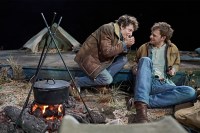
The National’s new comedy by April De Angelis is a clever and amusing attempt to deliver that most elusive artefact, the state-of-the-nation play. It’s easy to pan this production because the plot lacks surprises and the script is overly indebted to Abigail’s Party. The two lead characters are formulaic creations who reflect political polarities: left vs right, Remain against Leave. Kerry Jackson is a stroppy Essex blonde who loves Thatcher, despises foreigners and supports Brexit. She takes a shine to an overeducated wine snob, Stephen, who rides a bike and lectures in philosophy. Kerry’s new bistro in Walthamstow needs customers and she begs Stephen to post a favourable review in the local free sheet. In return she agrees to hire his mopey daughter as a waitress.

Guiltily compelling: Spector, on Sky Documentaries, reviewed

Television

On 3 February 2003, the emergency services in Los Angeles received a call. ‘I’m Phil Spector’s driver,’ a voice told them. ‘I think my boss killed somebody.’ This was the inevitable yet still extraordinary starting point for Spector – a new four-part documentary on a man who, in the face of fierce competition, might well be the strangest figure in pop history. By that stage, he perhaps deserved the description of him in one news report as ‘a ghost, a phantom, a half-forgotten rock genius’. Except that – whether by coincidence or something more sinister – he’d recently granted his first interview for decades to the British journalist Mick Brown. ‘I have devils inside me,’ said Spector during their conversation.

Gobbets of bile and hard-bitten wisdom: Iggy Pop’s Every Loser reviewed

The Listener

Grade: A– James Newell Osterberg Jnr’s unexpected and unwarranted longevity on this planet has conferred upon him the status of irascible, but very loveable, grandfather of punk: it suits him just fine. A delightful contrarian in a profession otherwise staffed by vapid, guileless, liberals – Iggy actually meant it when he sang ‘I’m a Conservative’ – Iggy now sprays the profanities around with abandon while delivering gobbets of bile and occasionally hard-bitten wisdom in the direction of yoof. Which, given Iggy is now 75, means pretty much everyone. This album veers between the addled late-1970s pop rock of The Idiot and Lust for Life and the scabrous metal raunch of his earlier incarnation with the Stooges.

Petrol, seawater and blood: the horror of Cornwall

Arts feature

Penwith isn’t an island, but it feels like one. The heathland above the cliffs is filled with mine workings and Iron and Bronze Age relics: menhirs, fogous and quoits. To most visitors Cornwall is as simple as the GWR posters: gaudy pastels, happy children, ice cream. This Cornwall exists for six weeks in the summer holidays, the setting for a visitor’s bourgeois childhood – Enid Blyton’s Cornwall, principally – but it’s not the essential one. There are multiple real Cornwalls, and they have nothing to do with the tourist aesthetic, which the visitors bring with them. In this spirit, Cornwall’s famous writers are usually from outside: Virginia Woolf (Kensington); Daphne du Maurier (Hampstead); John le Carré (Dorset).

I beg Sam Mendes to stop writing his own scripts: Empire of Light reviewed

Cinema

Sam Mendes’s Empire of Light, which he wrote as well as directed, is billed as a ‘love letter to cinema’ although, alas, in this instance cinema does not appear to love him back. The magic of film-going is the theme but there is almost no film-going in it and what there is isn’t magic. Peculiarly soulless, pedestrian and plodding, it is, however, wonderfully shot by Roger Deakins. It also stars Olivia Colman so now we can deal with that all-important question: can Olivia Colman save any film she’s in? No, is the answer. But it is probably a hundred times better than it would have been without her. https://www.youtube.com/watch?

Not everything Bowie did was genius – he was more interesting than that

Pop

I’m generally not a fan of New Year’s resolutions, but one occurred to me recently as the younger members of my family were blasting out a patchy David Bowie playlist: Stand Up Against Revisionism. It’s harder than ever these days not to succumb to printing the myth – reality can be so so-so – but critics have a duty to keep a clear head while others are losing theirs. Even around the dinner table on New Year’s Day. Bowie would have been 76 this week; he was born on 8 January 1947, and died two days after his 69th birthday in 2016. He’s not getting any less popular in posthumous old age. In fact, business is booming. At the end of last year, the latest hefty Bowie box set arrived, titled Divine Symmetry and covering the Hunky Dory era.

A Turkish dystopia that eludes western censors: Netflix’s Hot Skull reviewed

Television

A strange new virus has infected half the world but the cure is worse than the disease: authoritarian tyranny, in which the populace lose most of their freedoms, are subject to endless testing and are corralled into gated communities. I’m talking, of course, about the wildly implausible plot of a dystopian sci-fi thriller called Hot Skull. On the downside, it’s a bit depressing, with relentlessly grey cityscapes so bleak it makes Blade Runner look like Pleasantville. On the upside, it’s Turkish which means that – as with the brilliant Russian post-apocalyptic drama To the Lake – you get a completely different, original and perhaps more honest satirical slant on the crazy world we’re living in.

Did this Lithuanian invent abstraction? M.K. Ciurlionis, at Dulwich Picture Gallery, reviewed

Exhibitions

Trivia question: name a famous Lithuanian. Google came up with four I’d never heard of and one I had: Hannibal Lecter. It seems that Lithuanians are famous only in Lithuania unless they’re the monstrous inventions of non-Lithuanians – an injustice Dulwich Picture Gallery is helping to correct with its M.K. Ciurlionis exhibition. Mikalojus Konstantinas Ciurlionis is not just Lithuania’s most famous artist; he is also the country’s most famous composer. On his death in 1911 he left more than 400 musical compositions and more than 300 artistic ones, the latter squeezed into six short years before pneumonia carried him off aged 35. The son of a church organist, he was a musical prodigy, mastering the piano aged five and the organ aged six.

Do conductors have to be cruel to be good?

Arts feature

Playing under the baton of Arturo Toscanini must have felt a bit like fighting in the trenches. There are recordings of him rehearsing in the 1930s or ’40s. The orchestra is bowling along; there’s a low muttering, and then suddenly, out of nothing, the explosion. A scream of rage: a huge, operatic, animalistic roar. There’s a barrage of Italian profanities and what sounds like a fist smashing repeatedly on wood. Bernard Shore, who played under Toscanini in the BBC Symphony Orchestra, witnessed him hurling his baton at a cowering viola section. With the NBC Symphony, Toscanini threw his gold pocket watch to the floor and stamped on it.

Detectorists Christmas Special is a triumph

They’re tricky things to get right, Christmas specials. Ideally, they should capture in one perfectly judged episode the very essence of everything you found wonderful about your favourite classic sitcom, be it The Royle Family, Father Ted or Peep Show, all dusted with the lightest sprinkle of tinsel, icing sugar and nostalgia. But if they get the mix wrong – usually by overdoing the saccharine and mawkishness – it takes you straight down to Christmas hell and tarnishes your memories forever. For example, I will never, ever be able to watch Only Fools And Horses again, not even the actually funny episode where the chandelier falls down, because of an emetic, late-period Christmas special involving Del Boy, his unnecessary wife and – ugh – their new born baby.

The Recruit might be the worst show on Netflix

The Top Gun series received generous support from the US Navy because it was such an effective recruitment tool. I wonder if something similar went on between the CIA and Netflix’s new series The Recruit, this time as an exercise in reputation management. 'There’s nothing sinister or threatening about the Company,' this bizarre, horribly ill-judged and tasteless comedy/thriller series squeals at every turn. 'We’re just a bunch of lovable, kooky misfits doing our bit to defend your freedoms.' If you think I’m exaggerating, consider that one of the biggest baddies in the series – right up there with the evil Russians – is the Senate oversight committee responsible for holding the CIA to account. R-i-g-h-t.

Irresistible: Sky Max’s Christmas Carole reviewed

Television

What’s wrong with sentimentality? The answer, I’d suggest, could either be: a) its almost bullying insistence on us having emotions disproportionate to anything a particular story has earned; or b) nothing at all. And if you want to see how both of these are possible, two of this year’s big Christmas TV offerings provide handy illustrations. Firmly in category a) is The Boy, the Mole, the Fox and the Horse, an animated film by Charlie Mackesy, based on his own mega-selling book and with some impressively big-name actors doing the voices. Its methods are established immediately when a boy lost in a snowy wood happens across a cute talking mole (Tom Hollander). ‘What do you want to be when you grow up?’ the mole enquires. ‘Kind,’ says the boy.

Mesmerisingly sad: Corsage reviewed

Cinema

Corsage is a biopic of Empress Elisabeth of Austria who was prized for her beauty and fashion sense and may have been, I don’t think it’s too much of a stretch to say, the Princess Diana of her day. But then disaster strikes: she turns 40. I know, but in 1877 that is old. That is past it, for a woman. What purpose does she serve now? This isn’t yet another film about a woman being done over by bad royals. It isn’t Sofia Coppola’s Marie Antoinette or Pablo Larrain’s Spencer. It’s more a take on celebrity culture and no longer being what is wanted. It’s mesmerisingly sad, and Vicky Krieps, who won the best actress award at Cannes, is superb. https://www.youtube.com/watch?

A short history of applause – and booing

Theatre

A dank Tuesday evening in a West End theatre. The auditorium is barely two thirds full. The play is nothing special – certainly not spectacular. Your neighbour is struggling to stay awake. The reception, however, is tumultuous. The audience is on its feet, squealing, whistling and whooping as though someone has just found the cure for cancer. The house lights come up and the rumpus stops as suddenly as it started. Everyone makes for the nearest exit. This irritatingly mechanical ritual is a phenomenon – imported, I guess, from Broadway – that has recently become ubiquitous in London, never mind the quality of what’s on stage.

A cute present for aficionados: The Beach Boys’ Sail on Sailor – 1972 reviewed

The Listener

Grade: B+ By the time the 1970s had come along – post Altamont and post hope – the Beach Boys were tired of being beach boys and thus became, for a while, just another rather mediocre rawk band. The two albums they released in the first three years of the decade, Carl and the Passions – ‘So Tough’ and Holland, dispensed (largely) with those sumptuous harmonies and the simplicity of teenage anthems to God and gave us unconvincing blue-eyed soul and tinny R&B. Of those two albums, only the lovely ‘Marcella’ (where those harmonies come back) and the commendably ludicrous ‘All This is That’are worth shelling out your hard-earned pennies.