Culture

Culture

The good, the bad and the ugly in books, exhibitions, cinema, TV, dance, music, podcasts and theatre.

A stellar night at Celtic Connections

Pop

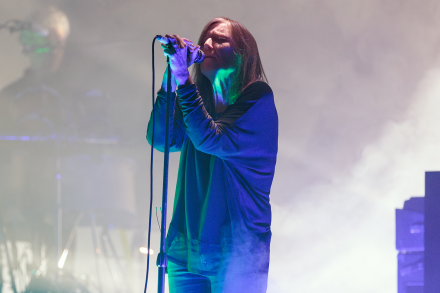
Sometimes I think, in the end, only the voice truly matters. Dress it however you wish, zhuzh it up with textural condiments: cool electronics, warm strings, harsh noise, romantic rhythm, ambient atmospherics. It’s all decoration. The human voice is what we respond to most fervently and instinctively in popular music. This – far from infallible – notion occurred to me while attending a concert celebrating 50 years of the Scottish Chamber Orchestra as part of Celtic Connections, Glasgow’s annual (and always inventive) festival of roots music. Led by American conductor Eric Jacobsen, the SCO opened with a lively rendition of Mendelssohn’s Hebrides Overture before providing supple, sympathetic support for four voices. Each was unique and evocative. One was truly transportive.

It’ll haunt you forever: The Zone of Interest reviewed

Cinema

I don’t know if it’s a Jewish thing, but I’m certainly always bracing myself for the latest Holocaust film. There have been some horribly dim ones, such as The Reader or The Boy in the Striped Pyjamas, both of which invite you to sympathise with the perpetrators and you know what? I won’t if it’s all the same to you. (Don’t get me started on Schindler’s List; we’ll be here forever.) But Jonathan Glazer’s The Zone of Interest dispenses with the usual conventions. There is no humanising or even dehumanising. There is no pretence at insight. It was what it was; look at how ordinary these mass murderers were. Treated like this, it’s somehow more horrifying and terrifying than Nazis stomping all over the place being evil.

The unique hell of being a wartime bomber pilot

Television

Some years ago I did a short series of interviews for The Spectator with war veterans about their combat experiences. Most had found them exciting, fulfilling, even enjoyable: ‘I wouldn’t have missed it for the world!’ said infantryman Mike Peyton, who likened it to doing the black ski run at Tortin in Verbier. But the one who had nothing good to say about it was RAF bomber pilot David Hearsey. ‘All those films where you see fliers gather in the mess for a sing-song round the piano: didn’t happen in my squadron,’ he told me. ‘Our base was grim, cold and windblown. Everyone was miserable and terrified and barely socialised with anyone outside their crew. What was the point? They were all going to die sooner or later.

Why do choreographers keep adapting films they can’t possibly improve upon?

Dance

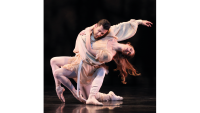
Ballet has always suffered from a shortage of stories that can communicate without the medium of the spoken word or a lengthy synopsis in the programme. Recourse has often been made to familiar fairy tale and legend, but recently popular films and novels have also become a favoured source – Matthew Bourne, for instance, has fed off both The Red Shoes and Edward Scissorhands, while Christopher Wheeldon turned to Like Water for Chocolate and Cathy Marston to Lady Chatterley’s Lover. The question that seldom seems to be asked in such cases is a basic one: can dance bring anything to the table, and can its language enlarge the source or create a new dimension? If the answer is pretty much no, then why bother?

What would Alasdair Gray think of Poor Things?

It’s awards season in the movie industry and the film Poor Things, based on the novel by the late Scottish writer and painter Alasdair Gray, is flying high. To date, it has received more than 180 nominations in various award categories, including 11 Oscars and 11 BAFTAs, and has chalked up 51 wins. What Alasdair would have made of the film version of Poor Things, I don’t know. He could be a hard man to please. It has certainly brought his extraordinary imagination to an entirely new audience. I imagine Alasdair would have disapproved of the film leaving its Scottish roots behind (although Willem Dafoe has an odd stab at a Scottish accent).

The visionary art of Eduardo Paolozzi

Arts feature

On 10 June 1940, a riot erupted in Edinburgh as a 2,000-strong mob swarmed the streets, hell-bent on revenge. Their targets were barbers, delis and ice cream parlours; anything or anyone Italian. Mussolini had just entered the war and the mob scented blood. The police eventually quelled the violence and the city’s more sympathetic locals helped sweep up the broken glass and mop up the spilled wine. But nearly half of the city’s 400 Italian Scots were rounded up under Winston Churchill’s order to ‘collar the lot’, and sent to internment camps. Among them was the 16-year-old Eduardo Paolozzi, who was locked up at Edinburgh’s Saughton prison. While Paolozzi was creating pop mash-ups, Warhol was still making whimsical illustrations of shoes It could have been worse.

Joyous chaos: Lucy Harwood, at Firstsite, reviewed

Exhibitions

‘Welcome to England’s Most Misunderstood County’, reads an imitation road sign inside the entrance to Firstsite gallery. It’s part of ‘The Essex Way’ (2021), a monumental collage commissioned from local boy Michael Landy to mark the 10th anniversary of the Colchester gallery’s opening. With its discombobulating mix of illustrations of native birdlife and views of landmarks such as the Veolia landfill site at Rainham, Landy’s mural is designed, like the gallery’s current exhibition series, to challenge assumptions about the county now most commonly associated with Towie.

Without Pitchfork, bands like the Clientele would never have attracted any attention

Pop

The whole world might have been different had Alasdair MacLean, singer and guitarist of the delicate, pastoral, slightly psychedelic band the Clientele, had his way. In 2006 he told music website Pitchfork about the time he was working for a publisher and strongly recommended they turn down a children’s fantasy novel that had been submitted. They overruled him and published Harry Potter and the Philosopher’s Stone anyway. We all know what happened to J.K. Rowling. MacLean ended up leaving the world of books, and in due course the Clientele got a music deal that enabled them to turn full time, though I have no idea whether they still survive solely on the tiny margins a working indie band can carve out.

Visually world-class, dramatically second-rate: Don’t Destroy Me, at the Arcola, reviewed

Theatre

Don’t Destroy Me is the rather breathless title of Michael Hastings’s first play which he wrote when he was just 18. The material draws on his adolescent years in a south London boarding house and the action opens with an elderly husband, Leo, and his unfaithful young wife, Shani, preparing for a visit from their handsome teenage son, Sammy. Leo knows that his marriage is being undermined by Shani’s affair with a cocky spiv who lives next door but this tawdry business fades into the background as the play starts to come alive. The characters upstairs take over. The flat above is occupied by Mrs Pond, a pretentious fraud in her early forties who is desperate for romance and attention.

Original and absorbing: A Highland Song reviewed

More from Arts

Grade: A- Why don’t you go outside and get some fresh air instead of playing that stupid game? A) I’ve been outside, and I didn’t like it. And B) there’s a game for that. A Highland Song excellently simulates the experience of going outside for a walk and regretting it. Moira sets off to meet her Uncle Hamish at the lighthouse – but like Virginia Woolf’s lot, takes her sweet time getting there. Once you’re 100 yards from her front door, she has no idea where she is. Despite her och-aye-hoots brogue, she turns out to be no less clueless than the tourists who head up Ben Nevis in flip-flops and have to be helicoptered back to civilisation by mountain rescue three days later. Think of this as a getting-lost-in-the-glens simulation.

Highly effective slice of old-school storytelling: ITV’s Born from the Same Stranger reviewed

Television

With its tales of close relatives reuniting after years of separation, ITV’s Long Lost Family has been reliably jerking tears since 2011. Now, from the same production company, comes Born from the Same Stranger: another thumping slice of highly effective old-school human-interest storytelling, this time served with a side order of ethical dilemmas. In the 1990s when, as the programme put it, ‘sperm donation was in its heyday’, donors did their thing in return for 50 quid and a promise of anonymity. On solid practical grounds, this seemed like a good idea at the time – and perhaps still does. But it reckoned without the deep human need to know where we’re genetically from – especially now that we appear to have decided this makes us who we are.

Mesmerising: All of Us Strangers reviewed

Cinema

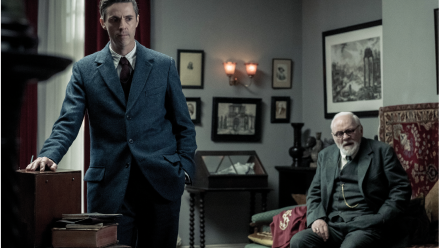
Andrew Haigh’s All of Us Strangers is an aching tale of grief, loss and loneliness starring Andrew Scott and Paul Mescal, so I probably don’t need to tell you the acting is off the scale but I will anyway: the acting is off the scale. Scott, in particular, infuses his character with such vulnerability that you’ll want to reach into the screen and comfort him. And while it does feature ghosts, don’t let that put you off. They’re the doable kind rather than the walking-through-walls, ‘wooOOO-wooOOO’ kind. (Huge relief all round.) Haigh makes complex, intimate, single-protagonist films (Weekend, 45 Years, Lean on Pete) and this is no exception.

Giselle is lovingly revived at the London Coliseum

Dance

Two archetypal ballet heroines have been facing each other across WC2: at the Coliseum, Giselle the blameless virgin, wronged in the first act, disembodied in the second; at Covent Garden, Manon the seductive, manipulative courtesan who can’t choose between love and money. Both in different ways are victims of a cruel world, and both must die. The men responsible for their downfall – of course – survive. Mary Skeaping’s staging of Giselle for the English National Ballet, first seen in 1971, divides opinion among the cognoscenti.

The man who got the West to fall in love with India’s sacred literature

Arts feature

The first European translation of the Bhagavad Gita, a dialogue between Prince Arjuna and Lord Krishna, appeared in English in 1785. Strangely, this classic of Indian spirituality, which is much concerned with liberation, was prefaced with talk of conquest, rightful dominion and chains of subjection. The translation had been produced under the auspices of the English East India Company, then in the process of claiming for itself ever-larger swaths of territory in India. The first edition incorporated a letter written by the governor-general in Calcutta, Warren Hastings, in which he compared the Gita with Homer and Milton.

Americans still think ‘punk rock’ was about the music, bless them

Pop

Of their many cultural quirks, Americans retain a slightly ridiculous and yet rather touching belief in the power of ‘punk rock’ (nobody in the UK ever calls it that, of course: it’s just ‘punk’). Despite laying claim to the progenitors of the whole punk thing – the Stooges, the New York Dolls, the Ramones – Americans still don’t quite seem to understand it. They actually think it was about the music, bless them. More bafflingly, they seem to regard ‘punk rock’ as something that has enduring currency, rather than being a brief – though significant – cultural phenomenon of the mid-to-late 1970s that was more or less over before it began. Americans still don’t seem to understand punk.

Modern, timeless, effortlessly avant-garde: Pasquarosa, at the Estorick Collection, reviewed

Exhibitions

In February 1929, an exhibition by a young unknown female painter opened at the Arlington Gallery on Bond Street. This was not surprising in itself, given that the gallery specialised in lesser-known artists. More surprising was the fact that this artist was a woman – and Italian. As the critic Emilio Cecchi noted in the catalogue: ‘As regards the best Italian art of today the English public knows very little.’ What piqued people’s interest in this particular Italian artist was her fascinating backstory. Born in 1896 in Anticoli Corrado, a small hill town northeast of Rome known as a nursery for artists’ models, Pasquarosa Marcelli had never painted and was virtually illiterate when she moved to the capital in 1912, aged 16, to work as a model.

Duff nonsense: The Enfield Haunting, at Ambassadors Theatre, reviewed

Theatre

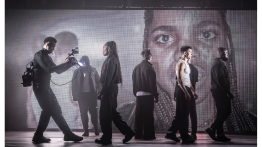
The Enfield Haunting is a good old-fashioned horror show that wants to be a documentary as well. It’s based on a hocus-pocus yarn that made the front page of the Daily Mirror in 1977 and was swiftly forgotten. The play opens in an Enfield terrace that resembles a bomb site, complete with charred plasterwork, missing walls and ripped out floorboards. Peggy, a harassed housewife played by Catherine Tate, is struggling to cope with three teenage brats and a ghost that’s got loose in her home. Two ghosts, in fact. Peggy’s daughter, Janet, has been possessed by a demonic spirit that forces her to rasp out nonsense in a hoarse, throaty gurgle, like that annoying girl from The Exorcist.

Everything hits the spot: Royal Opera’s Elektra reviewed

Opera

Aristotle wrote that classical tragedy should evoke pity and awe. With Richard Strauss’s Elektra, the awe can be taken as read: a certain irreducible level of epicness is written into the score, even if – like Sir Antonio Pappano on the first night of this new production at the Royal Opera – a conductor takes the composer’s advice and treats it like Mendelssohn’s ‘fairy music’. But I genuinely hadn’t expected quite so much of the other emotion – pity, or if you prefer, compassion.

Gladiators was never good TV

Television

I’m sure there’s a Portuguese word which describes ‘enforced nostalgia for a thing you never enjoyed in the first place’. Whatever it is, it applies in spades to BBC1’s reboot of Gladiators, which we’re now told was one of the landmarks of 1990s Saturday TV entertainment but which I don’t recall fondly one bit, despite having a child who would have been just the right age to enjoy it. What I do remember was the desperate contrivance of it all. The Fawn, I recall, was invited to go with our boy the Rat to write up a feature on the very first show and interview the stars. She came back traumatised.

Sincere, heartfelt, true: The Holdovers reviewed

Cinema

The first thing to say about Alexander Payne’s latest, The Holdovers, is that it’s not so much an inspirational teacher film as an uninspirational teacher film. You should know that before attending the cinema otherwise you might sit throughout in the brace position, fearing it could go all Dead Poets Society at any moment. It doesn’t. No one plunders Tennyson for motivational slogans even once. Instead, it feels sincere, heartfelt, true. You may even come away wishing  you’d had an uninspirational teacher when you were at school. The year is 1970 and it’s filmed as if it had been made in 1970 with static on the soundtrack, desaturated colours and retro titles.

The stars are aligned for Royal Opera’s tantalising new production of Elektra 

Arts feature

About 30 minutes before the end of Richard Strauss’s Elektra, the universe splits open. Elektra, daughter of the murdered king Agamemnon, lives for the day when her brother Orest will return to avenge her father by slaughtering her mother. Now Orest is here and his sister no longer recognises him. Until suddenly, shatteringly, she does, and Strauss’s 109-piece orchestra unleashes a dissonant scream unlike anything that had been heard in European music. Indeed, for many listeners in 1909 it was the end of music. Satirists compared it to capital punishment (one cartoon depicted a quaking victim of ‘Elektra-cution’). When it transferred to Covent Garden in 1910, newspapers promised London audiences ‘the most arduous score ever written’. It sold out.

Why has the BBC pulled its punches in this doc about the Indian super-rich?

Television

The big finish to Streets of Gold: Mumbai, an excited look at the city’s ‘wealthiest one-percenters’, was an extravagant party hosted by ‘two of India’s most coveted fashion designers’. As the programme made clear, all the guests were rich and/or famous, and all were dressed to prove it. ‘If you’re basic, you’re not invited,’ said one – which, given that the idea of the party was ‘to celebrate diversity in all its forms’ some documentaries might have considered a remark worthy of further investigation. But not Streets of Gold. As the previous hour had demonstrated, its chief characteristic – never a good one for a documentary – was a marked lack of curiosity.

The confusing, overwhelming, exhilarating music of Jockstrap

Pop

Shall we get the pop predictions for this year out of the way first? Taylor Swift will continue to conquer the world; the charts will continue their descent into meaninglessness; some long-forgotten group or style will become inexplicably popular because kids use it to soundtrack their TikTok videos. There. That’s the coming year taken care of. And how did the old one wrap up? With a week of gigs in the run-up to Christmas that was so overloaded it was impossible to get to them all. That still left plenty of treats, though, beginning with Jockstrap. The band was joined on stage by strings, a percussionist, a soprano, as well as someone on stilts dressed up as a monster straight from the props cupboard of Terry Nation-era Doctor Who.

Poor Things is weird and wonderful – but not so weird I had to Google it afterwards

Cinema

I’ve heard a few people say that, based on the trailer, Yorgos Lanthimos’s latest film, Poor Things, looks too weird for their tastes. To be honest, the trailer made me think this ‘gender-bending Frankenstein’, as it’s being sold, looked too weird for my tastes. But let’s be brave. It is Lanthimos after all (The Lobster, The Favourite), and it is the wonderful Emma Stone, whom we are always here for, so let’s not be too afraid. It is weird, no doubt. But it is the sort of weird we can do. And not so weird that I had to Google it afterwards. It has a simple narrative – a journey of self-discovery – that’s not a headscratcher at all. (I saw Studio Ghibli’s The Boy and the Heron over Christmas and I’ve been scratching my head ever since.

Donmar Warehouse declares war on Shakespeare

Theatre

Many of today’s theatre directors seem to believe that Shakespeare’s work was a huge mistake which they have a duty to correct. According to Max Webster, the director of Macbeth at the Donmar, Shakespeare’s error was to write scripts for the stage which would work better as radio plays. His amended version is set in a fake recording studio where every seat is equipped with a set of headphones. Spectators must test the gear first to ensure that the stereo effect is working. If not, contact a member of staff, etc. David Tennant, playing the lead, transforms himself from a nice friendly Time Lord into an irascible Scottish warlord. He’s a terrific light comedian but his mischievous off-beat style doesn’t suit the role of an earnest, bloodthirsty villain.