Culture

Culture

The good, the bad and the ugly in books, exhibitions, cinema, TV, dance, music, podcasts and theatre.

You’ll want to claw your face off: Scoop reviewed

Film

Scoop is a dramatised account of the events leading up to the BBC’s 2019 Newsnight interview with Prince Andrew. The one he imagined would allow him to put Jeffrey Epstein behind him, but instead put Pizza Express (Woking) on the map, made us want to claw our own faces off with the horror of it, and led to the Queen stripping him of all his royal and military titles. (I think you know you are in trouble with Mummy when this happens.) Although billed as a ‘film’, this isn’t especially cinematic. It’s more like a bonus episode of The Crown but it is phenomenally cast (Rufus Sewell is a revelation) and you do get to claw your own face off all over again. If, that is, you have any face left.

Wise, passionate and soul-stirringly withering: remembering the great Michael Tanner (1935-2024)

Michael Tanner, who died yesterday at the age of 88, lived two parallel lives. To many Spectator readers, he was the magazine's peerless opera critic: wise, passionate, thrillingly disputatious, intensely funny, extremely generous with the Semtex. Essential reading. He wrote The Spectator's weekly opera column from 1996 to 2014 and continued to review – and raze to the ground where necessary – concerts, books, albums and opera, whatever we flung at him, right up until 2022.  To countless others, however, he was one of the great philosophical scholars.

The quiet brilliance of street photographer Saul Leiter

Arts feature

This is the second exhibition of mid-century New York street photography at the MK Gallery in Milton Keynes. The first, in 2022, surveyed the work of Vivian Maier, who at her death left behind a vast quantity of prints and negatives: evidence of a hidden life unsuspected even by those in whose household she lived and worked for four decades. There are continuities between Maier and the subject of the current show, Saul Leiter. They were contemporaries, loners who lived into their eighties (Leiter died four years after Maier, in 2013), prolific but uninterested in recognition, their reputations largely posthumous. Leiter was born in 1923 in Pittsburgh, like Andy Warhol and, like Warhol, he got out.

Impressionism is 150 years old – this is the anniversary show to see

Exhibitions

The time that elapsed between the fall of the Paris Commune and the opening of the first proper impressionist exhibition amounted to less than three years. Over the course of that period, the city had witnessed the collapse of the Second Empire, suffered a siege at the hands of the Prussian army and seen vicious house-to-house fighting between the troops of the Versailles government and thescrappy citizen-army of Paris proper. All Parisians would recall the rivers of blood running down the city’s ritziest shopping streets, zoo animals being butchered for restaurant fodder, and the mass slaughter of rebel prisoners across the public squares of the city’s eastern faubourgs.

Choreographers! Enough with the reworkings of Carmen and Frankenstein!

Dance

Carmen and Frankenstein are without a doubt two of the most over-worked tropes in our culture, the myths of the evasively seductive gypsy and the human monster machine being lazily recycled and plundered and vulgarised in various forms to the point at which their authentic primal power has been altogether deflated. So it was with a heavy sigh that I anticipated their two latest danced iterations. No surprises were likely, and none were delivered.

Exhilarating: MJ the Musical reviewed

Theatre

If you’ve heard good reports about MJ the Musical, believe them all and multiply everything by a hundred. As a music-and-dance spectacular, the show is as exhilarating as any Jackson produced while he was alive. The sets, the costumes, the choreography and the live band deliver an amazing collective punch. When he removes his black trilby he looks like Rishi Sunak at a karaoke bar The script, by Lynn Nottage, takes us into Jackson’s twisted personal history. He was one of ten children raised in a four-room shack in Gary, Indiana, by weirdo parents. His mother was a Jehovah’s Witness who refused to celebrate birthdays or Christmas.

Dramatic, urgent and intriguing: BBC1’s This Town reviewed

Television

After conquering the world with Peaky Blinders (and before that by co-creating Who Wants to Be a Millionaire?), Steven Knight was last seen on British television giving us his frankly deranged adaptation of Great Expectations. Happily, he’s now returned to form with a show that, while not a retread exactly, is definitely Peaky-adjacent. In This Town we’re back in a Birmingham – this time in the 1980s – that’s rundown, riven, violent and soul-stifling, yet that Knight presents with unmistakable love. Nor, once again, is there any escaping the overwhelming power of the family as a blessing and a curse.

Compelling and somewhat heartbreaking: Girls State, on Apple TV+, reviewed

Television

Here’s a fun thought experiment: instead of entrusting the future of American democracy to one of two old men, what if you put it in the hands of 500 teenage girls? Girls State, the sister documentary to Amanda McBaine and Jesse Moss’s award-winning 2020 film Boys State, follows the events of a week-long civic engagement camp where high-schoolers create an all-female democracy from scratch. A feminist manifesto is much easier to compose than a real solution to culturally ingrained inequality Girls State and Boys State programmes have given argumentative American teens an education in the necessary evil of politics since the 1930s.

Clever, beautiful and sonically witty: Beyoncé’s Cowboy Carter album reviewed

The Listener

Grade: A+ Carter is a useful surname to have if you’re making a country album. So it is with Beyoncé: she married into the name when she got hitched to Jay-Z, but he is from New York, not Poor Valley, VA. Helps if you’re from Texas too – just to convince folks that this bit of genre-hopping is rooted in authenticity. It isn’t – but who cares? This is a clever, beautiful and sonically witty album. Country music’s conventions draw out of Beyoncé perhaps the most sublime melodies she has written, or part-written. There are cameos from Dolly Parton, half-forgotten black sharecropper’s daughter Linda Martell, Willie Nelson and the ghost of Chuck Berry, but – the last excepted – they don’t add much to this sprawling but magnificent double album.

Why Easter is the most rock and roll religious holiday 

Easter is by far the most rock and roll religious holiday. Christmas might be the time when the pop vultures circle, plucking from the bones of garish sentiment, but the wham-bam narrative mic-drops of Holy Week are of a different order. Easter has provided a dramatic template for every rock opera, concept album, heroic comeback and combustible band dynamic this side of the Chatterley trial and the first Beatles LP. ‘Jesus died for somebody’s sins, but not mine,’ runs the opening line on Patti Smith’s debut album, Horses. Maybe so, but she understood the innate power of this stuff. Smith’s second LP is called Easter, and it is replete with overtly Christian imagery.

Death of a choir

Classical

Always make your redundancy announcement when the people at the receiving end of it are on a high. This seems to be the favoured method of today’s managing executives, who perhaps imagine that adrenalin will somehow anaesthetise the blow of getting the sack. For the Cambridge student choir St John’s Voices, the news of its imminent disbanding and the redundancy of its director Graham Walker came just two minutes after the light was switched off at the end of a three-day recording session of Russian choral masterpieces last week. Does egalitarianism have to be promoted at the expense of up-and-running excellence?

Don’t tell them but the French didn’t in fact invent etiquette

Radio

When dining in France, it is considered rude to finish the bread before the main course has been served, and ruder still to slice the bread with a knife, lest the crumbs land in a lady’s décolletage. In China, you should never place your chopsticks upright in a bowl of rice, and in Bangladesh you may eat with your fingers, but should avoid getting sauce above the knuckles. If you are guilty of any of the above, may I direct you, politely, to a new documentary on the World Service. The programme takes aim at many outdated traditions (including those that resign women to the kitchen), but the conversation is far more informative than censorious and more eye-opening than dour.

If you hate the Irish, you’ll adore this play

Theatre

Faith Healer is a classic Oirish wrist-slasher about three sponging half-wits caught in a downward spiral of penury, booze, squalor, sexual repression, bad healthcare, murderous violence and non-stop drizzle. The mood of grinding despair never lets up for a second as the healer, Frank Hardy, along with his moaning wife and their Cockney sidekick, motors around the British Isles trying to cadge pennies from cripples in exchange for bogus cures. Every cliché in the rich thesaurus of Celtic misery is brought together in this rancid melodrama about mob justice.

Why do movies always have to bash the ‘burbs?

Cinema

Mothers’ Instinct is a psychological thriller starring Anne Hathaway and Jessica Chastain and it is one of those over-ripe, camp melodramas that, back in the day, would have almost certainly starred Joan Crawford and Bette Davis. Or Tippi Hedren and Kim Novak, if we are going to be Hitchcockian about it. Either way, it’s a face-off between two world-class actresses and while it throws plausibility to the winds at the end, it is a delicious ride. And I’ve saved the best news for last: it’s all done and dusted in 95 minutes. Not an ounce of fat here. It is directed by Benoît Delhomme and is a remake of Olivier Masset-Depasse’s 2018 French-language film which, in turn, is an adaptation of the novel by Barbara Abel.

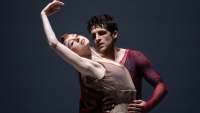
From the sublime to the ridiculous: Royal Ballet’s MacMillan triple bill reviewed

Dance

My feelings about the genius of Kenneth MacMillan have always been volatile, but in the course of the Royal Ballet’s current triple bill, they veered even more wildly than usual between uncomplicated delight, awed reverence and embarrassment. A revival of his early Danses Concertantes, firing off Stravinsky at his most effervescent and designed with exuberantly colourful Festival-of-Britain jazziness by Nicholas Georgiadis, provided half an hour of pure joy. Stylistically an exercise in the neoclassicism that dominated the postwar era, it’s witty, chic and upbeat, exploring sharp angles rather than smooth curves and lyrical lines. MacMillan’s choreographic invention is profligate, with little twists and unexpected turns, all infused with an infectious spirit of playfulness.

Fans of torture, dolly birds and fat lines of cocaine will love The Gentlemen

Television

Guy Ritchie only does one thing but he does it very well: slick, violent, sweary, black comedy capers about the unlikely intersection between toffs and the criminal underworld, invariably starring ex-footballer Vinnie Jones as a loveable tweed-wearing thug. If you were hoping for something different from The Gentlemen, prepare to be disappointed. If, on the other hand, you can never quite get enough of shotguns, stately homes, frantically crowbarred-in but still-quite-amusing one liners, rival gangsters, vast quantities of claret (in both vinous and sanguinary forms), torture, dolly birds, travellers, slightly annoying solecisms, fights, gambling and fat lines of cocaine, then this will be your cup of tea, guvnor, and no mistake, innit, what ho, old chap.

Think flute-playing Sir Keir will rescue opera? Look at Labour-run Wales

Opera

A tale of two opera companies from the Land of Song. After its distinctly gamey new Cosi fan tutte, Welsh National Opera has sprung dazzlingly back to form with a new production of Benajmin Britten’s final opera, Death in Venice. It’s directed by Olivia Fuchs, in collaboration with the circus artists of NoFit State, and in a word, it’s masterful. Fuchs’s Serenissima is a city of shadow, its landmarks glimpsed distantly in smudged, restless scraps of black and white film. The tourists and locals wear monochrome period dress; only Aschenbach (Mark Le Brocq) is in a noncommittal grey. The colour has drained from his world and from the peripheries of the stage he gazes, impotent, at the figures who dance and sport in the light, played by the acrobats and aerialists of NoFit State.

Why art biennales are (mostly) rubbish

Arts feature

Should you visit Malta this spring, you may notice something decidedly weird is afoot. Across the public squares of its capital, Valletta, performance artists are blocking busy thoroughfares and causing havoc on packed café terraces. The Hospitaller and British military forts that dominate the capital’s famous harbour, meanwhile, are full of dysfunctional installation work, while the curio-filled vitrines of local museums are forced to compete with video art. Even the Grandmaster’s Palace – for centuries the country’s seat of power – has accommodated several dozen mini-exhibitions on the theme of ‘the Matri-archive of the Mediterranean’.

An engrossing new two-hander about Benjamin Britten

Theatre

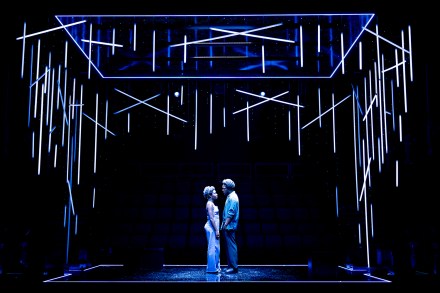
Ben and Imo are composer Benjamin Britten and his musical assistant, Imogen Holst. But those cosy pet names tell us where we stand – or at least, where we think we do. The illusion of being inside an artistic clique is at the heart of Mark Ravenhill’s new two-hander, which began life as a BBC radio drama and which he has now opened out into a two-act play about the pair. Alan Bennett did a Britten play a few years back but Ravenhill is sharper, and as directed by Erica Whyman, Ben and Imo just about supports its own length. His Benjamin Britten is bravura – neck stretching forward, then springing back, like a tortoise Which is more than can be said for its subject, Britten’s 1953 coronation opera Gloriana.

Dazzling: Harry Clarke, at the Ambassadors Theatre, reviewed

Theatre

Sheridan Smith’s new show is more a mystery than a musical. Opening Night is based on a 1977 film by John Cassavetes that failed to attract a major US distributor. After opening briefly in LA, it vanished without trace. It’s a backstage drama about a tattooed drunk, Myrtle, who accepts the lead role in a new play which she starts to dislike. Realising her error, she tries to improve the script at the rehearsals and during preview performances ahead of the opening on Broadway. In real life, an actor who sabotaged a show like this would be fired and replaced. But never mind. This is make-believe. Myrtle’s attempts to vandalise the script are opposed by the producer, the director and the writer, and they each moan to her in private about her behaviour.

How depressing when people over-identify with their ethnicity

Radio

I am a Jew. I live in a council estate in London where considerably more than half of my neighbours are Muslims. These people aren’t my friends, but we get along fine: I pick up their parcels; we coordinate complaints to the council about the strange, blue-tinged fluid that sometimes drips from everyone’s ceilings, as if someone in the penthouse had decided to fill their flat with jelly. Elsewhere, our distant cousins are doing terrible things to each other. It’s increasingly hard to imagine a world in which these distant cousins can live together, intermingled but mostly minding their own business – but that’s exactly what we do every day in London. Over the past six months I’ve started feeling extremely grateful for that.

Readers, I welled up! At a cartoon! Robot Dreams reviewed

Cinema

Robot Dreams is an animated film from the Spanish writer-director Pablo Berger and while it doesn’t have the production values of something by Pixar or Disney or DreamWorks, it will capture your heart. Sweet, charming, deeply moving.... Readers, I welled up! At a cartoon! This is something we need never speak of again. It is based on the graphic novel by Sara Varon and stars absolutely no one, as there are no voices to voice. There is sound but no dialogue, like Mr Bean, although the similarity ends there. It is set in the 1980s in a New York populated by anthropomorphic animals. Hail a taxi and your driver may be a Sikh elephant, or your FedEx delivery guy may be a bull, and look at this warthog washing his car while swinging his big old bottom to mambo music from the radio.

Insipid show of a weak painter: Angelica Kauffman, at the Royal Academy, reviewed

Exhibitions

Angelica Kauffman’s funeral in Rome in 1807 was designed by her friend Canova on the model of Raphael’s. The corpse of ‘the great Woman, the always illustrious holy and most pious… was accompanied to the Church by two very numerous Brotherhoods… followed by the rest of the Academicians & Virtuosi who carried in triumph two of her Pictures’. At the Royal Academy in London, the account of her obsequies was read out at the general assembly and entered in the minutes; as a founding member of the institution – one of only two women so honoured, with Mary Moser – Kauffman was gone, but not forgotten. Kauffman was a decorative artist at heart.

The joy of jump-scares in gaming

More from Arts

Grade: A- One thing videogames are surprisingly good at is scaring the willies out of you. Claustrophobia, unease, jump-scares, anxious-making camera-angles... Gamers of my generation will not have forgotten the spooky crackle of the Geiger counter in Silent Hill; nor needing fresh trousers after that dog jumps through the window in the first Resident Evil. The granddaddy of them all was Alone in the Dark – which, when it came out in 1992, essentially invented the survival horror genre. It sent you crawling through a spooky old mansion solving puzzles, fretting about your inventory and being jumped by sluggish monsters. Now a lavish and loving reboot stars B+-listers David Harbour and Jodie Comer. The former is grizzled PI Edward Carnby; the latter his employer Emily Hartwood.

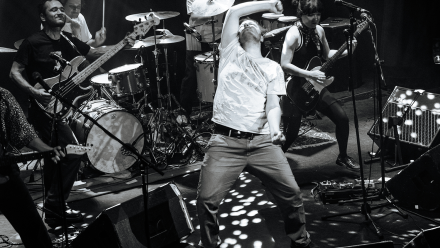
The horror of London’s music venues

Pop

There were headlines last month about the plight of live music in Britain. More than a third of grassroots venues are making a loss; more than 100 of them are ceasing to put on live music or closing altogether. Cue the stories about how, if it wasn’t for these broom cupboards giving musicians the opportunity to learn their trade, you’d never have got all those acts you know and love. All true, of course. We need small venues, and not just for the health of the music industry but for the simple pleasure of sipping a pint watching a young band in a small room. What use is a venue when a couple of hundred people can’t even see the stage? But dear God, the bigger venues that accommodate graduates of the grassroots circuit need to up their game, too.

Why architectural modernism was championed by the rulers and the ruled

Arts feature

My childhood in Hong Kong was shaped by a particular style of building: market halls with brise-soleils sheltering us from the glare; housing-block stairwells with perforated blockwork letting in dappled light and breeze; classrooms accessed from open-air decks, with clerestory windows cross-ventilating the stale, sticky air. In this sub-tropical ex-British colony, these features defined its mid-century municipal buildings. While the investment in public amenities has since been portrayed as ‘pacification’ to shore up consent for British rule, it also undeniably nurtured – in the wake of a ravaging Japanese occupation – the explosion of Hong Kong’s middle class. This included my parents, who were raised, schooled and housed in such postwar colonial architecture.