Culture

Culture

The good, the bad and the ugly in books, exhibitions, cinema, TV, dance, music, podcasts and theatre.

BBC1’s new Rebus is the kind of TV detective they just don’t make any more

Television

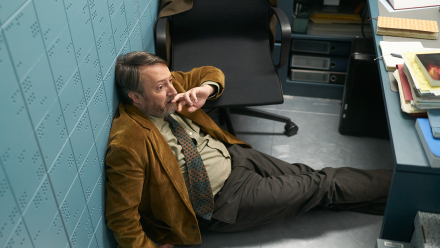
Imagine a new series of Morse in which the real-ale-quaffing, jag-driving opera buff is turned into a speed-snorting mod on a pimped up Lambretta. Or – this one I’d actually like to see – jeune Poirot, featuring a clean-shaven habitué of fin-de-siècle Brussels absinthe dives. This may give you an inkling as to how upset one or two Rebus fans are about the Edinburgh detective’s latest TV incarnation. Confusingly titled Rebus – as opposed to, say, Punk Rebus or Wee Rebussie – the series depicts a protagonist quite a bit younger than his former TV incarnations, grumpy, dishevelled Ken Stott and a mite-too-smooth John Hannah.

Bristol’s new concert hall is extremely fine

Classical

Bristol has a new concert hall, and it’s rather good. The transformation of the old Colston Hall into the Bristol Beacon has been reported as if it was simply a matter of upgrading and renaming. There were probably sound reasons for doing so, but in fact (and despite protests from the Twentieth Century Society) the postwar auditorium has been demolished outright and replaced with a wholly new orchestral hall designed on the best current principles: shoebox-shaped, with much use of wood and textured brick. Butterworth sears his melodies on to the eardrums. Isn’t it weird we still think of the Edwardians as inhibited? Acoustically, it’s extremely fine – not a glamorous sound, but a remarkably transparent one.

The weird, hypnotic world of Willie Nelson

Pop

Many years ago, I wrote a book about Willie Nelson. At its conclusion, I reached for an elegiac, valedictory tone. In 2006, when The Outlaw was published, Nelson was already 73, and it seemed plausible to suggest that one of the great American lives might be winding down. I pictured Nelson rolling off the road and into the sunset, his work on Earth more or less complete. Nelson embodies both sides of an increasingly divided nation; hippie and redneck, patriot and agitator Well, scratch that ending. Having recently turned 91, Nelson is still going strong.

Headed for the canon: Withnail and I, at the Birmingham Rep, reviewed

Theatre

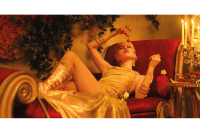
After nearly 40 years, Withnail has arrived on stage. Sean Foley directs Bruce Robinson’s adaptation, which starts with a live rock-band thumping out a few 1960s hits. The musicians take cameo roles as maids and coppers. The show needs a larger cast especially for the tea-room scene – ‘We want the finest wines available to humanity’ – which calls for a big crowd of crumbling old crocks. Never mind. The production would have thrilled diehard fans. As for newcomers, they would probably have been better to start with the film. This production of Withnail would have thrilled diehard fans – newcomers less so Robert Sheehan delivers a glitzy, karaoke version of Withnail which is all surface and very little inner torment.

The woman who revolutionised British fashion: Barbara Hulanicki interviewed

Arts feature

‘I was one of your original customers in Kensington Church Street,’ I tell the founder of Biba when we meet. ‘Are you coming to complain?’ she shoots back. At 87 and fresh off a flight from Miami, Barbara Hulanicki is as sharp as a tack. The designer was in London for the opening of The Biba Story, the Fashion and Textile Museum’s celebration of the revolution she accomplished in 1960s street fashion. Believe me, it was a revolution – I was there and yes, I remember. In fact I can summon a mental inventory of all the items of clothing I bought from Biba over its short life, from the lilac fit-and-flare mini-coat that was my first proud purchase in 1967 to the brown maxi-coat with the power shoulders and the shaggy fake-fur trim that was my last in 1972.

Gorgeous and deeply absorbing: Manor Lords reviewed

More from Arts

Grade: A ‘God games’, as they used to be called, have a storied history. SimCity, Civilisation and the excellently sadistic Dungeon Keeper have all been responsible for many a PhD thesis being delivered late. The Almighty seems to have smiled on the latest iteration of the genre. The product of a one-man-band independent developer, Greg Styczen, its current pre-release version scored a million downloads on the first day it was available. You can see why. It’s made with such care and love. You take the role of a medieval lord of the manor – choose a surly avatar and a coat of arms – who starts with a handful of peasant families in a tented encampment in a drizzly forest. Zoom down and watch them as they drag timber about with their mangy ox.

Nowhere near as miserable as I remember it: The Beatles – Let It Be reviewed

Television

Beatles lore has long held that the film Let It Be was a depressing portrait of the band falling apart. According to the same lore, that’s why Peter Jackson’s Get Back was such a revelation. Revisiting Michael Lindsay-Hogg’s footage of the group at work in January 1969, Jackson discovered there was far more joy around than anyone suspected – including the surviving Beatles. Yoko remains a darkly brooding presence (the revisionism that sees her as benign needs its own revision) All of which, it now turns out, only goes to prove the ever-reliable power of suggestion. I vaguely remember seeing Let It Be on TV in the 1970s, before it disappeared until last week – and finding it as miserable as I already knew everybody said it was. Except that it really isn’t.

Fawlty Towers – The Play is the best museum piece you’ll ever see

Theatre

Fawlty Towers at the Apollo may be the best museum piece you’ll ever see. A full-length play has been carved out of three episodes: ‘The Hotel Inspectors’, ‘The Germans’, and ‘Communication Problems’ in which the deaf guest, Mrs Richards, made a nuisance of herself by refusing to switch on her hearing aid in case the batteries ran out. For anyone who saw the sitcom in the 1970s, this is a pleasantly weird show. It’s like returning to a seaside funfair after half a century and finding all the rides unchanged and the staff more or less as you remember them. If Beckett had written family comedies he might have created something as amusing as this Paul Nicholas makes an even better Major than the Major. And his rich, fruity voice is an unexpected treat.

Meet the man who says improvisation is the key to Mozart

Classical

In August 1993, the pianist Robert Levin sat down in Walthamstow Assembly Rooms with the conductor Christopher Hogwood and the Academy of Ancient Music (AAM) to record the complete piano concertos of Wolfgang Amadeus Mozart. Mozart was big – the bicentenary celebrations of 1991 had made a global impact. And Hogwood and the AAM were big too. After their groundbreaking period-instrument Mozart symphony cycle a decade earlier, the 27 piano concertos seemed like a wholly achievable ambition. What could go wrong? ‘For Mozart’s contemporaries, what surpassed even his virtuosity was his ability to improvise’ Only, as it turned out, the entire classical record industry. The project was meant to take a decade but in 2000 the record label, Decca, lost its nerve and pulled the plug.

Predictable but has a certain French verve: Two Tickets to Greece reviewed

Cinema

Within the first five minutes of Two Tickets to Greece you know what it is and where it’s going. It’s based on what I call ‘the hate-love formula’ with its in-built guarantee: any two people who can’t stand each other at the outset of a film will have bonded by the end. In this instance it’s a womance featuring two middle-aged women who were inseparable at school but haven’t seen each other for 30 years. One is Blandine who, as an adult, is reserved and buttoned-up, while the other, Magalie, is – gulp – a ‘free spirit’. (Run, Blandine; run like the wind!) But while the film is predictable, it has a certain French verve, excellent performances and doesn’t take it out of you.

Lovely slice of Cosmic Scouse: Michael Head & the Red Elastic, at EartH, reviewed

Pop

One of the more bizarre but recurring tales about how the music of Liverpool has been shaped over these past 45 years concerns Courtney Love, the American musician famed, music aside, for being married to Kurt Cobain, and for being wildly unpredictable. This story claims the 17-year-old Love, who had travelled across the Atlantic to be near the bands she loved, introduced Liverpudlian musicians to LSD, setting in train a decades-long phenomenon known as ‘Cosmic Scouse’.

The brilliance of Beryl Cook

Arts feature

Nobody claims Beryl Cook was an artistic genius, least of all the artist herself. ‘I think my work lies somewhere between Donald McGill [the saucy postcard artist that George Orwell wrote so lyrically about] and Stanley Spencer,’ she once told me. ‘But I’m sorry to say I’m probably nearer McGill.’ She was, as ever, being modest. I actually think she’s nearer Spencer – and Hogarth, come to that. Cook’s paintings make us laugh but that doesn’t stop them from being art. (Few would say Shakespeare’s comedies are as profound as his tragedies, but they’re brilliant creations, nevertheless.) Though Victoria Wood dubbed her work ‘Rubens with jokes’, there aren’t actually any jokes in her pictures; they’re all direct observations, not double entendres.

A gripping podcast about America’s obsession with guns

Radio

The love affair between so many Americans and their guns – long a source of international fascination – appears to be getting more painfully intense. The greater the publicity over gun crime, the more Americans think they’d better acquire a firearm to keep themselves safe. There are now roughly 400 million guns in the US – but most citizens feel more unsafe than ever, and with some justification. Last year featured both the highest level of gun ownership in US history and the highest recorded number of mass shootings. This really is one to listen to in bed, in the pitch dark – even better, pretend you’re in a couchette ‘How did we get here, and how do we get ourselves out?

Yunchan Lim’s Chopin isn’t as good as his Liszt or Rach

The Listener

Grade: B- In 2022 the South Korean pianist Yunchan Lim became, at 18, the youngest winner of the Van Cliburn competition, displaying a virtuosity that stunned the judges. You could see conductor Marin Alsop’s astonishment as he bounded through the finale of Rach 3, combining accuracy and swirling fantasy at daredevil speed. It’s been viewed nearly 15 million times on YouTube. In truth, though, he’d have had to screw up badly not to win, because he’d already dispatched Liszt’s fiendish Transcendental Études with perfect articulation and mercurial wit; in places he out-dazzled even the current master of this repertoire, Daniil Trifonov. Decca snapped him up and here’s his first studio album: both sets of Chopin’s Études.

Fascinating insight into the mind of Michelangelo

Exhibitions

You’re pushing 60 and an important patron asks you to repeat an artistic feat you accomplished in your thirties. There’s nothing more daunting than having to compete with your younger self, but the patron is the Pope. How can you say no? Besides, it’s an excuse to get away from Florence, where your work for the republicans who expelled the Medici has become an embarrassment since their return. So you tell Pope Clement VII that, yes, you will move to Rome and paint a Last Judgment on the altar wall of the Sistine Chapel.

Dense, melancholic, hypnotic: Brighde Chaimbeul, at Summerhall, reviewed

Pop

The hip end of the folk spectrum is in rude health right now. Dublin’s mighty Lankum lead the way, but plenty of other interesting artists are following in their wake, Brighde Chaimbeul among them. If a Gaelic-speaking trad musician from Skye reinterpreting Philip Glass for the small pipes sounds like your thing – and why on earth wouldn’t it? – then Chaimbeul is worthy of exploration. At 17 she won the BBC Radio 2 Young Folk Award. Her 2019 debut, The Reeling, released via Rough Trade, cross-pollinated traditional with experimental electronic music. More recently, and still in her early twenties, she has collaborated with American avant-garde saxophonist Colin Stetson on the album Carry Them With Us.

Minority Report is superficial pap – why on earth stage it?

Theatre

Minority Report is a plodding bit of sci-fi based on a Steven Spielberg movie made more than two decades ago. The setting is London, 2050, and every citizen has been implanted with an undetectably tiny neuroscanner which informs the cops about crimes before they’ve been committed. However, as the first scene reveals, the undetectably tiny neuroscanner can be removed from the flesh with a corkscrew. The character who gouges out her tag is a computer geek, Julia, who invented the surveillance method in the first place. She stands accused of planning a murder and she goes on the run to clear her name. The actors appear to be trapped inside a tangerine lunchbox Sound familiar?

Why did C.J. Sansom approve this moronic Disney+ Shardlake adaptation?

Television

What would C.J. Sansom have made of the Disney+ version of his novel series about 16th-century crookback lawyer Matthew Shardlake? Sadly, because he died just a few days before its release, we’ll probably never hear the full story. But this comment from the show’s producer offers a hefty clue: ‘Chris [Sansom] has been enormously generous and he wants more people to read the books, and this is such a good way.’ Sounds very much like Sansom accepted this atrocity of an adaptation as a necessary evil: his books had been stuck in development hell for nearly two decades (possibly, because his labyrinthine whodunits about monastic reform and court politics in Henry VIII’s England were considered a bit niche for mass audiences) and, in the end, he simply capitulated to moronitude.

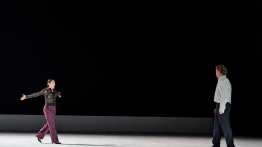
There are passages of considerable eloquence in Royal Ballet’s The Winter’s Tale

Dance

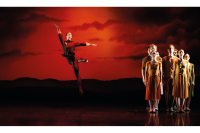
There’s no escaping Christopher Wheeldon – a modest, amiable fellow from Yeovil of whom anyone’s mum would be proud. Reaching outside the ballet bubble, his stagings of An American in Paris and the Michael Jackson musical have wowed the West End, Broadway and beyond. My guess is that his take on Oscar Wilde, to be premiered in Australia later this year, will soon travel north, too. Next season the Royal Ballet will revive his box-office smash Alice’s Adventures in Wonderland as well as a programme drawn from his plentiful short pieces. Two summers ago, he presented us with an adaptation of the novel Like Water for Chocolate (not so tasty). And if that wasn’t enough, here is a revival of his version of The Winter’s Tale, first seen a decade ago.

Wonderfully special: La chimera reviewed

Cinema

La chimera, which, as in English, means something like ‘the unrealisable dream’, is the latest film from Italian writer/director Alice Rohrwacher (The Wonders, Happy as Lazzaro). Her films are arthouse, in the sense that if you’re in the mood for someone blowing stuff up and escaping by speedboat while enjoying flirtatious repartee with a sexy lady, this probably won’t cut it. But if you’re in the mood for something original and woozy and riotous and wonderfully special, you will be able to fill your boots. Arthur has a kind of superpower that enables him to locate buried loot just by coming over funny It is set in Italy in the 1980s and stars Josh O’Connor as Arthur. Arthur is a tombarolo.

It’s time to free art from being ‘interactive’ and ‘immersive’

Arts feature

The American artist and critic Brad Troemel once pointed out that art galleries have all turned into a kind of adult daycare, and ever since then I haven’t been able to visit a gallery without noticing it. Nearly two decades ago, Carsten Höller installed a set of big aluminium slides in the Turbine Hall at Tate Modern, and they were undeniably good fun because going down slides is fun. It’s also fun, although maybe for a different type of person, to ask if going down slides counts as art. These days, though, you can hardly move for this stuff. The world is already interactive. You walk around in it. You can steal things from shops Last summer the Turbine Hall hosted a set of giant building blocks by Rasheed Araeen.

Fat White Family’s new album is much, much better than I had feared

The Listener

Grade: A- The irresistibly catchy – if you are not quite right in the head – ‘Touch The Leather’ was probably my favourite single of the previous decade, aided by a video which was simultaneously marvellously seedy, threatening and infantile. ‘Left-wing skin on the right-wing leather – touch the leather leather…’ Well it did it for me, and so I set great stock by these scrofulous squat-dwelling skaggies from Brixton, until with every subsequent dim-witted release the notion began to embed itself that they weren’t, actually, very good. ‘Touch The Leather’ was maybe just one of those glorious singular flukes you find in pop music by performers who aren’t really up to much. I might have to revise that opinion a little.

How can anyone resist The Piano?

Television

One challenge facing any novel, drama or film about the Holocaust is to restore its sheer unimaginability. In Thomas Keneally’s Schindler’s Ark – filmed, of course, as Schindler’s List – when news reaches Krakow of what’s happening in Auschwitz, Keneally pauses for some editorialising. ‘To write these things now,’ he says, ‘is to state the commonplaces of history. But to find them out in 1942… was to suffer a fundamental shock, a derangement in that area of the brain in which stable ideas about humankind and its possibilities are kept.’ The Piano shamelessly seeks to move us – and shamelessly succeeds In The Tattooist of Auschwitz, the same fundamental shock is more gradual.

An exquisitely funny sitcom that should be on the BBC

Theatre

Agathe by Angela J. Davis follows the early phases of the Rwanda genocide 30 years ago. The subject, Agathe Uwilingiyimana, became prime minister on 18 July 1993 but her tenure ended abruptly when she was assassinated by a rioting mob which surrounded the UN compound where she was sheltering on 7 April 1994. She saved her children, according to some accounts, by sacrificing her own life. This is a rough-and-ready play that tells the story impressionistically through monologues, rap lyrics, news broadcasts and reconstructed scenes at the UN headquarters. It doesn’t pretend to offer a full historical account but it generates a horrible mood of impending doom.

Kandinsky is the star of Tate’s expressionist show

Exhibitions

‘We invented the name Blaue Reiter whilst sitting around a coffee table in Marc’s garden at Sindelsdorf… we both loved blue, Marc liked horses and I liked riders, so the name came of its own accord.’ Christened so casually by Wassily Kandinsky and Franz Marc in 1911, the Blue Rider was always more of an idea than an art society, but the Tate Modern’s new exhibition – the first in the UK since 1960 – makes it sound more contemporary by describing it as a transnational collective.

Adrianne Lenker is a treasure for the ages 

Pop

You could very well sum up their differing approaches to American roots music from how they were dressed. Both wore cowboy hats and both wore trousers, but Adrianne Lenker’s were faded denim, while Lainey Wilson went with shiny brown leather. Lenker, looking austere and speaking and singing softly, played music plucked from eternity, demanding you concentrate on her stillness. Wilson, on the other hand, was here to make the crowd feel good; a little melancholy on the big ballads, sure, but she’s an entertainer in the grand tradition of country music.