Culture

Culture

The good, the bad and the ugly in books, exhibitions, cinema, TV, dance, music, podcasts and theatre.

A New York Day

Take 35,000 photographs, apply some tilt-shift fancyness and time-lapse brilliance and, hey presto, Sam O'Hare has this groovy film of a day in the life of New York City as seen in, well, miniature. Worth a few minutes of your Friday time and best viewed in full-screen mode: The Sandpit from Sam O'Hare on Vimeo. [Thanks to JPM for the tip.

Stop the BBC’s racism

I saw the BBC’s Crimewatch programme last night and was, as ever,  sickened by its inherent racism. It has reached a point where something really ought to be done: perhaps, like my colleague Charles Moore, I should withhold my license fee until they get with the programme, as the Americans like to say. As usual they had some dapper copper pointing to a board of miscreants whom the police cannot find, presumably because they are overwhelmed with paperwork or sorting out imaginary hate crimes; the public is requested to dob them in. Of the ten faces on this rogue’s gallery, accused largely of violent crimes, eight were non-white.

Stick to making your schmaltzy films, Mr Curtis

Features

Richard Curtis’s films — rose-tinted, upper-middle-class parodies of modern Britain — are bad enough, says Stephen Pollard. But his politics are even worse There are few film-makers whose name instantly conjures up a style, an atmosphere, a set of recognisable characters, even a plot. Richard Curtis is one of them. From Four Weddings and a Funeral and Notting Hill to Love Actually and Bridget Jones’s Diary, the label ‘Richard Curtis’ on a film tells you straightaway pretty much all you need to know. For myself, I’d rather boil my eyeballs than spend another second of my life being sucked in to his film-making-by-numbers Disney-Britain.

In Arcadia

More from Arts

Last year, within the space of five weeks before Christmas, I lost two friends who had illumined the world for me and made it a more enlivening place. Both were artists, both were in their eighties and both were determined individualists who recognised each other’s work without being in any way close allies. John Craxton was the first to die, in hospital on 17 November after a short illness. Just over a month later, Craigie Aitchison dropped dead of a heart attack. I hope to write about Aitchison when some of his distinctive work on the theme of the Crucifixion is on show. This is a tribute to John Craxton.

Losing streak

More from Arts

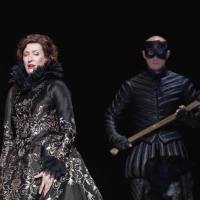
Prokofiev’s opera The Gambler adapts Dostoevsky’s novella of the same name, an audacious enterprise. Prokofiev’s opera The Gambler adapts Dostoevsky’s novella of the same name, an audacious enterprise. Unfortunately, it fails, as I think all the composer’s operas do, apart perhaps from The Love for Three Oranges, and mainly because he gives no evidence of interest in individual human beings, and hence of the musical means which he might develop to express their individuality. War and Peace is Prokofiev’s most spectacular failure in that respect, but the war scenes do something to salvage it. There are no compensations in The Gambler, so what is quite a short opera, a bit more than two hours, comes across as a long, stagnant one.

Pale imitation

More from Arts

11 and 12 Barbican, until 27 February A Life In Three Acts: Bette Bourne and Mark Ravenhill Soho, until 27 February Peter Brook, the world’s most maddening theatre director, returns to London with an adaptation of a novel set in the French colony of Mali in west Africa. Brook is never as bad as his critics hope nor as good as his fans dream. So he always disappoints somebody. 11 and 12 tells of a schism within an oppressed Muslim sect. Some worshippers recite 11 verses of a certain prayer, others 12. The tiff intensifies and the French authorities order a crackdown. This dispute neatly encapsulates the seismic pettiness of religious controversies but the bust-up isn’t pursued very far.

Death in the afternoon

More from Arts

After weeks of waiting, it was all over in a matter of seconds. Weeks in which I’ve listened to every episode, just in case. Weeks of enduring night after night the awe-inspiringly-dull Annette and Helen saga. Weeks of wondering how The Archers’ scriptwriters would cope with the death last October of Norman Painting, the actor described as ‘the lynchpin’ of the longest-running radio soap. Would they try to replace him, or simply do away with his character, Phil Archer? Then, when it came, we were given so much advance warning it was as if Health & Safety had visited BH and told the Controller: there’s to be nothing sudden, or too frightful.

Missing Maggie

More from Arts

The closer we get to the Great Disappointment — aka the forthcoming Heath administration — the more I miss Margaret Thatcher. The closer we get to the Great Disappointment — aka the forthcoming Heath administration — the more I miss Margaret Thatcher. Just how much I was reminded by Michael Cockerell’s new series The Great Offices of State (BBC4, Thursday). This particular episode was about Surrender Monkey Central — aka the Foreign Office — and featured Maggie in her pomp, eyes ablaze, holding forth on the only way to deal with jumped-up foreigners like Galtieri. ‘I’m not in the business of appeasement. It is not part of my psyche!’ she declared. ‘You can’t negotiate away an invasion!’ she said.

Cruising along

More from Arts

Taxi touts outside greeted me with a hopeful ‘Bula’. Mynah birds squabbled in the jacarandas and teenagers on the nearby parkland were throwing long passes with a rugby ball. Not quite your average UK betting-shop setting, but this was the Fiji branch of Grants Waterhouse. I had stepped in seeking a little inspiration for the talk I was to deliver the next day to the Cunard liner Queen Victoria’s passengers on the joys of horse-racing. (It’s a tough assignment, but somebody has to do it.) And, given Mrs Oakley’s developing taste on board for Pina Coladas and White Ladies, a little profit would have done no harm.

The Russian connection

Arts feature

Marianne Gray talks to Helen Mirren about her latest film, for which she’s had an Oscar nomination The first time I met Helen Mirren was at the Berlin Film Festival in 1985 when she was playing a Russian cosmonaut called Tanya Kirbuk in Peter Hyams’s space epic 2010. She laughed about having to learn Russian phonetically so she could say ‘roll the condensers’ and ‘send up the pod’ with an authentic Moscow accent.

An actor from the age of elegance

Features

I don’t think I have ever been so nervous before a telephone call. I had written to Ian Carmichael, via his agent, to ask if I could interview him for an article I was writing on the late Dennis Price, who had played Jeeves to Carmichael’s Bertie Wooster in the 1960s BBC series The World of Wooster. Carmichael had written back to say that he’d ‘try to oblige’ if I telephoned him at his North Yorkshire home. ‘I don’t think I’ll be very much help,’ he added. ‘Dennis was a very private man.’ Hardly encouraging. I was nervous because Carmichael, like Price, was a hero of mine.

Feasts of colour

More from Arts

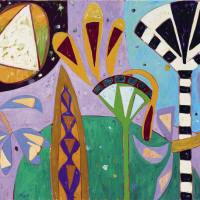
Gillian Ayres at 80 Alan Cristea Gallery, 31 & 34 Cork Street, W1, until 13 March Claude Monet Helly Nahmad Gallery, 2 Cork Street, W1, until 26 February Birthday greetings are in order for Gillian Ayres, who has just celebrated her 80th with an exhibition of new work of undiminished vigour, inventiveness and sheer uplift. One of our leading abstract artists, Ayres manages to keep on surprising us with large-scale paintings of superabundant vitality despite her own poor health, and with images of pronounced joy. However, her work is not all high spirits. The celebration of colour which distinguishes it is made with the full and certain knowledge of personal extinction (though may that moment be long delayed).

Good year for the obsessive

More from Arts

This may seem a little late to be talking about albums of the year. You might even ask, which year? and with reason. (I have already read three times that beloved cliché of January album reviews: ‘early contender for album of the year’.) But everything is so cheap at the moment, and Amazon knows we cannot resist its blandishments for long, having emailed me twice with special offers since I started writing this piece. Happily, it has been another good year for the music obsessive: there is just so much out there that begs your attention. As always, this is a strictly subjective selection, limited by my budget and very particular tastes, which I’m aware aren’t everyone’s.

Family values | 13 February 2010

More from Arts

Lucia di Lammermoor English National Opera, in rep until 26 February When David Alden’s production of Donizetti’s Lucia di Lammermoor was first staged by ENO two years ago it was so beset by cast illnesses that it was difficult to tell to what extent the director’s intentions were executed. Even so, the musical side of things, under Paul Daniel, was admirable.

Past perfect

More from Arts

Last week I had the pleasure of lunching with Michael Medwin, who is the only surviving member of the cast of The Army Game (ITV, 1957–61). Last week I had the pleasure of lunching with Michael Medwin, who is the only surviving member of the cast of The Army Game (ITV, 1957–61). He is 86 now, but amazingly sharp and chipper, still an active and successful impresario. He is anxious that the show is not forgotten, because in its day — shortly after the start of ITV — it was the most popular programme on television.

Caveat emptor

More from Arts

A weekly airdrop of Exchange & Mart was the luxury I used to think I’d choose when the producers of Desert Island Discs realised who they’d been missing all these years. A weekly airdrop of Exchange & Mart was the luxury I used to think I’d choose when the producers of Desert Island Discs realised who they’d been missing all these years. But now, I fear, it would be access to eBay, that wonderful source of 24-hour auto-porn, plus everything else. Just to browse — I’d have nothing to bid with, of course, though that needn’t stop me. Wonderful though eBay is, it should be negotiated with care.

‘If he couldn’t paint, he couldn’t live’

Arts feature

Ariane Bankes talks to the widow of Arshile Gorky, whose retrospective is about to open at Tate Mougouch Fielding opens the door to me looking a little gaunt but as beautiful as ever, though I have not seen her for a couple of years. She is in her late eighties, but no less stylish now than when we knew her as children; we were mesmerised by her chic, her gravelly voice with its hint of an American accent, her sense of fun and the faint whiff of excitement that enveloped her. When she was about 17, my father, then working in China, helped her ashore from a capsized sailing dinghy and fell in love with her on the spot. She was then Agnes Magruder, daughter of a captain in the American Navy stationed off Shanghai, and her youthful romance with my father evolved into a lifelong friendship.

Game without frontiers

More from Arts

Invictus, 12A Nationwide Gosh, Clint Eastwood will keep thinking of new ways to impress us, the cheeky little monkey. First it was the Dirty Harry and the spaghetti western characters and then he shifted to the director’s chair and ever since it’s been one different thing after another: Unforgiven; Mystic River; Million Dollar Baby; Flags of Our Fathers; Letters from Iwo Jima; Changeling and now Invictus, which tells the story of South Africa coming together for the 1995 rugby world cup. This is not a nuanced film, or even a sophisticated one. It has a story to tell and unapologetically tells it, often quite cheesily, Richard Attenborough-style.

Island inspiration

More from Arts

Chris Ofili Tate Britain, until 16 May There’s always something temporary-looking about an installation of Chris Ofili’s early paintings. These works are not hanging on the wall, but lean against it, propped up on feet of elephant dung — the best-known ingredient of this Turner Prize-winning artist’s work. As a consequence, the exhibition looks as if it’s still in the process of being hung, and these elaborately decorated and largely trivial paintings have yet to be hoisted on to the gallery walls.

Blunt instrument

More from Arts

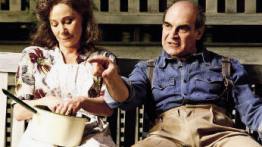
Enron Noël Coward Fool for Love Riverside With Enron, the playwright Lucy Prebble has picked an almighty task. The Texas fuel giant collapsed in 2000 with $30 billion worth of debt, which at the time was the largest bankruptcy in the history of money. The firm’s bosses flipped through the almanac of bent accountancy and lighted on a hoary old swindle. A shadow company was created to buy up their loss-making assets thus boosting profit margins and forcing the stock price skywards. To get the auditors to sign off the paperwork Enron simply bribed them. Anyone hoping to find any ingenuity or sophisticated elegance in the fraud will be disappointed. Money is a very blunt instrument in this play. So is the writer’s technique.

Anything goes | 6 February 2010

More from Arts

God and the editor willing, next month’s column will be the 100th ‘Olden but golden’. God and the editor willing, next month’s column will be the 100th ‘Olden but golden’. For those who write in The Spectator every week, this would doubtless seem small beer. For a monthly column it feels like a landmark and one I sometimes doubted I would reach. And of course I may not.... As any journalist will tell you, every piece you write has the potential to be your last. ‘Olden but golden’ began in October 2001, and I was pleased as Punch to be allowed to do it. Pop music has been a big part of my life since 1963, when I was eight and first discovered the Beatles.

Displaced families

More from Arts

Imagine, if you will, that it’s 1922 and you’re living in a small mountain village thousands of miles from Istanbul above the shores of the Black Sea. Imagine, if you will, that it’s 1922 and you’re living in a small mountain village thousands of miles from Istanbul above the shores of the Black Sea. You’re a practising Christian, and there’s a tumble-down cruciform church in the central square, with an icon of the Virgin hanging above the altar. Life until now has been ruled by the Ottoman Turks, but you speak a version of Greek handed down from the days when this part of Asia Minor was ruled by the emperors of Byzantium based in Constantinople.

Broken Britain

More from Arts

I’ve got another brilliant idea for a TV series. I’ve got another brilliant idea for a TV series. It’s called MPs Walled Up in Scorpion-Filled, Ebola-Ridden, Plague-Rat-Infested, Acid-Drenched, Radioactive Tower Block of Slow Hellish Screaming Death. All right, so the title does give away the premise, slightly, but I’d still watch it, wouldn’t you? 24/7. Done right — with special feature-length episodes devoted to Ed Balls, Harriet Harman, and the Milibands — I reckon it would be more satisfying than Band of Brothers, The Sopranos, Das Boot, South Park, The Simpsons and University Challenge rolled into one. And from me, that’s quite an accolade.

The Problem with Mo

David enjoyed the Mo Mowlam biopic Channel 4 showed on Sunday; I wish I could say the same but am not surprised that I can't. (You can watch it here, incidentally.) Yes, Julie Walters was just as excellent as one imagined her to be and, yes, it's carping to complain about what wasn't in the film (though an acknowledgement that the Peace Process didn't start on May 2nd 1997 would have been usefu) and it can't be terribly surprising that the movie gives the impression that the Peace Process was somehow Mowlam's own possession. Despite that I thought the film was, in terms of the politics of the matter, quietly devastating.