Culture

Culture

The good, the bad and the ugly in books, exhibitions, cinema, TV, dance, music, podcasts and theatre.

Beyond our ken

More from Arts

It seems only right to tune in to programmes about Belief in the week leading up to Easter Day, the holiest day in the Christian calendar. Whether or not you have faith, there’s some point in reflecting on matters of conscience once a year, if only to give your inner self an annual spiritual check-up. It’s a chance to pause and reflect on matters other than the bank balance, the state of the garden, or that irritating person who’s blighting your life at work. For her late-night Radio 3 series this week, Joan Bakewell has been talking to a Catholic, a Muslim, a Druid, an atheist and an Anglican Bishop.

Trouble upriver

More from Arts

Three reasons why I hardly ever review TV drama: 1) the length, 2) the politics, 3) sheer bloody laziness. I suppose the last one is the main reason but the others aren’t just excuses. It really is too depressing when, three hours into one of those Sunday and Monday two-part dramas, you suddenly realise that you’ve already wasted one evening and you’re about to waste another, but that you can’t bail out now because you’re in too deep — and what if something good and exciting suddenly happens? Almost all TV drama is too long and the reason for this is that the more screen hours you fill the bigger your commissioning budget.

Sunday Afternoon Country: The Flatlanders

Their 1970s album was called More a Legend than a Band and that was about right since it and they disappeared for 20 years. Happily the Flatlanders returned and continue to amaze with their groovy, mildly mystical brand of Texas country.

Round the galleries

Arts feature

I admire J.G. Ballard, who died last year, but much of his writing leaves me cold — as if abandoned in one of the lunar jungles or deserts that Max Ernst’s paintings so often depict. I admire J.G. Ballard, who died last year, but much of his writing leaves me cold — as if abandoned in one of the lunar jungles or deserts that Max Ernst’s paintings so often depict. It’s a deep chill of the psyche, a numbing of the human warmth that makes life bearable, and Ballard rightly identified it as taking over our culture. He wasn’t really a science fiction writer so much as a social commentator, dissecting our present dystopia — a remarkable and original voice, unafraid to describe the dark psychopathology of the human race, however ominous his predictions.

View from a room

More from Arts

Without from Within Djanogly Art Gallery, Nottingham, until 3 May In 1935 Magritte painted a picture called ‘La Condition Humaine’ showing a mountain landscape seen from inside a cave. In the mouth of the cave an easel with a see-through canvas perfectly frames the view of a distant castle, while a fire burning inside reminds us of Plato’s famous allegory of human knowledge, comparing us to prisoners in a cave whose only perception of reality is based on shadows thrown by firelight on the walls. Painting, Magritte implies, is similarly partial (although presumably an advance on shadows for a cave-dweller).

Gothic dream

More from Arts

Horace Walpole’s Strawberry Hill Victoria & Albert Museum, until 4 July ‘I waked one morning at the beginning of last June from a dream, of which all I could recover was that I had thought myself in an ancient castle (a very natural dream for a head filled like mine with Gothic story) and that on the uppermost banister of a great staircase I saw a gigantic hand in armour. In the evening I sat down and began to write without knowing in the least what I intended to say or relate.’  Thus Horace Walpole related the origin of the first ‘Gothic’ novel, The Castle of Otranto, published in 1765.

The hard sell

More from Arts

For all the billion-dollar turnovers and glamorous, high-profile sales in New York, London, Hong Kong and Paris, the top level of fine-art auctioneering is a notoriously high-overhead, low-profit business. At times, it is even a no-profit business (Sotheby’s made a loss last year). How the Big Two auction houses have grappled to respond to this uncomfortable fact has shaped recent saleroom history. First came collusion and price-fixing, which resulted in damaging — in every sense of the word — antitrust litigation in the US, and then brave but initially unsuccessful attempts to harness the internet revolution, with sothebys.com.

Sentimental journey

More from Arts

The Blind Side 12A, Nationwide The Blind Side — or ‘The Blahnd Sahd’, as they would say in Tennessee — is so ghastly and annoying and creepy I implore you to steer well clear. I know, I know, it’s based on a true story, Sandra Bullock won an Oscar for her performance, and it’s already made $265 million at the US box office, so why should you listen to me? No reason. No reason at all. Mostly, I don’t listen to me and I am me! But I do think you should know this: beneath the swelling music and push-button, Hallmark-style sentimentality, this film is basically about a rich, white, pleased-with-itself family who drag around a poor black boy as if he were some kind of sad old circus bear.

Missing spark

More from Arts

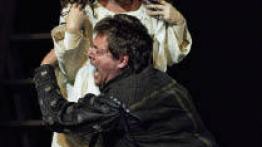
Katya Kabanova ENO, in rep until 27 March Katya Kabanova is Janacek’s grimmest opera, perhaps the grimmest opera ever written, but it is flooded with radiant music, which is decisively stamped out in the last few moments. With Katya having drowned herself, and the happy young lovers Kudrjas and Varvara having taken their most unChekhovian leave for Moscow, what hope is there for this community, whose senior figure, the Kabanicha, sees Katya’s suicide as the vindication of her moral stance?

Losing the plot

More from Arts

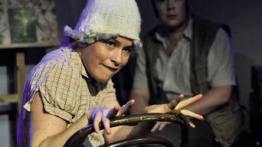
The Sanctuary Lamp Arcola, until 3 April Eigengrau Bush, until 10 April Furore fever still obsesses Irish playwrights. In Edwardian times there was nothing like a good old riot at the Abbey Theatre to get a new work established as a classic. Luvvie lore is replete with tales of mass walkouts and punch-ups at Dublin premières where the fisticuffs invariably end with the house being stormed by Sinn Fein while W.B. Yeats leaps on to the stage to appeal for calm and the Polish ambassador gets stabbed with a hat pin. Tom Murphy’s 1975 drama, The Sanctuary Lamp, seeks the rowdy affirmation of this tradition.

Sweet and sour

More from Arts

Lewis Carroll invented the word ‘mimsy’, probably soldering it from ‘miserable’ and ‘flimsy’. Lewis Carroll invented the word ‘mimsy’, probably soldering it from ‘miserable’ and ‘flimsy’. Since then mimsy has taken on a separate life. Chambers defines it as ‘prim, demure, prudish’ and Oxford as ‘feeble and prim’, though I think modern usage would imply a certain self-conscious prettiness, like sprigged pillowcases, tiny pens with floral designs and anything by Cath Kidston. Anyhow, The Delicious Miss Dahl (BBC2, Tuesday) was mimsy from the opening credits — all spindly drawings in pastel colours.

Straight talking

More from Arts

I had to rush into the house from the car so as not to miss a word. Two virologists were talking with Sue MacGregor about their favourite books on last week’s A Good Read (Tuesday, Radio 4), and came up with such unusual choices and spoke with such matter-of-fact appreciation, so different from the usual literary fare, that it made me want to read all their choices immediately. It was an inspired decision by Sue and her producer (Jolyon Jenkins) to invite not just one but two science professors on to the programme in the same week; like giving an Alka-Seltzer to an old favourite after it’s ingested just one too many finely crafted novels.

Digging the dirt

More from Arts

News that the government is setting up a ‘land bank’ of brownfield sites, consisting of bits and pieces of spare or disused land, and encouraging councils and private landowners to lease these out to local groups as allotments, underscores the impression of a national appetite for ‘growing your own’. News that the government is setting up a ‘land bank’ of brownfield sites, consisting of bits and pieces of spare or disused land, and encouraging councils and private landowners to lease these out to local groups as allotments, underscores the impression of a national appetite for ‘growing your own’.

A diet of unrelenting mush

Arts feature

Ben West on the decline in quality of regional theatre; he fears it can only get worse We may have been languishing for months in the worst recession for decades, but theatre appears to be booming. West End theatres enjoyed a record £500 million in ticket sales in 2009, with audience figures exceeding 14 million for the first time. Attendance for straight plays was up 26 per cent on 2008, at 3.6 million. The many hits have included Ian McKellen and Patrick Stewart’s Waiting for Godot, the National Theatre’s War Horse, and Enron and Jerusalem, which both transferred from the Royal Court to the West End.

Celebrating freedom

More from Arts

Albert Herring Royal Academy of Music La bohème The Cock Tavern, Kilburn Whenever there is a new production of Britten’s great comedy Albert Herring I go to it and then carry on at some length about how wonderful the opera is, and this particular production, whichever it may be. And it is always true. For several obvious reasons, Herring is an opera that producers mess around with very little — mild and harmless updatings are just about all that it is subject to; and, though it would be catastrophic to impose a radically new interpretation on it, it would be no worse than what is visited on many other stage works which should be just as directorially unmolested.

Gothic caricatures

More from Arts

Love Never Dies Adelphi, booking to October The Fever Chart Trafalgar Studio 2, booking to 3 April Love Never Dies has been bugging Andrew Lloyd Webber since 1990. He felt that the Phantom of the Opera needed a sequel and he’s been working on it for roughly three times as long as it took Tolstoy to write War and Peace. The script assumes no knowledge of the earlier show. Christine, an unhappily married French diva, is offered a singing contract by a mysterious maestro who runs a theatre in Coney Island. She arrives with her husband and son and discovers that the maestro is none other than the obsessed Phantom himself. The ensuing love triangle is marred by the bizarre psychological distortions of the characters.

Making a difference

More from Arts

Many years ago, when I decided to ‘become’ a novelist, I shipped myself off to a village in south-west France called St Jean de Fos for three months, banned myself from reading any novels in English (lest they corrupt my style) and became an obsessive maker of French dishes like cassoulet because my first book was about a restaurant critic and I wanted to make it perfectly authentic. Many years ago, when I decided to ‘become’ a novelist, I shipped myself off to a village in south-west France called St Jean de Fos for three months, banned myself from reading any novels in English (lest they corrupt my style) and became an obsessive maker of French dishes like cassoulet because my first book was about a restaurant critic and I wanted to make it perfectly authentic.

The long and short

More from Arts

It’s such an important book, the first great psychological novel, yet few people can with honesty claim to have read it, and even fewer to have read it all the way through, past the violent rape scene that takes place halfway through volume five. It’s such an important book, the first great psychological novel, yet few people can with honesty claim to have read it, and even fewer to have read it all the way through, past the violent rape scene that takes place halfway through volume five. Clarissa; or the history of a young lady is Samuel Richardson’s most prolix novel (at just about a million words, and eight volumes) and his most complex, telling in excruciating detail of Clarissa’s undoing by the vicious rake, Robert Lovelace.

The trouble with Cheltenham

More from Arts

By the time you read this, I will either be taking Mrs Oakley out for a well-deserved dinner at Le Caprice or I will be carrying a sack of stones and a pair of leg-irons, looking for a deep river. The Cheltenham Festival will have come and gone, probably taking with it most of my betting money for the year. This column had to be submitted before the Festival but if by the time you see it Khyber Kim has been placed in the Champion Hurdle, Baby Run has won the Foxhunters, Mourad the Coral Cup and Enterprise Park the Albert Bartlett Novices’ Hurdle the unseemly struggle over whether the house should be recarpeted will have been settled in Mrs Oakley’s favour. And if Summit Meeting has won the Neptune Novices Hurdle she can carpet it with fivers.

Interpreting history

More from Arts

Painting History: Delaroche and Lady Jane Grey National Gallery, until 23 May Just up the road from where I write is the dramatic ruin of Framlingham Castle, the historical seat of the Howard family and the Dukes of Norfolk. The castle was granted to Princess Mary by her half-brother King Edward VI, and she took refuge there when on Edward’s death his second cousin Lady Jane Grey was named as his successor, rather than she herself. The country was in the grip of its worst period of internal religious strife, which Protestant Edward had tried to avoid by commending devoutly Protestant Jane to the crown. But the Catholics would have none of it, and Mary’s star was very soon in the ascendant.

The Blarney Festival Arrives Again

Faith and begorrah it's that time of year again. Time, that is, for the kind of "virulent eruptions of Paddyism" that, in the words of Ireland's greatest newspaper columnist, is another form of "the claptrap that has made fortunes for cute professional Irishmen in America." Yes it's St Patrick's Day and Myles na Gopaleen's withering verdict on the nonsense of professional Irishism remains about the best there is. These days, mind you, it's gone so far that you can no longer easily determine what's pastiche and what's become parody. In a curious way, the celebrations in New York, Chicago and Boston are the real deal and it's the attempts to emulate them in Ireland that are the most ridiculous part of the entire shenanigans.

A woman of substance

Arts feature

Felicity Kendal tells a surprised Mary Wakefield of her admiration for Mrs Warren From the moment Mrs Warren bustles in halfway through Act I of Mrs Warren’s Profession, she’s clearly an excellent sort. ‘A genial and presentable old blackguard of a woman,’ says George Bernard Shaw fondly of his heroine. And she is a heroine, though she’s also a brothel-keeper as compromised as St Joan is righteous. I’ve only read the play, not seen it, but I’m also very fond of Mrs Warren, and, as I walk to the Comedy Theatre to meet Felicity Kendal, I begin to worry. Kendal playing Mrs Warren in the West End? The more I think about it, the less suitable it seems. Surely Felicity is winsome and twee; Mrs W is a business-like old pimp. How can that work?

Talking point

More from Arts

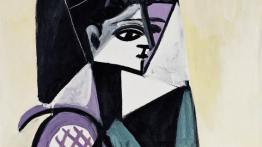
Michelangelo’s Dream Courtauld, until 16 May This is one of the series of exhibitions built around a single masterpiece from the Courtauld’s collection — in this case Michelangelo’s remarkable presentation drawing ‘The Dream’ — placed in an informative context of closely related loans. The Courtauld does it superbly: quietly stated, rigorously researched, laid out with clarity and authority. It is accompanied by a hefty but handsome catalogue (published by Paul Holberton, £30 in paperback), packed with scholarly exegesis, with particularly useful notes on individual exhibits. The show consists of a group of Michelangelo drawings, original letters and poems by the artist, and certain works by his contemporaries.

Long evening with Handel

More from Arts

Tamerlano Royal Opera, in rep until 20 March Handel’s Tamerlano is rated extremely highly by the cognoscenti, indeed routinely listed as being among his two or three greatest operas. I have only seen it twice, once at Sadler’s Wells nine years ago in a production by Jonathan Miller, conducted by Trevor Pinnock, and now at the Royal Opera in a production by Graham Vick, with Ivor Bolton conducting. On both occasions I have been bored to the verge of paralysis, but more so by the present one. It lasts from 6.30 until 11 o’clock, with two relatively short intervals. So it is as long as Die Walküre or Tristan, though they are always scheduled to start at 6 or even earlier.

Sister act | 13 March 2010

More from Arts

Private Lives Vaudeville, until 1 May Party Arts, until 13 March This isn’t right. This can’t be happening. She’s over 50. Quite a bit over. In fact, she’s 53 and she’s playing the 29-year-old heroine in one of the finest comedies in the repertoire. And she’s doing it in London. And she isn’t even English. What possessed Kim Cattrall to imagine she could play Amanda in Private Lives? The answer turns out to be, supreme self-possession. From her first entrance, her starry grace communicates itself to the entire auditorium. The age question resolves itself straight away. She appears half-naked in a bathrobe. Her soft bare arms are plump and tanned and show none of the sinewed graininess of the gym or the bench press.