Culture

Culture

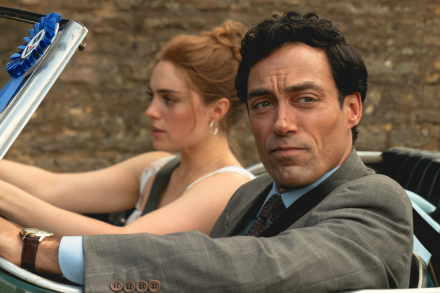
Enjoyably old-fashioned: ITV’s The Lady reviewed

I lasted all of five minutes with Netflix’s tasting menu-length Being Gordon Ramsay. This surprised me, because I’ve long had a bit of a soft spot for the irascible, crevice-faced, sweary old ham. I know that all reality TV is fake but I’ve always quite enjoyed watching carrot-top pretending to lose his rag yet again in some rat-infested culinary cesspit before transforming it, in the space of a month, into a Michelin three-star. Ramsay no longer even pretends that his programs are anything more than extended plugs for his brand But the dishonesty and contrivance and brazen commercialism of this autohagiography are just too much to stomach.

Fans of George Eliot are in for a shock: Bird Grove at Hampstead Theater reviewed

Bird Grove by Alexi Kaye Campbell is a comedy of manners set in 1841. A portly suitor, Horace, arrives at a respectable house intending to propose to a rebellious and brilliant 22-year-old, Mary Ann. Horace’s father is dying and he must find a bride before nightfall or lose a substantial legacy. This ludicrous but very human situation starts the play. It’s instantly gripping. Mary Ann is in the drawing room being treated for headaches by a French mesmerist along with two wealthy radicals, Mr and Mrs Bray, who encourage her political activism. Her father, Robert, introduces his guests to each other and invites them to stay for tea. This fascinating glimpse of her early life shows George Eliot as a surly, arrogant, spoiled and heartless pest A hilariously awkward party ensues.

Marvelous but repetitious: Gwen John – Strange Beauties reviewed

A pilgrimage to Cardiff Central, sorry, Caerdydd Canolog (according to the signage in the station, which also had my return train’s destination ‘Lundain Padd’ton’) to see the new Gwen John show. She is being lauded as Wales’s greatest artist, but she left Tenby at 18 in 1895, and never went back. After studying at the Slade she moved to Paris, fell in love with Rodin, and adopted the Catholic faith.

‘I didn’t expect to love Wagner’

By the end of Siegfried, the third opera in Wagner’s Der Ring des Nibelungen, the king of the gods is in freefall. In the first opera, Das Rheingold, Wotan is a confident protagonist; a world-builder. In Die Walküre, we’ve seen him discover the limits of power, and felt his heart break. Now, in Siegfried, he’s a haunted figure; the solitary Wanderer, searching the world for answers that his all-powerful wisdom can no longer supply. He confronts the young hero Siegfried, and his law-giving spear shatters on the sword of a reckless, clueless boy. "All he can say is, 'Go, then. I can’t hold you any more,'" says Christopher Maltman, who has sung the role of Wotan throughout the Royal Opera’s current Ring cycle, and brings it to completion when Siegfried opens later this month.

Ann Lee deserves better than her biopic

Ann Lee was a sharp-tongued woman from the back streets of 18th-­century Manchester who joined a maverick Protestant sect that became known as the Shakers, or “Shaking Quakers.” In fact their shaking was the least of it: they howled, gurned and gibbered while flirting with the notion that God would return to Earth in the form of a woman. All sexual activity, even between man and wife, was forbidden. Ann then had a series of visions that, according to subsequent Shaker accounts, identified her as the “woman clothed with the sun” whose appearance in the Book of Revelation heralds the end of the world. In 1774, “Mother Ann” and a small band of faithful emigrated to America.

ann lee shakers

Love Story’s counterfeit Kennedys

Last June, Jack Schlossberg, the Kennedy nepo baby currently running for the open seat in New York’s 12th Congressional District, called out the television mini-series, Love Story: John F. Kennedy Jr & Carolyn Bessette. Executive producer Ryan Murphy was, Schlossberg declared, exploiting this couple’s courtship, marriage and death, and “profiting off of it in a grotesque way.” On a key point, Jack can rest easy. Love Story, now airing on FX/Hulu, treats his uncle John F. Kennedy Jr. reverently. Elizabeth Beller, Bessette’s biographer, praises the show for “honoring the legacy of everyone involved.” If JFK Jr.

The auteur Eugène Atget

Few connoisseurs of the image are unfamiliar with the great French photographer Eugène Atget (1857-1927). But his name is, unfortunately, unfamiliar to the lay person. This is a shame: his gloriously detailed, sharply focused black-and-white images of late 19th- and early 20th-century Paris evocatively conjure the shadows and lights of the boulevards, parks and alleyways of the Belle Époque. His astonishing close-ups of finely crafted architectural details are as striking as his sometimes surreal views of storefront windows and food-stall displays. Whether training his bulky large-format view camera on scenes interior or exterior, he reveals an aesthetic sensibility exquisitely sensitive to the world around him.

Marilyn Monroe, poetic muse

The year 1959 was a particularly productive but especially depressing year for Sylvia Plath. She toured the length of America, attended a series of stimulating literary seminars and wrote some of her most beloved verse. While outwardly active and energetic, her diary reveals she was struggling all the time to sustain her few fleeting fits of happiness. One entry in October describes a vivid dream she had, in which Marilyn Monroe appeared as a kind of fairy godmother. Monroe gave Plath a manicure and promised her a “new, flowering life,” before wishing her well and inviting the troubled poet over for Christmas. The image of Monroe clearly consoled her. Plath was hardly the only poet to be mesmerized by Monroe’s outward magnificence and fascinated by her perturbing private tragedies.

Eye-catching but superficial: ‘Wuthering Heights’ reviewed

Emerald Fennell’s "Wuthering Heights" had purists losing their minds from the get-go. They lost their minds at the casting – Margot Robbie is too old for Cathy; Jacob Elordi is too white for Heathcliff – and then lost their minds at the trailer, which is all heaving bosoms and kinky vibes set to Charli xcx beats. But Fennell has made it clear that it is her vision of Emily Brontë’s novel, hence the quotation marks around the title, and that she wants it to feel as she felt when she first read the book at 14 years old. I was willing to cut her considerable slack but did her 14-year-old self, I had to wonder, make it to the end? Who, in their right mind, would sell it as a Valentine’s date film if they had? I may be on #TeamPurist here.

Why does Taxi Driver still resonate?

Even if you haven’t seen the movie, you probably know the macabre legacy of Martin Scorsese’s early masterpiece Taxi Driver. Released 50 years ago this month, the tale of the eponymous cabbie Travis Bickle, played by Robert De Niro, still has something potent to say about what can happen when a brooding loner finds himself adrift amid the menace and jammed chaos of New York’s streets with a .44 Magnum for company. Perhaps one of the reasons Taxi Driver resonates with so many people is because of this human void that lies at its center. At one time or another, we’ve all felt as alone as Travis Bickle.

Taxi Driver
marty supreme

Marty Supreme mirrors Timothée Chalamet’s desire

Recently, Timothée Chalamet gave the world a refreshing show of ambition when, after winning a SAG award, he said that “the truth is I’m really in pursuit of greatness. I know people don’t usually talk like that, but I want to be one of the greats.” Ambition perhaps turned into arrogance when, during an interview for his new film, Marty Supreme, Chalamet noted that during the last few years, he’s been handing in “top-of-the-line performances... I don’t want people to take it for granted. This is really some top-level shit.

The golden years of David Bowie

This year marks the anniversaries of two of David Bowie’s most compelling and powerful albums: 1976’s Station to Station and 2016’s Blackstar. Given that they are often – rightly – described as Bowie’s crowning artistic achievements, amid severe competition from his other releases, they also have the intriguing fillip that both were originally released in January: a fortunate time for the musician, who was born on January 8, 1947, even if it was also the month in which he finally departed this Earth. Yet the comparisons between Station to Station and Blackstar, which came out 40 years apart, are far more pervasive – and persuasive – than the serendipity of their release dates.

david bowie

The cruelty of H is for Hawk

H is for Hawk is an adaptation of the bestselling memoir by Helen Macdonald who, following the sudden death of her beloved father, channels her grief through the training of a goshawk, Mabel. The film stars Claire Foy, who is superb, as is the nature photography, but is it right, keeping a wild animal captive, and depriving it of its natural behaviors because it helps you in some way? What’s in it for this gorgeous bird, I kept wondering. The cruelty is never addressed. This is solely about human need. We’re not even told who plays Mabel, so I can’t say what she has been in before or whether she has won any awards. (I would hope so; she is magnificent.

A vibrant, partial look at Gabriele Münter

Recognition can be late in coming for many artists, but perhaps especially so for women whose originality and talents too often become overshadowed by their more famous romantic partners. Museums are often eager to put on shows making this very argument as women artists are rediscovered. Sometimes the thesis succeeds; other times, it does not. The latest of these is the case of the German artist Gabriele Münter (1877-1962), whose reputation, until recent decades, rested less on her own body of work than on her long-time connection to her mentor and lover, the Russian expressionist Wassily Kandinsky (1866-1944). The Guggenheim Museum’s exhibition, Gabriele Münter: Contours of a World, attempts to rectify the imbalance.

How mediocrity took over the Grammys

Is music getting worse? Rick Beato is a musician, producer and critic with more than five million YouTube subscribers. His answer would be: yes, pretty much. In a recent video, he compares the 2026 Grammy Song of the Year nominees to those of 1984. There are a few bright sparks among the slate of new songs, but Beato regards most of them as derivative, unoriginal and unlikely to be remembered past the end of the awards show. In contrast, 42 years on, all the 1984 nominees – Michael Jackson’s “Beat It,” The Police’s “Every Breath You Take” and Lionel Richie’s “All Night Long” among them – are firmly embedded in the popular music canon. One could ask the same question about science: has it gotten worse? My answer, I have to say, reflects Beato’s for music.

The power of the walkout

To walk out of a public performance before the end – be it the theater, a concert or a lecture – is not the done thing. It’s considered an antisocial act that disrupts the performance and thus other people’s pleasure. To walk out provokes tuts of disapproval and scowls of indignation. And yet while it’s something we all disapprove of (at least in theory) it’s also something we all secretly long to do. Who hasn’t sat and squirmed in their seat at some tedious piece of theater and wondered: how much more of this must I suffer? And who hasn’t been subjected to one of those long, sycophantic interviews with some self-adoring author flogging their latest book and not prayed for the courage to make a run for it?

walkout
hamnet

To see, or not to see Hamnet?

In 1966, the actor Raphael Montañez Ortiz staged his one-man show Self-Destruction at London’s Mercury Theatre. Intermittently screaming “Mommy! Daddy!,” Ortiz tore the clothes from his body, doused himself with baby powder, lay down in a diaper, downed a few bottles of milk and began vomiting profusely. Plastic bags were then distributed to members of the audience, who were encouraged to follow suit. Montañez Ortiz’s performance gave the psychologist Arthur Janov the idea to create primal scream therapy, a psychiatric fad that once counted John Lennon and Yoko Ono among its followers.

Why has it all gone wrong for The Night Manager?

The Night Manager is finally back after ten years with three major drawbacks: no Elizabeth Debicki for the sex scenes; no Tom Hollander for the comedy scenes; and no Hugh Laurie for the evil-kingpin-in-his-toothsome-mountaintop-lair scenes, I nearly claimed. But only because at the very beginning of the new season the Laurie character’s grizzled body is identified by Olivia Colman (in her most irritating performance ever, as a dowdy but capable MI6 officer with a gratingly suburban accent). And I didn’t want to spoil the coming plot twist in case any of you were foolish enough to have fallen for this blatant case of Chekhov’s misidentified corpse.

night manager

Behind Wes Anderson’s infamous sensibility

Woody Allen once sardonically described the fans of his films as being divided between those who liked the “early, funny ones” and the later, darker pictures. Much the same might be said of another famous WA: Wes Anderson, who has established himself as one of American cinema’s most significant auteurs despite no longer living in the country – he hops between England and France. Like most auteurs, his films are more succèss d’estime than they are succèss de box office, but he has the cream of Hollywood lining up to work with him and commands respect among actors young and old. Anderson is rightly celebrated – or castigated – as a visual stylist, but he has enormous flair as a screenwriter Anderson’s visual sensibility is infamous.

The depth of Edmund de Waal

“I’m very, very proud of making pots,” says Edmund de Waal. “I don’t call myself a conceptual artist.” He is putting the finishing touches to an exhibition of ceramic sculptures at Gagosian’s Beverly Hills gallery. Around the walls are sleek, tiered vitrines filled with porcelain vessels, along with a sequence of smaller gold-painted boxes – “reliquaries,” as de Waal calls them, inspired by the early Renaissance master Duccio. “I hate the word minimalism. I find it completely useless as a term.” In the last 20 years, de Waal has risen from the status of a humble ceramicist to become one of Britain and America’s leading contemporary artists, best known for his multipart installations of pots.

Keith McNally: ‘big-name’ stars are wrecking Broadway

“WAITING FOR GODOT IS A RUBBISH PLAY.” So declared Keith McNally in an Instagram post that caught my eye. “I urge you not to see Waiting for Godot.” Accompanying the statement was an image of the two stars who headlined this fall’s production at Broadway’s Hudson Theater, Keanu Reeves and Alex Winter. The play is the latest in what regular theatergoers and visiting tourists may have started to recognize as a recurring theme in New York’s theater scene: an overwhelming number of big-name Hollywood screen actors dotting their playbills. These players are here to make their bones and increase their prestige as “true” thespians, often by attaching themselves to tired and familiar productions. This has certainly not been lost on McNally.

mcnally

My Name is Orson Welles was illuminating

Orson Welles (1915-85) considered the notion of posterity vulgar, but he knew that he’d be loved once he was dead. That death came suddenly, just over 40 years ago, on October 10, 1985. There was a poignancy to the way death took him – sitting at his typewriter after appearing on Merv Griffin’s talk show. By then, the co-writer, director and star of the greatest film ever made, Citizen Kane (1941), hadn’t finished a film since 1973’s ignored but now quietly loved F for Fake. At the end of his life, he may have been better known as the guy in Paul Masson wine commercials than as a cinematic genius. To commemorate the 40th anniversary of his passing, Paris’s Cinémathèque Française last fall arranged the illuminating exhibition My Name is Orson Welles.

orson welles

Jane Austen: Rise of a Genius is projecting

Which is your favorite Jane Austen novel? OK, maybe not a conversation prompt appropriate for every setting, but a reliable one, I find, to break the ice at DC dinner parties where I’m not well acquainted with my fellow guests but spy someone who seems likely to know her work. I also ask it of younger fiction writers who come looking for advice about plot construction. I once resorted to it with a stranger, a woman of a certain age, to distract me from my irritation, sitting on an Acela train inexplicably halted outside Wilmington, Delaware, for two hours. She chose Persuasion, Austen’s elegiac account of late-in-life love.

The secrets of Henri Rousseau

Henri Rousseau (1844-1910) was so earnest that it landed him in jail. When a former student asked him to use forged identity papers to open a bank account, Rousseau, who was then in his sixties, was happy to help out his old acquaintance. He seemed unaware that he was doing anything more than a favor, let alone committing fraud. To prove the painter’s innocence, his lawyer brought one of his canvases before the jury and declared: “You do not have the right to condemn a primitive.” The works that result from such legendary naivety are on view at the Barnes Foundation in Henri Rousseau: A Painter’s Secrets.

The Adventures of Elektronik is not your average children’s comedy

For people from the former Soviet Union, the holiday season brings with it two certainties: mayonnaise and movies. Mayonnaise, because no winter festivity is complete without the traditional mayo-infused salads with such evocative names as “herring under a fur coat” and “Olivier,” which are eaten for days straight. These calorific concoctions are best accompanied by a dozen or so cult films from around 1965 to 1985, which are ritually rewatched every year by Homo Sovieticus and his descendants. Of these classics, one of the most beloved is the musical The Adventures of Elektronik (1979). Adapted from the novels of the science-fiction writer Yevgeny Veltistov, the movie tells the story of a young robot named Elektronik.

This Christmas, listen to Mary Did You Know?

A popular and poignant Christmas song, written late in the previous century for a church’s holiday program, incites passionate criticism from those who disagree with the way it phrases its message. Since first being recorded in 1991, “Mary, Did You Know?” has been performed by soloists and groups ranging from Carrie Underwood and Dolly Parton to Pentatonix, CeeLo Greene and Kathleen Battle. The lyrics are a series of questions to Mary, Jesus’s mother, asking whether she knew during his infancy about the profound impact he would make as an adult. Yet that powerful literary device annoys those who believe the song demeans its subject.

Does Spielberg’s new movie have real UFOs?

Steven Spielberg might be the most beloved and popular American director of the 20th century, but it is also unavoidably the case that, since 2005’s Munich, he has been on something of a disappointing run. While many of his films, not least The Fabelmans and West Side Story, have been critically acclaimed and Oscar-nominated, there is a growing sense that he has not made a really interesting or worthwhile picture in 20 years, with the partial exception of the enjoyable, quirky, Coen Brothers-scripted Bridge of Spies.

Have Americans lost their sense of humor?

Humor has become serious business. A nation of anxious primates trapped in a silicon casino of likes, retweets and dopamine-soaked drudgery, America is suffering from what the comedian Norm Macdonald called a “crisis of clapter.” Terrified of saying the wrong thing, needing punchlines to be spoon-fed – what was once the funniest place on Earth has become a tight-lipped, tongue-twisted society where jokes are rewarded with polite applause instead of genuine laughter. It’s the old stink of a well-mannered aristocracy, and very un-American indeed. From his beginning, the ugly American – wild-eyed and rabble-rousing – rankled the Old World.

humor
renoir

In defense of Renoir’s pretty pictures

Those who think it’s chic to dismiss Renoir have a rethink coming, courtesy of the absorbing, highly informative exhibit Renoir Drawings, now on view in New York. Not so long ago, the idea of ousting Pierre-Auguste Renoir (1841-1919) from the canon of western art sparked a movement of sorts. “RENOIR SUCKS AT PAINTING,” proclaimed a protester’s sign at the Museum of Fine Arts in Boston in 2015. The performance artist Max Geller had organized the demonstration to condemn Renoir as a purveyor of “treacle.” His female nudes objectified women, it charged; even when clothed, they smiled and blushed too prettily. Indeed, Renoir’s work held value only for the unsophisticated and its popularity represented the triumph of the cliché.