
Which is your favorite Jane Austen novel? OK, maybe not a conversation prompt appropriate for every setting, but a reliable one, I find, to break the ice at DC dinner parties where I’m not well acquainted with my fellow guests but spy someone who seems likely to know her work. I also ask it of younger fiction writers who come looking for advice about plot construction. I once resorted to it with a stranger, a woman of a certain age, to distract me from my irritation, sitting on an Acela train inexplicably halted outside Wilmington, Delaware, for two hours. She chose Persuasion, Austen’s elegiac account of late-in-life love.
All hew to the notion that Austen was a secret subversive, who ‘ripped up the rule book’
Had this still been the 20th century, I’d have picked Pride and Prejudice, a book revered by the English department at Baltimore’s Bryn Mawr School for Girls. In spring 1976, we ninth-graders spent six weeks reading and discussing Elizabeth Bennet, Mr. Darcy and their rocky road to love. By that age I’d devoured plenty of books, but for entertainment, not to understand people or the world. Pride and Prejudice opened my eyes to what fiction is capable of. And while I couldn’t fathom the alchemy – the exact way she did it – I felt Jane and I were somehow kindred spirits. Austen bestows this gift on all her readers: she flatters you into thinking you’re as clever as she was.
Imagine my excitement at the prospect of Jane Austen: Rise of a Genius, the lavish three-part documentary commissioned by the BBC to mark the 250th anniversary of the novelist’s birth on December 16, 1775. But the show is replete with both factual and interpretive errors, especially in regard to Austen’s third book, Mansfield Park. And this last made my disappointment all the keener, for in the new millennium Mansfield has replaced Pride and Prejudice as my most cherished Austen. The ubiquity of P&P television, book and film adaptions played a part in this switch of allegiance. I began to feel a missionary zeal to spread the word that Austen had written other brilliant novels. But the story of Fanny Price, the poor relation with an uncompromising moral core, struck middle-aged me as uniquely reverberant in a fallen world. And when I began writing my own fiction, I studied Mansfield Park closely to grasp how Austen constructed this book, second only to Emma in word count but possessing a more unwieldy cast, a lengthier time span and a greater variety of settings than any of her other novels.
I’m hardly alone in regarding Mansfield Park as a marvel of structure, pace and character. Vladimir Nabokov selected this Austen to teach at Wellesley College and Cornell University in the 1940s and 1950s. In his heavily annotated copy of the book, now in the New York Public Library’s archives, Nabokov notes Austen’s exactitude with spatial and temporal distances, attempts to determine the approximate location of the eponymous manor house and calculates from hints dropped in the story that the main action is meant to take place in the year 1808. Yet in his lectures, he exhorted his students to read the novel on Austen’s terms: “There is no such thing as real life for an author of genius: he must create it himself and then create the consequences. The charm of Mansfield Park can be fully enjoyed only when we adopt its conventions, its rules, its enchanting make-believe.”
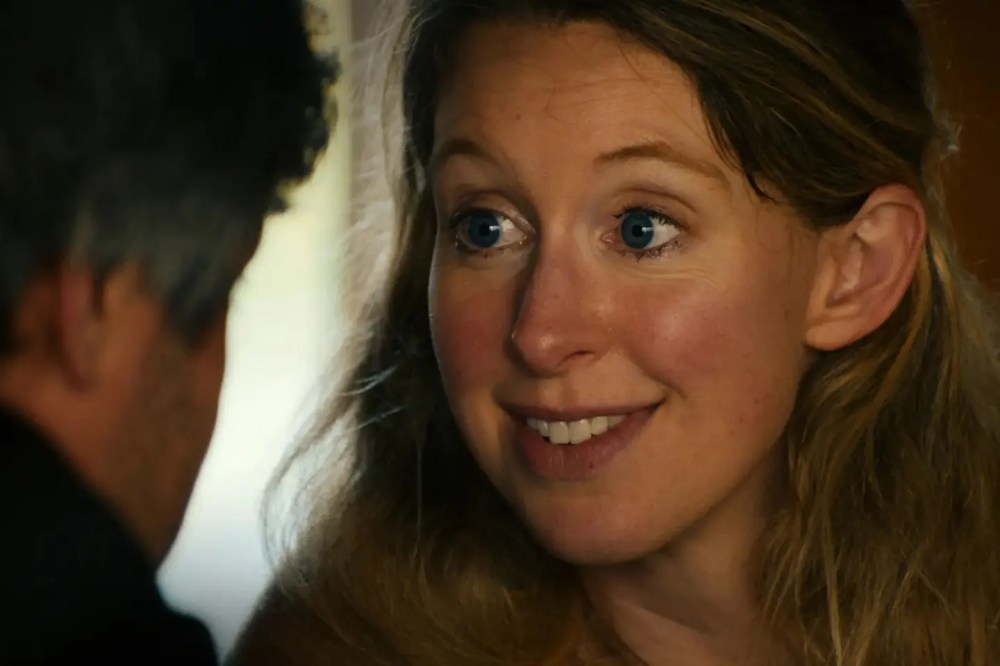
All this is lost on the BBC, which treats my beloved Mansfield Park as an anti-establishment, abolitionist text. Rise of a Genius, now available on BritBox, recounts the novelist’s life via a series of strange, mute reenactments, accompanied by the opinions of talking heads – academics, novelists and performing-arts luvvies. While the group represents a variety of ethnicities, there’s no variety of viewpoint. All hew to the notion that Austen was a secret subversive, who “ripped up the rule book” by anticipating modern attitudes.
In a blistering essay on the History Reclaimed website, Lona Manning, a novelist and leader of the Jane Austen Society of North America, writes: “For the BBC, the important thing to know about Austen is not her wit and her cool irony (hardly mentioned), [nor] her revolutionary narrative techniques (briefly mentioned).” Instead, the documentary insists that Austen sought to “tackle big subjects and say something about the world without alienating readers and critics.” Perhaps it was inevitable that a writer as beloved as Austen would be reimagined as a social-justice warrior in Empire-style dress and bonnet. That desire to feel kinship with her, which I experienced as a teenager, is obviously widespread among Austen’s legions of (mostly female) fans, and today, for many, that means detecting within her work an affirmation of their own – dare I say it – woke opinions. Not so long ago (the 1970s and 1980s) it was fashionable to disparage Mansfield Park for lacking the sparkle of other Austen novels. True, mousy Fanny Price can’t rival P&P’s Elizabeth Bennet for boldness of spirit. But prompted by the contemporary preoccupation with racism, Rise of a Genius celebrates the book’s seriousness of purpose, only to misread it. Fanny is sent away from Mansfield Park, the show implies, for challenging her uncle, Sir Thomas Bertram over his involvement in the slave trade. Wrong, as all MP stans know. Sir Thomas is angry with his ward for refusing the marriage proposal of eminently suitable (but secretly craven) Henry Crawford.
In her admirable biography of Austen, Claire Tomalin reports that abolitionist views were taken as given in Austen’s family and social set. (Britain banned the transporting of enslaved people on British ships in 1807.) More significant to Austen when she began writing Mansfield Park, in 1811, was the elevation of the Prince of Wales to Prince Regent, King George III now totally incapacitated by madness. The Regent and his brother, the Duke of Clarence, lived with open disregard for religious principles, especially the sanctity of marriage. The royal brothers sat atop a corrupt patronage system and drew on the nation’s pinched public purse to throw lavish parties. “Mansfield Park is, among other things, a novel about the condition of England, and addresses itself to the questions raised by royal behavior and the kind of society it encouraged,” Tomalin writes.
Austen deserves to be recognized for her true audacity, which has nothing to do with politics
Too bad the BBC didn’t recruit Tomalin, or someone of equal seriousness, who might have pointed out Austen’s perspicacity. Certainly, there’s room in discussions of her work to cite its modern resonances, from sleazy Andrew Mountbatten-Windsor’s being tossed out on his formerly royal ear, to the twice-divorced President Trump increasingly styling himself as an American monarch, slapping gold leaf on the White House walls while untold riches flow to his family members.
Yet even this doesn’t prove Jane Austen’s sense or sensibility makes her “just like us,” however much some might want to pretend. She’s neither modern nor free-thinking. She upheld the strict social order of her time, even as she satirized the odious persons, like Fanny’s Aunt Norris, who lord their higher status over others. We can love Austen, but we can’t change her. And she deserves to be recognized for her true audacity, which has nothing to do with politics.
In his excellent book, What Matters in Jane Austen, John Mullan of University College London writes: “She did things with characterization, with dialogue, with English sentences, that had never been done before.” And Austen accomplished this in isolation, living most of the time deep in the Hampshire countryside, a member of no literary circle, in contact with no other notable author. Our Jane was a miracle, and that’s enough.
This article was originally published in The Spectator’s January 19, 2026 World edition.





Comments