James MacMillan

Sir James MacMillan CBE is a Scottish composer and conductor. He was Composer-Conductor of the BBC Philharmonic from 2000-2009 and of the Netherlands Radio Chamber Philharmonie from 2009-2013.

How silence makes music

From our UK edition

‘What!? But they won’t let you in!’ and ‘What!? But they’ll detain you at the border!’ and ‘What!? But they’re all nuts over there!’ were just some of the responses from friends and colleagues at my announcement that I was heading to the US for three and a half weeks’ work. But my visa was valid and accepted at passport control, I wasn’t thrown in jail, and the people whom I met and worked with were perfectly sane, perfect hosts and a perfect delight. First up was the Minnesota Orchestra, where I conducted two concerts of my own music and more well-known works by Rachmaninov and Rimsky-Korsakov. Also on the programme was an excerpt from Wagner’s Parsifal.

James MacMillan, Sebastian Morello, Amy Wilentz, Sam Leith and Lloyd Evans

From our UK edition

32 min listen

This week: composer James MacMillan reads his diary on the beautiful music of football (01:11); Sebastian Morello tells us about the deep connection between hunting and Christianity (07:17); Amy Wilentz explains how Vodou fuels Haiti’s gang culture (16:14); The Spectator’s literary editor Sam Leith reviews The Virago Book of Friendship (22:38); and – from the arts pages – The Spectator’s theatre critic Lloyd Evans writes about a new play on the last days of Liz Truss and also about Bette and Joan, which includes 'brutal' and 'brilliant' portraits of Bette Davis and Joan Crawford (26:37). Presented by Oscar Edmondson. Produced by Patrick Gibbons and Oscar Edmondson.

Music’s debt to Pope Benedict

From our UK edition

One group delighted with the papacy of Benedict XVI was musicians. He was one of us. He had a grand piano in his apartment in the Vatican and played (mostly his beloved Mozart) regularly. His love of music was not restricted to music for the liturgy. He saw the numinous dimension to music in its secular forms too. When, two years after his renunciation, he received an Honorary Doctorate from the Pontifical University of John Paul II in Kraków, he chose to give his lecture on music. These words stand out to me: ‘In no other cultural ambit is there music of equal grandeur to that born in the ambit of the Christian faith: from Palestrina to Bach, to Handel, up to Mozart, Beethoven and Bruckner. Western music is something unique, which has no equal in other cultures.

I’m not the only football-obsessed composer

From our UK edition

I was in Sweden a few weeks ago, where my music was presented in Stockholm in the most recent International Composer Festival. One of the orchestral works performed was my football-themed ‘Eleven’ (11 players, melodies of 11 notes, chords of 11 pitches and various football chants woven into the fabric of the score). I’m not the first composer obsessed with the beautiful game. Bohuslav Martinu’s ‘Half-time’, written in 1924, was inspired by the supporters of his team, Sparta Prague. And more recently there have been bold examples by English composers Mark-Anthony Turnage (who worked chants for his beloved Arsenal into his orchestral piece ‘Momentum’) and Benedict Mason, in whose opera Playing Away even the ball sings an aria.

Christmas Special 2024 with Rod Liddle, Lionel Shriver, Matthew Parris and Mary Wakefield

From our UK edition

71 min listen

Welcome to a special festive episode of The Edition podcast, where we will be taking you through the pages of The Spectator’s Christmas triple issue. Up first: our review of the year – and what a year it has been. At the start of 2024, the outcome of the US election looked very different, the UK had a different Prime Minister, and The Spectator had a different editor! Luckily, The Spectator’s regular columnists are on hand to declare what they got right – and wrong – throughout the year, and whether they’re optimistic for 2025. Rod Liddle, Matthew Parris, Mary Wakefield and Lionel Shriver take us through everything from Trump to trans (03:24).

The mystery of teaching composition

From our UK edition

Summer study courses for young composers have been popular for a few generations. After the second world war, up-and-coming experimental composers started flocking to places like Darmstadt in Germany for the Internationale Ferienkursen für Neue Musik. Olivier Messiaen taught there in the late 1940s and 1950s, when among his students were Stockhausen and Boulez. Attending the 1980 course as an undergraduate, I benefitted from a lesson with Brian Ferneyhough and conversations with Wolfgang Rihm, who died last week and was described in one obituary as ‘the last great German composer’. In the US, the summer activities at places such as Tanglewood and Aspen have become part of the learning process for many young composers over the years.

I’ll never take culture for granted again

From our UK edition

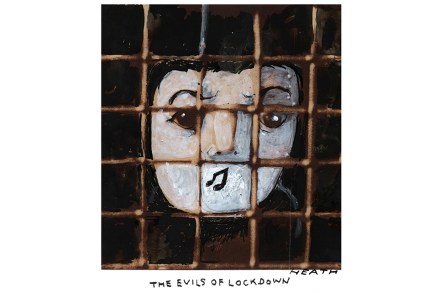
‘Has this been the happiest year of my life?’ I found myself asking recently. It has certainly been topped with the arrival of a third granddaughter last month. (My first, little Sara Maria, died a few years ago.) The birth of Rosie Elisabeth has taken our joy to cosmic levels, but 2023 has been a succession of delights, mainly connected to the concerts I’ve been able to conduct around the globe, from St Louis to Tallinn. After the evils of lockdown, many of us worried that musical life would never return. But it has. I will never, ever take cultural life for granted again. One highlight this year was the culmination of a huge project at my festival in East Ayrshire, the Cumnock Tryst.

There was no ‘hidden Unionist code’ in my Queen’s funeral anthem

From our UK edition

There were two world premieres during the Queen’s funeral on Monday. One was a beautiful setting of some verses from Psalm 42 by Judith Weir, the Master of the King’s Music, and the other was an anthem by me, a setting of a passage from Romans 8, ‘Who Shall Separate Us From The Love of Christ?’ I wonder if Judith had to deal with some of the questions I got on the day. How could I have written the music so fast considering that Her Majesty only died on 8 September? Of course, these things are planned years in advance, so I composed the anthem some time ago. I was asked to keep quiet about it until Sunday night when the order of service was published.

In praise of the St George’s Chapel choristers

From our UK edition

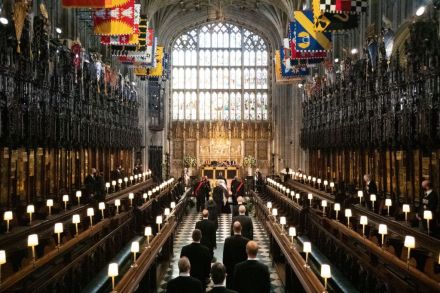
The stark simplicity of the music performed at Prince Philip’s funeral service will have made a gentle but huge impact on the mourners, inside St George’s Chapel Windsor and on the millions watching on television around the world. Those of us who have some involvement in the world of choral music were mightily impressed at how the music was delivered, by only four choristers when the norm is a full complement of about 30 singers, adults and children. Three of the four singers were Lay Clerks of St George’s Chapel Choir (countertenor, tenor and baritone) with an added female soprano voice, conducted by James Vivian and the organ was played by Luke Bond.

Community music-making is the jewel in the British crown

From our UK edition

Music is a universal language. The style that has enraptured me since childhood, classical music, has always had an international dimension, and has taken me around the world in the decades since. But even in those early boyhood encounters I became aware of music and musicians from many different lands and eras. Apart from the beauty and excitement of the music itself, the art form became an early gateway for me to languages, history, geography, philosophy, theology and much more. There were clearly a lot of Germans to grapple with (Bach, Beethoven, Brahms) — and some French (Debussy, Ravel) —as well as Italians (Vivaldi, Verdi) and lots of Russians too (Tchaikovsky, Stravinsky, Shostakovich). But where did my own country figure in all of this?

Beethoven’s spirituality: a conversation with Sir James MacMillan

From our UK edition

34 min listen

It's the 250th anniversary of the birth of Ludwig van Beethoven – in my opinion, the greatest creative genius in history and a man of extraordinary moral courage. In this episode of Holy Smoke, I'm joined by his fellow composer Sir James MacMillan to discuss a side of Beethoven that the postmodern artistic establishment prefers to ignore: his unwavering faith in God and the surprisingly strict morality that arose from it. One of the questions I ask Sir James is whether Beethoven was really a Catholic. His answer is a resounding yes. He may not have gone to Mass very often, but before he died he asked to see a priest and during years of intense suffering composed one of the greatest of all settings of the liturgy, the Missa Solemnis.

There’s something about Mary

From our UK edition

Music likes to tell the same story over and over again. This is part of its tradition but even individual composers can be drawn back to the same models in attempts to reclothe and reinterpret musical forms and structures and settings of classic texts. This is especially the case with the Crucifixion narrative. Bach is revered for his two Passions — St Matthew and St John — but there have been other ways for composers to relate this story in sound. The Seven Last Words from the Cross is a now defunct liturgical form which attracted the attention of Lassus, Schütz, Haydn, Gounod and César Franck.

The SNP has played Scotland’s Catholic Church for a fool

From our UK edition

In England and other places there can still be surprise when discussion of football in Scotland segues too smoothly into the discussion of religion. And vice versa. It can also get entangled with toxic politics too. The sectarian divide between Celtic and Rangers doesn't need to be rehearsed, but the tribal hinterlands behind this ancient sporting rivalry point to the sad opposition between Loyalist and Republican, Royalist and Nationalist, Britain and Ireland, Catholic and Protestant. Some say it's fading away, some say it isn't, but there was a manifestation last week that it may be evolving – into something worse. Celtic played the Israeli team Hapoel Beer Sheva in Glasgow on Wednesday in a pulsating European qualifier which the home team won 5-2.

Tartan-ing up the arts

From our UK edition

Many years ago an arts spokesperson for the SNP launched an extraordinary attack on Scottish Opera, saying, ‘If push comes to shove, if I were arts minister and had to choose between the survival of Gaelic music and Scottish Opera, I would say rich people could always go to Salzburg for lieder and Sydney for opera.’ With various parties now competing for the class-war-and-grievance vote, I sense a return of this kind of rhetoric in debates on Scottish culture, arts and politics. Scottish Opera routinely invite Scotland’s politicians to their productions and their invitations are routinely ignored. The feeling is that there are votes to be lost in being seen supporting elitist culture.

Unthinking dogmatism

From our UK edition

James MacMillan explains why he hates the assumption that he is a liberal left-winger In my travels I see myself frequently described in foreign media as a ‘left-wing and Scottish nationalist’ composer. The latter label is ludicrous, and I just put it down to a foreigner’s ignorance and justifiable disinterest in the parish-pump tedium of devolved Scotland. It doesn’t bother me too much. The first, however, disturbs me much more. I used to be on the Left — I joined the Young Communist League in 1974, when I was just 14. Part of the motivation behind this was no doubt to annoy my devoutly Catholic relatives, who were all Labour supporters, but anxious, to the point of distraction, about insiduous Marxist manoeuvrings in the unions and in the workplace.