Winston churchill

It’s a pointless waste of time for David Cameron to resurrect the hunting debate

Of all the election promises politicians make in the run-up to a general election the one most certain to remain unfulfilled is David Cameron’s pledge to try to repeal the foxhunting ban. He has said he will give MPs a free vote on the issue, but he promised something similar before the last election, only to be prevented from doing anything by his coalition partners, the Liberal Democrats, who remain firmly opposed to hunting with hounds. So does the Labour party, and so does the public. A recent opinion poll found that 80 per cent of people in this country, in rural communities as much as in towns, want to keep the ban in force.

The elderly are society’s new baddies

The gulf in understanding between the old and the young has widened with the news that the young are beginning to turn teetotal. If there was one thing that the old thought they knew about the young, it was that they drank too much. British youth led the world in its enthusiasm for alcohol. Our cities swarmed with loutish binge drinkers. Yet now, all of a sudden, we learn that abstinence is becoming fashionable. The number of people under 25 who don’t touch a drop has increased by 40 per cent in eight years. More than a quarter of people in this age group now don’t drink anything at all. What is going on? The conditions for heavy drinking would seem to be perfect: there is economic hardship and a generally gloomy outlook on most fronts.

The madness of Nazism laid bare

‘If the war is lost, then it is of no concern to me if the people perish in it.’ Bruno Ganz, who not so much portrays Hitler as becomes him in Bernd Eichinger’s 2004 film Der Untergang (Downfall), spits the Führer’s nihilist venom so convincingly that the fundamental insanity of Nazism is at once laid bare, even to his closest collaborators. The madness of Nazism is now merely Hitler himself, and when on 30 April Ganz/Hitler, entombed in the Führerbunker, shoots himself, the film’s tension is at once gone. What follows is just rats fleeing the hole; and the rest, as it were, is silence. But it was not. VE (Victory in Europe) Day was not celebrated in London until 8 May, and in Moscow on 9 May.

Powers of persuasion: how Churchill brought America on side

In time for the 50th anniversary of Churchill’s death comes this pacy novel about his attempts to persuade the Americans to join the war. It is January 1941; President Roosevelt’s special envoy Harry Hopkins arrives in Blitz-torn London and is subjected to Churchill’s charm offensive. Hopkins, a chain-smoking, hard-drinking man of principle with a dislike of hereditary privilege, finds himself guided down every corridor of power. It’s port and cigars at Downing Street, roast pheasant at Chequers, even champagne in the prime ministerial bathroom while the great man fires questions at him from the tub, ‘a pink, round, gleaming Michelin man’.

Glorious and triumphant — Iain Macleod on Winston Churchill’s funeral

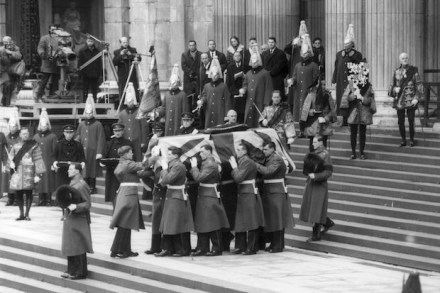
Today marks fifty years since the funeral of Winston Churchill. In the 5 February 1965 edition of The Spectator, editor Iain Macleod wrote under the pen name Quoodle about the occasion.  There has never been such a funeral service I before. There will never be again. It was splendid and solemn, but it was also glorious and triumphant. There was nothing here for tears, for the noblest of all our countrymen had died full of years. Even in St. Paul's it was a family service. As if the Churchill family had invited the larger families of Britain and the Commonwealth and the world to share their grief and their pride. The ceremonial was faultless.

How the Spectator congratulated a 25-year-old journalist called Winston Churchill

In 1899, Churchill headed to South Africa as a journalist for the Morning Post to cover the Boer War. He was captured in an ambush of an armored train but escaped with £75 and four slabs of chocolate in his pocket in hopes of finding the Delagoa Bay Railway.  This from our archives, 30 December 1899 (link here).  The Morning Post of Wednesday contained a characteristic telegram from their correspondent, Mr. Winston Churchill, describing his escape from Pretoria. Mr. Churchill, who had been taken prisoner after showing great gallantry in the armoured train action near Chieveley on November 15th, was confined at Pretoria.

‘We live as free men, speak as free men, walk as free men because a man called Winston Churchill lived’

This is the Spectator's leader from 22 January 1965. Two days later, on 24 January, Winston Churchill died: Since the first news was given of his grave illness, the attention of the world has been concentrated on a quiet house in Hyde Park Gate. Old men and children, friends and strangers, came to pay homage and to be near him as he fought his last battle. The Archbishop of Canterbury on Tuesday prayed for him 'as he approached death' and the world waited and joined in prayer. There is more pride than tears in our grief. We are a free people because a man called Winston Churchill lived. By some miracle of communication he was able to call us to greatness, and we in eager response man- aged from somewhere to find a strength that we did not know was in us.

What unites Churchill, Dali and T.S. Eliot? They all worshipped the Marx Brothers

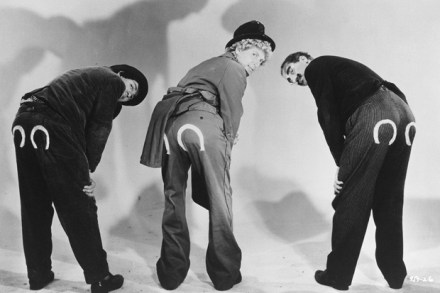
‘I had no idea you were so handsome,’ Groucho Marx wrote to T.S. Eliot in 1961 on receiving from him a signed studio portrait. The Missouri-born Eliot was the Marx Brothers’ devoted fan; three years later, in June 1964, Groucho called on the 75-year-old poet at his home in London. Eliot was interested in the Marx Brothers’ first undisputed film masterpiece, Animal Crackers (1930), while Groucho wanted only to quote from ‘The Waste Land’; however, the men agreed that they shared a love of cats and fine cigars. Winston Churchill was another who admired the Marxes and their deliciously mad repartee. During an air attack on London in May 1941 he found himself watching Monkey Business (1931), and was ‘glad of the diversion’.

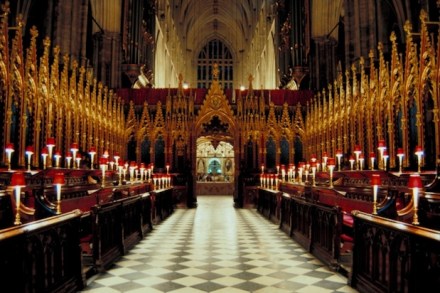
Westminster Abbey was a fitting setting in which to celebrate the life of Winston Churchill’s last child

The Times has given way to the Daily Telegraph as the bastion of the established order, for— with the one exception of the Prince of Wales and his wife — it listed the thousand or so people who attended last week’s memorial service for Lady Soames in Westminster Abbey in alphabetical order. This meant, for example, that my name, since it begins with C, came hundreds of places ahead of all the members of the Soames family, and even further ahead of the eighth Duke of Wellington, who is to be 100 years old next July.

The Spectator at war: Quiet seas

From The Spectator, 14 November 1914: We have mentioned elsewhere Mr. Winston Churchill's speech on the Navy at the Guildhall, in which he pointed out that in effect patience and vigilance must be the watch-words of our sailors now as heretofore. There seemed at one time a certain restlessness in the public mind in regard to the Navy, which if it had been reflected in our Fleets might have been of the utmost danger. Happily, however, public opinion seems now to have steadied, and there is no fear of any attempt on the part of the man in the street to try to force our Navy into premature action. Nothing could be more foolish or more ruinous than for the public to say : "Why doesn't the Navy do something?

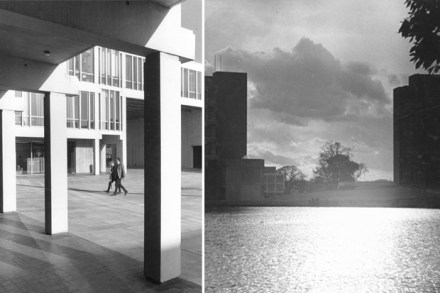
The only way is Essex University

We are told this is now a ‘knowledge economy’. Strange, then, that there are so few recent educational buildings of note. An expansion of universities has not led to much enlightened architectural patronage. Rather the opposite, in fact. The university visual trope remains those dogged dreaming spires. And London’s skyline is punctuated not by grand monuments to learning but by the swaggering, leering one-liners of the global plutocracy. These are thoughts that come to mind on the occasion of Essex University’s 50th birthday, a much more interesting anniversary than it first (rather bleakly) sounds.

Why prefabs really were fab

Sir Winston Churchill did not invent the prefab, but on 26 March 1944 he made an important broadcast promising to manufacture half a million of them to ease the new housing emergency caused by enemy bombs and the continued growth of inner-city slums. He went on to claim that these easy-to-assemble, factory-made bungalows would be ‘far superior to the ordinary cottage’. Readers of this richly illustrated, hard-hitting little book will find that Churchill was right. The new prefab — an early prototype immediately went on show at the Tate Gallery, of all places — did not meet the approval of George Bernard Shaw, who called it ‘Heartbreak House’ and that ‘Damn Tin Can’ — but seems to have been hugely enjoyed by most of those lucky enough to live in one.

Good riddance to rhetoric

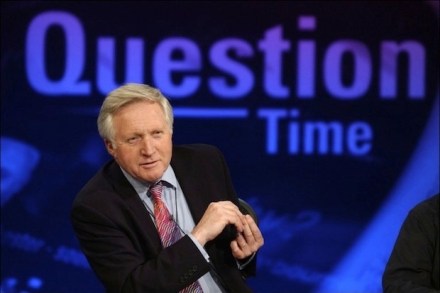
Autumn is here, and so the political classes celebrate the return of Any Questions and Question Time. (The Dimbleby is the only species that hibernates during the summer.) This year, though, listen out for the one thing missing from both programmes: rhetoric. Over recent series politicians and pundits have shrugged off the oratory. Instead they talk normally, like normal people in a normal setting. And thank God for that. In the bad old days, discussion programmes were full of panellists giving it the full Winston.

The rhetorical power of ‘never’, from Ian Paisley to King Lear

He won’t be remembered as Lord Bannside, but Ian Paisley will be remembered for shouting: ‘Never, never, never, never.’ The fourth never was hardly a shout, by his standards, but merged into the roar of the crowd. Never is a useful word for rhetoric. In our mind’s ear we remember how Churchill stressed the word and paused as he said: ‘Never in the field of human conflict.’ That auditory memory is something of an illusion, for Churchill made his great speech about the ‘Few’ in the Commons, in 1940, and proceedings were not recorded in sound. What we have heard is the version he delivered again for a recording in 1951. If Paisley managed four nevers, Lear outdid him in that moving line: ‘O, thou wilt come no more.

The lost Victorian who sculpted Churchill

Ivor Roberts-Jones was in many ways the right artist at the wrong time. Had the sculptor been born a few decades earlier and worked in the Victorian age, when statues of the builders and defenders of empire were erected proudly and prolifically across the land, he’d surely have received no end of garlands. As it is, Roberts-Jones (1913–96) found himself constantly battling against artistic fashions and today is barely even talked about. Born in the Welsh border town of Oswestry, he moved to London to study at the Royal Academy Schools and Goldsmiths College (the latter’s fame as a breeding ground for conceptual excess still a long way into the future).

‘Papa told us everything’: Winston Churchill and the remarkable Mary Soames

By any standards Mary Soames was one of the most remarkable women of her era: close confidante (possibly the closest) to Winston Churchill throughout the second world war, dedicated political wife, one of the most outstanding British ambassadresses sent to Paris, successful (against all reckoning) chairman of the National Theatre, and — later in life — a prize-winning author. She was also one of only three non-royal Ladies of the Garter in recent British history, and a Spectator contributor to boot. All this went hand in hand with a reluctance to talk about herself, and — except on rare occasions — about the war, and the father whom she adored and was especially close to.

Why –y? The evolution of a suffix

Hitler was ‘dark, shouty, moustachioed’ in Churchill’s eyes, or rather, that was Jonathan Rose’s view of how Churchill saw Hitler, according to Sam Leith, writing in the books pages on 19 April. Shouty is not a word Churchill would have used in exactly this sense, for which no example is recorded by the Oxford English Dictionary before 2001. It falls in the category of –y suffixes that connote condemnation, ridicule, or contempt, like catty, churchy or beery. There are plenty of entries for a rather different sense, ‘like a shout’, as Henry Coward noted in his Choral Technique and Interpretation (1914) of untrained voices that may be ‘shouty, throaty, cavernous, hooty, scoopy, and nondescript’.

The poet who welcomed war

Today, 23 April, the world celebrates the 450th anniversary of William Shakespeare's presumed birth (and marks with less joy the date of the Bard's death in 1616). That double date obscures another: the 99th anniversary of the death of a less celebrated Warwickshire-born literary lad, the poet Rupert Brooke. Brooke, like many of his friends and contemporaries, died in the First World War. But unlike most of them, he perished not in action, but as a result of septicaemia from an infected insect bite to his upper lip. En route to the bloody beaches of Gallipoli, he fell ill in Egypt, died on a French hospital ship moored off the Greek island of Skyros, and - fittingly for a classically educated poet - lies buried in an isolated olive grove overlooking the wine-dark waters of the Aegean.

Churchill was as mad as a badger. We should all be thankful

Land sakes! Another book about Winston Churchill? Really? Give us a break, the average reader may think. Actually though, as title and subtitle suggest, this isn’t just another biographical study. It’s at once odder and more conventional than that. More conventional because, in some ways, it is just another biographical study. Odder because — instead of being a straightforward discussion of Churchill’s literary work — it sees literature as the key to his biography. More than that, its author seems to think he has hit on a ‘new methodology’ in which ‘we can write political history as literary history’. Well, perhaps.

Lessons from Tina Brown on the art of failing upwards

Shortly after I started working at Vanity Fair in the mid-1990s, I suggested to my boss Graydon Carter that I write an article about the number of New York society types who were bankrupt. Not morally bankrupt, but up to their eyeballs in debt. ‘Let’s get a team of researchers to go through the financials of everyone on the guest list of the annual costume ball at the Met,’ I suggested. ‘We could publish a list, like the Forbes 400, but the exact opposite: America’s most indebted billionaires.’ Graydon didn’t go for it, and not just because he was worried about its impact on his social life. ‘Like who?’ he said. I rattled off a list of names, but he pooh-poohed every one. ‘This is just wishful thinking, Toby,’ he said.