Wildfires

My midnight naked swim

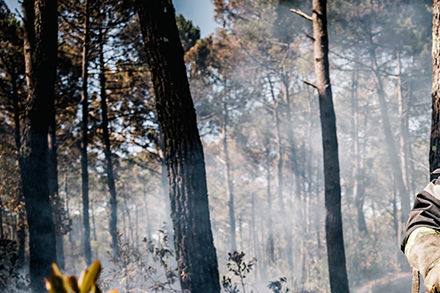
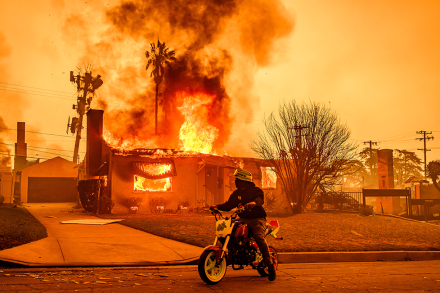
Provence The tiny village of Correns, two villages along, suffered more in the recent fires than we did. Even the green oaks on either side of the narrow road in were burnt to a dusty pale russet brown, like a New England fall but wrong. Sometimes, when I close my eyes, I still see the huge wall of flames and smoke racing down the hill to American Cathy’s house when I helped her escape. Here I could picture a tunnel of flames. No lives were lost – people in vulnerable houses left before the fire took hold – but several homes in the surrounding woods were destroyed.
My cave house’s wonderful history

Provence Looking back on it, apart from this year’s wildfires, the stultifying heat of high summer in Provence isn’t so bad if you accept that the time to exercise is 6 a.m. and work is only possible before midday and from late afternoon onwards. Holidaymakers and the better-off have pools to jump into and air conditioning to enjoy. But during the afternoons the rest of us lie almost naked on the bed under a ceiling fan, shutters closed, while the Rouge Noir varnish on our toenails melts. I’m told that Frenchmen sit in their pants watching the Tour de France.

Will the heatwaves make this year’s French wines better?

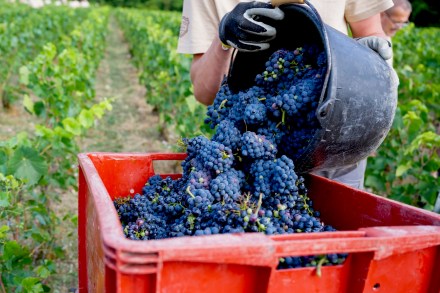
It has been a punishing summer in France. Heatwaves, drought and forest fires have driven away tourists and made life hell for firefighters. The nation’s winemakers have also had an anxious time of it, but there is now cautious optimism that the exceptional weather may work in their favor. Since late May, France has been swept by a succession of heatwaves as well as a series of destructive wildfires. The worst of these was in the Gironde, west of Bordeaux, which lost 42,000 hectares to flames. Swathes of Provence have also been ravaged by fires in recent weeks. As a result of the fires and the heat, France’s Ministry of Agriculture decided to postpone its annual grape harvest forecast from early August to early September. The announcement was welcomed by the industry.

heatwaves

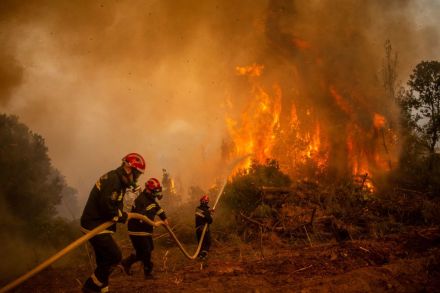
A toast to the heroic French firefighters

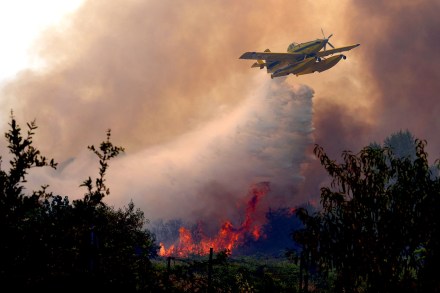
Provence ‘Imbeciles! I told them! When the fire comes on the hill there, it always goes that way… did they listen? They did not! They fought it from the wrong side. Look at the mess.’ The old man, the last in the village still wearing a beret, was angry with the pompiers. This was two days after the fire which almost engulfed American Cathy’s house. Now the centre of the village was filling with brown smoke from a fire on the eastern side of our closest hill and the Sanctuary of Notre-Dame de Grâce was threatened a second time. In fairness to the pompiers, the last time fire struck there was in 1962. Following the first world war, many parts of rural Provence were depopulated.

Tears and terror on the front line of the French wildfires

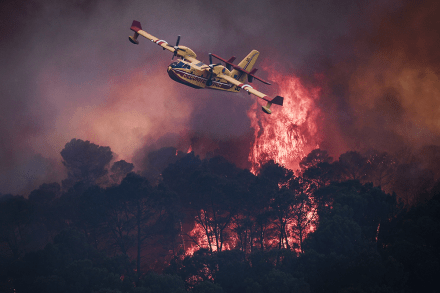
Provence As soon as I opened my front door I could smell it. Along the path, flakes of white ash landed on my arms. Looking north beyond the cliff, I saw a rapidly increasing plume of brown-black smoke. Before long it filled a third of the sky. Not again. Ten years ago, almost to the day, the concrete shack I was renting in the woods a few miles from the village was almost engulfed. Jeremy was having a break and staying with me when a wildfire broke out in the valley below. The smoke and flames looked about a quarter of a mile away and firefighting Canadairs flew low overhead. Friends told us to leave but I refused. I’d left everything behind in Scotland 18 months before and couldn’t face doing so again. Jeremy asked if he’d have to knock me out and throw me over his shoulder.

wildfires

Did someone say climate change?

As seen in the Daily Telegraph I am sitting in my living room watching Songs of Praise, when a sudden burning smell assails my nostrils. I leap up from my armchair, deposing my poor delicate bichon frisé Wordsworth from my lap. ‘WILDFIRE,’ I shriek. I had heard the news of thousands being displaced in the South of France, but I never imagined the fires would reach Otford, Kent. Leaving Wordsworth to his fate, I make for the back door in the kitchen, only to discover the real culprit: my toaster, billowing black smoke. Oh heavens, I must have forgotten. Retrieving the two slabs of solid carbon from the now-defunct toaster, I muse on how, even if I hadn’t been about to be consumed by a climate change-induced wildfire, my fear of one raises an important point.

The fall of AI’s shooting star

Situational Awareness is a hedge fund that has just taken a spectacular dive. Its name was adopted from the title of an essay by the fund’s 24-year-old German founder, Leopold Aschenbrenner, exploring the promises and perils of AI ‘superintelligence’. Many people who thought Aschenbrenner himself was super-intelligent gave him money to invest and, for a brief while, he outperformed their wildest expectations, his novice fund clocking up a 439 per cent return in the first half of this year. But in July it plunged from $45 billion to $10 billion as AI-related stocks tumbled and its entire holding of listed shares had to be sold to raise liquid funds. Now market-watchers are asking whether he’s the harbinger of a wider crash or just an overhyped shooting star.

Tears and terror on the front line of the French wildfires

Provence As soon as I opened my front door I could smell it. Along the path, flakes of white ash landed on my arms. Looking north beyond the cliff, I saw a rapidly increasing plume of brown-black smoke. Before long it filled a third of the sky. Not again. Ten years ago, almost to the day, the concrete shack I was renting in the woods a few miles from the village was almost engulfed. Jeremy was having a break and staying with me when a wildfire broke out in the valley below. The smoke and flames looked about a quarter of a mile away and firefighting Canadairs flew low overhead. Friends told us to leave but I refused. I’d left everything behind in Scotland 18 months before and couldn’t face doing so again. Jeremy asked if he’d have to knock me out and throw me over his shoulder.

Portrait of the week: No. 10 North, Burnham meets Zelensky and European wildfires  

Home Andy Burnham, the Prime Minister, summoned cabinet ministers for a day at No. 10 North – Heron House in central Manchester, shared with intelligence agencies – which he reached by private jet to Glasgow, where he had an appointment, and another private jet south to Manchester. President Volodymyr Zelensky of Ukraine became the first international visitor to Mr Burnham, who told him: ‘You can count on the UK for as long as it takes.’ He decided to speed up the independent review of adult social care being undertaken by Baroness Casey of Blackstock. He said that he wanted schools to offer technical courses to children aged 14 and over.

Won’t someone please think of the French wine?

There was something surreal about my visit to La Cité du Vin, Bordeaux’s wine museum, last Saturday. From the top floor, with its panoramic view of the city, you could see the smoke from the Gironde wildfire turning the sky yellow, yet none of the staff seemed remotely concerned. This was in spite of the fact that the conflagration had already triggered France’s largest evacuation since the second world war and was getting closer to Bordeaux every hour. OK, maybe they thought it unlikely they’d be asked to leave their homes, but weren’t they worried about the region’s vineyards? These people worked at a museum dedicated to celebrating wine, for Christ’s sake.

The unspoken truth about wildfires

Bordeaux and Madrid are threatened by flames. In Sicily, arsonists tied burning rags to the tails of cats to spread fires. Here in Britain the Cairngorms and Peak District national parks are ablaze. It’s the climate Armageddon, say the greens. If only we had built more wind farms and eaten fewer cows this would not be happening. Hot, dry spells undoubtedly make fires more likely, but awkwardly for those blaming climate change, wildfires are getting less frequent worldwide, not more, as the globe warms. The acreage burned has decreased steadily since 2000, according to Nasa’s satellites, and is thought to have almost halved in a century.

Spain’s response to wildfires has been infuriating

From my home in Ávila I usually have a splendid view of the ancient town’s medieval walls. But yesterday morning the wind changed direction and they were largely obscured by a pall of wildfire smoke. The town hall issued health advice and recommended closing windows. But I’m among the fortunate. Everyone in Burgohondo, 25 miles south of Ávila, has been evacuated. It is the village my wife’s family comes from, and where the fire started. Across the region, tens of thousands have already been forced to leave their homes. And the forecast is ominous. Last year I suggested that Spain’s summer fires are made so frequent and destructive by long, hot, dry summers and by rural depopulation, with the resulting abandonment of farming and grazing.

spain wildfires

Please stop filming yourself urinating in JFK’s old apartment building

From our US edition

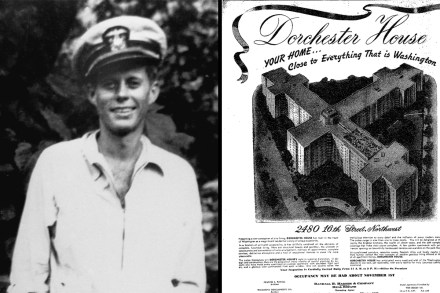
Dorchester House is a storied Art Deco apartment block in Northwest DC, noted for being John F. Kennedy’s first address in the capital. Fast forward a few decades and the building appears to offer far less glamor: a number of residents have complained about repeatedly finding urine and feces in the building’s stairwells. One resident told Cockburn he encountered excreta in the stairwell “daily during the winter.” The waste is cleaned up “usually within a few hours after I contact the front desk,” says the resident, “but in rare cases it can remain for days. There is still some dried feces in one of the stairwells that has never been cleaned up.” “I have to use the flashlight on my phone to avoid stepping in it,” he added.

building

Labour’s class war on moorland

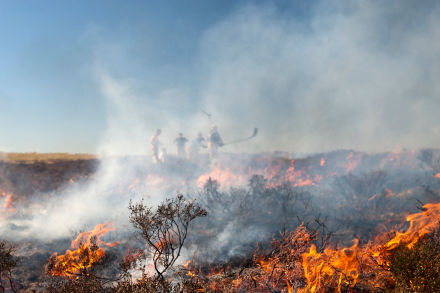
This year has been a bad one for wildfires in Britain. In June, nearly 30,000 acres burned near Carrbridge in the Highlands. In August, a careless camper, I’m told, ignited 5,000 acres in the North York moors, setting off 18 unexploded shells, shrapnel from one of which narrowly missed a gamekeeper. The pollution from wildfires was ten times worse this year than in the wetter weather of last year. Yet Keir Starmer’s government has chosen this autumn to ban the one practice that has been preventing more such dangerous fires: the managed burning of heather on much of England’s moorland. In doing so, it has ridden roughshod over advice from scientists, firefighters, land managers, farmers and environmentalists, ignoring or misrepresenting evidence along the way.

Seneca’s guide to coping with disaster

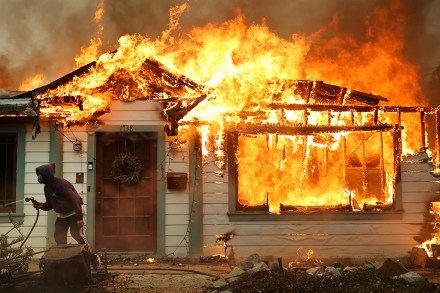
How does one attempt to console someone on the destruction of their home, a fate recently visited on so many citizens of Los Angeles? Seneca, the millionaire philosopher and adviser to the emperor Nero, associated consolation with ‘reprimanding, dissuading, exhorting, commending’. He exemplifies that in a letter musing on the reaction which his friend Liberalis had had to the destruction by fire of his beloved Lugdunum (Lyon) in Gaul ad 64. This had caused Liberalis to worry about the strength of his own character, usually so steadfast, when confronted with this disaster. Seneca contended that we should be ready for anything, since there is ‘nothing that Fortune, when it so wishes, does not topple at the height of its prosperity’.

Am I a MAGA icon?

‘Traitor!’ the woman yelled at me the instant I entered the beautifully decorated living room of a famous actress. It was a Twelfth Night celebration, and the room was full of glamorous friends and acquaintances. ‘What?’ I replied, bemused. ‘That photo!’ she screamed, ‘How could you take that picture with all those Republicans?’ Over Christmas I had been to a dinner hosted by some good friends who happen to be Republicans. This, it turned out, was a great crime. I am a Tory but have many socialist friends and we get along just fine and have hearty and amusing conversations. Here in America, though, it seems Democrats and the Republicans cannot even mingle. ‘Are you kidding me?’ I asked her. ‘No, I’m not,’ she snapped.

Which were the most destructive fires in history?

Swing states Where would Canada and Greenland rank if they became US states? – Canada would be, by far, the largest state. In fact, at 3,855,100 square miles it is marginally larger than the current US (3,796,742 square miles). – It would also be the largest state by population, with 41.5m inhabitants, putting it ahead of California (39.4m). – It would have the third largest GDP, at $2.58tn, behind California ($4.08tn) and Texas ($2.69tn). – Unless Canada also joined, Greenland would become the largest US state, at 836,330 square miles, ahead of Alaska (665,384 square miles). – It would be the smallest in terms of population, its 56,600 inhabitants less than a tenth of the current least-populous state, Wyoming (587,618).

The Greek wildfires and the failings of the state

The wildfires raging across Greece for what is by now more than a week, show no sign of abating. High temperatures continue in what is the country’s worst heatwave in almost four decades. While no region of the country has been spared, the images coming from the northern part of Evia island are particularly striking. One, showing an elderly woman in despair – the grim atmosphere behind her painted dark red by fire and smoke, like a still from a post-apocalyptic film – became the prime example of what the new reality of extreme temperatures will look like. It was from Greece, but it could as easily have been taken in Turkey, Italy, Spain and other places around the Mediterranean sea that are fighting the same battle.