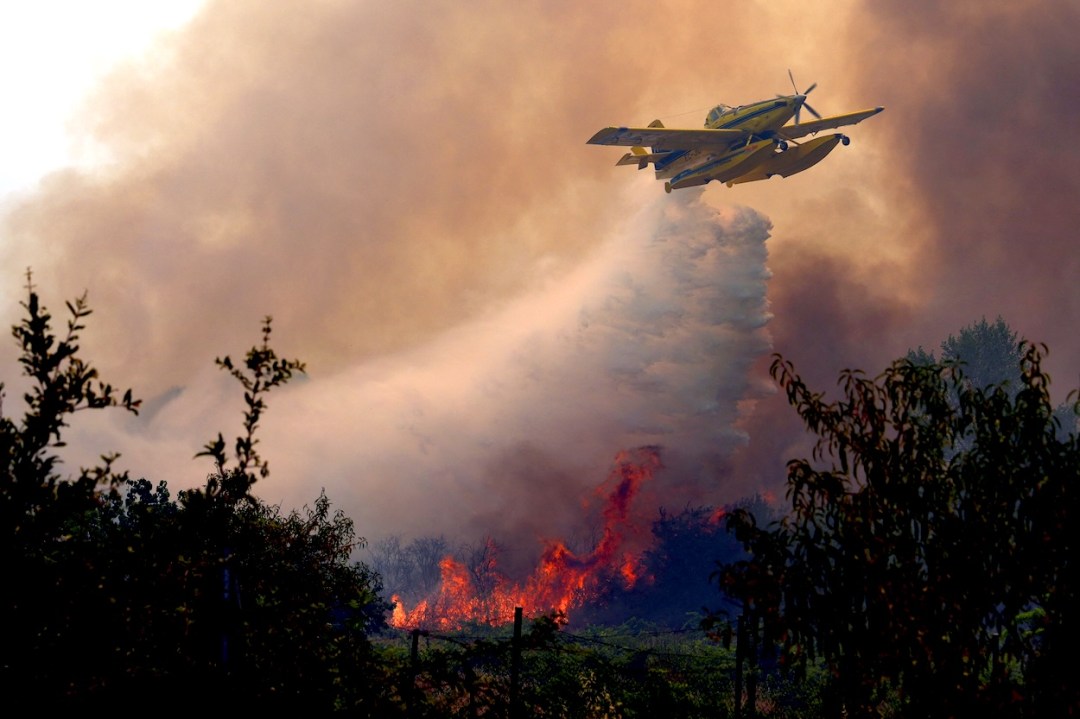
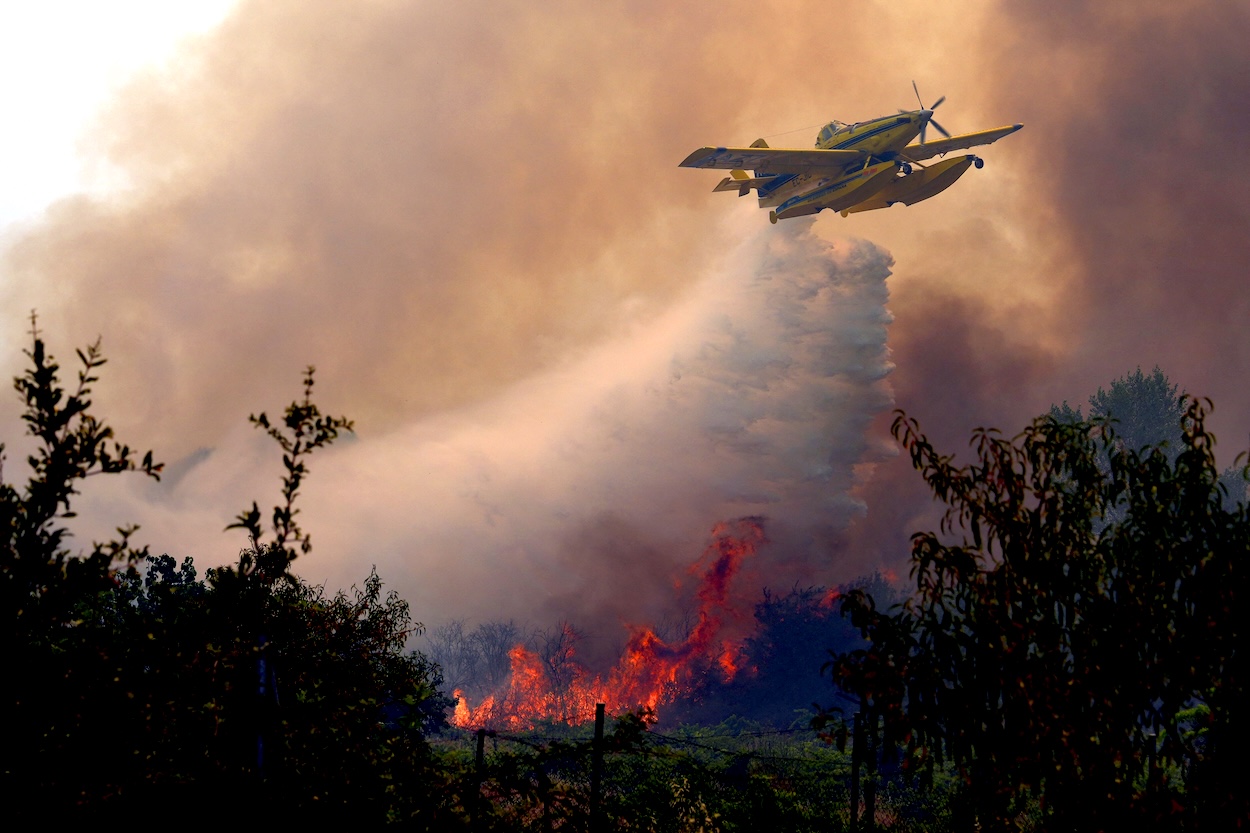
From my home in Ávila I usually have a splendid view of the ancient town’s medieval walls. But yesterday morning the wind changed direction and they were largely obscured by a pall of wildfire smoke. The town hall issued health advice and recommended closing windows.
But I’m among the fortunate. Everyone in Burgohondo, 25 miles south of Ávila, has been evacuated. It is the village my wife’s family comes from, and where the fire started. Across the region, tens of thousands have already been forced to leave their homes. And the forecast is ominous.

Last year I suggested that Spain’s summer fires are made so frequent and destructive by long, hot, dry summers and by rural depopulation, with the resulting abandonment of farming and grazing. Inadequate forest management leaves the land dense with highly combustible vegetation. And, of course, politicians repeatedly fail to prepare adequately.
Sure enough, ten months later, as ash settles and sirens wail across Castile-León, it’s all happening again – on a terrifying scale. El País, Spain’s center-left newspaper of record, ends its solemn editorial with characteristic civic earnestness: “The urgent priority now is to extinguish these fires and care for the victims, but once the last embers have been extinguished, the most difficult part will begin.” The most difficult part, the editorial makes clear, is preventing future disasters.
These pious platitudes display the delusional pomposity that dominates Spanish political discourse. They imply the existence of a sensible, functional policy cycle: fires break out; they are eventually extinguished; serious politicians, counseled by experts, then assemble in conference rooms in Madrid and Valladolid; and effective long-term preventive reforms follow. What actually happens is simpler: once the fires are out and the television crews have left, the politicians return to their endless bickering over which party is more corrupt – which, believe me, is a close-run thing.
Far more convincing than the editorial’s facile optimism is the sober realism of its columnist Diego Garrocho, who writes of an “avoidable hell”: “The hills are ablaze because of a hostile and rapidly changing climate, and because of neglect by public authorities… Every summer we repeat the same ritual of ash, tears and broken promises…”
Meanwhile, Alfonso Fernández Mañueco, the regional president of Castile and León, has announced that his administration will join the criminal proceedings against those allegedly responsible for starting the Burgohondo fire through the prohibited use of heavy machinery. The announcement may be justified, but it does not answer the separate question of whether the regional authorities were adequately prepared.
It’s true that Mañueco’s administration responded to last year’s fires. It approved changes intended to put the regional fire-prevention operation on a year-round footing, while beginning a wider transition towards a predominantly public service by 2028. Yet shortly before this summer’s high-risk season, unions representing forestry workers in Ávila said that the operation was starting “at half throttle,” citing unfilled vacancies and staff who had yet to take up their posts. The situation, said one representative, was “the same as or worse than last year.” Firemen interviewed by El País have described high staff turnover, occasional failures of coordination and inadequately trained personnel.
The docile Spanish electorate is a full partner in this cycle of neglect
In Spain, regional governments have primary responsibility for forest-fire prevention and the initial direction of fire-fighting operations, while the central government supplies national resources, coordinates the response and, in exceptional cases, assumes command. As a result, when disaster strikes, the left-wing central government and the right-wing regional governments devote themselves to mutual recriminations. Last week, for example, Óscar Puente, the Minister of Transport, tweeted: “We are all clear that the UME [Military Emergency Unit] is now the new fire service for the autonomous communities governed by the PP. They cut taxes for the rich, slash public services and then ask the government to sort out their mess.”
But it’s too easy to place all the blame on politicians. The uncomfortable truth is that the docile Spanish electorate is a full partner in this cycle of neglect. After the disaster of last year’s fires, Mañueco’s PP nevertheless won more seats in the regional election.
El País identifies prevention as “the most difficult part.” The difficulty is not that Spain lacks the knowledge or technical capacity to reduce the danger. It is that prevention requires long-term planning, inter-party cooperation and unglamorous spending – and that Spaniards continue to reward their politicians’ incompetence.
Diego Garrocho puts it more starkly: “There is a lack of resources, investment, planning and prudence… these wildfires are not an act of God… they are the visible manifestation of decisions that were never taken.”
Quite so. And it’ll be just the same next summer.




Comments