Weather

Make men’s shorts socially acceptable 

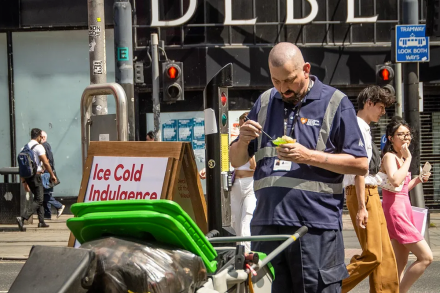
For a country which loves to talk about the weather, we do not do it very well. They order these things much better in the United States. It helps that the US resisted the wholesale adoption of centigrade. Celsius, while fine for performing nerdy scientific experiments, is insufficiently granular for everyday use. I favour a uniquely British measure of temperature known as the tabloid scale, where very low temperatures are denoted in Celsius but high temperatures are given in Fahrenheit. (No Sun journalist should be made to write ‘Temperatures are set to soar into the low- to mid-30s’; it simply doesn’t work.) But the other American practice we need to adopt is the ‘feels-like’ temperature.

The humiliating truth about the way we think

Over the long span of human existence, different cultures have held varying notions as to how responsible we are for our own thoughts and beliefs. Before the dawn of the Abrahamic religions, and in places untouched by these faiths, it tended to be the rule that individual members of the group could only be understood as parts of the whole, or in the grander cosmic scheme of things. The ascendence of Christianity in Europe, with its idea of the indivisible soul, tilted matters more towards a belief in individual agency and accountability. This concept, secularised by Descartes, who gave us the commanding rational ego, has proved resilient ever since, despite the best efforts of Freud, neuroscience and gene selection theory to dethrone it.

The challenge of dining al fresco in Chicago

From our US edition

The food and drink editor was taken with my idea for a piece on the challenges of outdoor dining in the big city, specifically Chicago, the big city where I live. “Do you know when you might be able to file?” she asked. “Ma’am,” I replied, “this morning it was 23 degrees Fahrenheit. One of the challenges of outdoor dining in Chicago is avoiding frostbite. How far can you push it out?” The number of outdoor diners in Chicago killed by shrapnel is remarkably low I would have preferred the Fourth of July. She gave me till the end of April. Fine, I said. Even in Chicago, two straight months of inhospitable weather would be unusual, setting aside that 43-day stretch when the mercury never got above freezing. (No joke. December 28, 1976 to February 8, 1977. Look it up.

Is ‘wind drought’ the latest climate catastrophe?

Simon Winchester has found an excellent subject. While invisible, wind makes itself apparent through its effect on other things. This may mean flying detritus, scudding clouds and the rustle of foliage; or it may mean the ways in which it irresistibly alters and directs larger movements in society and culture. Much of the history of global capitalist exchange was driven by the trade winds, forcing the direction of money and goods into particular cross-continental patterns of advantage and disadvantage. Over the centuries, we have discovered more and more, understanding the westerlies and those high, savage rivers of air, the jet streams. Many significant events have been settled by wind.

Winter is coming. Thank goodness

The leaves on the oak tree in the park are three-quarters brown and bring to mind the two-tone hair of a model in the ‘before’ picture of a dye advert. The tiny leaves on the apple tree over the garden wall look as though they have been individually removed and stuck in an air fryer to crisp up nicely before being painstakingly reattached. The sky is leaden, the colour of Sunday afternoons on the box in the 1970s, when the grey screen swarmed with Messerschmitts, Heinkels and Spits… It can only mean one thing. Winter is coming. And just in the nick of time. Because winter is wonderful – easily the best season, no matter what others may claim. How so?

The Mediterranean summer holiday is broken

For more than 60 years it has been an annual fixture for thousands of us, a birthright enjoyed and embraced by the children of modern, pleasure-seeking, throw-away Britain. Precisely when it happened, I couldn’t say, but at some point in the 1950s or 1960s, the trains radiating from the metropolis to the coastal resorts of Clacton-on-Sea, Southend-on-Sea, Bournemouth, Frinton, Brighton and beyond stopped heaving with Londoners. In their place a whole series of new, hitherto unfamiliar resorts zoomed into the national consciousness, heralded by the tang of aviation fuel and the promise of neverending heat and chilled cerveza.

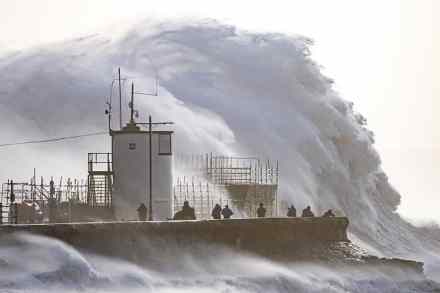
How bad can August storms get?

Injury time England bowler Chris Woakes won a standing ovation for coming out to bat against India at the Oval with his arm in a sling after dislocating his shoulder – although in the event he didn’t have to face a ball before England lost. Some other sportsmen who carried on while injured: — Franz Beckenbauer played out half an hour of extra time during the semi final of the 1970 football World Cup, also with his arm in a sling after dislocating his shoulder. — Manchester City goalkeeper Bert Trautmann played the last quarter of an hour of the 1956 FA Cup Final with a broken neck after colliding with a Birmingham City player. His side won 3-1.

Tsunami hits Hawaii and US mainland

From our US edition

Tsunami alerts were triggered this morning across the Pacific after an earthquake struck off Russia’s Kamchatka Peninsula. The quake, one of the most powerful ever recorded with a magnitude of 8.8, prompted evacuations from Hawaii, California, Japan and Russia. Initial waves, however, have so far proved less destructive than originally feared.Waves up to 4ft high were recorded in Oahu and Maui. Flights to and from Maui were canceled and commercial harbors closed as a precaution. "God willing, these waves will not hurt us," said Hawaii’s Governor Josh Green. "But you have to assume they will be life-threatening." Hawaii’s tsunami alert was later downgraded to an advisory, with officials warning of unusually strong currents and urging residents to avoid the coast.

Earthquake tsunami

Memories of childhood snow days

From our US edition

I must have seen it in a movie, one of the old black and white ones: jovial carolers coming into the manor, brushing the snow off their shoulders and stamping their feet. Or rosy-cheeked sledders whacking their boots against the doorstep as the fluffy stuff obligingly disperses. That’s not the way it works in north Georgia, where I remember about four or five childhood snows. Soggy, 35-degree snows. Snows that bring down pine trees onto every powerline in ten counties. Snows that nevertheless thrill the hearts of schoolchildren, who almost instantly find that they’re not equipped for their Alpine fantasies. That was not mitten country, or sweater country, or even often warm hat country.

snow

Should we prioritise the LGBTQI community when disaster strikes?

Are homosexuals and transgendered people more at risk from natural disasters than the rest of the population? I dare say there is a robust tranche of right-of-centre opinion which holds that they are indeed more at risk and that by and large this is a very good thing. Natural disasters are sometimes called ‘acts of God’ and those of a deeply conservative disposition may be inclined to see them as a punishment from the Almighty for grave transgressions of a sexual or gender nature. It is God doing what God does best – a spot of appropriate smiting.

Is 2023 a bad year for forest fires in Europe?

Boss pay Julia Hoggett, chief executive of the London Stock Exchange, complained that FTSE 100 bosses aren’t paid enough, and suggested that the gap between UK bosses and US bosses needs to be closed if the London market is to prosper. How much are FTSE 100 bosses paid? – The median earnings in 2021 for a FTSE 100 boss was £3.41m and the mean £4.26m. Three were paid less than £1m, 57 between £1m and £4m, 35 between £4m and £10m and three more than £10m. Two changed jobs during the year and so aren’t included in the figures – But the best-paid FTSE chief executive wasn’t even in the FTSE 100. That was Frederic Vecchioli, CEO of FTSE 250 company Safestore, who earned £17.06m. The next best-paying companies were: Endeavour Mining (FTSE100) £16.

Where have the world’s highest temperatures been recorded?

Swing when you’re winning What are the biggest UK by-election swings? — The 1983 Bermondsey by-election saw a 11,756 Labour majority turned into a 9,319 majority for the Liberal party – a result widely attributed to the Labour candidate, Peter Tatchell, coming out as gay during the campaign. The Labour party under Michael Foot was also extremely unpopular – and had its then biggest defeat in a general election four months later. — The Clacton by-election of 2014 saw a 12,068 Conservative majority overturned into a Ukip majority of 12,404, with the Conservative share of the vote falling from 53% to 25%. However, it was unusual in that the Ukip candidate, Douglas Carswell, had been the sitting Conservative MP.

Fact check: Is Sadiq Khan right about fires?

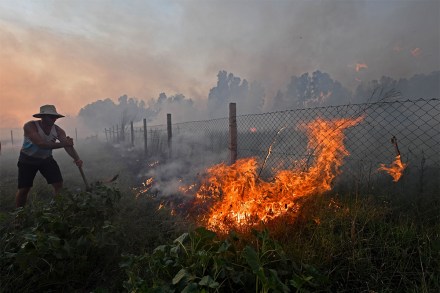
Will global warming condemn Britain to more fires? Sadiq Khan, Mayor of London, has been widely quoted this morning comparing recent fires around the capital to the Blitz. ‘Yesterday was the busiest day for the fire service in London since the second world war,’ he said – climate change caused the heatwave which ‘led to the fires’. He added that he was dismayed that the Tory leadership contenders were not discussing this ‘elephant in the room.’ So is this right – or misleading? As so often, it’s a mixture. Khan is correct to say that the number of calls to London fire brigade was a record high: it received more than 2,600 calls. But 999 call handlers can receive hundreds of calls about the same incident.

Slowly roasting in heatwave Britain

From our US edition

Manchester, England Making plans for a European city break this summer? Seeking somewhere with centuries of history and culture, fine wine and, above all, sweltering temperatures? There’ll always be Rome, Barcelona, Athens — but chances are you haven’t considered Manchester, the northern English industrial powerhouse that inspired Karl Marx to write The Communist Manifesto and gave the world the Smiths, Joy Division and Oasis (you know, the ones who wrote “Wonderwall”).

heatwave britain

Did Storm Eunice really break records?

Blow by blow Did Storm Eunice really set a new record for wind speed in England? A 122 mph gust measured at the Needles on the Isle of Wight is, according to the Met Office, provisionally the fastest ever recorded in England. Greater speeds have been measured in Scotland: 173 mph on Cairngorm summit on 20 March 1986 and 142 mph at Fraserburgh on 13 February 1989. Northern Ireland, too, has recorded a faster gust, of 124 mph at Kilkeel, County Down on 12 January 1974. Last week’s record is only provisional. One suspect detail is that it is more than 30 mph faster than any gusts recorded elsewhere.

The wishful thinking of COP26

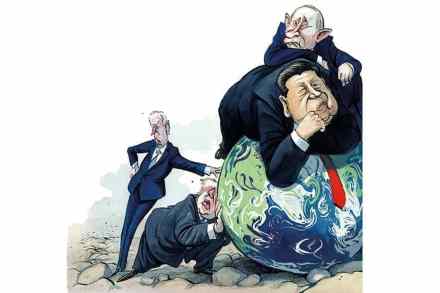
History records that George II was the last British king to lead his troops on the battlefield, at the Battle of Dettingen in 1743. But maybe it is only a matter of time… Addressing the COP26 summit in Glasgow Prince Charles called for a 'vast military-style campaign' against climate change. We must put ourselves on a 'war-like footing', marshalling the resources of the private sector as we did during wartime. I look forward to the sight of Charles, on horseback, leading a battalion against Xi Jinping’s People’s Army to try to take the site of China’s latest coal-fired power station. There is a very big problem with this kind of rhetoric.

It’s no wonder young people have ‘eco-anxiety’

Is it any wonder that children and young adults are going down with ‘eco-anxiety’ , as claimed in an opinion piece in the BMJ this week? One of the pieces of evidence it cites is a survey published in 2020, which claimed that 57 per cent of child psychiatrists had dealt with patients who were feeling anxious about climate change. It would be easy to dismiss this as another case of the ‘snowflake generation’ lacking the toughness of their forebears. But even if it is true that earlier generations of children, such as those brought up during the second world war, seemed to cope much better with the genuine threat of being wiped out by the nightly bombing of British cities, I think we ought to take it seriously as a mental health issue.

We are in a perfect storm of perfect storms

When my husband’s whisky glass fell off the little table next to his chair on to next door’s cat, which was on an unauthorised visit, provoking it to make a speedy exit, en route scratching the postman, who had for a change that afternoon rung the bell to deliver a parcel instead of putting a little card through the door saying we were out, it was, my husband averred, a perfect storm. He really meant he had fallen asleep and let his copy of The Spectator fall. We are in a perfect storm of perfect storms. ‘A perfect storm has arisen due to a combination of factors relating to Brexit and the pandemic,’ wrote someone in the Times about the petrol shortage. I fear the tempest will blow more perfectly yet.

I’m back for the Almanac

From our US edition

Growing up in Weston, Connecticut I remember well a little pamphlet that hung over the shelf in the garden shed, attached to a nail by a string threaded through its conveniently predrilled hole. The pamphlet was well-worn and covered with my father’s dirty fingerprints as he often consulted it. A new one replaced the old one every year. The cover always had a cameo of Benjamin Franklin, its first publisher. The title was The Old Farmer’s Almanac, and my father swore by it. As did several million other Americans, who wanted to be guided in the ways of gardening, know what to expect weather-wise for the year and find out about new seeds and ways to get better harvests of existing crops.

almanac

Pet project: how many dogs and cats are there in Britain?

Escape velocity The evacuation of Afghanistan was likened to the fall of Saigon on 30 April 1975. What were the logistics of that operation? — Although most US troops had left Vietnam, 5,000 civilians remained. Some left during the month, but ambassador Graham Martin gave the order to evacuate everyone only on 29 April. — The only available airbase had been shelled and there were no sea or land routes, so the only way out was by helicopter. In 24 hours 7,000 people were evacuated, including 5,500 Vietnamese citizens. Helicopters took off from the US embassy compound every ten minutes. — It was a 50-minute ride to US warships waiting off the coast.