Weather

Britain, climate change and the reality of extreme weather events

‘Extreme weather will be the norm,’ says the Guardian. Britain is gaining a more ‘violent’ climate according to Sir James Bevan, chief executive of the Environment Agency. ‘The UK is already undergoing disruptive climate change with increased rainfall, sunshine and temperatures, according to scientists,’ wites the BBC’s ‘environmental analyst’ Roger Harrabin. But how many people making these sorts of claims have actually read the Met Office’s report – the ‘State of the UK Climate 2020’ – as opposed to merely reading the press release? Not for the first time, the real data presents a very different world from the one depicted in the increasingly hysterical reporting on climate change.

Is rain getting heavier?

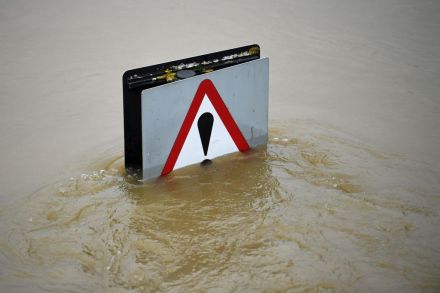
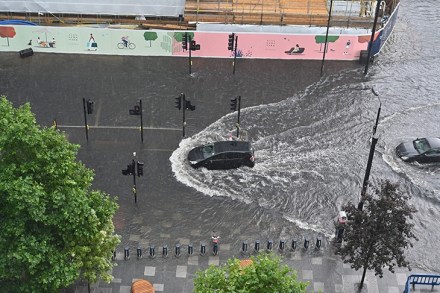
Reinventing the wheels Skateboarding made its debut at the Olympics. Who invented the skateboard? — There are many reports of homemade skateboards being created in the 1940s and 1950s by Californian surfers who wanted to continue a form of their sport out of season, but the first commercial skateboard was marketed by roller-skate company Roller Derby in 1959. The sport, however, failed to catch on until 1973, with the introduction of urethane wheels and a curve at the end of a board known as the ‘kick-tail’, which allowed acrobatics to be performed. Water logs There was more surface flooding in London. Is heavy rain becoming more common in London? The Met Office uses different ways to measure long-term rainfall trends. 1.

Have tennis players always been expected to give interviews?

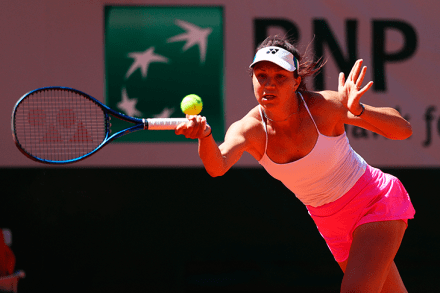
Game, set, chat Japanese tennis player Naomi Osaka withdrew from the French Open after being fined $15,000 for failing to appear for a post-match press conference. Have players always been expected to give interviews? — Wimbledon was first televised live in 1937, the year of Fred Perry’s third and final victory against Gottfried von Cramm. A photo from 1938, when Bunny Austin was beaten by the US player Donald Budge in the final, shows that the post-match interview was already part of the coverage. Vaccine clots How many people in the UK have died from blood clots related to the AstraZeneca vaccine? Up to 27 May the Medical and Healthcare Products Regulatory Agency has recorded 332 serious cases and 58 deaths.

How often does it snow in April?

D of E awards A few of the late Duke of Edinburgh’s lesser-known titles and honours: — Royal Chief of the Order of Logohu (Papua New Guinea); Grand Commander of the Order of Maritime Merit of the San Francisco Port Authority; Grand Cross in Brilliants of the Order of the Sun of Peru; Grand Cross of the Order of the Falcon (Iceland); Member First Class of the Order of the Supreme Sun (Afghanistan); Grand Cordon of the Supreme Order of the Chrysanthemum (Japan); Grand Cross with Chain in the Order of the Queen of Sheba (Ethiopia). Paying their respects The Duke of Edinburgh will have only 30 mourners at his funeral, thanks to Covid restrictions. How many people have attended or watched royal funerals?

Here in Texas, Hell has frozen over

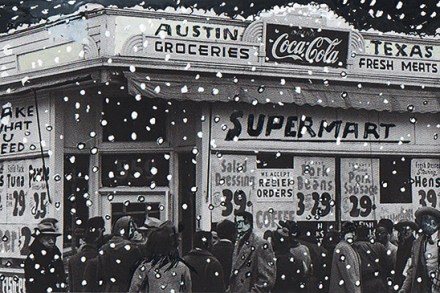
Austin ‘If I owned Texas and Hell,’ General Phil Sheridan famously said, ‘I would rent out Texas and live in Hell.’ Although the weather was unusually warm for the season in central Texas we guessed something was up when, in broad daylight with hawks about, our normally crepuscular attic mice risked running down a porch pillar and gathering the spilled seed from bird feeders. They vanished completely days before the snowstorm struck. Sadly, some of our birds were not so prescient. We watched a bewildered Audubon’s warbler, which could no longer fly, hopping about in the snow. Either it had lost the main flock continuing south, or good weather had persuaded it to stay. Trying not to frighten it, my wife made sure it was fed.

The BBC tradition of trying to remove patriotic songs from Last Night

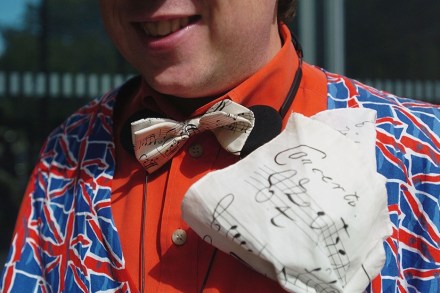
About Last Night It was suggested that the BBC might ‘decolonise’ the Last Night of the Proms by removing ‘Rule, Britannia’ and ‘Land of Hope and Glory’. ‘Land of Hope and Glory’ made its first appearance at the Proms in 1902 (Edward Elgar’s march had been played the previous year without the words). Sir Henry Wood’s ‘Fantasia on British Sea Songs’ followed in 1905. But the Last Night in its modern form began only with the first televised Last Night in 1947. Twenty-two years later began another tradition: the BBC trying to remove patriotic songs from the programme. The move was defeated in 1969 and again in 1990, in the run-up to the Gulf War.

How hot does a ‘heatwave’ have to be?

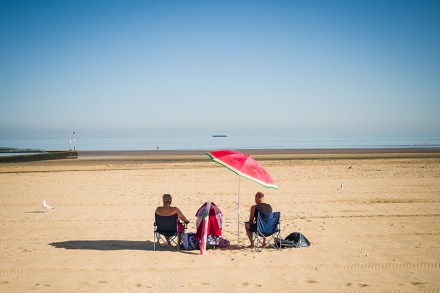
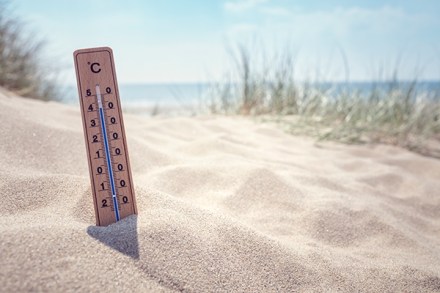
Some like it hot Are heatwaves becoming a devalued currency? Last year the Met Office defined a heatwave as three consecutive days when maximum temperatures exceed the 90th percentile maximum temperature for mid-July. In London that means when the maximum exceeds 28˚C. For the rest of the south-east, as far west as Hampshire and as far north as Nottinghamshire, the threshold is 27˚C. For Dorset, Somerset, Herefordshire, Shropshire, Cheshire, Derbyshire, South Yorkshire and Lincolnshire it is 26˚C, and everywhere else, including the West Country, most of Wales, the north of England and Scotland it is 25˚C. In places it will mean a heatwave occurring in 30 to 50 per cent of years. Journeys by dinghy How far do migrants have to travel in boats?

My toilet ultimatum to the builder boyfriend

The rain showers had a strange and wondrous effect. All the cyclists, joggers and dog walkers that were coming from miles away to take their essential exercise in the countryside magically disappeared. No one we didn’t recognise took any essential exercise in the downpours, but then resumed it when the weather changed. I find this odd because the explanation of the day-trippers for putting their bikes and their backpacks and their hiking equipment and their picnic baskets into the backs of their cars had been that they really, really needed to do that — come hell, high water or Covid. The locked-down inhabitants of towns and cities needed to pedal around the countryside hour after hour, day in day out, so badly that we lot who live here ought to get out of their way.

Barometer: The brands regretting calling themselves ‘Corona’

Going viral A few of the businesses which chose ‘Corona’ as a brand name and now have a bit of an image problem: — Corona beer — brand of lager owned by Anheuser Busch InBev. — Corona Energy — gas and electricity supplier to businesses and the public sector. — Corona Pine Furniture — range from Mercers Furniture of Rotherham. — Corona ‘the 2D game engine’ — software for designing video games. — Corona, the ‘lemon capital of the world’, a city of 160,000 people 45 miles from LA. — And one which changed its name in time: Corona lemonade — South Wales manufacturer taken over by Britvic in 1987 and rebranded.

What did psychics predict was going to happen in 2019?

Bah humbug Some of the things reported to have been banned this Christmas: — Mulled wine banned from being sold by street traders at Christmas fayres in Castleford, West Yorkshire, on the grounds it would break a Public Spaces Protection Order designed to stop street drinkers. — Christmas lights banned by health and safety officers in Pembury, Kent, on the grounds they each weighed more than 4kg. — Children banned from sending more than one Christmas card each to classmates at Belton Lane Primary School, Grantham, on the grounds that cards are environmentally unfriendly. — Glitter banned from Marks and Spencer cards, wrapping paper and decorations.

What weather records were broken in 2019?

Keeping it in the family A study by the Middle East Technical University claimed to prove that the pronounced chin of Charles II of Spain and many of his Habsburg relatives was the result of marriage between cousins. Some royals who went even further: — Tutankhamun’s wife Ankhesenamun is believed to have been his half-sister. She bore two daughters who both died in infancy. — King Rama V of Siam (1868-1910), also known as Chulalongkorn, is reputed to have had 77 children with 92 different consorts, four of whom were his half-sisters. — Princess Nahienaena of Hawaii (1815-1836) bore a daughter with her brother, Prince Kauikeaouli. The baby died.

Barometer | 25 July 2019

Losing confidence The government may soon face a vote of no confidence, the second this year. How often do these votes happen — and succeed? — Since 1945, UK governments have faced votes of no confidence on 23 occasions. Only one of these has been successful — when Jim Callaghan lost by a single vote on 28 March 1979, precipitating the election which brought Margaret Thatcher to power. — There have been 24 successful votes of no confidence in history, 13 of which were in the latter half of the 19th century. — Since 1900 there have been only three — that in 1979, and two in 1924 which brought down Stanley Baldwin and Ramsay MacDonald respectively.

Low life | 11 July 2019

The hotel manager had arranged for me to borrow an Alfa Romeo Spider Duetto two-seater convertible (1982) for the afternoon. And now, after lunch, here it was, as promised, parked on the forecourt. ‘You’re familiar with left-hand drive cars I take it, Mr Clarke?’ she said, a touch apprehensively I thought. ‘I’ve had a Spider,’ I said. ‘Similar to this, but a later, fuel-injected model.’ A true statement — although I was as confounded by it as she was. She handed me the key and a map with a suggested scenic route marked in Biro. I climbed in, fired the thing up, and with a cheery wave, 10,000 exploratory revs and a pip on the horn I set off through the village.

Portrait of the Week – 9 May 2019

Home John McDonnell, the shadow chancellor, blamed Theresa May, the Prime Minister, for leaking details of talks between the government and Labour over Brexit. He said she had ‘blown the confidentiality’ of the talks and ‘jeopardised the negotiations’. He was annoyed that the Sunday Times had said she would agree to a customs union, something predicted four days earlier by the Daily Telegraph. Rory Stewart, the new International Development Secretary, said the Conservatives had to accept the ‘short-term pain’ of a Brexit compromise with Labour. David Lidington, May’s right-hand man, admitted that the failure to reach a Brexit agreement meant that the EU elections on 23 May ‘do have to take place’.

Is the weather the Brexiteers’ best argument?

We have reached peak summer, literally. And the weather is probably the Brexiteers’ best argument, since it would be madness to go abroad. This is the great week of summer parties in London, including the US Embassy and the FT. Last week was the V&A summer party, described to its director Tristram Hunt by one disbelieving guest as Civilisation set on Love Island. The reason was that millennials prefer pink carpets to red ones and drink slightly less than their elders, and worse. I am not saying there is a London/country divide, but we take our pleasures differently in Norfolk. Our neighbours were busy organising their stall for the village fête last weekend, with its celebrated attraction: hammer the nail into the log.

Why weather apps can’t be trusted

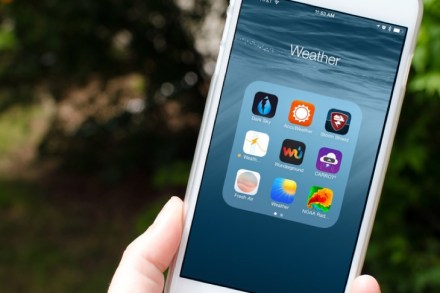
The Times reports this morning that Bournemouth business leaders are hugely annoyed with the BBC, whose weather app predicted thick cloud and thunderstorms for the recent bank holiday. In the event, it was sunny and warm, but the damage had already been done, and takings on the seafront were said to be down by nearly 40 percent as people decided to stay at home rather than risk a soaking. While weather forecasting is undoubtedly getting better, it seems fairly clear that ultra-local forecasts of the kind you find on weather apps can be very misleading: reducing the whole forecast to a single icon, as most apps do, removes all the nuance. The lesson seems to be that if you are going to make a decision based on a forecast, you should watch the TV weather and get it explained to you.

Why the BBC weather forecasts wind me up

One of George Santayana’s most famous dicta is that ‘To be interested in the changing seasons is a happier state of mind than to be hopelessly in love with spring.’ This may be a metaphor for life, but it is also literally true. It matters in countries such as ours, where no season is so extreme that it cannot be enjoyed. If you agree with Santayana, you will be irritated by our BBC weather forecasts, which misrepresent the weather as a constant, and generally losing, battle to get warmer. In their language, temperatures are forever ‘struggling’ — always to rise, never to fall.

Wild life | 8 March 2018

Laikipia Off Madagascar the other day the Indian Ocean gave birth to a little storm called 11S. As its gyre turned clockwise over the sea, 11S gained momentum until it was a huge vortex of thunder and lightning christened Tropical Cyclone Dumazile. Like a naughty lover yanking away the shower curtain so that everything in the bathroom is sprayed with hot water, Dumazile pulled the entire weather system of mainland Africa eastwards. The effect was to suck the clouds from the steamy jungles of Congo’s river basin across the equator and dump their entire contents over our farm in highland Kenya. There was I enjoying the dry season. ‘How’s the farm?’ asked people through February. ‘Dry,’ I said.

London calling | 26 October 2017

Madame Monet was bored. Wouldn’t you have been? Exiled to London in the bad, cold winter of 1870–71. In rented rooms above Shaftesbury Avenue, with a three-year-old son in tow, a husband who couldn’t speak English, and no money coming in. Every day roast beef and potatoes and fog, fog, fog choking the city. ‘Brouillardopolis’, French writers called it. Camille Monet had offered to give language lessons, but when she hadn’t a pupil — and Claude hadn’t a commission — she let him paint her, listless on a chaise-longue, book unread on her lap. Her malaise was ‘l’exilité’ — the low, homesick spirits of the French in England.

What I did on International Women’s Day

It was International Women’s Day on Wednesday of this last week. The Guardian had enjoined its readers to send in reports of what they had done to advance the struggle, or how they had been in some way oppressed by men — perhaps raped, or talked to as if they were stupid, or looked at a little coldly when they squirted breast milk over fellow diners at The Ivy. I tried to think of something I had done for the cause but came up short, sad to say. So instead I tried to show solidarity by spending a substantial amount of International Women’s Day looking at a photograph of Emma Watson’s tits. The actress is a radical feminist campaigner and has even been given some kind of role at the United Nations to advance the cause of female liberation across the globe.