Vladimir putin

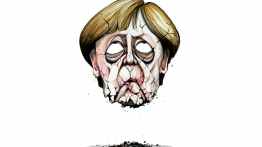
Angela Merkel’s legacy crumbles

From our US edition

Angela Merkel is one of the most recognizable names in modern politics and probably the only German chancellor since post-war leader Konrad Adenauer that Americans will remember. Merkel was the leader of the center-right CDU party and head of the German government for a full 16 years, making her one of the longest-serving chancellors in German history as well as the first woman to hold the post. Now the full scale of her disastrous reign is becoming clear. Following the nuclear power plant incident at Fukushima in 2011, Merkel began Germany's "Energiewende" (energy shift), intending to phase out of all of Germany's nuclear plants in favor of renewables.

merkel retirement
support

Make China pay for its quiet support of Putin’s war

From our US edition

China is tacitly backing Putin’s aggression against Ukraine. The Biden administration should combat this by imposing economic costs on China through the corporate Environmental, Social and Governance disclosure requirements that are already in place. Xi Jinping and Vladimir Putin met in February at the Beijing Olympics, their thirty-eighth visit in the nine years since Xi took power. In a 5,000-word statement on February 4, Xi and Putin proclaimed their friendship with “no limits” and “no forbidden areas of cooperation.” Just weeks before the invasion, China signed agreements to buy from Russia energy and agricultural products worth over $200 billion.

Zelensky basks in the world’s spotlight

From our US edition

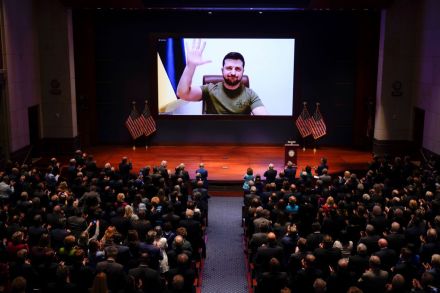
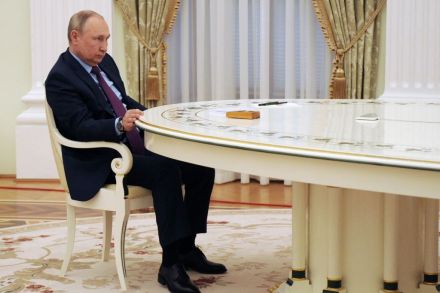
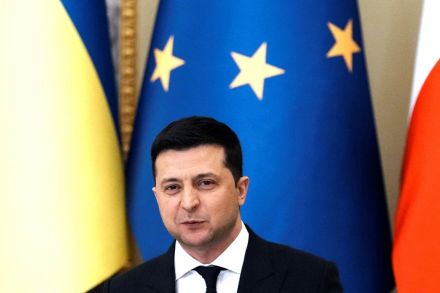
Ukrainian president Volodymyr Zelensky is flying high. The contrast between Zelensky, who virtually addressed Congress this morning, and Russian president Vladimir Putin, who rarely appears publicly, becomes starker almost by the day. Putin believed that he could launch a Blitzkrieg attack that would topple Zelensky but the very opposite has occurred. It is Putin who is cornered while Zelensky basks in the world’s spotlight. In his address, it was shrewd of Zelensky to fold Ukraine’s struggle for independence into the American saga. Essentially, he appealed to the New World to redress the balance of the Old World.

zelensky

Yes, Putin could use biochemical weapons in Ukraine

From our US edition

The Russian Defense Ministry held a briefing last week claiming that they have discovered US-led biological laboratories in Ukraine. Moscow stated that a rapid halt was brought to the facilities’ activities, adding that Kyiv and Washington had violated the Convention on the Prohibition of Biological and Toxin Weapons. The Kremlin did not feel the need to provide evidence of its claims, par for the course in Putin’s Russia.

biochemical weapons
crazy nuts

Is Putin nuts?

From our US edition

As Russian forces level Ukrainian cities with artillery, missiles and airstrikes, there's a concerted effort to get inside the mind of Vladimir Putin: from pundits, former US national security officials and current heads of government. What could possibly get the man to stop the bombardment and support a ceasefire? Is Putin intent on conquering all of Ukraine? Or is there some combination of concessions the Ukrainian government and the West could offer that would end the war and bring about a full Russian troop withdrawal? The fact is none of us know what Putin’s endgame is. Putin’s own advisors, especially those kept out of the inner circle, may not even understand what the Russian leader is planning.

Russia is the West’s great tragedy

From our US edition

The books written about the tragedy of the Russo-Ukrainian War will be legion. In the meantime, there's another book that ought to have been written 20 years ago about a previous tragedy concerning Russia: how, following the collapse of the Soviet Union in 1991 and with it the demise of the communist regime, Russia and the West failed to “converge” in some way. Why did the two did not come to embrace each other politically, economically, and culturally? The rivalry between East and West has since 1917 been fundamentally an ideological and not a nationalist one. Historically, before the Bolshevik Revolution, Washington had been on cordial terms with Moscow, from which it had purchased the Russian territory of Alaska in 1867.

us-russia

What happens if Russia defaults?

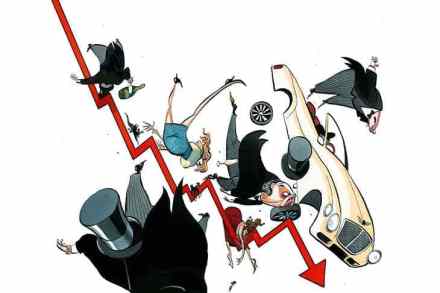
Well down the list of things to worry about as the ghastly Ukrainian tragedy unfolds is the high probability that the Russian government will stop paying its international debts. But this risk should certainly be somewhere on that list – as the fallout from past defaults has shown. We have been here several times before. Moscow also defaulted on its debt in 1998, exacerbating a sell-off across all emerging markets. It led to the collapse of a huge US hedge fund, Long-Term Capital Management, which had to be bailed out to prevent a worldwide meltdown. This came too late to save many other investors from large losses. Ten years later, apparently isolated problems in the US mortgage market did cause a global financial crisis.

Russia’s war is a global cancer

From our US edition

One thing I have always found fascinating about Russia is that when they tell us they are going to do something, they usually do it. So when Moscow struck a military base near the Poland-Ukraine border that was a staging ground for arms shipments, we shouldn't have been surprised. They told us that was their next plan of action just twenty-four hours before they did it. But that’s just the beginning of what Russia likely has in store for the West, NATO, and the entire world if we aren’t careful. Russian president Vladimir Putin’s plan seems simple: chaos on a scale that will extend far beyond Ukraine. You see, Putin is starting to come to grips with the fact that he can’t win the war in Ukraine — at least on paper — unless he destroys Ukraine.

cancer

Kamala Harris laughs at a war

From our US edition

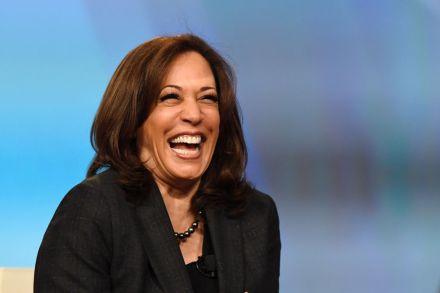
It’s nice to be prescient. On Thursday, in a column titled “Kamala Invades Poland,” I introduced the world to “cackle diplomacy.” “Silly partisan hyperbole!” I nearly heard as the social media-ites had their say. But then the vice president of the United States did me proud. Just a few hours after my column posted, there she was, holding a press conference with Polish President Andrzej Duda. Some say the people who run our government sent Kamala Harris to Eastern Europe in order to give her a chance to shine in the sphere of international relations. Watch her performance and tell me what you think. “I am here, standing here. On the northern flank...on the eastern flank...talking about what we what we have in terms of the eastern flank and our NATO allies.

Peace and its consequences in Ukraine

From our US edition

It is now a matter of consensus that Vladimir Putin never intended to fight the type of war that now faces him in Ukraine. What was plainly meant to be a blitzkrieg-style assault has devolved into a war of attrition, with death, destruction and violence on a scale unseen in Europe since the disasters of the last century. It is quite plain that the Kremlin, despite its bluster, is aware of this. The Kyiv government's claims of Putin dismissing his generals and raving in fury at his security services are consistent with events on the battlefield; indeed, after two weeks of fighting, Russia has only managed to decisively claim one Ukrainian city.

volodymyr zelensky ukraine invasion

Don’t buy Biden’s ‘Putin price hike’

From our US edition

The Putin price hike. That’s the line the Biden administration is using to absolve itself of blame for higher gas prices. “Russia is one of the three largest oil producers in the world,” White House spokeswoman Jen Psaki said in a social media video meant to deflect criticism from President Joe Biden. “And the fact that they started this conflict, invaded a foreign country, and they are such a big producer of oil in the world is the reason why the global oil markets are disturbed and why gas prices are going up.” The administration banned Russian oil imports this week, with the House of Representatives approving a similar ban on Thursday.

vatican

Why won’t Pope Francis condemn Russia?

From our US edition

On February 25, the day after Russia invaded Ukraine, Pope Francis met with Aleksandr Avdeyev, Russia’s ambassador to the Holy See. Yet rather than summoning Mr. Avdeyev to the Vatican, Francis called at the Russian embassy, just two blocks from the Castel Sant’Angelo. The visit was a violation of diplomatic protocol. Heads of state don’t just pop ‘round to the local embassy. Over the next couple of days, it became clear that Francis wouldn’t be paying the same honor to Ukraine’s ambassador. Even more strikingly, Francis refused to condemn Russia for the attack. Vatican-watchers fumed. On February 28, the Vatican’s secretary of state released a video condemning the conflict “unleashed by Russia against Ukraine.

Don’t make war in Ukraine about Putin’s mental health

There was a time when supposedly serious commentators on world affairs used to at least feign historical knowledge. They might quote Bismarck or Castlereagh. Now, international relations punditry, like almost everything else, has succumbed to the language of pop psychology. Vladimir Putin is ‘gaslighting’ the Russian people, we are told, motivated by his ‘hypermasculinity’. His invasion of Ukraine is, according to one commentator on Radio 4 this morning, ‘unforgivable abuse’. I thought abuse meant kicking a dog or being cruel to a partner. Now it means starting a war. It’s almost as though we’re unable to think of Putin as anything other than a nasty contestant on reality TV.

ukraine

Ukraine and the war for your mind

From our US edition

Deterrence works. Russia's nukes are the only thing keeping the US from full-out war in Ukraine just six months after retreating from Afghanistan. The unprecedented propaganda effort by Ukraine and its helpers in the American mass media to drag the US and NATO directly into the fight has failed — so far. But the struggle — the one for your mind space — is not over. To understand what follows, you have to wipe away a lot of bull being slung your way. Insanity is not the only explanation for Putin’s actions of the past few weeks.

What’s behind Russia’s new Z symbol?

National symbols are usually proudly emblazoned for all to see. That’s the point of them. One, though, seems rather to have crept up on us in recent weeks, being flashed almost like a secret tattoo and then quickly covered up again. It is the letter ‘Z’ that Russians have started using to denote national solidarity and support for their country in the war in Ukraine. The Z came to international notice when a Russian gymnast, Ivan Kuliak, displayed it prominently on his strip two weeks ago while standing next to a Ukrainian competitor at a tournament in Qatar. He now faces a disciplinary inquiry as under the rules such symbols must not be worn.

The joy of wigs

I thought, or anyway hoped, that once I’d finished the chemotherapy I would spring back to vitality. Seven weeks on and I’m still creeping about like a two-toed sloth. Now and then I study my face and head in the bathroom mirror for signs of rejuvenation. The narrow skull now boasts a light covering of baby fuzz. Sprouting from my upper lip are some widely spaced bristles. But no sign yet of any eyebrows. From their pouchy sockets the eyes look back at me uncertainly. Listening to In Our Time a few weeks ago, I heard Melvyn Bragg read aloud Thomas Hardy’s poem ‘I Look into My Glass’. The three short, deceptively simple stanzas, concluding with the phrase ‘throbbings of noontide’ undid him.

Putin is bored

At the beginning of this year, Vladimir Putin was sitting comfortably in the Kremlin: his legacy so far a steady leader who had saved his people from the helter-skelter of robber capitalism in the 1990s and given them a modicum of stability and pride. He must have known that if he waged war on a country of 45 million brother Slavs, he risked losing it all. Liberty and life are now less certain. So why did he do it? Having spent four years in Moscow and more than two decades of Russia-watching, I have never believed that Putin was a chess grandmaster. While his apologists in the West lauded his cunning, I have always seen him as an improviser. Like the best at his favourite sport – judo – he prepares for combat, studies his opponent, and considers various eventualities.

Time for Europe to man up

From our US edition

The End of History has ended. It officially ended with Vladimir Putin’s decision to invade Ukraine. Francis Fukuyama wrote The End of History in the early Nineties. It's a book that captures the optimistic zeitgeist of that decade — born of the fall of the Berlin Wall and the implosion of communism. The basic idea was that once communism faded away — the reality, not the ideal, which will forever exist in the minds of many intellectuals — the world would become a more liberal, democratic and commercial place. It was an argument with real legs. East Germany was digested by the West without a burp. The Baltic states prospered. Asia took off. A rising commercial tide lifted all boats.

sanctions putin russia davos oligarch

Russia’s war on Ukraine: the lessons so far

The sheer complexity – and horror – of Russia’s war on Ukraine makes it difficult to distil the essential points. To take only one example, the battlefront north of Kiev, where the Russian convoy is stalled, is significantly different from that along the Black Sea, where Russian forces from Crimea have made substantial progress. A third front, in the east, is consolidating in Russia’s favour, though the fight was much harder and longer than Moscow expected. Amid this complexity, it is important to summarise what we know so far: 1. Vladimir Putin’s decision to invade Ukraine appears to be the most catastrophic strategic mistake since the end of the Cold War and by far the most dangerous.