Vladimir putin

Is the West deserting Ukraine at precisely the wrong moment?

Moscow is coming under direct drone attack, the Russian economy is creaking, patriotic bloggers are ever more apocalyptic in their predictions of military disaster and evidence is piling up that Russia’s elites are becoming seriously disillusioned with the war and Vladimir Putin himself. Is this the moment for Britain to desert Ukraine by easing sanctions and refusing to commit more money to Kyiv’s military? Last week, the British government issued licences for the import of gasoline products from Russia refined in a third country. No. 10 also approved  licences for British companies to continue to service tankers carrying Russian liquefied natural gas (LNG).

How Putin got the Hollywood treatment

Sometimes life disappoints you in interesting ways. I hated Giuliano da Empoli's 2022 book The Wizard of the Kremlin, a fictional political thriller about the dawn of Putinism, with a shuddering passion. I had, therefore, been looking forward to despising the film version when it arrived in cinemas last month, too.  Yet it turns out that TWotK, directed and co-written by French filmmaker Olivier Assayas, is an impressive film: visually stunning, well cast, a straight story well told. Paul Dano (the greasy-faced young preacher from There Will Be Blood) plays Vadim Baranov, the fictional ‘Wizard’ of the title, a whizkid theatre and TV executive tasked with creating and curating a successor to the ailing Boris Yeltsin.

Russians no longer believe Putin’s war propaganda

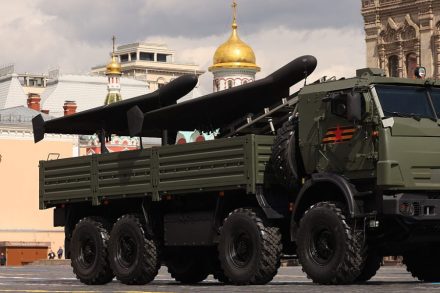
A year ago, Russia marked the 9 May Victory Day celebration with a spectacular display of fireworks that lit up the Moscow sky. This year the fireworks have again been spectacular – but this time they have been caused by long-range Ukrainian attack drones slamming into refineries, pumping stations and factories deep inside Russia. In the Black Sea port of Tuapse, fireballs of burning gasoline 15 storeys high erupted over the local oil refinery, while rivers of burning fuel ran down the city’s streets. Firefighters took three days to extinguish the inferno, which created a plume of smoke so high it was filmed by skiers from the slopes of the Caucasus mountains more than 60 miles away.

Those who believe in liberalism must now fight for it

I’m conscious that, just as the easiest way to lose an argument is to mention Hitler, so the easiest way to lose journalistic credibility is to invoke the 1930s. Yet the similarities to our own dismal decade are now too numerous to ignore. There is the same collection of morbid symptoms: the rise of strongmen, the collapse of the political centre, the intellectual organisation of political hatreds. Even more worryingly, there is the same sense of hurtling towards global conflagration. The similarities begin with the disintegration of the international order.

‘More than half our squad were executed’: Inside Russia’s rotten army

The Russians are on the warpath – and Europe is Vladimir Putin’s next target. That was Sir Keir Starmer’s alarming claim at the Munich Security Conference earlier this month. Britons ‘must be ready to fight, to do whatever it takes to protect our people, our values, and our way of life’, Starmer warned. Britain and Germany’s top military commanders delivered the same message in a recent article. Russia’s military posture ‘has shifted decisively westward’, wrote Air Chief Marshal Sir Richard Knighton and General Carsten Breuer. Soon the Kremlin ‘may be emboldened to extend its aggression beyond Ukraine’. Really? According to much western coverage in mainstream and social media, the Russian army is crumbling, corrupt and inept.

Learning from history requires sophistication and skill

If you reckon you have an understanding of international politics today, you probably haven’t been listening properly. Vladimir Putin, Xi Jinping, Benjamin Netanyahu and Donald Trump are making history too fast for most of us to keep up. Odd Arne Westad’s The Coming Storm seeks to make sense of the current geopolitical chaos by drawing parallels between now and the years before 1914. If you don’t find those comparisons reassuring, you aren’t supposed to. The point being stressed is that, unless we are careful, we risk sleepwalking into a Great Power conflict as terrible as, or worse than, the first world war. Westad is a leading Cold War historian from Yale and his comparisons are always thought-provoking and often accurate.

Moldova has been saved from Russian influence, but at what cost?

The European Union, guardian and champion of democracy, rightly takes a dim view when ruling parties ban their opponents, refuse to open polling stations in areas likely to vote against them, censor opposition news channels and allow a large staff of foreign election monitors to police social media in the run-up. If Serbia, say, or Georgia tried systematic election rigging of this kind, Brussels would be the first to call foul and disregard the result as illegitimate. But when it’s the EU that’s running the interference, as in Moldova this week, the rules are apparently quite different. This week the pro-EU party of Maia Sandu, Moldova’s President and a former World Bank official, won a slim majority in a general election.

Believe it or not, Russia is great

I have been invited to Moscow by the Russian Orthodox patriarchate because the organiser is a fan of my podcast. Everyone at home thinks I am either dangerous or mad. My mother is convinced I’m going to be bumped off by the FSB or killed by a drone. Others claim I have become a useful idiot of the evil dictator Putler because the patriarchate are merely his stooges. ‘Is that true?’ I ask the patriarchate’s media affairs guy. ‘Well, under Peter the Great we were run by the government. And under communism we weren’t allowed to exist. So you could argue that, historically, we’re about as independent as we’ve ever been.’ When I put the same question to an archbishop, his response is more forthright.

Is the British Council really a ‘nest of espionage’?

I worked for nearly a decade at the British Council in East Asia. Every day, under the guise of teaching English and promoting awareness of British culture abroad, I would compile dossiers on people of interest, take pictures of government buildings and military installations and pass secret documents to couriers to smuggle back to Britain. I would sometimes meet contacts in parks where we would have brief, cryptic conversations beginning with a code line like ‘The geese are flying south early this year’, without ever directly looking at each other. Except of course I did none of these things and neither, I am convinced, did anyone else.

Where have all the upper-class Tories gone?

A currently fashionable conservatism is militantly against Ukraine and, by more cautious implication, pro-Russia. We who disagree are, I quote Matthew Parris in these pages last week, ‘prey to the illusion that the second world war was a template for future conflict, and Hitler a template for Putin’. Others put it more unkindly, speaking of ‘Ukraine brain’ as a mental affliction among the Cold War generations. One should not project the entire second world war on to now, but some similarities with the 1930s are undeniable.

Putin’s trap: how Russia plans to split the western alliance

Though you wouldn’t know from the smiles around the table at the White House this week, a trap has been set by Vladimir Putin designed to split the United States from its European allies. In Washington on Monday, Europe’s leaders, plus Sir Keir Starmer and Volodymyr Zelensky, agreed with Donald Trump that the killing in Ukraine should and can be ended as soon as possible. They lavished praise on Trump for reaching out to the Kremlin, despite having themselves treated Putin as a pariah for the past three years. And they even enthusiastically applauded the notion of security guarantees similar to Nato’s Article Five ‘all-for-one and one-for-all’ mutual defence clause as a way to safeguard Ukraine’s borders in the future.

The real reason Trump’s Alaska summit matters

Donald Trump has never lacked confidence. ‘I’m here to get the thing over with,’ he said last week when announcing the meeting with Vladimir Putin. ‘President Putin, I believe, wants to see peace. And Zelensky wants to see peace. Now, President Zelensky has to get… everything he needs, because he’s going to have to get ready to sign something.’ To many, that sounded like a variation on Trump’s much repeated election claim that he would end the Ukraine war in 24 hours: a grandiose statement that will probably bear little if any fruit this week. Indeed, the smart money is on the Alaska summit resulting in claims of a ‘historic breakthrough’, which will change little on the front lines.

Has Zelensky become a liability?

Is Volodymyr Zelensky becoming a liability for the West and for his own country? We are entitled at least to pose this question as we (I mean America and Europe) are funding this war.  The fact is that neither side seems capable of winning, so let’s park the sermonising and look for the compromise in which so many wars – just wars as well as unjust ones – have always ended I ask because it is clear, and for years has been clear, that the conflict with Russia must end in a compromise, and the shape of that compromise should not be in doubt. Russia must be given a ladder to climb down and this must involve land.

Trump’s Alaska meeting is a gift for Putin 

From the Kremlin’s point of view, holding a US-Russia summit in Anchorage, Alaska is an idea of fiendish brilliance. The venue itself determines the agenda. Literally half a world away from the petty concerns of the European continent, Donald Trump and Vladimir Putin can flex the vastness of their respective countries. Anchorage is an eight-hour flight from Washington D.C. and roughly the same distance from Moscow, flying over no other country but Russia for most of the way. By travelling to the point where their countries almost touch in the North Pacific, both leaders can feel justified in prioritising issues that concern just the two of them, from arms control treaties to space cooperation to Arctic mineral rights.

Putin orders new offensive

‘You want a ceasefire? I want your death,’ said Russia’s chief propagandist Vladimir Soloviev during prime time television, the camera zooming in on his face. His message was aimed at both Ukrainians and Europeans urging the Kremlin to stop the war. Soloviev, alongside a chorus of other Kremlin loyalists and military experts, has lately been gloating about how Vladimir Putin weathered western pressure and secured Donald Trump on his side. There will be no peace, they say, until Ukraine capitulates to Russian demands. Putin, as if to prove the point, announced yesterday that he had ordered the military to begin creating a ‘security buffer zone’ along the Ukrainian border – which is not quite the peace process Trump has been calling for.

What does Putin want? Whatever he can get away with

The US general Mark Clark knew a thing or two about dealing with Russians. In the aftermath of the defeat of Nazi Germany, Clark commanded the American occupying forces in Austria. His Soviet opposite number, and nominal ally, was Marshal Ivan Konev. The two war heroes were tasked with pacifying the conquered and divided country at the dawn of the Cold War. ‘The Russians were not interested in teamwork,’ recalled Clark in his 1950 memoir, Calculated Risk. ‘They wanted to keep things boiling… They were accustomed to the use of force. They were skilled in exploiting any sign of weakness or uncertainty or appeasement. This was their national policy.’ Two things infuriated Clark more than anything.

Putin is outwitting Trump

In the incessant conflicts of life and politics, people who know what they want tend to win. That is why Stalin won at Yalta and why, despite the extreme disadvantages of his country’s polity and economy compared with those of the United States, Vladimir Putin is outwitting Donald Trump. He wants Ukraine (and has related revanchist imperial ambitions), and has spent many years working out how to get it. His probing has taught him just how much both the United States and Europe, in their different ways, do not know what they want. The only real mistake Putin made was to think that Ukraine itself did not know what it wanted. It turned out that Ukraine most definitely does not want him. What about Trump?

Does might make right?

The criminals Donald Trump and Vladimir Putin both believe that might is right. The whole question fascinated the ancient Greeks.  In his famous history of the long war between Athens and Sparta (431-404 bc), Thucydides (d. c. 400 bc) explored the question through speeches on both sides, but on one occasion – when Athens demanded the surrender of the small island of Melos – he put it in the form of a debate. Here is an edited sample, strangely apposite too: Ath: You know as well as we do that, in the real world, justice comes into it only between equals in power, while the strong do what they can and the weak have to comply.

I’m a culture war addict

Reading Melissa Lawford’s excellent analysis in the Sunday Telegraph, ‘Putin can’t afford peace – Russia’s economy is hooked on war’, I had a queasy sense of recognition. Lawford claims that Vladimir Putin has no real desire for a peace deal in Ukraine, because both his personal political power and his country’s militarised economy depend on the conflict. She quotes an IMF former chief economist as saying: ‘He’s enjoying the war. It’s awful. But he doesn’t want to end the war.’ Doing the podcast rounds in London during the past week, I’ve felt a sheepish kinship with Vladimir. Have I, too, been enjoying the war? The culture war, that is. If so, do I really not want it to end? It may be too early to say if the woke wars are over.

Trump is like Shakespeare’s Fool

President Trump’s role in relation to other countries resembles that of the Fool in Shakespeare. He provides a sort of running satire on how rulers behave, and his antic wit expresses, amid the foolery, certain truths. In relation to Gaza, the prevailing idea of the ‘international community’ is that, because of the 7 October massacres and Israel’s subsequent decapitation of the Hamas leadership, the answer is ‘a two-state solution’. This orthodoxy is tragi-comic in its lack of reality. Mr Trump looks at the matter differently.