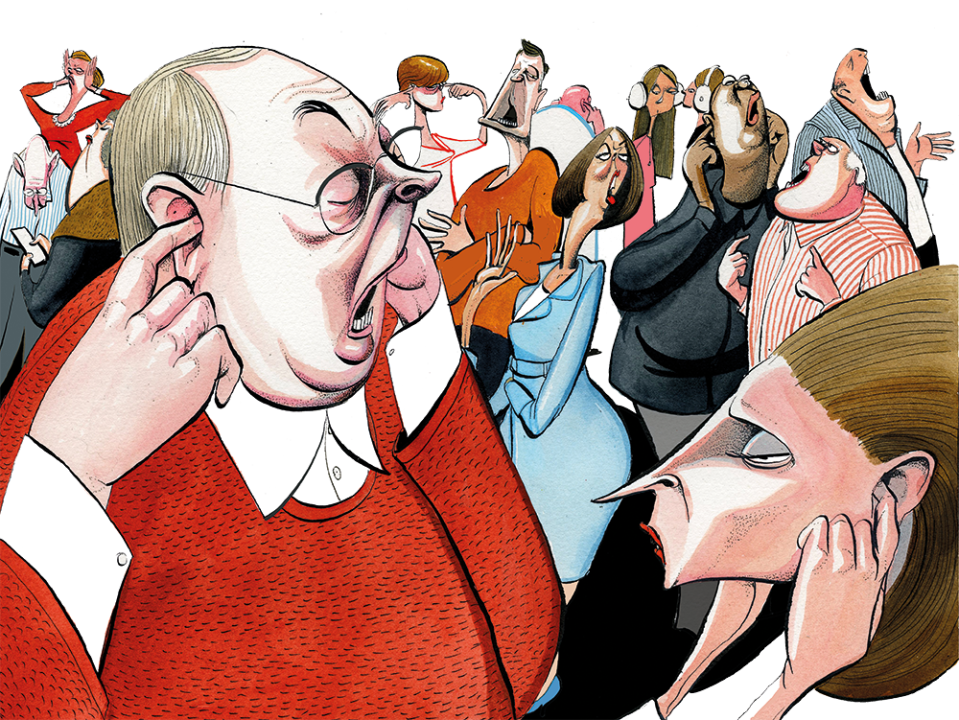
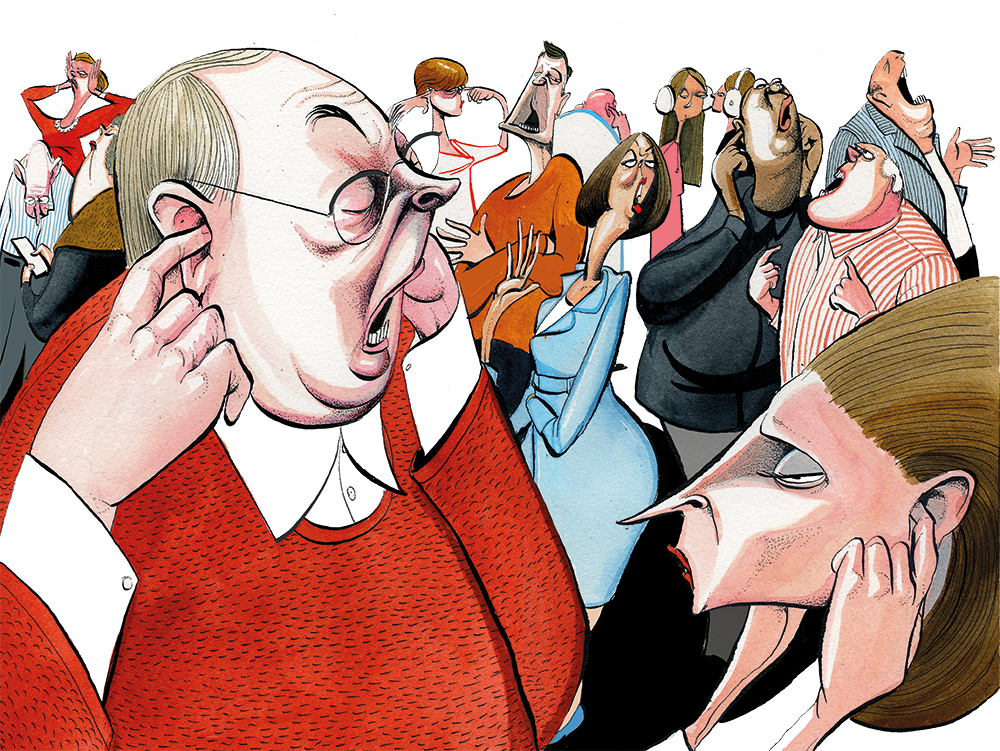
If you live near the frontiers of acceptable opinion, as any thinking person must surely do, you quickly find that these badlands are policed mainly with insults and innuendos. And so you learn one morning, to your surprise, that you are an apologist for some repulsive regime which you strongly dislike. If you have been especially daring, you may be a “war crimes denier” as well. Or you are charged with “whataboutery,” a word its users think will magically erase your case. Or, in many ways best of all, you are a conspiracy theorist.
There is a myth that this phrase was invented by the CIA to try to discredit protesters against the Vietnam War, but the expression is far older than that. Even so, like all these dismissive epithets, it is remarkably effective – especially among the great electronic mobs of antisocial media.

The word “conspiracy” is one of the strangest in our language. The authorities will readily allege it when they have very little actual evidence against a defendant. Nobody sniggers when they do so. But a private individual will be laughed to scorn if he suggests that powerful or influential people might have met privately to discuss a common aim – as in fact they do all the time. The moment the tinfoil hat of “conspiracy theorist” descends on your head, nothing you say will be taken seriously.
As well as suggesting mild insanity, the word also creates dark images of men in Guy Fawkes hats, with daggers concealed in their cloaks, whispering to each other in a tavern in Deptford. I have long tried to counter this nonargument by pointing out that the most common conspiracies in modern Britain go by the prosaic name of “lunch.”
When I worked as a Lobby reporter at the Palace of Westminster, I learned quickly that very little could be picked up in the Lobby itself. The key to success was to join or form a lunch group with one or two others, and invite senior politicians to spill the beans over an expensive meal they didn’t have to pay for.
I do not think that the Sainted Lord Moore, who was in such a group with me in the Thatcher era, will mind terribly if I mention this. His presence had a magical effect. Almost nobody turned us down. Many of those we pumped for leaks, gossip and indiscretions are now dead, including Lord Hailsham, who turned up at Rules in Maiden Lane straight from the Woolsack, still wearing his Lord Chancellor’s kit of doublet and hose. If the readers of British newspapers knew just how much of the supposed political news placed before them is cooked up in such places, over the smoked eels or the steak and kidney pudding, I expect they’d be envious.
But this is lighthearted stuff compared with “whataboutery.” This expression really did begin in the Cold War, when Soviet propagandists would respond to criticism of their police state by saying that black people in the US got a raw deal. The two obviously weren’t comparable, and in any case Soviet Moscow was one of the most racially bigoted cities in the world. It was false equivalence of opposites. But we have recently moved into the age of regime change, in which we are expected to applaud wars against other countries because their regimes are bad. But, oh dear, what if our allies also have bad regimes?
I am as revolted by the Iranian despotism as anyone else. Perhaps more so. They once threw a friend of mine into solitary on false charges of spying, a hideous experience of injustice and cruelty. But the “West” is somehow unmoved by the comparable repressions of Turkey, its prisons bulging with journalists, of Saudi Arabia, with its dungeons and bone saws, and Egypt, with its street massacres of opposition supporters. We are very friendly with these countries. How so if our hatred for oppression in Iran is genuine? If I make the simple point that our supposed objections to the Tehran state are a pretext, not a reason, then I am accused of “what-aboutery.” Is this right or fair? If you really cannot distinguish between oven-ready propaganda and serious fact, should you even engage in politics?
The inventor of whataboutery, as I sometimes point out, was Our Lord Jesus Christ, who in a memorable bit of preaching, asked “And why beholdest thou the mote that is in thy brother’s eye, but considerest not the beam that is in thine own eye? Or how wilt thou say to thy brother, Let me pull out the mote out of thine eye; and, behold, a beam is in thine own eye? Thou hypocrite, first cast out the beam out of thine own eye; and then shalt thou see clearly to cast out the mote out of thy brother’s eye.” (Matthew 7, vv 3-5, if you’re interested).
If you cannot distinguish between oven-ready propaganda and fact, should you even engage in politics?
As for being an apologist for foreign despots, this has now become the standard objection to anyone who dissents from the official line on the Ukraine war. And it is an official line. Government buildings in London fly the Ukrainian flag, an unprecedented gesture. No doubt there are some people who support the Russian invasion of Ukraine (I have always deplored it). There may even be people who support its aims, whatever they actually are (I have no idea). I am even told that I am a Putin sympathizer because I was once a Trotskyist, logic so mad that it would take pages to dismantle.
The possibility that I might take the view I do because I am a British patriot and don’t see what interest Britain has in prolonging, arming and financing this conflict is not considered. This is all quite trivial now, and I can cope with it. But it troubles me because it is the embryo of a police state mindset, in which dissent is automatically treachery. Argue with me, beat me in debate, anything you like. But don’t call me by these totalitarian names.





Comments