Vaccine

A vaccine won’t solve all our Covid problems

Today’s Oxford-AstraZeneca vaccine update has raised hopes that life in Britain could start getting back to normal by spring. But cheers in Downing Street didn’t extend to AstraZeneca’s share price, which fell by nearly three per cent in response to the news. Why the dip in the wake of such good news? AstraZeneca vaccine’s effectiveness – recorded at 70 per cent – is notably lower than its Pfizer and Moderna competitors. What's more, the 70 per cent figure has been reached by averaging results from two groups who received the vaccine in different doses: a smaller group, who were given half a dose at first, recorded a 90 per cent efficiency rate, and the larger group, who were given two full doses, only a 62 per cent efficiency rate.
Oxford’s vaccine success could mean a return to normal by April

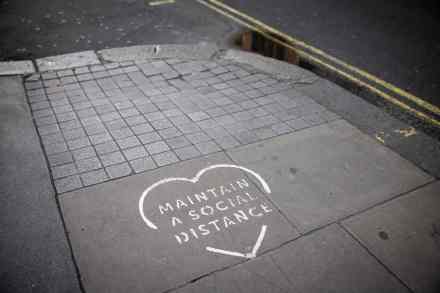
One consequence of the positive Oxford vaccine news this morning is that the UK will shift to a strategy of attempting to vaccinate as much of the adult population as possible. We know from NHS documents obtained by the Health Service Journal that the aim is to have 75 per cent of the population vaccinated by April. If this was the case, all social distancing measures could be ended that month, with even nightclubs open as before. The Oxford vaccine is particularly well suited to a mass vaccination programme. Unlike the Pfizer one, it can be stored at fridge temperature making distribution of it far easier. Rolling this vaccine out will, obviously, be a logistical challenge.

Letters: The limitations of a Covid vaccine

Still distant Sir: In James Forsyth’s analysis (‘Boris’s booster shot’, 14 November) he infers that a vaccine, if provided to the majority of the UK population, would deliver herd immunity from Covid-19, noting that ‘it seems increasingly probable that by the second half of next year, we will be emerging from this Covid nightmare’. I pray that he is right, though fear he may not be. In a recent Lancet editorial the view expressed was the exact opposite, as it notes that any vaccines are ‘unlikely’ to prevent transmission, though will reduce the severity of symptoms and likelihood of death.

The dangers of censoring anti-vaxxers

Earlier this week, the Labour party wrote to the government urging it to bring forward legislation so that social media companies which fail to ‘stamp out dangerous anti-vaccine content’ can face financial and criminal penalties. ‘The government has a pitiful track record on taking action against online platforms that are facilitating the spread of disinformation,’ said Jo Stevens, Labour’s shadow culture secretary. ‘This is literally a matter of life and death and anyone who is dissuaded from being vaccinated because of this is one person too many.’ My first thought on hearing this was how pitifully out of touch the Labour party is.

How moral is it to refuse a vaccine?

Well thank goodness for that, eh? Just as we reached our darkest hour and resigned ourselves to an endless series of lockdowns and the ruination of everything we once took for granted, we heard that help might be at hand. With the announcement of a Covid vaccine, what the Prime Minister called the ‘distant bugle of the scientific cavalry’ was at last audible. Think Pheidippides staggering into Athens, or the great horn of Helm ringing out. My instinct, and I expect yours, was to think something like: ‘Phew! It’ll take a month or two, maybe a year, but we’re in sight of things going back to normal. There is light at the end of the tunnel.

There’s nothing wrong with profiting from a vaccine

A couple of shots to the arm and this will all be over. With today’s news from Moderna, last week’s from Pfizer, and with a potential update from AstraZeneca in the next few days, we may soon have three vaccines against Covid-19 (and if you add in candidates from Russia and China perhaps more). And yet, it turns out, that some people are already fretting about potential side effects from that. And they don’t just mean a mild fever or muscle ache. They mean something far, far nastier. Profits. While most of us have been feeling a lot better about the epidemic over the last week, Jeremy Corbyn seems most worried that — once a vaccine has been approved and the virus eliminated — a big company might make some money from it.

Have Moderna outdone the Pfizer vaccine?

Another week, another set of preliminary results from a Covid-19 vaccine trial. This time it is the Moderna vaccine candidate, mRNA-1273. And, to judge by the figures put out by the company this morning, it has outdone the Pfizer vaccine in its efficacy. Out of the 30,000 people involved in the phase three trial (half of whom were given the vaccine and half of whom were given a placebo), 95 went on to contract Covid-19. Of those who became infected, 90 were in the control group and only five had been given the vaccine. Eleven participants had a severe case of Covid, all of whom were in the control group. The findings have allowed Moderna to claim, provisionally, that the vaccine is 94.5 per cent effective.

Sunday shows round-up: Brexit deal could fall down over fishing

Simon Coveney - Internal Market Bill could mean no trade deal Ireland's Foreign Minister Simon Coveney returned to Sophy Ridge's show this week to make clear his objections to the government's Internal Market Bill. The bill, which famously threatened to break the EU Withdrawal Agreement in 'a specific and limited way', has recently been watered down by the House of Lords. However, it is expected that the government will reinsert the offending clauses, which would keep Northern Ireland's market aligned with Britain in the event of no trade deal. Coveney warned that this move could derail the prospective trade deal altogether: https://twitter.com/RidgeOnSunday/status/1327899546903588864?

Portrait of the week: Vaccine hopes up, Zoom shares down and Biden calls Boris

Home Pfizer and BioNTech announced a vaccine against Covid-19 of 90 per cent efficacy from two injections three weeks apart. It was not known if it prevented transmission of the virus. The vaccine has to be stored at an ultra-low temperature of minus 80˚C. In July, the British government had bought 40 million doses, enough for a third of the population, with ten million available by the end of the year (along with access to five other vaccine candidates, totalling 340 million doses in all). The army and police planned vaccination centres. Shares in air transport went up; shares in Zoom went down. Asked whether we could say with confidence that life should be returning to normal by spring, Sir John Bell, the Regius Professor of Medicine at Oxford, said: ‘Yes, yes, yes.

Open and shut case: how did lockdown affect shops?

Shot in the arm Global stock markets reached a new high after pharmaceutical firm Pfizer announced a vaccine it is developing has been found to be 90 per cent effective. What have been the best- and worst-performing FTSE 100 shares over the past 12 months? BEST Scot. Mortgage Investment Trust | +109% Ocado | +94% Fresnillo (gold production) | +86% Flutter Entertainment | +75% Polymetal | +51% WORST Rolls-Royce | -74% Int. Consolidated Airlines | -71% BP | -61% Shell (B shares) | -58% Lloyds Bank | -52% Pharma’s life Who was Mr Pfizer? Charles Pfizer set up a factory with his cousin Charles Erhart in Brooklyn in 1849, initially to produce the drug santonin, used to purge the intestinal tract of parasitic worms.

Will the government be left suffering from ‘long Covid’?

The first full week of the new national lockdown had the potential to be very difficult for Boris Johnson. Although just 34 Tory MPs voted against this England-wide measure, many more are unhappy about it. They have, as Tory MPs now do when they come across things they dislike, set up a group with a three-letter abbreviation: in this case, the CRG (Covid Recovery Group), which will oppose further lockdowns. Adding to the discontent among backbenchers, No. 10 had just U-turned on extending free school meals into the holidays. Tory MPs were left wondering why — as with exam result appeals — they had bothered taking so much flak from the media and the public if the government was going to give way in the end.

The questions we must ask about the Covid vaccine

After a difficult nine months, we are naturally all sick of lockdowns and other Covid restrictions. Everyone misses parts of their pre-coronavirus lives, from seeing friends and family, to pubs and restaurants, to the theatre and concerts and, yes, even our workplaces. It was therefore no surprise that this week’s news of a vaccine breakthrough was widely applauded. It is human nature, after all, to cling on to things that give us hope. Hope that was encouraged by leading scientists such as Sir John Bell. After the Pfizer news broke, the Oxford professor was asked on BBC radio whether we would be returning to normal by spring. His response? ‘Yes, yes, yes.’ This was a When Harry Met Sally moment that proved to be music to the ears of millions of Britons.

Will the Pfizer vaccine live up to the hype?

So is this the big turning point? Markets certainly seem to think so. No sooner had news broken that the vaccine being developed by Pfizer and German firm BioNTech is 90 per cent effective, the FTSE surged by 5 per cent. Given that the US Food and Drug Administration (FDA) has suggested that any vaccine that proves to be more than 50 per cent effective could be licensed, this suggests the vaccine will go on to be approved around the world. Any vaccine that proves partly effective will be welcomed with open arms by a world which largely remains in lockdown or semi-lockdown. But does the reality live up the surge of relief which has gone around the world this morning?

What I learnt as an Oxford vaccine guinea pig

Was the Oxford vaccine trial paused? Mine wasn’t. I signed up for it last week, in the 55 to 69-year-old category, and I was told on Friday that I should continue posting my swabs and attending follow-up appointments.  My friends were keen to tell me I was ‘utterly mad’ to join a trial. But I believe in vaccines. So do most anti-vaxxers, incidentally. It would be a rare adult who hadn’t benefited from childhood inoculations against polio, diphtheria, tetanus and whooping cough. My parents, who were raised in the 1930s, didn’t just believe in vaccines they rejoiced in them. When they were little it was all too common for a family to lose a child en route to adulthood.

The vaccine goalposts have shifted

Matt Hancock provided a vaccine update on Monday, explaining that the chances of a drug being ready by early next year are ‘looking up’. With trials pending in the UK, USA and Brazil, the Oxford-AstraZeneca vaccine could be approved this year, although the Health Secretary he conceded it would more likely come in spring 2021. He added that doses are already being manufactured so that it will be ready to roll-out the moment it does receive approval.  We’ve heard this all before.

Will the speculative vaccine shopping spree ever end?

Somewhere, possibly in the land of big sheds, just off the M1 in Leicestershire, must be a burgeoning NHS surplus store. Its shelves will be groaning with ventilators and testing kits which turned out not to work, surgical gloves, bibs and masks which turned out to be defective – and quite possibly, in months to come, with millions of shots of vaccines which won’t be able to be used. It was announced this morning that the government has signed up for 60 million doses of a vaccine being developed by GSK and Sanofi – although the financial details of the deal were not released. GSK says the vaccine will enter clinical trials this autumn and will – possibly – be ready for manufacture in the second half of 2021.

Can Britain avoid a second lockdown?

What comes next, now that the transmission rate and prevalence of Covid-19 have fallen significantly? (Before you shout at me, yes I know there is frustration and some bemusement among scientists that illness incidence and numbers of deaths have not dropped faster in the UK, but they have nonetheless reduced significantly, if not uniformly, everywhere). There are detailed plans from the government for when and how to restart certain businesses and social activities in the coming six weeks. But there is not a clearly articulated strategy for how we are expected to live and work between now and the end of the year (and beyond). So I've tried to piece together what ministers and officials have said privately and publicly about different elements of the longer-term strategy.

Britain can’t rely on a vaccine to ease lockdown restrictions

Six weeks ago Britain stood as a bit of an outlier among western countries in that our government seemed set to manage, rather than suppress, coronavirus. It rejected the idea that it was pursuing ‘herd immunity,’ but seemed to do just that. Now we stand out for a different reason: we are the only country which appears to be committing itself to remain in lockdown, or close approximation thereof, until a vaccine arrives. In much of Europe, lockdown restrictions are tentatively being relaxed as infection rates and death rates fall. Here, ministers tell us it is far too early for that sort of thing – we will need restrictions on our lives, in one form or another, until we have a vaccine available. Is that a plausible strategy?