Britain’s longest downturn
As of today, we now have four years’ worth of GDP figures since the UK first went into recession — and they don’t look pretty. By this point in the 1930s, we’d already fully recovered from the Great Depression.
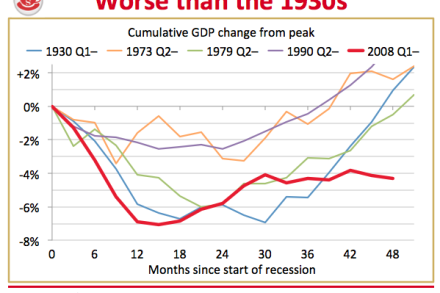
As of today, we now have four years’ worth of GDP figures since the UK first went into recession — and they don’t look pretty. By this point in the 1930s, we’d already fully recovered from the Great Depression.
Why are Dennis Skinner and George Osborne locked in enmity? The answer, according to Jonathan Haidt, lies beyond the obvious partisan explanation, and reaches back into humanity’s first nature. Haidt is a professor of moral and social psychology at the University of West of West Virginia, who has written a compelling book, The Righteous Mind, which argues that politics is determined by evolutionary biology and what he terms ‘Moral Foundations Theory’. In a little over 300 pages of incisive prose, Haidt presents a theory that explains why politics is always personal. His research shows that our high-minded ideals are mere spontaneous gut-reactions, a primeval hangover from our less evolved forebears.
The European Court of Human Rights has ruled that five terror suspects, including notorious Islamist cleric Abu Hamza, can be deported to the United States — a decision welcomed by both David Cameron and Theresa May. Last year, Hamza and three of the other men appealed to the ECtHR against extradition to the US on a whole host of grounds — including that they might face the death penalty and that their trials would be prejudiced.
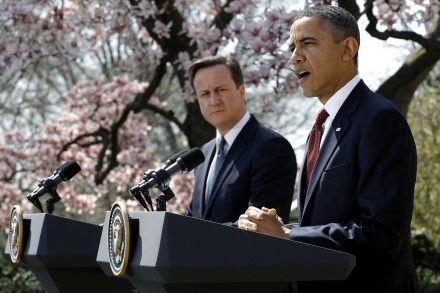
https://www.youtube.com/watch?v=mX6mT0kpoyQ The Camerons weren’t the Obamas' only big-name guests at the State Dinner last night. They were joined by a host of stars including Warren Buffett, Richard Branson and George Clooney, who’s just returned from war-torn Sudan. In their speeches (above), the two leaders had very warm words for each other. Of Cameron, Obama said: ‘In good times and in bad, he’s just the kind of partner that you want at your side. I trust him. He says what he does and he does what he says.’ And the PM returned the compliments: ‘There are three things about Barack that really stand out for me: strength, moral authority and wisdom.
Afghanistan, what now? After a week of death and retaliation in the country, it appears that a car bomb has been detonated on the runway at Camp Bastion — probably aimed at the visiting US Secretary of Defence, Leon Panetta. A spokesman has since said that ‘at no point was anyone on board Mr Panetta's plane at risk,’ but it certainly highlights the dangers attached to his visit. What chance, now, that he will be successful in his goal of ‘easing tensions’? The incident cropped up very briefly in David Cameron and Barack Obama's press conference just now.
Above is what they call the ‘raw video’ of David Cameron's and Barack Obama's trip to a basketball game last night. It's the unrefined version of what Downing St hopes will be refined, packaged and sent to your television screen at hyperspeed: images of the PM and the President dressed casually and chatting away as the game goes on. Like I said yesterday, it's political theatre — designed to benefit both men. They were then both interviewed at halftime, which you can watch here.
You’d think the American sub-prime crisis would have taught politicians the world over not to try to rig the housing market. But no, David Cameron is back on it today — about how to ‘unblock’ the system so the debt geyser starts to gush again. ‘The problem today is that you have lenders who aren’t lending, so builders can’t build and buyers can’t buy,’ says the Prime Minister. ‘It needs the government to step in, and help unblock the market.’ The idea that lenders may not lend because they feel the housing market may fall, and people may be unable to repay, is instantly dismissed. He speaks as if debt is the solution, and unavailability of debt is a self-evident problem.
Today’s leaked NATO report on ‘the state of the Taliban’ has generated the predictable responses: excessive attempts by the media to hype it up, and excessive attempts by NATO and the Pakistani government to play it down. What is its true significance? It’s a good scoop, but there is little or nothing in it which really counts as ‘news’ to anyone who has been following the debate. The report is the latest in a series going back several years (I remember reading earlier versions during my time in government), which summarises thousands of interviews with captured insurgents and others, in an attempt to build up a picture of the state of the insurgency to inform strategic and operational decision-making.

At a funeral in New Orleans in 1901, Joe ‘King’ Oliver played a blues-drenched dirge on the trumpet. This was the new music they would soon call jazz. A century on, from the hothouse stomps of Duke Ellington to the angular doodlings of Thelonious Monk, jazz survives in the vocal inflections of rap. To its detractors, rap presents black (increasingly, white) people to the world in terms the Ku Klux Klan might use: illiterate, gold-chain-wearing, sullen, combative buffoons. (‘Life ain’t nothing but bitches and money’, harangued the Los Angeles combo N.W.A. in a reversal of Martin Luther King’s ‘black improvement’.) Yet Bob Dylan had offered an early version of rap in ‘Subterranean Homesick Blues’; rap has its pedigree.
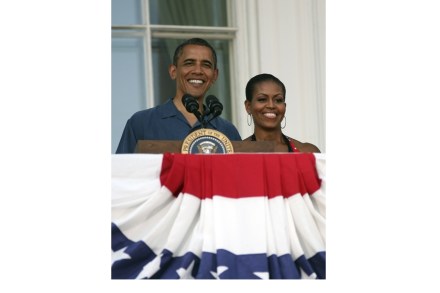
Barack Obama is not up to the job. That is Ron Suskind’s oft-repeated contention. The President, he states, compromised with, rather than curbed, failing American financial institutions, and has surrounded himself with warring staffers who are either no more competent than he is or, if expert, disregard his wishes. Following a picture caption that reads ‘Obama showed real weakness in managing his own White House,’ Suskind, a Pulitzer Prize winner, justifies his title: The confidence of the nation rests on trust.Confidence is the immaterial residue of material actions: justly enforced laws, sound investments, solidly built structures . . . . Gaining the trust without earning it is the age-old work of the confidence men.
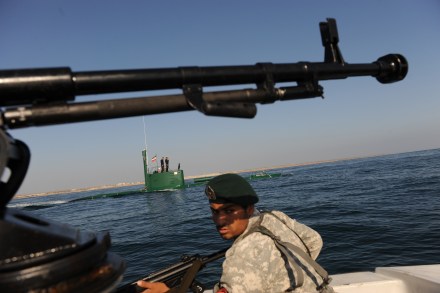
With the EU agreeing a new round of sanctions on Iran – outlawing European oil and gas purchases from Iran in six months, freezing Iran's Central Bank and banning trade in gold and other precious metals with any state-related bodies – tensions between Iran and the West are increasing. An Iranian MP has – again – warned that Iran will close the Strait of Hormuz and the US administration has – again – said that such an action will be countered. But what would happen if Iran carried out its threat? Iran has noteworthy littoral warfare capabilities, including mines, anti-ship cruise missiles, and land-based air defence.
What a shame the Christmas literary recommends season is over: otherwise I would have loved to draw this to your attention as quite the funniest book of the year. In The Reactionary Mind political author Corey Robin pretends to analyse the psychopathology which drives conservatives to think and act the way they do. I say "pretends" because obviously the whole thing is a sustained exercise in hilarious, spot-on pastiche of just how shrill, absurd and ludicrous the liberal-left can be when it tries too hard to be clever.
The situation in the Strait of Hormuz continues to intensify, with Defence Secretary Philip Hammond showing that, like his predecessor, he is not shy of pushing back when he gets a shove. Today he warned Iran that any attempt to block the straits, a key shipping lane, would be ‘illegal and unsuccessful’, and would be countered militarily if necessary. In truth, any conflict over the straits would be very costly for both sides. Iran is likely to have the capacity to strike, in a shock-and-awe attack, at US and British bases in Kuwait, Bahrain and Oman. But this would be a dramatic escalation of events which would — Tehran must realise — see the leash come off Israel, and probably lead to an all-out aerial attack on Iran.

The year has begun with Iran and the United States circling each other in the Straits of Hormuz; like two boxers before a bout, seeing who will strike first and working out where a blow could land. The immediate cause has been Iranian manoeuvres in the Arabian Gulf, and a visit to the area by the American aircraft carrier USS John C Stennis. Iran's army chief has said that his country will take action if a US aircraft carrier returns to the Gulf. Oil prices have shot up as a result. This could be the worst time to goad a Democratic president facing pressure from those Republicans currently trying ‘out hard’ each other in Iowa. Barack Obama has, throughout his tenure, tended to ignore bullyboy behaviour.

The photographs and video footage show North Koreans weeping in their hundreds at the news of Kim Jong-il's death. But the departed leader, immortalised by Team America as a song-prone loner, remained a mystery to both his people and outsiders alike. He came to power after his father, North Korea's founder Kim il Sung, died in 1994. Reliable biographical information about him is scarce. He rarely appeared in public and his voice was seldom broadcast. What's certain is that he spent lavishly on both luxuries and a nuclear programme, while millions of North Koreans starved. Kim Jong-il's death comes at an awkward moment.
Stephen King’s latest novel is a time-travel fantasy about the assassination of John F. Kennedy. At almost 750 pages, 11.22.63 is drawn-out even by blockbuster standards. Critics have bemoaned its surfeit of period detail (bobby socks, Hula Hoops, big-finned cars). I rather enjoyed it. King, now an august-looking 64, is a writer of towering cleverness, whose fiction manages to appeal to a reading public both popular and serious. Much of what passes these days for literary fiction is mere creative writing. Give me genre fiction (John le Carré, Martin Cruz Smith) any day. A fiction without a story — Kings knows — is scarcely worth its weight in paper. Before King was the emperor of bestsellerdom he studied English at the University of Maine (his birthplace). 11.22.

Yet again, the New York Times fact-checkers seem to have taken the day off. The newspaper yesterday printed an editorial about British economic policy which contained basic errors – identical to those made in a blog which Paul Krugman bashed out last week. It's worth fisking a little, because Krugman appears to be using the newspaper to create an austerity myth. 'A year and a half ago, Prime Minister David Cameron of Britain came to office promising to slash deficits and energize economic growth through radical fiscal austerity. It failed dismally.' This is right, insofar as there was no austerity. The below shows current spending, for every month since the government took power. They overspendt.
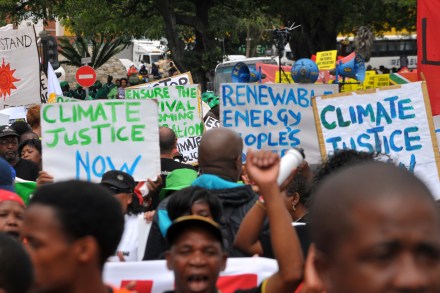
Will Durban break the cycle of climate change meetings that repeatedly disappoint those hoping to replace Kyoto with an upgraded model? With so much else on, most people seem to be ignoring the latest summit entirely. Scanning the major newspaper websites, only the Guardian and the Independent mention “Durban” on their homepages. First Copenhagen failed to live up to the massive hype. Then Cancun continued the stalemate on the big picture and negotiators contented themselves with addressing some relatively minor points. But Kyoto’s commitment period ends at the end of 2012, so those hoping for new mandatory targets can’t content themselves with stalling forever.
The Euro crisis is terrifying, as Peter Oborne rightly says in today’s Telegraph. But what scares me even more is the paucity of the debate. Right now, the summitry is aimed at saving the euro as if this were an end in itself. Merkel’s logic (‘if the euro fails than Europe fails’) is dangerously simplistic: there are millions out of work, including half of young people in Spain, and they won’t be helped if their dole money is paid in euros. Recovery is needed. Jobs are needed. The euro has always been a project that puts politics first and economics second, with disastrous consequences. It cannot now be solved by political willpower or political cliches. The bailouts are mounting, and failing.