Matt Cavanagh

Willetts attempts to limit the damage of Coalition immigration policy

From our UK edition

There was a flutter of excitement among the Higher Education community this morning, when the education editor of the Times tweeted that David Willetts, the Universities Minister, was about to announce that overseas students would be excluded from net migration figures, and therefore from the Prime Minister’s pledge to reduce net migration to under 100,000 by the election. Straightaway I responded that I thought this unlikely. There is a strong policy case for taking students out of the political 'numbers game' on immigration. Net migration figures are supposed to measure 'long term migration', whereas most overseas students return home fairly quickly.
What’s in Mark Harper’s immigration in-tray?

From our UK edition

As an ambitious young MP rewarded with promotion to Immigration Minister, Mark Harper could be forgiven for viewing the job with mixed emotions. Traditionally one of the most senior ministerial jobs outside Cabinet, it will certainly guarantee him plenty of exposure, but not always for the right reasons. His first and biggest problem is the target the Conservatives have set themselves, to reduce net immigration to under 100,000 a year. The latest figures remain more than double this level, despite a series of controversial reforms, and few observers think the target can be met before the next election.

Net migration starts to fall – but the real questions remain unanswered

From our UK edition

The latest immigration figures published by the ONS today, for the calendar year 2011, show net migration falling for the first time under the coalition – but nowhere near fast enough to give ministers confidence that they will hit their target by 2015. The ONS estimates that immigration last year fell by 25,000, and emigration rose by 11,000, resulting in a drop in net migration of 36,000 – from 252,000 to 216,000. This is in line with my earlier prediction, though the ONS warn that the fall is not statistically significant, and the target of 100,000 still looks a long way away.

ONS blunder lets ministers blame falling real incomes on immigration

From our UK edition

Yesterday the ONS published a report showing average disposable incomes at their lowest level since 2003. This is difficult news for ministers: as Isabel pointed out, concerns about the cost of living – stagnant wages and rising prices – are one of the main reasons given by voters in recent polls for turning away from the Conservatives. Imagine, then, how pleased ministers must have been when they saw that the ONS had thrown them a lifeline: the chance to blame it all on immigration. The ONS report discusses the effects of wages and prices, and then adds that ‘finally, sustained population growth led to incomes being spread across a greater number of people, and therefore further reduced the growth of actual income per head over the period’.

Troubled families policy deserves cross-party support

From our UK edition

The report published this week by Louise Casey, the Government’s 'Troubled Families' Tsar, has attracted a fair amount of criticism, but what it does illustrate is the chaotic lives these families lead – and the implausibility of thinking that their problems can be solved by the kind of flagship social policies traditionally favoured by either Conservatives or Labour. As Isabel put it, Conservative 'reform of the welfare system will pass many of the families by. In these stories there is no calculated decision to opt out of the labour market because of generous benefits, more an endless failure to cope with life and the way it has worked out'.

A U-turn on international students would be welcome

From our UK edition

If you have been confused over the last couple of days by the mixed messages emerging from Downing Street about the government’s policy on international students, you are not alone: the same applies to many figures inside Whitehall.  The Sunday Times reported a Number 10 source saying David Cameron is 'definitely considering a change in policy', 'fearing the UK could lose billions if students are caught up in the pledge to reduce net migration to below 100,000 by 2015'. The Mail followed up the story in its leader on Monday, endorsing it but suggesting it would be a mistake – and blaming it on the Lib Dems.

Foxhound arrives in Afghanistan – five years too late

From our UK edition

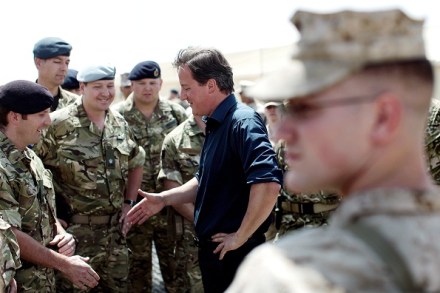
There was welcome news yesterday for our forces in Afghanistan, and for those who want to see them supplied with the best equipment, with pictures of the first ‘Foxhound’ patrol vehicles arriving in Helmand. Foxhound is the long-awaited replacement for the Snatch Land Rover, whose inadequate protection against Improvised Explosive Devices in Iraq and then Afghanistan became glaringly obvious as far back as 2005. In the intervening years, the Ministry of Defence has procured a number of vehicles offering much better protection, starting with the Mastiff in late 2006.

Ed Miliband embraces Englishness, but still has to grasp the nettle on immigration

From our UK edition

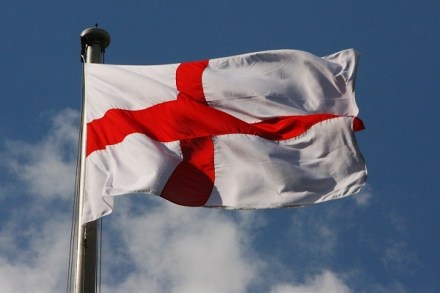
I hope that CoffeeHousers, regardless of political affiliation, will welcome a speech by a Labour leader that is explicitly patriotic, about England as well as the United Kingdom. As Ed Miliband said today, Labour has too often seemed either uninterested in Englishness or embarrassed by it, when there is nothing in its history and values that justifies this. Miliband was also right to emphasise the legitimacy and strength of ‘multiple identities’ — whether English and British, Scottish and British, Indian and British, or British and Muslim. And he was right to urge the English to ‘embrace a positive, outward looking version’ of national identity.

Another voice: How ministers are gaming the net migration target

From our UK edition

International students are currently the largest single category of immigrants who count in the net migration figures, which cover all those intending to stay more than a year. In the most recent figures (the year to June 2011) there were 242,000 such students — making up 40 per cent of so-called ‘long term’ immigration. However, as a new report by IPPR sets out, international students are not really ‘long term’ immigrants at all. They are far more likely to return home after a few years than the other main immigration categories of work and family: the evidence suggests only around 15 per cent stay permanently.

Riots report undermines the Tory diagnosis, but spreads itself too thin

From our UK edition

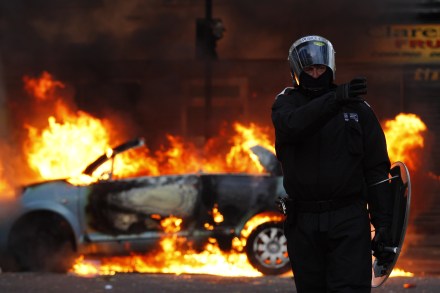
After last August’s riots the debate became quickly polarised. Were socio-economic factors like unemployment to blame, or was it all down to the individual choices of the rioters? David Cameron and other Conservative ministers knew which side of this debate they wanted to be on. They had been taken by surprise by the riots, initially failing to realise how serious things were, but when they got back from their holidays they set out a clear and confident line, brushing off most questions about links to the state of the economy or youth attitudes, and condemning the riots as ‘criminality pure and simple’. The soundbite was deliberately simplistic; Conservative ministers’ actual views were more complex.

Replacing control orders: an unsatisfactory compromise 

From our UK edition

A small silver lining for David Cameron in the ‘cash for access scandal’: on a quieter day, today’s report on the coalition’s replacement of control orders with ‘Terrorism Prevention and Investigation Measures’ (TPIMs) might have got more attention. The report, published by the Independent Reviewer of counter-terrorism legislation, David Anderson QC, makes for difficult reading for ministers. Before looking at the detail of the report, it is worth remembering that control orders were always a second-best policy.

Why the immigration cap isn’t biting — and why that is good news

From our UK edition

The government’s official advisers on immigration, the Migration Advisory Committee, have today published a report into the restrictions on skilled migrant workers from outside the EU. Turns out that the much-vaunted ‘cap’ on skilled workers has only been half taken up — with numbers likely to be around 10,000 against the cap of 20,700 — and that this is offset by the high numbers of workers, around 30,000, coming to the UK on ‘intra-company transfers’.

The infantryman’s struggle in Afghanistan

From our UK edition

https://www.youtube.com/watch?v=7Hzz4iTwSsI If you have an interest in the military campaign in Afghanistan, or in modern film-making — and if you have a strong stomach — I would strongly recommend Hell and Back Again, a contender in the Best Documentary category at the Oscars this weekend. Despite winning the World Documentary prize at Sundance last year, it had a very limited cinema release (not unusually for a documentary) and is yet to break even worldwide, though that may be about to change. The main difference with the other equally impressive but better-known documentaries on the Afghan campaign, Restrepo and Armadillo, is the film’s individual focus.

The implications of today’s border security report

From our UK edition

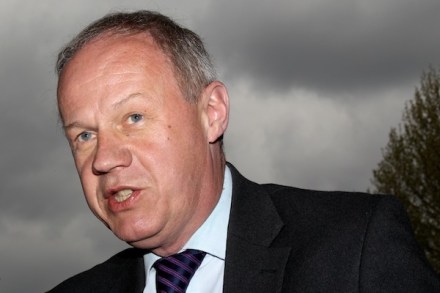
Today brought closure of a kind to last year’s border fiasco (which I covered for Coffee House here and here), with the publication of the report by the Chief Inspector of the UK Border Agency, John Vine. On first reading, there is no ‘smoking gun’ which would trigger a ministerial resignation. The report does find that, in early 2011, the immigration minister Damian Green had authorised the relaxation of one of the checks at the centre of the controversy: ‘Secure ID’, which verifies the fingerprints of foreign travellers with visas. But the report also finds that Green’s authorisation should have been superseded by later instructions from the Home Secretary Theresa May.

How to implement a minimum price for alcohol

From our UK edition

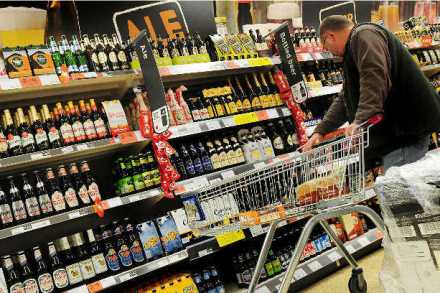
Pete posted earlier on the Prime Minister’s latest intervention on the issue of problem drinking. The new proposals — like a greater police presence in A&Es, and ‘drunk tanks’, special units where drunks are taken to sober up — are sensible enough, but seem small relative to the scale of the supposed problem, and focus on peripheral (though important) side-effects, rather than the core of the issue. The ‘big idea’ seems to be missing, even though the Conservatives have been flirting with it for some years, is a minimum unit price (MUP) for alcohol: far more controversial, but potentially far more effective. The last Labour government, in which I was an adviser, looked at this idea in some depth.

The MoD wastes another opportunity

From our UK edition

Today’s White Paper on defence procurement makes disappointing reading for the UK defence industry — and for anyone who believes that one of the lessons of the last few years is that we need a more active industrial policy. IPPR set out the case in a recent report on globalisation, arguing for sustained support for industries, like defence, which have high potential for growth, for exports, and for high-skill manufacturing jobs. We need robust safeguards on the sale of defence equipment to repressive regimes, as well as greater transparency on government lobbying to avoid a return to the bad old days of the Pergau Dam — or minor embarrassments like David Cameron’s attempt to rebadge an export drive in the Gulf as a tour of the Arab Spring.

Today’s NATO leak highlights the need for more realism over Afghanistan

From our UK edition

Today’s leaked NATO report on ‘the state of the Taliban’ has generated the predictable responses: excessive attempts by the media to hype it up, and excessive attempts by NATO and the Pakistani government to play it down. What is its true significance? It’s a good scoop, but there is little or nothing in it which really counts as ‘news’ to anyone who has been following the debate. The report is the latest in a series going back several years (I remember reading earlier versions during my time in government), which summarises thousands of interviews with captured insurgents and others, in an attempt to build up a picture of the state of the insurgency to inform strategic and operational decision-making.

The Home Office still hasn’t cleared up its border issues

From our UK edition

Remember Theresa May's border skirmish against Brodie Clark back in November? This morning the Home Affairs Select Committee published their report into the whole affair. Ideally it would have cleared up some of the confusions over who was responsible for waiving various security checks at our borders last summer, and whether they were right to do so — but it doesn't really manage it. This is not really the fault of the committee: some of the crucial questions they put to the Home Office remain unanswered, and key documents have not been released to them.

Immigration to fall in 2012 — but still not on track to hit the Tory target

From our UK edition

Immigration will remain at the heart of political debate in 2012. Economic downturns tend to heighten concerns about migrants competing for jobs and depressing wages, and spending cuts tend to sharpen resentment over migrants claiming benefits or adding to pressure on public services. The latest e-petition to garner a hundred thousand signatures will get its reward of a day in parliament, debating the effects of immigration on Britain’s growing population. And while Labour and the Liberal Democrats might be reluctant to talk about immigration, the Tory leadership clearly see it as useful in handling those on the right who are unhappy with life in coalition — commentators as well as backbench MPs.

Dave’s ‘troubleshooters’ policy is right — but it needs working on

From our UK edition

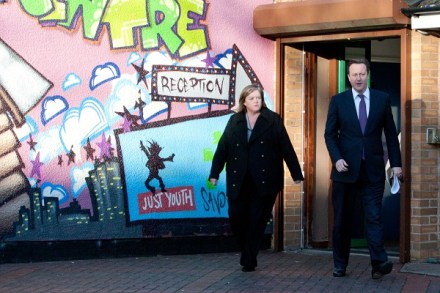
David Cameron has finally announced the way forward on his pledge to ‘turn round the lives of 120,000 of Britain’s troubled families’ — and it is good news. These families combine behaviour that is harmful or disruptive to the rest of society with reliance on benefits, social housing and other services, reinforcing the sense that they are taking a lot from their fellow citizens while giving nothing positive back. And although dealing with their problems is expensive, they already cost government and society a lot of money, as the Prime Minister is rightly emphasising today.