Joseph Bottum

The way we read now

For almost 300 years, the novel was a major art form, perhaps the major art form, of the modern world — the device by which we tried to explain ourselves to ourselves. Something new came into art during the transition out of the Middle Ages, through the Renaissance and the Reformation, and into the modern age. We might call it the turn to the interior — an increasing agreement that domestic life and drama are real, not merely minor activities necessary to keep body and soul together while we play out our real lives on the world’s stage. Think how rare domestic drama was before the novel.


novel bottum

In our bleak landscape, all those Christmas lights aren’t so much decorations as declarations

The Midwest loves Christmas. Loves it with all the ingenuity in its mind and vigor in its limbs. Loves it with all the passion in its soul. All you need is a staple gun, a thousand feet of twinkly lights and, hey presto: a house roof bright enough to illuminate the season. Or guide a spacecraft down from Mars. Only Halloween can rival Christmas in the small cities, and rival is too strong a word. Better to say that Halloween is the only other holiday for which Midwesterners are willing to bring out their staple guns and inflatable lawn ornaments. But the effort is almost half-hearted, compared to Christmas.

christmas lights madison wisconsin

Did the cyber revolution save Sioux Falls?

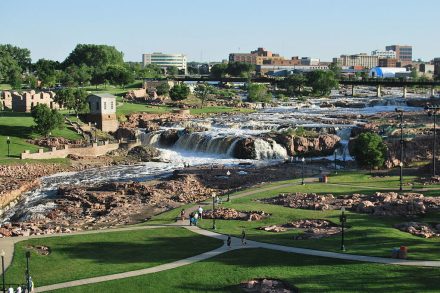
So, here’s a proposition — an idea, a notion that might be worth exploring: the computer revolution has saved the small city. Four decades into the digitizing of our lives, some of the unintended and unexpected consequences of computerization are coming clear. And one of those consequences may be the possibilities for success found by some small Midwestern cities. The truly great cities of the nation — New York, Los Angeles — are among the most powerful economic engines ever created. The computer revolution proved to be jet fuel for the economics that brought them out of the doldrums of the 1970s. The large Rust Belt cities — Pittsburgh, Cleveland, Detroit — have either succeeded or failed to find a way out of the collapse of American manufacturing.

sioux falls

The Farm Stand Test

Tall and thin — a little stooped, his moustache and the thatch of his hair starting to show a little white — Lowell Gerry was putting out pumpkins this past week. Dozens and dozens of the things: round ones and flattened ovals. Bright orange ones, as neon as DayGlo, and deeper colours edging toward a reddish brown. A range of albino pumpkins, too, like pale sickly ghosts. Like vegetable lepers. They seem to sell fairly well. Last Tuesday, before the first snow dusted eastern South Dakota over the weekend, two or three other shoppers stopped by in the 15 minutes I was there to look for a few of the harvest’s last green tomatoes. It’s Halloween, of course, that incites the pumpkin fervour. The town of Madison is not exactly tiny, by rural standards.

farm stand test

Free speech and expensive schools in South Dakota

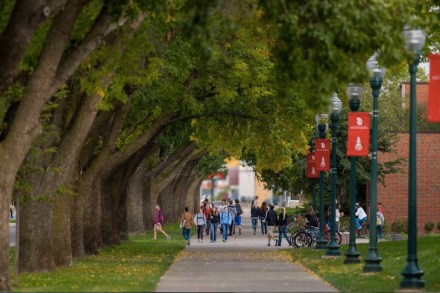
In nearly every state, the legislature is nervous about the public universities it finances. And fair enough. Apart from sports, the state colleges in America tend to make the national news only when protests break out, and protests tend to be driven by a radicalism that reveals the school protesters are far to the left of the legislatures of even the more liberal states. Such national news embarrasses the legislators, who send querulous letters to the school officials, with distant threats of cutting state funding. Which tempts those officials to surrender preemptively to activists, in the hope of avoiding protests. Conservatives in America typically blame the radicalism of college administrators for, say, the academic banning of conservative speakers on campus.

university of south dakota

Big lakes, small ripples

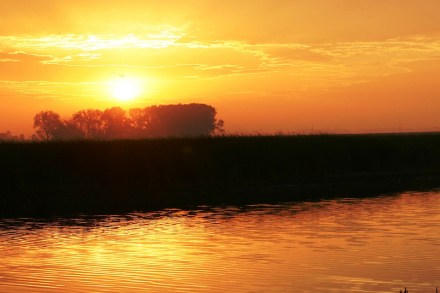
The summer motorboats still roared this past weekend, their wake roiling the Midwestern lakes. The days continue hot, for the most part, and the sun bright. But something in the lower angle of the light now speaks of the season’s falling off toward winter. Something a little more golden — tentative and ephemeral — than the summer sun. Something more Septemberish. Nonetheless, you could sit on the shore and watch the boats make their runs up and down the middle of the local South Dakota lakes — Lake Madison, Lake Herman — like mechanical salmon, determined to reach their final locks in the waning days. Like August behemoths, roaring their unwillingness to admit the season’s end. And who knows?

lakes milwaukee lake south dakota

In praise of Midwestern manners

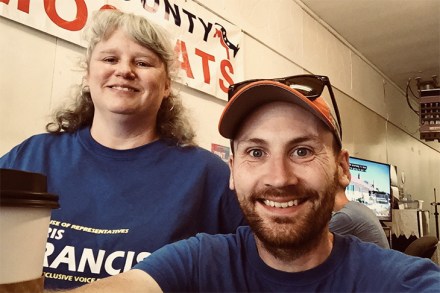
Chris Francis stopped by my table down at the Sundog coffee shop to chat for about 20 minutes last Friday, and he didn’t ask for my vote. Now, in the give and take of daily conversation — the ebb and flow of coffee-shop chatter in a small Midwestern town — lots of people don’t canvass for votes. But Chris is a Democratic candidate for one of the District 8 seats in the state legislature here in South Dakota, and he’s going to need all the support he can get when election day comes in November. The reason Chris didn’t ask may be that he assumed I already planned to vote against him, although I’ve only met the man once or twice when I stopped by the Brickhouse, the local arts centre he runs.

chris francis south dakota midwestern manners