Ukraine

The democracy delusion

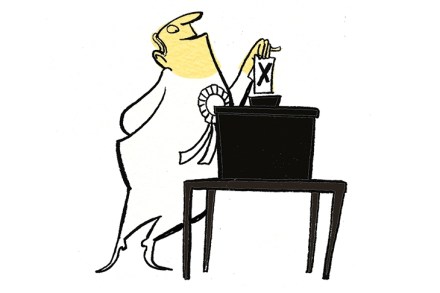
Andrés Sepúlveda sleeps behind bombproof doors in a maximum-security prison in central Bogota, Colombia. When travelling to judicial hearings or to meet prosecutors, he is accompanied by a caravan of armed guards with serious firepower. As they move at high speed through the capital, the motorcade uses sophisticated equipment to jam mobile phones to lower the risk of a coordinated assassination attempt. Sepúlveda is one of the world’s most notorious election-rigging specialists. Now that he has been caught and put in jail, he is helping atone for his crimes by explaining how he fixed elections — and the people he used to work with want him dead. But Sepúlveda isn’t the only specialist in this field.

Massacre of the innocents

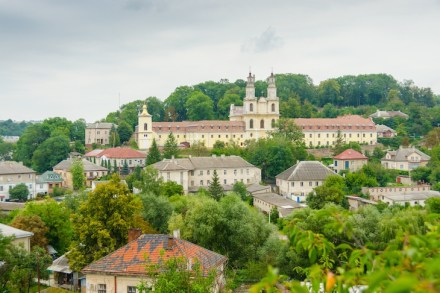
I thought I knew the history of the years 1914 to 1945: the first world war and the terrible casualties in the trenches; the second world war and the German conquest of Europe; day and night bombing; Stalingrad and the Holocaust. But I’m embarrassed to say that I knew nothing about the tragedy in Galicia in Eastern Europe. Unlike the Nazi genocide, much of the killing took place between neighbour and neighbour: Jews, Poles and Ukrainians destroyed each other with increasing ferocity and brutality between 1914 and the 1940s. The beautiful city of Buczacz in Eastern Galicia, with its Roman Catholic, Greek Orthodox and Jewish shrines, ended as a gigantic ruin.

Dancing queen

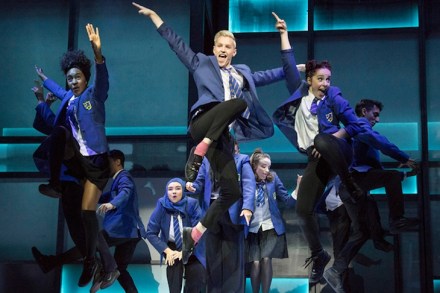
Everybody’s Talking About Jamie opened at the Sheffield Crucible in February for a standard three-week run. The show is based on a BBC documentary, Jamie: Drag Queen at 16, about a working-class lad who attended his school prom in a scarlet frock. Director Jonathan Butterell saw the potential to create a replica Billy Elliot and he brought in two co-writers to turn the material into a comic musical. Word of mouth was excellent and the show received immediate offers for a West End transfer. The action starts in a Sheffield comp where a class of 16-year-olds are being given career advice by a computer. Blond misfit Jamie is encouraged to train as a forklift-truck driver. But he has other ideas. With his mum’s help he sets off in search of his inner self as a gender-fluid diva.

The revolution devours its children

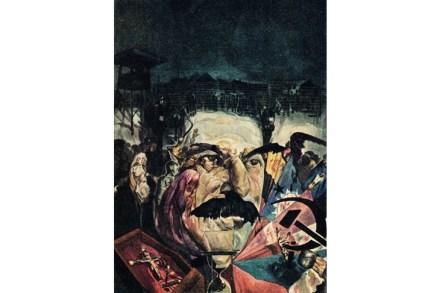
He stood five feet seven in his boots — the same height as Napoleon and an inch shorter than Hitler. He had webbed toes, a grey face pitted by smallpox, a stunted arm, soft voice, yellowish eyes and an awkward rolling walk. He swore like a trooper, smoked a pipe, drank the sweet wines of his native Georgia, and was an avid reader of history, novels and Marxist-Leninist theory, marking the pages of the 20,000 books in his library with expletives scrawled with the same coloured crayons with which he signed mass death warrants and international treaties: ‘Rubbish!’, ‘Piss off!’, ‘Fool!’, ‘Scumbag!’, ‘Ha-Ha!

Navigating a new world

In the 1890s, when British-owned ships carried 70 per cent of all seaborne trade, legislators worried about the proportion of foreigners who served in their crews; which could top 40 per cent. Their worry is not surprising, given the verdicts gathered from British consulates in port cities on the native seaman: ‘drunk, illiterate, weak, syphilitic, drunk, dishonest, drunk…’ In 1894, a parliamentary committee interrogated officers about manning and skills in the merchant marine. One informant was a British-naturalised master ‘with 16 years’ experience’. The MPs, who didn’t presume to ask this expert witness specifically about foreign crews, recorded his name as ‘Mr J. Conrad Korzeniowski’.

The Spectator Podcast: Brexit Wars

On this week's Spectator Podcast we look at the final Brexit war amongst the Conservatives. We also discuss the maverick politician taking Ukraine by storm, and get on the blower with Blowers. First up, with a 4,000 word intervention by Boris Johnson doing the rounds this week, ahead of Theresa May's pivotal Brexit speech in Florence, the Conservatives look more divided than ever on the European question. Will it be EEA minus or CETA plus? Or are we headed for an even more mongrel departure? These are the questions James Forsyth asks in this week's cover piece, and he joins the podcast along with Henry Newman, director of Open Europe. As James writes: "The time for choosing is fast approaching for Theresa May.

Books Podcast: Stalin’s war on Ukraine

In this week’s Books Podcast I talk to the Pulitzer Prize winning historian (and former Spectator deputy editor) Anne Applebaum about her devastating new book Red Famine. The early 1930s in Ukraine saw a famine that killed around five million people. But fierce arguments continue to this day whether the “Holodomor” was a natural disaster, or a genocide perpetrated by Stalin against the people and culture of Ukraine. I ask Anne about what we now know of what actually happened — and what it means for our understanding of the present day situation in the former Soviet Union. You can listen to our conversation here: And if you enjoyed that, please subscribe on iTunes for a new Spectator Books podcast every Thursday.

Ukraine’s last best hope

You have to hand it to Mikheil Saakashvili: the man doesn’t give up. After a tumultuous nine years as president of Georgia, which began with a furious anti-corruption purge, culminated in a short but disastrous war with Russia in 2008 and ended with accusations of embezzlement and authoritarian practices, he is determined to return to power — not in his own country, but in Ukraine. Saakashvili is brilliant and divisive. His many fans, principally drawn from the educated and the young of Georgia and Ukraine, see him as exactly the kind of clear-thinking, fearless leader who can sweep away the tangle of cronyism that has turned most former Soviet states into kleptocratic autocracies.

The hunger

In 1933 my aunt Lenina Bibikova was eight years old. She lived in Kharkov, Ukraine. Every morning a polished black Packard automobile would draw up to the door of the handsome pre-revolutionary mansion her family shared with other senior Party cadres to take her father to his job as Party boss at the Kharkov Tractor Factory. When he returned in the evening her father would be carrying bulging packets of sausages and meat from the factory canteen. Lenina did not remember wanting for anything. Yet in reality Kharkov, like all Ukraine’s cities in that terrible year, was an island of plenty in a sea of starvation. All over Ukraine millions of peasants were dying of hunger in a massive, man-made famine deliberately unleashed by the Soviet state.

Ukraine’s slow war of attrition still rumbles on

Towns on Ukraine's ceasefire line are marking three years since some were retaken by government forces from pro-Russian separatists. But there is little cause for celebration: houses in Marinka, Krasnogorovka and Avdiivka bear the scars of war. Some of these scars are recent, including a large house with nine apartments that was destroyed in shelling in late July. The war in eastern Ukraine is a forgotten conflict in many ways. It is talked about as “frozen” or “hidden” yet there is little recognition that the fight is still rumbling on. Unlike Bosnia or the border between Georgia and the breakaway statelets of South Ossetia and Abkhazia, eastern Ukraine witnesses dozens of exchanges of fire a day.

Trump’s eastern front

 Kiev There is no lavatory paper to be found in government buildings in Kiev. Plan ahead, locals advise, if you visit a tax office, the council or some other arm of the bureaucracy. This state of affairs is one small sign of the corruption that pervades Ukraine. Even the trifling sums spent on toilet roll are stolen by dishonest officials. Patients bribe doctors to get treatment; students bribe professors to pass exams; citizens bribe tax inspectors… actually, many people don’t bother with tax in the first place, working instead in a vast shadow economy. Two Ukrainian journalists tell me all this as we sip drinks in a surprisingly expensive Kiev café.

The joy of the Proms

Summer nights, hot and humid, mean just one thing — it’s Proms season again. Sore feet, sweaty armpits, queuing outside the ladies loos, home on the Underground with a head and heart buzzing with Bruckner or Bacharach, Handel or Honegger. Just as special is the nightly feast on Radio 3 — a live concert, guaranteed every evening, and on top of that specially commissioned talks and literary events to get us thinking. On Sunday afternoon, in between the Mozart and Schumann performed by Bernard Haitink and the Chamber Orchestra of Europe (COE) at the Royal Albert Hall, Sarah Walker took us inside the working life of an orchestra. What does it take to create the particular sound of an ensemble of individual players? How important is the conductor?

Cries and whispers | 15 June 2017

There’s a moment in A Boy in Winter where a young Ukrainian policeman has to escort his town’s Jewish population to a churned-up field under the watchful eyes of his new Nazi masters. It’s November 1941 and Mykola has been told that all he has to do is relieve the Jews of their luggage and move them along. He assumes that they know what’s coming to them. In his mind, the Germans are ‘bastards’ but no worse than his former Soviet occupiers, who burned his family’s fields and grain stores as they fled eastwards. So Mykola has deserted the Red Army and joined the auxiliary police under the Germans, the only way to make a living in the occupied town.

The magic of bookshops

It is not uncommon for writers to be obsessed by bookshops. Some even find their writing feet through loving a particular bookshop and developing a habit, which helps to form the writers they become. And often they end up in a rage with the common run of bookshops. Why would they not? It is, or used to be, a numbers game, and most bookshops fail to stock most writers. But in recent years online outlets such as Amazon have changed the stocking (and the hating) game. Since proper bookshops became an endangered species, a use-them-or-lose-them energy pervades the bookish classes. It is a form of virtue signalling to go to your local, if you have one, order in what they haven’t got and pay more than you would online.

Will Putin target Latvia next?

The Baltic states do not feel like a front line. I did not see a police officer in more than a week in Latvia, let alone a soldier. Somewhere out there were three NATO battalions, deployed to deter Putin from crossing the border. But if it wasn't for the seediness that lingers like a bad smell - the occasional Brezhnev brutalist building and the memorials to the murdered Jews - I could think myself in a European country that had never experienced the twin curses of Nazism and communism. The art nouveau architecture is as fine as any you will see in Paris or Barcelona, and covers many more streets. There are Italian restaurants everywhere. People looked a little bewildered when I said I wanted to try Latvian dishes. What were they? Lentils? Sausages?

What Brexit won’t fix

The Leave campaign was right to pour scorn on David Cameron’s warning this week that Brexit could threaten Europe’s military stability and lead to war. Boris Johnson mocks the Prime Minister about his prophecy on page 14. If Cameron really believed that Britain leaving the EU could lead to war in Europe, why on earth did he risk having a referendum at all? Why was he suggesting until a few weeks before his negotiations with EU leaders that he would consider voting for Brexit if he didn’t get his way? It’s easy to tease the increasingly shrill alarmism of the Remain campaign. But it is harder to say how exactly leaving the EU would make things better.

Nothing quite adds up

Whimsy, satire and deadpan humour: welcome to the world of Andrey Kurkov. If you know Kurkov’s work, The Bickford Fuse will be no surprise and need no introduction. It’s not Death and the Penguin or A Matter of Death and Life (read them first), but it’s certainly Kurkov in welcome and familiar mode. For newcomers and to summarise: he’s really a kind of Ukrainian Kurt Vonnegut, a serious writer never more serious than when he’s being funny about unfunny things, and with a whole lifetime of unfunny things to be serious about. As the second world war was to Vonnegut, so the Soviet Union is to Kurkov. If — as Oscar Wilde believed — our duty towards history is to rewrite it, then Kurkov has long been working overtime.

Will Dutch politicians choose to serve Brussels or their citizens?

The Netherlands was one of the six original founders of the European Union. We, the Dutch, have always been internationally orientated, progressive, tolerant and open, and as a nation and a people, we still are. But our attitude towards the centralistic, expansionist, and undemocratic EU has become increasingly sceptical. For us, the EU no longer represents a dynamic view of the future but – on the contrary – many feel that it has fallen victim to precisely the kind of static, special interests politics that it was meant to transcend. It has turned out to be a 1970s solution for a 1950s problem. It was hardly surprising, then, that two thirds of the Dutch population said ‘No’ to the proposed European Constitution in 2005.

Whoever invented referendums needs a kicking

My favourite quote of the year so far comes from the author Fay Weldon. ‘If this were an all-woman society,’ she said, ‘we wouldn’t have television. We’d just have lots of nice cushions.’ Fay was making the point that it’s men who do all the -inventing and most of the work. She has since profusely apologised for this remark and others made during the same ‘off the cuff’ interview — almost certain proof, then, that what she said is largely true. But only largely, Fay. Without women we might not have discovered either of the unpleasant radioactive elements polonium and radium — both stumbled upon by Marie Curie, who was habituated (unwisely) to carry chunks of them around in her apron pocket.

David Cameron has dropped his references to a ‘reformed’ EU. Will ‘safer’ be next?

Obviously the 198 business leaders who signed a letter to the Times yesterday explaining why Britain should remain in the EU are too busy and important to read what appears under their names, but surely someone in their enormous ‘comms’ teams should have pointed out to them that they were directly repeating David Cameron’s current slogan ‘Britain will be stronger, safer and better off remaining a member of the EU’. Might it not compromise their independence as top executives if they let words be put into their mouths by a politician? Irritated, I tried to order my stockbroker to divest my portfolio of all shares in all the companies concerned, but unfortunately found that I had not got any. By the way, Mr Cameron’s slogan has already changed.