Ukraine war

Biden’s muddle on Chinese arms for Russia

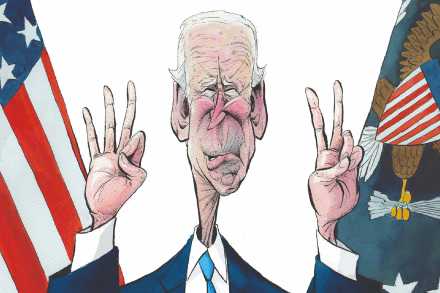
Will China send arms to support Russia? That was the possibility that US Secretary of State Antony Blinken raised at the Munich Security Conference, accusing Beijing of considering doing so. China has officially rejected this claim and, as of last night, so has President Biden. ‘I don’t anticipate a major initiative on the part of China providing weaponry to Russia,’ Biden told ABC, seemingly directly contradicting his right-hand man on foreign policy. Is this just another case of Sleepy Joe misspeaking, a comment that will have to be walked back by his team in the hours to come? After all, Biden has form.

Ukraine needs more than tanks

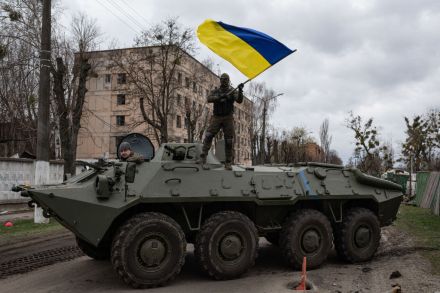
What weapons will Ukraine get next? It’s a crucial question that matters perhaps more than anything else for understanding how the Russo-Ukraine war will end. For the last few months two different systems have received the most attention, systems that Ukraine has asked for almost daily. These are tanks, or MBTs (Main Battle Tanks), the key armoured vehicle of 20th and 21st century land warfare, and ATACMS (Army Tactical Missile Systems), the longest-range ammunition now available for the US-made HIMARS rocket launchers already in Ukraine.  Both are needed for the quickest possible Ukrainian victory in the war, though for now it seems that the first, tanks, are on their way and the other, ATACMS, are still a while away.

Bear baiting

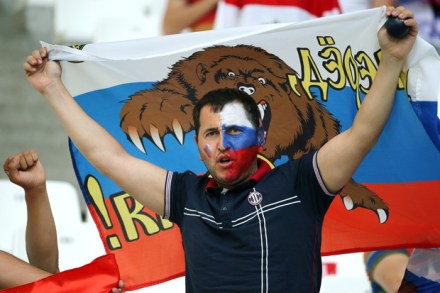
Oh those Russians. When they’re not beating up English football fans, they’re cheating at the Olympics. They occupy other countries and shoot down civilian airliners, then pretend it wasn’t them. They’re helping Assad win the Syrian civil war. They’re even driving up London house prices. There’s no infamy, apparently, of which Russians are not guilty. ‘OK — we did do all those things,’ admits a Moscow broadcaster friend, a little sheepishly. ‘But everyone else does them too! We’re the only ones to get punished, because everyone hates us.’ Since the annexation of Crimea in 2014, Russians have become the world’s official pariahs.

Watching the next war

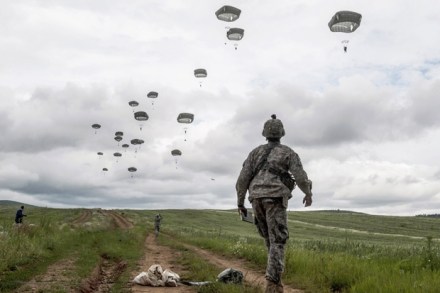
Late last month, on a windswept plain near the Polish town of Zagan, the defence ministers of Poland, Germany, Norway and the Netherlands joined the Nato secretary-general, Jens Stoltenberg, to watch Nato’s response to Russia’s incursions into eastern Europe. The dramatic culmination of a week of military manoeuvres, Exercise Noble Jump was a spectacular show of force by Nato’s new VJTF brigade. More than 2,000 troops from nine countries fought a fierce mock-battle against irregular militia, with live ammunition. Huddled in the attendant press pack, struggling to insert my earplugs, this awesome demonstration felt like confirmation — if any were needed — that Europe stands on the brink of a new cold war.

Wanted: a party leader willing to talk about defence

[audioplayer src="http://rss.acast.com/viewfrom22/the-death-of-childhood/media.mp3" title="James Forsyth and John Bew discuss the lack of foreign policy in the election campaign" startat=928] Listen [/audioplayer]In the 1984 US presidential election, Ronald Reagan came up with an effective way of embarrassing his rival Walter Mondale over defence. ‘There’s a bear in the woods,’ ran his television advert, showing a grizzly bear wandering through a forest. ‘For some people, the bear is easy to see. Others don’t see it all.’ During the British general election campaign, the Russian bear isn’t making any attempt to hide — it is standing on its hind legs and pawing at the trees with its claws.

Shelling, militiamen and shattered villages: welcome to eastern Ukraine’s ceasefire

  Eastern Ukraine For a moment, the sound of shelling is drowned out by a thumping beat coming from a camouflaged van. ‘Separatysty [Separatists]!’ says the rousing chorus: ‘The day of your death is here!’ We are with a Ukrainian nationalist militia in a village outside Donetsk airport, which is in the hands of pro-Russian rebels, usually referred to by the Ukrainians as terorysty or bandyty. But despite their bravado, the war is not going well for the Ukrainian side. There have been a series of disastrous setbacks, towns and territory lost, whole units put to panicky flight. The shattered village, Piesky, reminds me of Chechnya or Bosnia, the houses’ red roofs caved in, shell craters in the soft earth, rubble everywhere.

It’s Nato that’s empire-building, not Putin

[audioplayer src="http://rss.acast.com/viewfrom22/putin-s-empire-building/media.mp3" title="Peter Hitchens and Ben Judah debate Putin's empire building" startat=33] Listen [/audioplayer]Just for once, let us try this argument with an open mind, employing arithmetic and geography and going easy on the adjectives. Two great land powers face each other. One of these powers, Russia, has given up control over 700,000 square miles of valuable territory. The other, the European Union, has gained control over 400,000 of those square miles. Which of these powers is expanding? There remain 300,000 neutral square miles between the two, mostly in Ukraine. From Moscow’s point of view, this is already a grievous, irretrievable loss.

Violence, fear, confusion: this is what comes into a leadership vacuum

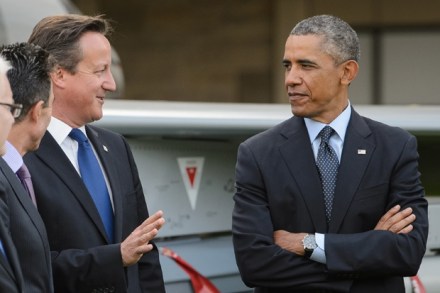
The old cliché that ‘nothing happens in August’ has again been brutally disproved. From the centenary of the outbreak of the first world war to the Russian invasion of Georgia six years ago, August is a month often packed with violence — but rarely more so than this year. In Syria, Christians are being crucified for refusing to convert to Islam. In northern Iraq, there are reports of mothers throwing their children from mountains rather than leaving them to the jihadis who are parading the severed heads of their victims. Russian convoys are rolling towards the Ukrainian border as Vladimir Putin tests the resolve of the West. Barack Obama has watched this unfold from his holiday spot in Martha’s Vineyard; David Cameron from the Portuguese coast.

Why a City job should be graduates’ last resort

August is the season for conversation about career choices. Every holiday party seems to include new graduates or next year’s graduands in need of grown-up advice. Many yearn to be pastry chefs, having devoted their student years to watching The Great British Bake Off. Some want to be journalists, and I tell them it’s more fun than having a secure job with a decent income. Happily I’ve only met one young man this summer who wants to go into financial PR, the métier in which I believe Satan himself did his first internship.

I know how ineffective sanctions are – but these ones just might work

‘Sanctions,’ said Kofi Annan, ‘are a necessary middle ground between war and words.’ Neither the EU nor the US will deploy troops or missiles to defend Ukraine against Russian-backed separatists, while Vladimir Putin basks in hostile Western words and turns them to domestic advantage. That leaves sanctions as the only means of seeking to influence him. But do they work? Evidence is not persuasive: in 200 cases studied by academics in Washington, from the League of Nations action against Italy’s aggression in Abyssinia in the mid-1930s to Russia’s assault on Georgia in 2008, sanctions were judged successful in one third of cases; in many of those, success was ‘partial’.

Sanctions won’t tame Vladimir Putin’s Russia. Talking might

The civilised world felt as if its heart had been touched by an icicle. Photographs of murdered children. Biogs of people like us; we could have been on that plane. We will be on similar ones, now reminded of our vulnerability to frivolous barbarians in possession of terrifying weapons. Grief and fear lead rapidly to anger: to the demand that something must be done to punish the evildoers and rescue us from insecurity. That might seem a comforting thought. It is also false comfort, for there is a basic problem. What can we do? When in doubt, think hard, in a long historical perspective. Paradoxically, that apparently arid discipline may bring real comfort. The disintegration of empires always makes the earth tremble as it is battered by tumbling geopolitical masonry.

Vladimir Putin’s empire of lies

According to Russian state television, flight MH17 was shot down by Ukrainian government forces who believed they were targeting Vladimir Putin’s jet returning from a summit in Brazil. An unnamed Spanish air traffic controller allegedly overheard two Ukrainian fighter pilots talking about the secret operation at Kiev’s Boryspil Airport. Ukrainian jets were supposedly seen tailing the doomed flight just before it exploded. Or, no — the plane was actually downed by a surface-to-air rocket fired from Kiev-controlled territory. Russian spy satellites recorded the whole incident, apparently.

Peter Mandelson’s diary: The accomplishments of George Osborne – and Vladimir Putin

My trips to meet Russians in Russia these days are a little less controversial than my encounter with them in Corfu. The Corfu trip, though, did have the bonus of throwing me together with George Osborne, whom I had not known previously. Returning from St Petersburg I awoke on Saturday to his interview on the Today programme. If the Tories win the next election (unlikely in light of last week’s performance) it will be down to his political skill and determination. And his being joined at the hip to Cameron. If Blair and Brown had managed the same double act, Labour would still be in power today. The St Petersburg international economic forum was somewhat less international this year.

No, Putin didn’t plot to invade Ukraine. But now he might have to

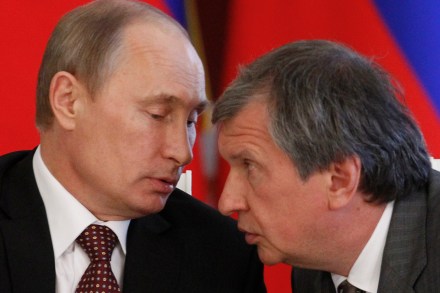
So what, exactly, does Vladimir Putin want? ‘To start World War Three,’ according to the embattled Ukrainian prime minister Arseny Yatseniuk. ‘To rule as president for life with powers on par with the tsars,’ according to Alexei Navalny, leader of Russia’s tiny opposition. To ‘force a major change of boundaries on Europe… and break the post-Cold War consensus,’ according to Radek Sikorski, Poland’s foreign minister. Actually, Putin himself has always been rather clear about his ambitions. ‘Russia has been a great power for centuries, and remains so,’ Putin told the State Duma in his first speech as prime minister, back in August 1999.

Let Putin have Crimea – and it will destroy him

David Cameron says that Russia’s annexation of Crimea ‘will not be recognised’. Ukraine’s Prime Minister Arseniy Yatsenyuk promises that ‘we will take our territory back’. They are both misguided. Let Crimea go: it will be the making of Ukraine and the end of Vladimir Putin. Without Crimea, there will never again be a pro-Moscow government in Kiev. Ukraine will have a chance to become a governable country — a strongly pro-European one with a Russian minority of around 15 per cent. Putin will have gained Crimea but lost Ukraine for ever. And without Ukraine, as former US national security adviser Zbigniew Brzezinski famously said, ‘Russia can no longer be an empire.’ Crimea is a gangrenous limb on Ukraine’s body politic.

Cicero would have agreed with Putin

Last September Russian President Vladimir Putin warned against a ‘unipolar’ world, saying that the national revival of Russia was in line with its foreign policy objective of a multi-polar world and the prevailing of international law over the rule of brute force. How very Roman of him. Cicero pointed out that if one wanted violence to end, the law must prevail; if it did not, violence would reign supreme. To no avail. Every five years, the Roman censors asked the gods ‘to improve and strengthen the position of the Roman people’. There was nothing unique about this.

Where to open your brothel: an international comparison

The best places to open a brothel The Commons all-party group on prostitution has called for a Scandinavian-style law where selling sex would not be illegal but buying it would be. How does the world treat prostitution? — In a survey of 100 countries by the educational charity ProCon, 50 were judged to treat prostitution as illegal, 39 as legal, with the remaining 11 making it an offence in some instances. — Among the most liberal were Canada, where laws against brothel ownership and pimping were recently overturned by the supreme court, the Netherlands, Germany, New Zealand and Greece. — The most severe criminal sanctions were found in Iran, where prostitutes face the death penalty, Iraq, Kenya and Saudi Arabia. You and whose army?