Ukraine war

Power play: Zelensky’s plan for his Russian conquests

40 min listen

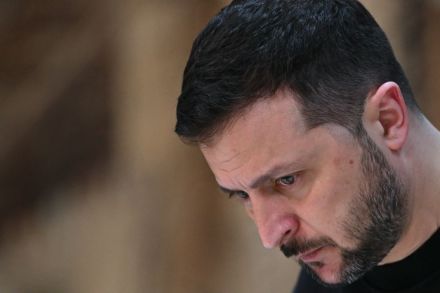
This week: Power play. The Spectator’s Svitlana Morenets writes the cover article in this week’s magazine exploring Zelensky’s plan for his Russian conquests. What’s his aim? And how could Putin respond? Svitlana joins the podcast alongside historian and author Mark Galeotti (02:10).Next: Will and Gus discuss their favourite pieces from the magazine, including Richard Madeley’s diary and Lara Prendergast’s argument that bankers are hot again.Then: how concerned should we be about falling fertility rates? In the magazine this week Jesus Fernandez-Villaverde argues that the problem is already far more grave, and far more global, than we realise. Why should we worry about this, and what can be done to stem this?

Keir Starmer’s first foreign policy tests

18 min listen

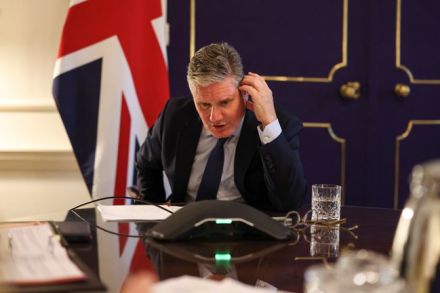
After successful showings at NATO and Blenheim Palace Keir Starmer is facing his first foreign policy tests, with big developments in Ukraine and in the Middle East. On the one hand, Ukrainian troops are continuing push into the Kursk region of Russia and on the other it looked last night that Iran had ramped up preparations for a possible invasion of Israel. Keir Starmer made a phone call last night to Tehran urging them to 'refrain from attacking Israel', warning against a 'serious miscalculation'.  Also today, Tory leadership hopeful Tom Tugendhat gave a press conference and took the opportunity to criticise the government response to the riots. Is he the law and order leadership candidate?

Resisting the escalation in Ukraine

From our US edition

The drums of war are reverberating across Eastern Europe. Every geopolitical decision made by global powers carries immense weight. Amid the fear of growing conflict, one figure has emerged, wielding a sharp tongue and a pointed finger, challenging hesitant American lawmakers to bolster Ukraine’s defense against Russian aggression. Polish foreign minister Radek Sikorski has embarked on a media offensive, chastising Republicans for their reluctance to green-light the Biden administration’s proposed $60 billion military aid package for Ukraine. Despite his purported noble objectives, Sikorski’s appeal deserves closer examination.

ukraine

Pope Francis’s Ukraine war faux-pas

From our US edition

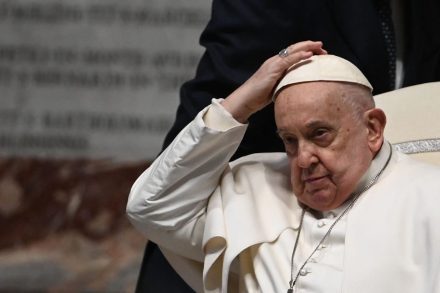
If you didn’t know any better, you might think that Pope Francis was no longer welcome in Ukraine. His recent interview with a Swiss broadcaster, excerpts of which were released over the weekend, has caused a whirlwind of disappointment and anger in Ukrainian policy circles as well as with some of Ukraine’s staunchest supporters in the West. The subject of derision: whether Ukraine should do a little less fighting and a lot more talking. Asked to comment about the debate between those who seek a negotiated end to Russia’s two-year-long war in Ukraine and those who oppose such a stance, Pope Francis chose the side of dialogue.

pope francis

The stalemate on illegal immigration

From our US edition

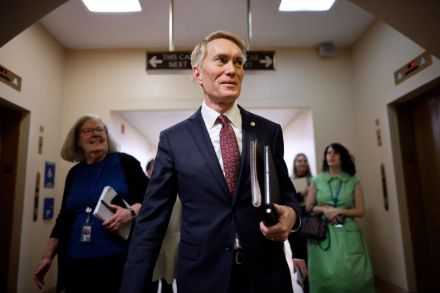
Few moments are less promising to reach a bipartisan deal than the months before a presidential election. And few issues present greater obstacles than limiting illegal immigration. Even the word “illegal” is contested. Progressives say it is too harsh. Conservatives say it is simply truthful. It is no surprise, then, that the compromise “border-security bill” gasped its final breath this week. The Senate bill, negotiated by a Democrat, a Republican and an Independent, met a hostile reception as soon as the text was released. House Speaker Mike Johnson declared it “dead on arrival.” Senate Majority Leader Chuck Schumer reluctantly brought it up for a procedural vote, where it went down in flames. Why such stiff opposition?

james lankford border illegal immigration

Putin’s ‘peace’ is a partitioned Ukraine

52 min listen

On the podcast: In his new year’s address this year Vladimir Putin made no mention of the war in Ukraine – despite missile strikes over the Christmas period – and now Owen Matthews reports in The Spectator this week rumours that Putin could be looking to broker a land-for-peace deal. Unfortunately – Owen says – this deal would mean freezing the conflict along its current lines and the de facto partition of Ukraine. Owen joins the podcast alongside The Spectator’s Svitlana Morenets who gives her own take on Putin’s 'peace' deal in the magazine this week. (01:21) Next: Former Sky News and GB News broadcaster Colin Brazier writes a farmer’s notebook in The Spectator this week about his new life as a farming student.

Katy Balls, Christina Lamb and Sam Leith

20 min listen

This week:  Katy Balls discusses the SNP’s annual conference and asks what will it take to hold the party together if things get much tougher over the next twelve months (01:10), Christina Lamb goes to Ukraine, only to be told that she’s 'at the wrong war' as events unfold rapidly in the Middle East (06:55), and Sam Leith chats to the man who heads up the tiny publishing house that regularly churns out Nobel Prize winners (12:13).  Produced and presented by Linden Kemkaran.

Why the new right is like the old left

From our US edition

F.H. Bradley, perhaps the most self-aware philosopher who ever lived, once dismissed metaphysics as “the finding of bad reasons for what we believe upon instinct.” Bradley (whose favorite pastime was using pictures of Gladstone for target practice with his revolver in his rooms at Merton College, Oxford) qualified his negative assessment of the intellectual life by pointing out that philosophy was itself one of those irrepressible instincts — a nicely circular way of putting it. This is more or less how I feel about journalism. I don’t expect anything from readers except the occasional quiet chuckle and a general sense of not having wasted their time. I am certainly not in the business of changing hearts and minds.

right
world

World events are not going America’s way

From our US edition

Contrary to the conventional wisdom, the world situation is grim for America. And it could actually get far worse. Why, then, are many of our national leaders acting as if things are going well? We need not doubling down but fundamental change. That starts with understanding that we are in serious trouble. The war in Ukraine, which is manifestly the Biden administration’s priority, is sadly likely to be protracted. While the Ukrainian counteroffensive is still ongoing, the best analysis indicates that the war has become a struggle of attrition. Russia is substantially mobilizing its economy and society for a long-haul war effort — and its armed forces appear to have at least partially adapted from their earlier failures.

Renewed hope on Ukraine’s Independence Day 

From our US edition

Kyiv Because I was born on the same day as Ukrainian Independence, there were always fireworks on my birthday. Until I was eight, I thought these rockets were in my honor. I even asked my mother to bring a bag so that I could catch a “firework” and it would keep shining for me all night long.  In addition to fireworks, there were concerts and cotton candy, and the fountain on the main square would be transformed from ordinary to multi-colored. It was like the Fourth of July in America, only on August 24 in Ukraine. But my childhood is over, I’ve become an adult and this year after eighteen months of Russia’s full-scale war, I’m not expecting fireworks. I’m hoping there won’t be Russian rockets or Iranian drones either. War forces us to adjust.

independence

Europe is not a museum

From our US edition

The temperature, at last, is starting to drop — and for Europeans that only means one thing: peak season is over. The crowds in the piazzas and on the beaches are starting to thin. And in the tavernas that were TikTokked you can finally think about getting a table. It’s time. Like the clockwork of migrating swallows — the Americans are going home. And knowing you can finally count on a breeze and far fewer strong-dollar spenders than a few weeks earlier, a stingier tipping class of European grande bourgeoisie in West London or the 8ème arrondissement — that has long since given up on July and August for the Mediterranean — is now contemplating a holiday. It’s still, however, at least conversationally, Europe season in the United States for a few more weeks.

europe museum america

Will the Online Safety Bill target moths?

As is now well-known, Ulez (the ultra-low emission zone) will expand from 29 August, taking in suburban parts of Kent, Surrey, Essex, Herts. This fact gave Richard Lofthouse, an editor and motoring journalist, an idea. He has done much to help car4Ukraine.com, a volunteer group within Ukraine which seeks gifts of 4x4 pickups abroad and repurposes them to help the war effort. Some are armour-plated, for instance, and fitted with a gun turret at the back. Others can be turned into field ambulances, and so on. There is an endless need for wheels in Ukraine, the life of each pick-up ‘in theatre’ being a matter of weeks. As I write, nearly 300 such vehicles have been contributed, well over half from British donors.

From ABC to AK-47: Russia’s new wartime curriculum

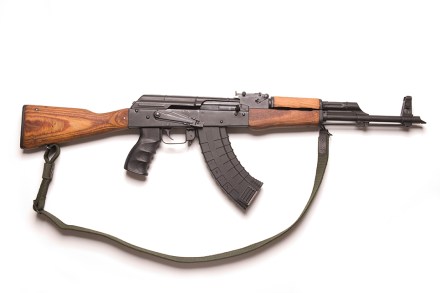
Russia’s education system is about to undergo a radical transformation. Next month, when the new academic year begins, classes will be required to teach teenagers how to assemble, handle and clean Kalashnikov rifles, how to use hand grenades and how to administer first aid in combat. This military training for sixth-formers – 16 and over – will be taught as part of their ‘fundamentals of life safety’ classes. Such classes have existed in various forms since the 1980s. In the past children have been taught quite practical skills, including how to stay safe in terrorist attacks, deal with radiation poisoning following the Chernobyl nuclear disaster and, more recently, the basics of online safety.

What we learned from the Korean War

From our US edition

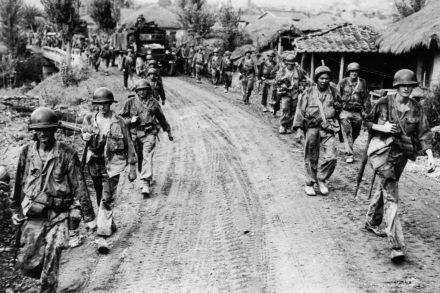
July 27 marks the seventieth anniversary of the armistice that ended major hostilities on the Korean Peninsula. Sometimes referred to as the Forgotten War, the last thing the Korean War should be is forgotten. First and foremost because tens of thousands of US and allied soldiers and millions of Koreans died, but also because of the lessons the war offers for policymakers today as the world enters an era not unlike the budding Cold War in 1950.  The first lesson is on the importance of messaging. The world pays attention to what the US says, and Washington’s adversaries pay particularly close attention. In January 1950, secretary of state Dean Acheson spoke to the National Press Club about a perimeter that the US would defend against communist aggression.

korean war

Biden chickens out on Ukraine and NATO

From our US edition

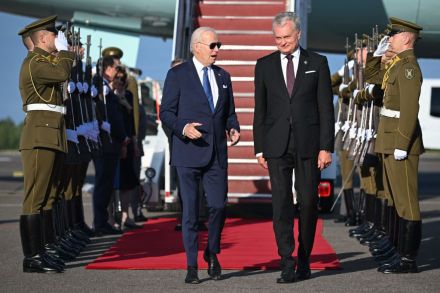
Shortly before his trip to Europe and the NATO summit in Lithuania, President Biden told CNN that he does not think Ukraine has an easy path to NATO membership. “I don’t think it [Ukraine] is ready for NATO,” he said to Fareed Zakaria. “I don’t think there is unanimity in NATO about whether or not to bring Ukraine into the NATO family now, at this moment, in the middle of the war.” “I mean what I say," Biden continued, "we are determined to commit [defend] every inch of territory that is NATO territory... If the war is going on, then we are all in a war.” That Ukraine would not join NATO in the middle of a war has generally been accepted due to the risks. Membership would come, albeit on a longer timeline, and after the war is over.

joe biden nato

The unlikely rise of Germany’s defence minister

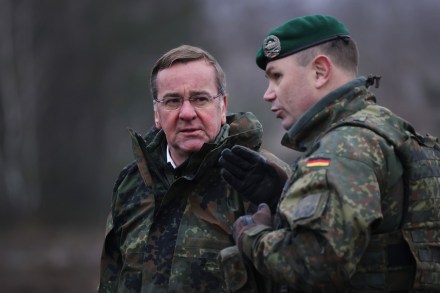
An unlikely political star has risen in Germany. Boris Pistorius, a 63-year-old father of two is a career politician and, as of January, defence minister, an office that has proved a dead end for many of his predecessors. On the face of it, Germany’s Boris has little by way of stardust. Yet he is the country’s most popular politician by a country mile and his department is set to increase its budget at a time when overall government spending is being sharply cut. It seems for the first time in decades, Germany is serious about security and defence – but how long will that seriousness last?

Reminders of the Cold War in Vienna and Budapest

From our US edition

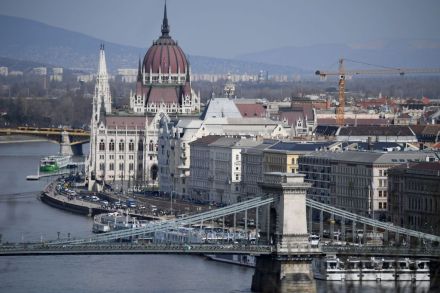
Apparently an acquaintance has dubbed me the “Kremlinologist of the right.” Redolent as it is of the Cold War-era drama surrounding the Kremlin, when the West was desperately trying to suss out what Winston Churchill called a riddle wrapped in a mystery inside an enigma, I could hardly object to this quip upon learning of it. Indeed, I recently traveled to two hot spots of the Cold War, Vienna and Budapest. I went full immersion in Vienna, where I attended a screening of Orson Welles’s The Third Man, a humdinger of a movie if there ever was one. Graham Greene set it in postwar Vienna, which was divided between the four occupying powers, France, Great Britain, America and the Soviet Union.

Cold War
ukraine

How the Ukraine war remade our world

From our US edition

War has a stronger appetite than any of the countries that wage it. Aggressors, defenders, small states and superpowers are all on the menu. Take the war in Ukraine, for example. The war really started in 2014 when Russia annexed Crimea and fomented secession in the Donbas. America slapped Moscow back with sanctions. This was virtue-signaling. Sanctions might sting Vladimir Putin and his cronies, but how could they change Russia’s interest in Crimea? The peninsula is Russia’s gateway to the Mediterranean. Sanctions can’t alter geography. Ukraine had a friend in Vice President Joe Biden, and it had his son Hunter on a Ukrainian oil company’s payroll. Then disaster struck — the Bidens were gone and Donald Trump became president.

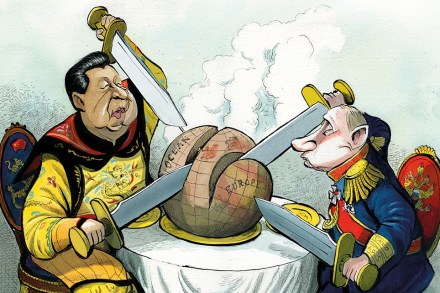
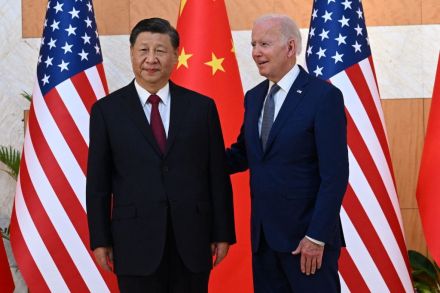
What Beijing wants out of the Russian invasion

52 min listen

As Xi Jinping visits Vladimir Putin in Russia this week, this episode of Chinese Whispers is returning to one of the missions of this podcast series – to look at things as the Chinese see them.  My guest today is Zhou Bo, a retired Senior Colonel of the People’s Liberation Army whose military service started in 1979. He is now a senior fellow at the Center for International Security and Strategy at Tsinghua University. He’s an eloquent and informed advocate of Beijing’s perspective. On the podcast, we discuss why China hasn’t criticised Russia more, despite its purported support for sovereignty, to what extent it really means its peace plan, and whether China is about to invade Taiwan.