Phillips O'Brien

Phillips O’Brien is professor of strategic studies at the University of St Andrews.

America needs its allies

From our UK edition

There are ‘great powers’ and other powers. This is a truism of international relations thinking for those who espouse a ‘realist’ point of view. And for them, being a great power gives a state enormous advantages. Russia, for instance, was widely called a ‘great’ power before its full scale invasion of Ukraine in February 2022 while Ukraine decidedly was not. The results of that analysis were predictable. It was widely stated that Great Power Russia, led by strategic genius Vladimir Putin, was going to steamroller weaker Ukraine in a matter of days. After all, great powers were the alpha males of the international relations world, able to bully lesser powers and treat them as the playthings they supposedly were.
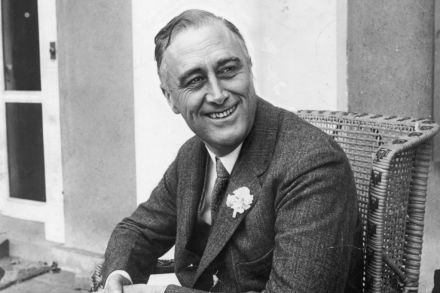
Franklin Roosevelt was made in world war one

From our UK edition

Many of those around Franklin Roosevelt were puking their guts out – but he could not have been happier. It was July 1918 and Roosevelt was crossing the Atlantic on his way to Europe on an official trip as assistant secretary of the Navy. Apart from rather forlorn attempts to sleep while the USS Dyer bobbed up and down in the deep North Atlantic swell, Roosevelt revelled in everything he experienced. Roosevelt loved being at sea and he had chosen, deliberately, to travel in a destroyer, the small nimble vessels that did much of the fleet’s dirty work. The destroyer he was on was newly constructed and manned with a green crew – which quickly showed.

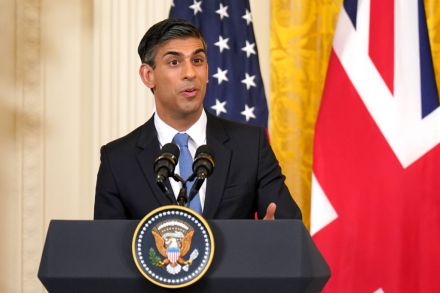
Does Rishi Sunak care about Ukraine?

From our UK edition

I’m told that these days you can still buy pastries which look like Boris Johnson, or drink beers with Boris Johnson’s face on the label, in Kyiv. There is even a Boris Johnson street somewhere in southern Ukraine. Though it has been described as ‘nondescript’ it’s still a sign that Britain’s early support for Ukraine after Russia’s full-scale invasion on February 24, 2022, lives on in the imagination of many Ukrainians.     The tragedy is that those with the greatest ‘imagination’ about the subject are probably in the UK itself.    For all the triumphalism, back-slapping and self-congratulation, the UK is one of the least generous supporters of Ukraine in all of Europe.

There’s no worse alternative to Putin

From our UK edition

Well it took two months, but the inevitable happened this week: Yevgeny Prigozhin, one time chef and later war-criminal extraordinaire for Vladimir Putin, was publicly executed in the most extraordinary way. While flying on his private jet with the upper echelon of his Wagner Group, he was shot down by a Russian military operated anti-air system. For a short period there were the weird but expected rumours circulating, asking if Prigozhin was faking his own death, or asking if the Ukrainians did it. The answer seems clear, however. Putin had Prigozhin executed for his armed mutiny two months ago. Always go with the simplest explanation.

The Ukrainian counteroffensive hasn’t failed

From our UK edition

In the last few weeks, words like ‘slow’, ‘grinding’ and even ‘failure’ have been used to describe the long-awaited Ukrainian counteroffensive. The fact that Ukrainian forces have not broken through Russian lines and indeed have only liberated a relatively small amount of Ukraine’s occupied territory after seven weeks (though to be fair, they’ve taken about as much as the Russians were able to seize in seven months), has led some to cast doubt on the course of the counteroffensive. It has been argued that the Ukrainians launched their main offensive in early June, failed, and since then have struggled mightily to deal with Russian defences, particularly dense Russian minefields.

Ukraine needs more than tanks

From our UK edition

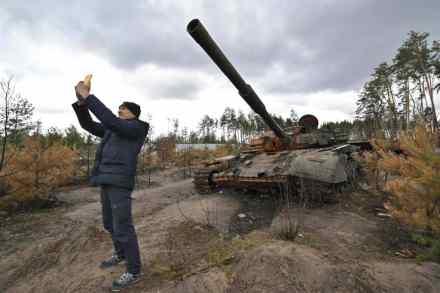
What weapons will Ukraine get next? It’s a crucial question that matters perhaps more than anything else for understanding how the Russo-Ukraine war will end. For the last few months two different systems have received the most attention, systems that Ukraine has asked for almost daily. These are tanks, or MBTs (Main Battle Tanks), the key armoured vehicle of 20th and 21st century land warfare, and ATACMS (Army Tactical Missile Systems), the longest-range ammunition now available for the US-made HIMARS rocket launchers already in Ukraine.  Both are needed for the quickest possible Ukrainian victory in the war, though for now it seems that the first, tanks, are on their way and the other, ATACMS, are still a while away.

Is Putin preparing for total war on 9 May?

From our UK edition

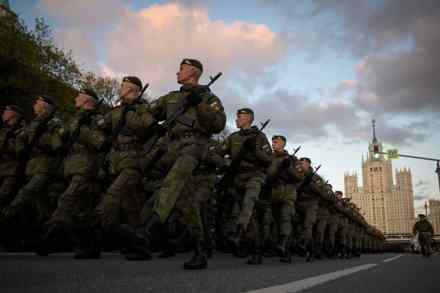
Ahead of Russia’s annual Victory Day celebration on 9 May – which marks the date the Soviet Union defeated Nazi Germany – the world is once again playing a will he, won’t he game with Vladimir Putin. It is inconceivable that Putin will be able to declare any kind of victory in the Donbas on 9 May as he originally intended. The question now is whether he will use the anniversary to declare all-out war on Ukraine instead and fully mobilise Russian society. It is a terrifying decision for Putin to face. The conquering army he sent into Ukraine has been shown to be deeply flawed, too small to conquer large amounts of territory, and inadequately led.

Could Russia lose the war in Donbas?

From our UK edition

We face a serious dilemma as the Battle of the Donbas begins. The idea that the Russian army remains a powerful, effective force capable of breaking through Ukrainian lines and encircling forces in the Donbas remains widespread. It is regularly claimed that now the Russians have shortened their supply lines, concentrated and rebuilt their forces, and appointed a bloodthirsty war criminal as their commander they will show us what they are capable of. And, it is claimed that the Russians must seize the Donbas and have a major victory by May 9, so that Vladimir Putin can stage a victory day parade then in Moscow. But what if the Russian forces haven’t improved since the beginning of the Ukraine war?

Why the sinking of the Moskva matters

From our UK edition

The sinking of the Russian guided missile cruiser Moskva is both a reminder of the past and a marker for the future. It harkens back to a lesson learned forty years ago. It was in 1982, in the waters around the Falkland Islands, that the ability of anti-ship missiles to destroy modern warships was brought home to much of the world. It was a shock for many to see a not-first-rate military run by the oppressive Argentinian Junta being able to destroy a number of the newest British warships during the Falklands War. Most notably the destroyer HMS Sheffield, which had been commissioned only seven years before, was destroyed after being hit by only one French-made Exocet missile.

The Russian army is running out of options

From our UK edition

So much had been written about the Russian armed forces’ modernisation and improvement over the last decade that that it was widely believed that the Russians possessed one of the largest and most powerful armies in the world until a few weeks ago. The army might not be on par with the US or China, but it was certainly capable of conquering a military minnow like Ukraine – or so the logic went. The six weeks of war in Ukraine – which have seen Russian forces fail to take Kyiv and fall back elsewhere – has dented the army’s reputation. And now it seems that the Russian military may be running out of options in the rest of the country too.