Uk politics

Gavin Williamson sacked, but denies guilt on Huawei leak. What went on?

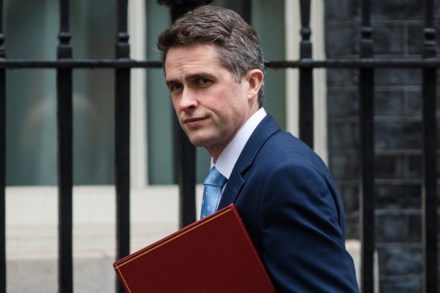
Gavin Williamson has been sacked from government following an investigation into the Huawei leak from a meeting of the National Security Council – replaced by Penny Mordaunt. Announcing the decision, a Downing Street spokesperson said Theresa May had asked Williamson to leave government having 'lost confidence in his ability to serve in the role of Defence Secretary': 'The Prime Minister has this evening asked Gavin Williamson to leave the Government, having lost confidence in his ability to serve in the role of Defence Secretary and as a member of her Cabinet. The Prime Minister’s decision has been informed by his conduct surrounding an investigation into the circumstances of the unauthorised disclosure of information from a meeting of the National Security Council.

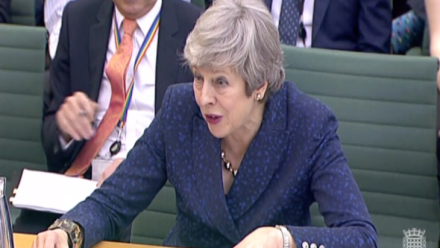
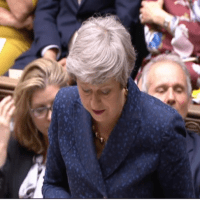
Theresa May flounders horribly at PMQs

Best mates on Brexit, deadly foes on everything else. The highly suspicious search for a Lab/Con Brexit accord was suspended today as the party leaders exchanged blows at PMQs. These covert ‘talks’ are clearly a blackmail effort contrived in Downing Street. By threatening her MPs with a Labour-backed Customs Union, Theresa May hopes to secure their support for her thrice-rejected withdrawal agreement. It might just work. The EU wasn’t mentioned at PMQs but the Labour leader found alternative sources of distress. ‘Things are getting worse,’ he crowed at the Prime Minister as he ran through a hit-parade of sob-stories: inequality, malnutrition, rising crime, falling police numbers and care-home failures.

Pointless PMQs shows up the government’s powerlessness

Most MPs' minds are elsewhere at the moment, with the local elections on Thursday and the European elections looming at the end of the month. Many of them were physically elsewhere at today's Prime Minister's Questions, which took place in a sparsely-populated Chamber with little atmosphere. A low rumble of bored chattering accompanied Theresa May and Jeremy Corbyn's exchanges, which lacked the usual political fire and fury of sessions held right before a poll. Neither of them really bothered to engage in exchanges, instead reeling off poorly-planned lines about social mobility, life expectancy and social care. The Prime Minister produced one of the worst jokes of her premiership when she told Corbyn that he should have welcomed the anniversary of the union between England and Scotland.

Cambridge’s slavery inquiry will raise more questions than it answers

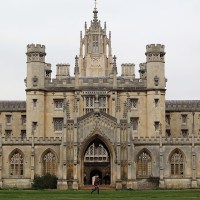
Can the past hold the present to ransom? Can we be culpable for our predecessors’ actions? Knotty questions of this kind have long been debated in British universities. But now these abstractions are finding new and controversial expression. Yesterday, the University of Cambridge made headlines by launching an academic investigation into its historical relationship – direct or otherwise – with the slave trade. The panel will spend two years scrutinising whether Cambridge profited from ‘the Atlantic slave trade and other forms of coerced labour during the colonial era’. For academics, the enquiry will certainly be interesting. But serious problems inevitably arise when historical discoveries are deemed to have moral consequence for the present.

Liz Truss shows solidarity with Diane Abbott

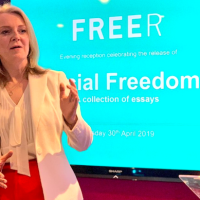
Liz Truss and Diane Abbott are an unlikely pair. One is a champion of free markets while the other is a true Corbynista. However, of late the Chief Treasury to the Secretary has managed to find common cause with the shadow home secretary. Speaking at a Freer think tank event last night with fellow freedom lovers James Cleverly and Steve Baker in the audience, Truss spoke of the importance of fighting over-interference of the state into people's daily lives – and that includes Abbott's recent decision to disobey London transport rules and drink an M&S mojito on the overground: 'When we try to micromanage people’s lives, we take away the freedoms that are crucial for them to feel in control. Freedom is the ability to make choices that others disapprove of.

David Lammy inspired me to stand for the Brexit Party

I am standing as Brexit Party candidate in the forthcoming EU elections. The response of voters so far has been overwhelmingly positive. Phew. Here’s a chance to demonstrate that the shambles that parliament has made of delivering on a referendum mandate will be challenged by a democratic fightback. It really is exciting. But, I admit, deciding to stand was rather more nerve wracking, and sent shockwaves among my peers.   *** “Why on earth rock the boat, it could ruin your life and career?”. Just one of the incredulous warning notes sent to me when a friend heard I was considering standing. I certainly had doubts about throwing my hat in the electoral ring.

Jeremy Corbyn wins his Brexit showdown with Tom Watson

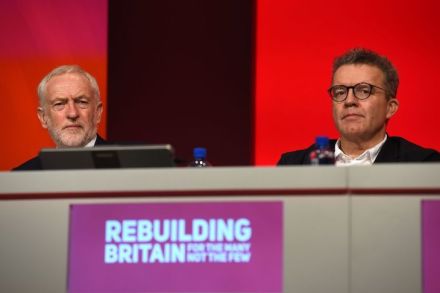
Jeremy Corbyn has again shown his power over the structures of the Labour party by winning today's national executive committee showdown over its European elections manifesto. A faction of MPs, led by Tom Watson and backed by the GMB, Unison, Usdaw and TSSA unions, had hoped to change party policy to support for a confirmatory referendum on any Brexit deal that Parliament comes up with. But Corbyn and the Unite union had opposed this, and this afternoon, they came out on top.

The Government wants Brexit talks to end next week. But can they end well?

Will the cross-party Brexit talks ever end? They seem to have been going on for almost as long as the negotiations to get Britain out of the European Union, and with a similar lack of anything for either side to boast about. Yesterday, David Lidington said he was 'encouraged by the sense in the room today about the need to inject greater urgency into this', which was read by some as a sign that a breakthrough might be imminent. This seems a rather hopeful reading of what is essentially an admission that everyone has been faffing around a lot, but members of the Labour negotiating team also believe the government might shift on some of its red lines. Lidington updated the cabinet on the talks when it met today.

Clever Tories admit capitalism isn’t perfect

One of the many things that has been neglected in the Conservative Party because of all-consuming Brexit is a meaningful debate about markets and business. Confronted with a Labour leader offering a clear critique of capitalism as a “rigged” system and outflanked by Nigel Farage telling a remarkably similar story about big money financing a self-regarding elite, the Tories have generally offered two responses. Both are flawed. On one hand are those who think the answer to complaints about the economy is to yell about Margaret Thatcher, Milton Friedman and sometimes Singapore. Liz Truss has become the most prominent advocate of what Stian Westlake rather brilliantly calls “live-action role-playing Thatcherism”.

Watch: James Brokenshire taken to task over Roger Scruton sacking

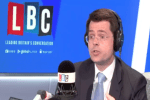
James Brokenshire has been keeping a low profile since the controversial sacking of Roger Scruton three weeks ago. But now the Housing Secretary has finally been taken to task for his handling of the row. Brokenshire sacked Scruton from his unpaid government role within hours of the publication of an interview in which Scruton was accused of making a 'series of outrageous remarks'. As Douglas Murray details in this week's magazine, the truth about what Scruton said was rather different. https://twitter.com/IainDale/status/1122988961784303618?ref_src=twsrc%5Etfw On LBC, Brokenshire was asked by Iain Dale whether he regretted sacking Scruton: 'It is just that regret I have. I have a huge amount of respect and acknowledgement for Sir Roger’s focus on aesthetics.

The message behind Labour’s latest party broadcast | 30 April 2019

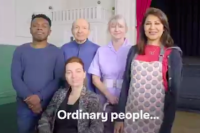
As the Tories set expectations low for Thursday's local elections, Labour is in campaign mode. The party has released its third and final party political broadcast ahead of this week's votes. The theme of the short film is investment vs austerity attempting to lay out the reasoning behind the Labour slogan 'for the many not the few'. In it, a host offers five members of the public money back that they lost as a result of Tory austerity. Meanwhile, a billionaire is given a £20,000 tax cut. The film goes on to suggest that only the 'ordinary' people put the money back in the community – while the billionaire barely notices it and moves it abroad. https://www.youtube.com/watch?

How Labour could solve its Brexit conundrum

Sources close to the Labour leader believe the emergency NEC meeting on Tuesday, which determines the Labour manifesto for the EU elections, will agree a formula that is "a restatement" of the party's equivocal and prolix party conference resolution of last September. But a senior trade union source tells me that if Unison, GMB and Usdaw are bulldozed on Tuesday, if their demand for Labour to commit to a "confirmatory" referendum on any Brexit deal is simply ignored, Corbyn and his colleagues are "being delusional about the likely consequences". The well-placed trade unionist added: "They have no idea what's going to hit them and the scale of the backlash they will face" – which captures for you how emotions are running very high.

Good news for government leakers

The hunt is on within government to discover which individual leaked details of a meeting of the National Security Council on allowing Huawei to help build Britain's new 5G network to the press. With an inquiry under way, Foreign Secretary Jeremy Hunt today announced that he would be happy to hand over his phone as part of the investigation. Still, should any government ministers or aides currently find themselves less enthusiastic about aiding the inquiry (and sweating it out that the net is closing in), perhaps they can find some relief in a column former No 10 aide Kate Perrior has penned for the Times. Perrior says that during her time working for the Prime Minister, she had to take part in three leak inquiries.

Sunday shows round-up: Tory chairman ‘hopes’ his party’s councillors will vote Conservative

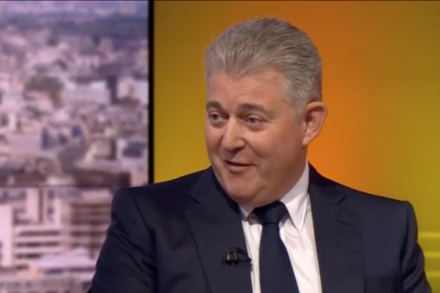
Brandon Lewis: I hope our councillors will vote Conservative After fighting off some technical glitches this morning, the new series of the Marr Show featured an interview with the Conservative party chairman Brandon Lewis. With local elections, and potentially, European elections approaching next month, Mishal Husain (filling in for Marr) asked Lewis about the party’s dire standing in the opinion polls. Of particular concern was a poll of Conservative councillors showing that 40 per cent were planning to vote for Nigel Farage’s new Brexit party if the European elections went ahead: MH: When nearly 800 of your councillors were questioned for a survey, 40 per cent of them said they would be voting for the Brexit party... BL: ...

Jeremy Corbyn won’t be forced to campaign for a second referendum

A concerted attempt by Labour MPs and MEPs to engineer that their party would campaign unambiguously for a ‘confirmatory’ Brexit referendum in the EU elections looks set to flop. Instead Jeremy Corbyn’s preferred position of characterising a new public vote only as an option is likely to prevail, because he seems to have retained the backing of most of the leaders of the big trade unions. The decision on how strongly to push for a referendum, and how Labour’s position on it should be worded in its manifesto, will be taken at a crunch emergency meeting of the party’s ruling NEC on Tuesday.

The Tories are stuck in the middle with May. Here’s what they should do next

The Tories have a debate on their hands about what direction they should go in. Do they return to the politics of the Cameron coalition? This delivered majority government, won over a greater percentage of AB (better off) voters, won more university towns, more professionals but fewer rural areas. Or should the Tories double down and become the Brexit party, moving towards what Nick Timothy says is the “National” party, with a rural, less affluent base led by someone like Boris Johnson? The choice is far from straightforward and there are five big considerations for the party to take into account on this issue before deciding which path to take: Demographic parameters: which demographic groups will get larger or smaller over time?

Derailing Brexit isn’t Leo Varadkar’s only aim

I agree with much of Liam Halligan’s analysis of the Irish government’s approach to Brexit (‘Good Friday disagreement’, 20 April). However, I think he omits an important point. Leo Varadkar is not merely attempting to derail Brexit; he is also hoping to achieve a united Ireland. For decades politicians, officials and journalists in the south have privately peddled the line to gullible counterparts in Britain that the Dublin establishment has been ambiguous about whether it really wanted the North with all of its myriad problems, but this is and always has been a lie. The Good Friday Agreement was clearly perceived behind closed doors in Dublin as a key transition stage to eventual reunification.

Theresa May will have to give the ’22 an answer

Next week, Theresa May will sit down with Graham Brady, the chairman of the 1922 Committee. He will ask her for more clarity on her departure plans. As I say in The Sun this morning, the answer that Mrs May gives will go a long way to determining her future. On Wednesday, the executive of the 1922 Committee rejected a change to its rules which would allow another vote of confidence in Mrs May’s leadership. But this decision was taken narrowly, 9 to 7 with 2 abstentions, and the executive did decide to ask the Prime Minister for more detail on when she will go. If Mrs May simply carries on saying that she’ll leave if the withdrawal agreement passes, that will not be enough.