Uk politics

Jeremy Corbyn has ditched his principles over Brexit

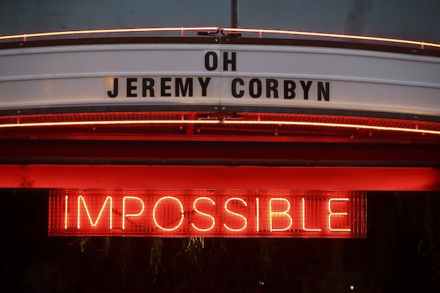
Remember when people would say things like, ‘Jeremy Corbyn might talk a lot of nonsense but at least he has principles’? We now know what rot that was. Corbyn is, in my view, the most unprincipled politician in the UK right now, and by some margin. Exhibit A: this man who was a devoted Eurosceptic his entire life has now effectively been employed by the establishment to keep us tied to the EU. This man who raged against the Brussels machine for years is now tasked with softening Brexit to such a degree that Britain will remain tied to the Brussels machine. For a taste of power, for a taste

One vote in it as Yvette Cooper’s bill passes

Yvette Cooper’s bill, requiring the Prime Minister to seek an Article 50 extension to avoid no deal, has passed by 1 vote—going through all its Common stages in a single evening.  The passage of this bill at such speed even though Theresa May has said she’ll ask for an extension, is another demonstration of how committed the anti no-deal majority in parliament is. But before these anti no-deal MPs pat themselves on the back, they should realise the limits to their action. Parliament is sovereign, but it isn’t sovereign over the EU27; and it is they who’ll decide whether to grant the UK an extension to the Article 50 process.

Theresa May and Jeremy Corbyn both want to frustrate Brexit

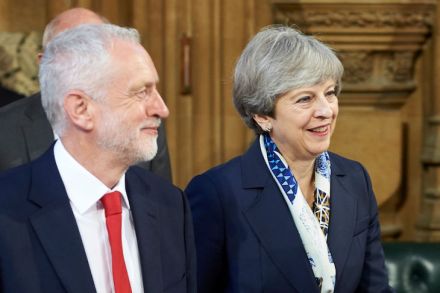
There is a logic in Theresa May’s late move to Labour. It is the same logic by which both parties, at the last general election, put forward very similar policies about Brexit. They need to stay together (while feigning disagreement for party reasons) to frustrate what people voted for. Just as they both said in 2017 that they wanted to leave the customs union, now both are working to stay in it. It is the same logic by which Mr Speaker Bercow has arranged for Sir Oliver Letwin to become prime minister on roughly alternate days. None of the main players really wants Brexit, but none can really say so.

Theresa May’s Brexit compromise won’t work

So, finally, we have a spirit of compromise. Jeremy Corbyn and Theresa May are going to sit down together and hammer out a deal on which both their respective parties can agree. Well, maybe not. There has been plenty of analysis over the past few hours predicting how it could all unwind – with further ministerial resignations and so on. But there is something more fundamentally wrong with what Theresa May has proposed. While searching for compromise might be a reasonable way to proceed on most political issues it simply doesn’t work in the case of Brexit. Either of the ‘extreme’ ends of political opinion on Brexit make sense: repealing

What MPs decide about Brexit is becoming irrelevant

Maybe we will go for a Norway-Double Plus. Or A Canada-Minus. Or Common Market 2.0, or a WTO-Light, an EEA-Doubled, or an Enhanced EFTA or even a Singapore Sling or a White Russian. Okay, scratch those last two. I seem to have mixed up a list of options for leaving the European Union with a cocktail menu. But that pair aside – and who knows, maybe late on a Thursday night MPs will vote them through instead – they are all ways that we might eventually leave. Amid all the arguments over our departure, however, one point is easily overlooked. For the economy, after we sailed through the original deadline

Last night’s vote takes some of the pressure off Theresa May

The failure of any Brexit option to wield a majority in Monday’s indicative votes appears to have eased the pressure on No. 10. Ministers had been expecting five hours of meetings today but the first cabinet has been delayed and there is an expectation that the meeting will not run on so long. One minister points out that there is now less pressure on the government to come up with an immediate decision on whether to pursue a softer Brexit, to attempt a no-deal Brexit or to go to the polls if May’s deal fails a fourth time. That’s not to say today’s meeting will be a walk in the

Britain must follow Germany’s example to help end Yemen’s civil war

There is no civil war in the world today whose effects are so detrimental to civilians as the conflict engulfing Yemen. The war, pitting a Houthi rebellion in control of the Yemeni capital against the nominal Yemeni government in the south, just crossed its four-year anniversary last week. The United Nations is trying its best to end the fighting, with little to show for it other than a ceasefire in the Yemeni port city of Hodeida which may or (more likely) may not get peace talks off the ground. Unlike the United Kingdom, which has exported £5.7 billion of arms to the Saudi-led military coalition bombing Yemen to smithereens, Germany has largely

Why Common Market 2.0 is the Brexit we need

In recent weeks, there has been a lot of inaccurate media coverage of Common Market 2.0, which proposes that the UK should remain a member of the European Economic Area (EEA) after Brexit. The fundamental purpose of the EEA Agreement is to extend the benefits of the single market to countries that are outside the European Union but members of the European Free Trade Association (Efta). EEA membership for non-EU states involves accepting the rules of the single market – including the four freedoms – but excludes other EU policies that many in the UK dislike, such as economic and monetary union, political union, the common agricultural policy, the common

Watch: Nick Boles quits the Tory party

Nick Boles has just quit the Tory party on the floor of the House of Commons. Minutes after his Common Market 2.0 Brexit plan was rejected by MPs, Boles took to his feet to announce his decision to resign the Tory whip. Here is what he said: ‘I have given everything to an attempt to find a compromise that can take this country out of the European Union while maintaining our economic strength and political cohesion. I accept I have failed. I have failed chiefly because my party refuses to compromise. I regret therefore to announce that I can no longer sit for this party.’

MPs reject soft Brexit options in Commons vote

MPs have once again failed to reach an agreement on their preferred Brexit option. The Commons rejected a customs union with the EU, Common Market 2.0, a confirmatory public vote and a bid to revoke Article 50 in the event of no deal being reached. Four amendment were considered – and voted down – by MPs tonight. Motion C, put forward by Ken Clarke, urged the government to pursue a customs union with the EU. It was narrowly rejected by 276 to 272. Motion D, Nick Boles’ ‘Common Market 2.0’, proposed that Britain opt for membership of the European Free Trade Association and EEC. It was rejected by 282 to

Watch: Anna Soubry and Jacob Rees-Mogg clash in the Commons

There are still a few hours to go until Parliament votes once again on Brexit, but it is already getting somewhat heated in the Commons. Anna Soubry attempted to take Jacob Rees-Mogg to task over his decision to back Theresa May’s Brexit deal. Here’s what she said: Would he like to tell the House why it is that, a few weeks ago, he voted against the government’s withdrawal agreement, but on Friday he voted for it? And why he is entitled to a vote and to change his mind but the people of this country are not? But unfortunately for Anna Soubry, her decision not to stand for a by-election

Tory MP: I was wrong to vote for May’s Brexit deal

There was a glimmer of hope for Theresa May and her Brexit deal on Friday when some Tory eurosceptics decided to vote for the withdrawal agreement after all. Richard Drax was one of them. But now he says he regrets doing so. He told the Commons this afternoon: I do feel I have not been true to myself. Although doing what I believed to be in the country’s best interests at that moment in time, I quickly realised that I should not have voted with the government on Friday afternoon. What I should have done – and did not – was to trust my instincts and those of the British

Why Norway Plus is a step too far for the Tories

The Norway Plus campaign has had a big boost today with both Labour and the SNP saying they’ll whip in favour of it. Given that the plan might well be acceptable to the DUP – as it means that the backstop wouldn’t come into force – and the Cabinet will be abstaining, it has a chance of getting a majority tonight. Though the number of Labour MPs who won’t want to back continuing free movement or are holding out for a second referendum means it’ll probably fall just short. If it does pass, then the chances of a general election go up again. Fighting an election on the customs union

What Jon Snow meant when he talked about ‘white people’ | 1 April 2019

Jon Snow has had a lot of flak for his ‘white people’ comment at the tail end of his report from the Leave Means Leave march on Friday. But in my view he hasn’t had enough. Because it seems pretty clear to me that he wasn’t simply disparaging whiteness and openly commenting on the racial make-up of a protest, which would have been bad enough — since when was it the job of newsreaders to point out people’s skin colour? No, he was also being classist, a bit of a snob. Because make no mistake: when members of the liberal elite say ‘white people’, they aren’t talking about white people

A Customs Union isn’t the way out of the Brexit mess

For some of those desperate for Britain to stay put in the EU, the Customs Union option functions as a handy obsession. Ministers, too, appear to be rallying behind this as a solution to the Brexit crisis, amid reports that dozens of senior Tories could vote for the UK to stay in a customs union in tonight’s vote. They are making a big mistake. There is no substantive case for irrevocably and permanently subjecting Britain to the European Union’s Customs Union. Rather than attempt to demonstrate how being tied to the Customs Union furthers the national interest, the best its proponents can do is pitch it as a tactical compromise. Being

Will Labour MPs back a bid to revoke Article 50?

Labour has not tabled a motion for today’s indicative votes on a way through the Brexit mess – which feels like an important moment, perhaps because it has recognised that its proprietary version of Brexit is dead and its role instead is to work with all MPs to identify a deliverable alternative (which could be no Brexit at all) to the Prime Minister’s thrice rejected plan. Presumably the thrust of Labour’s effort in the hours ahead will be to secure support for the Kyle/Wilson call for a “confirmatory” referendum (a referendum on any Brexit deal approved by parliament). But even so, the prospect of a majority of MPs backing a

Who would lead the Tories into a snap election?

After Theresa May’s deal was defeated in the House of Commons for a third time, there’s heightened speculation that we could now be heading for a snap election. With the Withdrawal Agreement defeated by 58 votes, even if No. 10 tries to put it to another vote it’s hard to see how May would manage the numbers. This is why talk has turned to an early election. In the immediate aftermath of that result, both Jeremy Corbyn and the SNP’s Ian Blackford called for one. Meanwhile, Theresa May gave the biggest hint yet that she could go for one – ‘I fear we are reaching the limits of this process in

A no-deal Brexit or general election are now likelier than ever

Maybe I am simply in the thrall of the powerful emotions manifested by MPs in their debate on Friday, but their rejection of the Withdrawal Agreement just now feels the most significant event to date on the long and tortuous road to Brexit or revocation. Because the EU just a week ago bent its rules to accommodate the Prime Minister’s request for a modest Brexit delay, and also tried to make it easier for her to ratify the deal by saying only the divorce part – the Withdrawal Agreement – would need MPs’ approval to secure a postponed Brexit date of May 22 for leaving the EU. Parliament has thrown