Uk politics

Nigel Lawson versus Mervyn King

In this week’s Spectator we have a piece from one of our former editors, Nigel Lawson, where he confronts this idea that the West’s woes can be blamed on a new bogeyman called ‘global imbalances’. This is fast becoming the received wisdom, something that even the bankers can point to and blame. It gets everyone off the hook, and takes attention away from the basic failure to regulate the supply of money and quality of investments. CoffeeHousers may be familiar with the argument by now. Time and time again, we hear central bankers shrug their shoulders and say something like: ‘Don’t blame us central bankers and financial policymakers for the debt crisis.

Assessing the sick

Should GPs determine whether people on long-term sick leave are too ill to work? Perhaps not, according to the draft copy of a government-commissioned review into sickness absence. It proposes setting up a new, separate and independent body to assess those on long-term sick leave, on the grounds that doctors have no incentive — nor, perhaps, the specific knowledge — to prod and coax them back towards employment. The new service, it is said, would advise sick leavers, and their employers, about just what they can and can't manage. If the government does introduce this, it will be another sign of their intent to untangle the problems with sickness benefits.

200,000 extra working pensioners

Despite – or perhaps because of – the recession, pensioner employment has increased dramtically over the past few years. In his Telegraph column today, Fraser remarks on this important but largely ignored trend in Britain's workforce. 'A million jobs have been lost since the Great Recession began', he says, 'but the number of pension-aged people in work has increased by 200,000.' Here's that phenomenom in graph form: Why has this happened? Fraser puts his finger on one important factor: 'Crucially, they pay less tax. A pensioner manning the tills in Tesco will take home 12 per cent more than a working-age colleague on the same salary.

Cameron and Merkel: all smiles but no progress

David Cameron and Angela Merkel were clearly keen to show that, whatever the tensions over the role of the European Central Bank, they still get on. I lost count of the number of times in their press conference that they used the word 'good' to characterise their relationship and their discussions. But there did not appear to have been any actual progress on how to deal with the current crisis. Certainly, there was no softening of Germany's opposition to using the ECB as the backstop for the Eurozone. Merkel conceded that she had raised a European-only financial transactions tax with the Prime Minister but that, unsurprisingly, no progress had been made on this front.

Farage scolds Europe’s wrecking crew

In his cover story for last week's Spectator, Fraser described how the Frankfurt Group – which he dubbed 'a new EU hit squad' – has begun imposing it's will on Greece and Italy. In the European Parliament on Wednesday night, Ukip leader Nigel Farage made the same case against them – and quite forecefully, too: https://www.youtube.com/watch?v=bdob6QRLRJU It's now going viral, with over 75,000 views so far.

What does the ‘carbon floor price’ mean? More emissions and fewer jobs

After the Conservative Party Conference, Fraser described this statement in George Osborne’s speech as the Osborne Doctrine: ‘Let’s at the very least resolve that we’re going to cut our carbon emissions no slower but also no faster than our fellow countries in Europe.’ The Government’s current climate policy clearly fails that test, as I set out for this site at the time, and there is no more egregious violation than the carbon floor price. It is one of those policies that can sound reasonable in theory: the EU Emissions Trading System creates a carbon market. That market produces a carbon price that is supposed to encourage business to invest in cutting emissions by doing things like building nuclear plants.

Benefits won’t rise in line with September’s inflation figures

Jill Sherman, the Whitehall editor of The Times, reports tomorrow that the government will not raise benefits in line with September’s inflation figures as normally happens. However, there’ll be no freeze in benefits. Instead, they’ll rise in line with a six month inflation average which stands at 4.5 percent rather than September’s 5.2 percent figure. This move will save the government a little less than a billion pounds as pensions will be exempt from the move. I suspect that there’ll be objections to this shift from various quarters. But it is worth remembering that 4.5 percent is far larger than the pay rises most private sector workers will see while there’s a wage freeze in the public sector.

Miliband’s ‘responsible capitalism’ requires deregulation

Despite yesterday’s gloomy unemployment figures there is, it turns out, good news for the government buried in current labour patterns: the total number of hours worked in the last three months has risen by three million. The bad news is that employers are currently filling this demand by getting current employees to work longer hours (average weekly hours over this time period rose by 0.3 to 31.5), rather than taking on new workers. Presumably this is because it is so much cheaper, and less risky, to do so.   This should come as an encouragement to the government, as they search for ways to bring about growth.

Some advice for Osborne

In the latest issue of the magazine, a flock of politicians, commentators and economists offers George Osborne some advice for growing the economy. There are ten contributions in total, but here are three for CoffeeHousers' consideration: Arthur Laffer Chairman, Laffer Associates Cut the 50p tax Reducing the burden which government places on the economy, through tax cuts, is the surest way to promote growth. I have never heard of a country that taxed itself into prosperity. Yet Britain last year raised the top rate of income tax from 40 per cent to 50 per cent. For more economic growth, and more tax revenue, this rate should be lowered immediately.

Osborne sells off the Rock

‘Sir Richard Branson set to buy Northern Rock.’ So read the headlines in November 2007 — and now they're finally true. It has been announced this morning that Virgin Money is going stump up £747 million to return the bank to the private sector. This, says George Osborne, ‘is an important first step in getting the British taxpayer out of the business of owning banks.’ By the looks of it, Virgin will be paying less than they would have done four years ago, but they have also had to make various assurances about how they will handle the Rock. When Branson's bid failed in 2007, and the bank was nationalised, it was because the government started worrying about what they saw as 'extortion' on Virgin's part.

Renegotiation reality

Governing is about choices. That goes for Europe too. The government says it can get everything it wants – that's politics – but the reality is different. It actually faces a number of trade-offs, the biggest being a choice between staying in an EU that reforms but not as quickly or as dramatically as parts of the Tory party wants; or to pull out entirely from the EU.  In his speech at the Lord Mayor's Banquet, the Prime Minister argued that he could both change Britain's relationship with the EU but remain inside the 27-member bloc. But I can find no serious EU expert or mandarin who believes this is actually possible. The most the PM can probably get is an opt-out from judicial cooperation.

Miliband finds his niche

I spent this morning with Ed Miliband on a trip to a factory in Sunderland. Miliband was visiting the Liebherr plant there, which manufactures cranes. The centerpiece of the visit was a Q&A with the workforce. Now, a factory in the North East is not the toughest venue for a Labour leader to play. But Miliband appeared far more comfortable in this setting than he does when giving a traditional speech from behind a podium.   Unlike Miliband’s Q&A at Labour conference, the questions were not softballs or traditional left-wing fare. One set of three questions were: why don’t we close the borders, bring back national service and do more to clamp down on benefit cheats.

A ban on smoking in cars should be unthinkable

It's tempting to respond to the BMA's extraordinary proposal to ban smoking in cars with a Thin End of the Wedge argument. Ban smoking even on the part of an unaccompanied adult, sitting in a car by the side of the road? How long before they're banning it in the home, eh? But hold it right there. The proposal isn't just scary for where it might lead. It's scary all by itself. The notion that a grown up can be barred from self-harm by smoking a fag by himself, in his own car, his own space, on the basis that it might kill him sooner rather than later, should be unthinkable in a free society.

Unemployment rate highest in 15 years

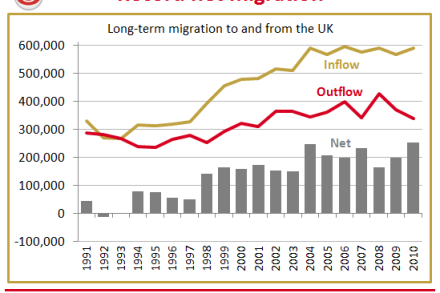
Today's unemployment figures do not make for cheery reading. Youth unemployment is up to over a million and unemployment overall has reached 2.62 million, meaning that the unemployment rate is the highest it has been for 15 years. Laura Kuenssberg tweets one particularly striking statistic: 'Number of UK Nationals in work fell 280k compared to this time last year, number of non-UK Nationals in work increased 147k over same time' This suggests that it's a touch too simple just to say that there are no jobs out there. It also means that we really should think about why non-UK nationals are proving so much more adept at finding work than their British counterparts.

The Tories may have left it too late for that realistic debate about border security

Another day of bad headlines about border security is, in the end, a bad day for the Home Secretary, whoever ends up getting the blame. Yesterday morning brought further revelations in the newspapers; and then at lunchtime, Brodie Clark, the senior official who was first suspended and then resigned over the affair, made his much anticipated appearance before the Home Affairs Select Committee. Meanwhile, over in the House of Commons, the immigration minister Damian Green had been summoned to answer an urgent question about further alleged border lapses. By the evening, the story was once again leading the national news. Nevertheless, as the dust settles, Theresa May is still there — and, if anything, slightly less vulnerable than before.

Cameron stamps on the SpAds

David Cameron summoned all Tory special advisers to Downing Street for a meeting this afternoon. He wanted, I understand, to warn them that too much of the coalition's internal workings were being briefed out to journalists. He made it clear that he wants an end to process stories appearing in the papers.   Downing Street has been infuriated by recent reports of tensions between Steve Hilton, Cameron’s senior adviser, and George Osborne and is keen to stamp on anything that keeps this — rather misleading — story going. There are also worries about the party being seen as divided again, a return to the old Tory wars stories of the 1990s.    Interestingly, Cameron said that he did not think that many leaks came from officials.

The policies behind your energy bills

It may be a week old, but last Monday's episode of Panorama really is worth putting half-an-hour aside for, if you haven't seen it already. Its subject was energy prices, and it raised some very urgent concerns about the government's policies in that area. You can watch it on the BBC site, but here's a brief summary in the meantime. All in all, switching our dependence away from coal and oil is going to be enormously expensive. Some £200 billion of taxpayers’ money is to be spent on increasing renewable energy output from seven to thirty percent by 2020. And, because sources like offshore wind costs almost £100 an hour more than traditional generators, this policy’s most immediate effect will be to raise energy bills sky high.

Clark versus May, round 2

The simmering feud between Brodie Clark and Theresa May has boiled over today. Speaking to the home affairs select committee earlier, the former border official didn't just repeat the substance of his resignation statement from last week, but ramped it up into a rhetorical assault on the home secretary. ‘I never went rogue and I never extended the trial without the Home Secretary’s advice,’ he said of the recent easing of border controls. ‘I’m just very conscious that over 40 years I’ve built up a reputation and over two days that reputation has been destroyed and I believe that has been largely due to the contributions of the Home Secretary,’ he added for emphasis.

Cameron shows his eurosceptic side

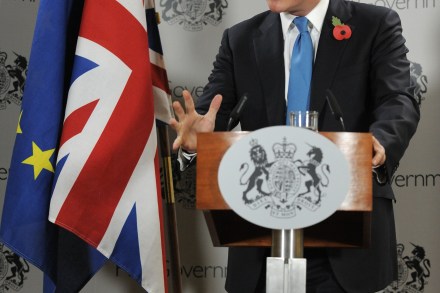
David Cameron's speech at the Lord Mayor's Banquet last night was a significant moment — the clearest articulation yet of his European Policy. In the crucial paragraph, he declared: 'we sceptics have a vital point. We should look sceptically at grand plans and utopian visions. We’ve a right to ask what the European Union should and shouldn’t do and change it accordingly. As I said, change brings opportunities. An opportunity to begin to refashion the EU so it better serves this nation’s interests and the interests of its other 26 nations too. An opportunity, in Britain’s case, for powers to ebb back instead of flow away and for the European Union to focus on what really matters.