Uk politics

Miliband’s immigration attack no threat to Cameron

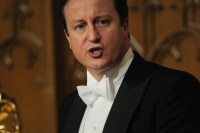
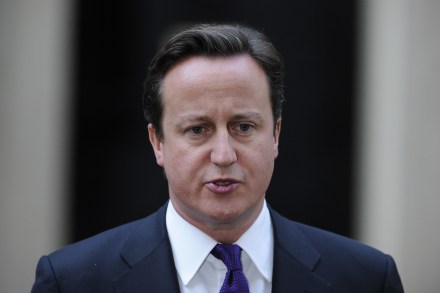
Ed Miliband broke with his post-conference policy of always asking about the economy at PMQs to devote all six questions to the whole Brodie Clark/Theresa May border dispute. Miliband, though, had no new killer fact or question. Instead, he stuck to general criticisms of the government’s approach. This gave Cameron an easy ride. He simpy backed the Home Secretary unequivocally before turning on Labour's immigration record. By the end, Cameron was at his most disdainful towards Miliband. Indeed, the most interesting element of the exchange was how the Liberal Democrats looked at their feet as Cameron rattled off the coalition's greatest hits on immigration. The rest of the session was relatively quiet.

Why is Huhne still shunning shale?

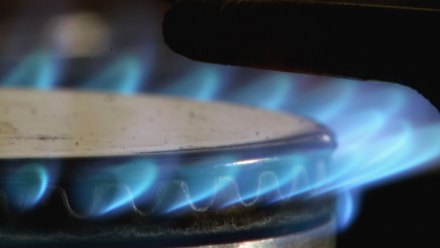
Chris Huhne's article in the Telegraph this morning attacking those who think that shale gas can solve Britain's energy needs is built around a straw man of an argument. Huhne claims that, 'Some therefore argue that we should abandon everything else and devote ourselves wholly to shale.' This is, to put it mildly, a dubious claim. Advocates of shale gas don't want to abandon all other forms of energy, they just want Britain to properly exploit an energy resource which could be as significant for Britain as North Sea oil has been. The Energy Secretary's aversion to shale is even more puzzling when you consider how keen he is for imported gas, coming from some of the most geo-strategically unpredictable places in the world, to emerge as 'the back-up' to renewables.

Clark rounds on May

Has anyone used the “Mayday” gag yet? Perhaps it's too cheap and obvious, but it's certainly applicable today. Not only are Theresa May's troubles still splayed across the newspapers — sure to come up in PMQs later — but they have also been aggravated by the man who just quit as head of the UK Border Agency's border force. So far as the bookies are concerned, the Home Secretary is now second-favourite (behind Chris Huhne) to be the Cabinet's next ejectee. As for how the former head of the UK Border Agency's border force, Brodie Clark, has made things difficult for May, I'd suggest you read his resignation statement here. In effect, he accuses May of misleading the Commons about his role in reducing border queues.

Osborne gets frank with Europe

George Osborne’s attack on the European Commission and his fellow finance ministers, for wasting time talking about a financial transactions tax when it is not going to happen, is quite a significant moment. It marks an attempt by Britain to knock this idea, which would hit this country far harder than anywhere else in Europe, off the agenda.   The Treasury, the Foreign Office and Number 10 have become increasingly exasperated about how this issue keeps coming up again and again. This feeling has been intensified by the fact that this issue is being discussed even as the crisis in the Eurozone is worsening by the hour.

‘Guest worker’ plan would hurt the economy

The economists who advise the Home Office on immigration policy have come out against a plan to turn economic migrants into 'guest workers'. Last week, the Migration Advisory Committee (MAC) published their response to the government's proposals on restricting settlement rights for skilled workers from outside the EU. With all the debate around David Cameron's pledge to cut net immigration to the 'tens of thousands', many of the detailed policies for achieving that overall aim have been somewhat neglected. It should be clear, however, that these particular proposals would represent a very significant change, with serious implications for employers.

Immigration headlines spell trouble for Cameron

So soon after taking on the right over the European Union, David Cameron didn't want to be seeing negative headlines on another of their hot-button issues. But that's just what he's woken up to this morning, thanks to the revelations that the Home Secretary authorised the relaxation of border checks. As James said, May's performance in the House of Commons yesterday left her looking safe for the time being – not least because of Cameron's support for her, as evidenced by his sitting alongside the Home Secretary during her statement. But immigration is as potent an issue as ever. Unlike the EU, it's one that the general public does think is important: immigration ranks third on Ipsos MORI's latest Issues Index, behind only the economy and unemployment.

May takes some hits, but looks safe for now

David Cameron provided a reassuring presence for the Home Secretary today, sitting supportively next to her throughout her statement and Yvette Cooper's response. May, who didn't sound or look like someone who thinks their career is in danger, stressed that she "did not give my consent or authorisation to any of these actions". But she had to concede that we'll never know how many people came in who shouldn't have because of the relaxation of checks on those arriving in this country. In an aggressive reply, Yvette Cooper demanded that the various inquiries May has set up report much earlier than the New Year. She also said that she had been warned by UKBA staff that the shredders were running there and that there was a ban on internal email.

Which Miliband?

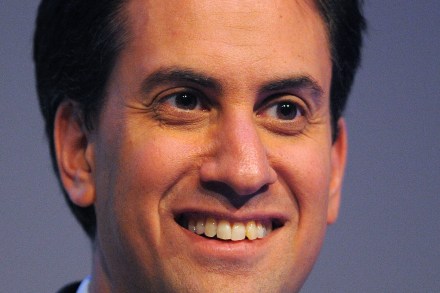
Don't be too hard on the Independent leader writer and proof readers. Ed or David Miliband? It's an easy mistake to make. John Humphrys got it wrong on the Today programme back in May, and even Ed's own deputy, Harriet Harman, slipped up. "I hope we will have David, er, Ed, Ed Miliband elected as Prime Minister at the next election," she told Woman's Hour during the Labour conference in September. At least Harman corrected herself, as the Independent now have on their website. This Daily Mail article from June still carries the wrong caption. But this affliction is even more widespread than that. Back in July, YouGov showed 1,265 people a picture of Ed Miliband. 80 per cent correctly identified him and 8 per cent said they weren't sure who it was.

After the EU

If the EU comes crashing down as a result of the Euro crisis, one thing is certain: the UK will be at the forefront of re-creating the bloc. Not exactly the way it is now, but not a totally different entity either. The reasons for this are three-fold, simple and are about Britain's interests. First, Britain derives benefits from being part of, and determining the rules for, the world's largest market. When the world is entering a "no-Doha" future, where pressure for protectionism will rise, there is no substitute for access to a relatively open market of some 400 million people. Neither transatlantic trade, commerce with the Commonwealth or links with the BRICS can substitute for it. Check the figures.

May caught in immigration row

Theresa May has up to now proved remarkably adept at avoiding the political bear-traps that have ensnared so many Home Secretaries in recent years. But she now finds herself caught in a classic Home Office row over who allowed the UK Border Agency to ease passport checks to cut queues during the summer months. James Kirkup has the scoop that ministers approved this decision. Given May’s reputation for keeping her ministerial team on the tightest of leashes, this creates a problem for the Home Secretary. Labour will go at this issue hard. They know it provides them with a populist way to claim that the cuts are endangering the country's security. But May's position is bolstered by the fact that the Prime Minister is her biggest fan.

The Union needs a champion

The First Minister of Scotland v the Secretary of State for Scotland on the Politics Show today was a non-contest. Michael Moore was hesitant and failed to fill the screen. Alex Salmond was crisp and confident. This disparity between Salmond and his opponents is one of the biggest problems for the Unionist cause. Polls consistently show that most Scots don’t want independence. But every day Salmond is out there making his eloquent—if factually dubious—case for it. There is a real and growing danger that’ll he end up winning by default because no one of stature is countering him. What’s needed is a big figure, preferably a non-political one, to defend the union and take the fight to Salmond.

A belaboured EU position

While the Coalition is split over Europe, Labour does not look like they are in a much better position. Ed Miliband told the BBC that he was in favour of the Euro; Ed Balls would presumably tackle anyone to avoid that becoming the party's policy. Meanwhile Douglas Alexander, Labour's brainy Shadow Foreign Secretary, has yet to make a game-changing intervention. Their predicament is obvious. Should Labour accept the narrative of renegotiation but opt for different areas to opt out of than those favoured by the Tories? Or should they, like William Borroughs, stand astride history and scream "stop", arguing for a pro-European position? Seemingly caught between the two views, the party's criticism of the government is like those two old-age pensioners in Woody Allen's joke.

Britannia waives the rules

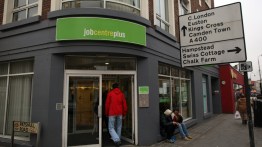
Today’s immigration headlines have a familiar feel. Twenty four hours after embarrassing revelations about a hundred thousand asylum case files being quietly written off, we now learn that at certain times over the summer, UK Border Agency staff were told not to bother checking people’s passports, or checking them against watch lists for crime and terrorism. The media are understandably dusting off old headlines about our borders being "out of control", and the Home Office being "not fit for purpose". The strategy of Conservative ministers in the Home Office is already clear: on the first story, blame the previous government, and on the second, blame the officials, with a number of senior executives being named and suspended.

Cameron’s attempt to re-moralise the economy

One of the great challenges facing Britain is how to re-moralise society. A country where individuals, or businesses, can't tell the difference between right and wrong has fundamental problems. The Times reports today that David Cameron is planning to start talking about the need for "moral markets". There'll be those on the right who don't like this, who feel it is pandering to Ed Miliband's distinctions between predator and producer capitalism. Others will feel that it is impractical. Then there are those who'll counter that the only responsibility of business is to maximise profits. But this is important territory for Conservatives to be on.

The paradoxes of renegotiation

David Rennie (aka The Economist's Bagehot) has an excellent column in this week's issue about the difficulties that Britain will face if she tries to repatriate powers from the EU. His main argument, having spoken to a number of senior German politicians and officials, is that if Britain holds up any treaty revisions in the hope of extracting concessions in return, then the other EU states will organise themselves without the UK. The Economist's former Brussels correspondent also makes the key point that the 10 countries that are outside of the euro are not natural allies for the UK – some, like Denmark, do not want to join the euro, but others such as Poland are keen.

Reviving the Scottish Tories

The Irn Lady pulled through – and the Scottish Conservatives survived. Had Murdo Fraser won, he would have renamed the party and left David Cameron running an England-only Conservative party. Yes, I can also imagine how much that would have upset them. But the day has been saved. The kickboxing Ruth Davidson, committed to reviving rather than abandoning the brand, has triumphed. She already been hailed as the first openly Glaswegian leader of the party, and her supporters argued that Murdo lacked her charisma which is why his proposition was more radical. I haven't met either, and can't comment. Except to say that Scotland remains a very large buffer zone between Cameron and proper control of No10.

The Irn Lady

Ruth Davidson was reluctant to say very much when she accepted the Scottish Conservative leadership this afternoon, insisting only that she wants to build up Tory party membership north of the border. But she knows – and all those around her know too – that membership levels are the least of her problems. Ms Davidson faces one of the most intractable puzzles in British politics: how to get Scots to vote Tory again. Everyone involved in Conservative politics north of the border knows the significance of 1955 – that was the year the Tories (and their allies) won a majority of both seats and votes in Scotland. Since then, the road for the Conservatives has been steadily and inexorably downhill.

Cameron leaves Cannes with an IMF headache

https://www.youtube.com/watch?v=Qm6yP-5RGK8 The Cannes summit leaves the world no further forward on its quest for some kind of solution to the Eurozone crisis. Strikingly, the Germans still won't agree — despite huge diplomatic pressure — to the ECB fulfilling the traditional emergency function of a central bank and acting as lender of last resort. This is a blow when you consider that Cameron thought there was a real possibility Merkel would budge on this after last week's European Council meeting. It also provides Cameron with a domestic political headache. For if the ECB won't act, the IMF will have to take more of the strain — and increasing Britain's contributions to the IMF in the current political climate is not going to be easy.