Uk politics

Halfon seeks to cool the inflationary fires

Don't whip out the cava just yet, CoffeeHousers. Inflation, in both its CPI and RPI incarnations, may be down on last month's figures, but the latest numbers are hardly cause for jubilation. At 5.0 per cent in October, CPI is still over double the Bank of England's target figure, and it's far outpacing the average growth in people's wages. The truth is that living costs remain constrictive, and at a time when the economy could teeter back into cataclysm at any moment.      Hence Robert Halfon's motion on fuel prices, which will be debated in the Commons today. It's another one of those motions triggered by an e-petition (112,189 signatures and rising), and it makes a simple plea: people are struggling, so how about doing more to cut the cost of fuel?

Whitehall could use some Google thinking

Today's New York Times has a fun piece about Google X, the secret lab where Google is working on its special projects. The ideas are, suitability, far out. They are, apparently, looking at connecting household appliances to the internet and creating a robot that could go to the office so you don't have to. It would be tempting to laugh if not for what Google has already pulled off. Indeed, the NYT reports that Google's driverless car might soon go into production. But in political terms what struck me about the article is that this is the culture that Steve Hilton embraces. Remember that when Hilton was working from California, he had a desk at Google. To someone from this mindset, the ideas that the Lib Dems are so keen to mock are not so crazy.

Cameron’s frustration with ‘quick fix’ critics

No columnist is closer to David Cameron than Bruce Anderson. The Spectator’s former political editor spotted Cameron’s potential back in 1992 during the general election campaign and ever since he has been an advocate of the Cameron cause. In 2003, he wrote a piece for The Spectator in which he tipped Cameron for the premiership.    The two remain in close touch and Bruce has, I’m told, been a recent guest at Chequers. So, it seems reasonable to assume that Bruce’s rebuttal of Cameron’s right-wing critics is, to some extent, a reflection of the Prime Minister’s own thinking.

Alexander drags Labour closer towards the Tories on Europe

You know, having read through Douglas Alexander's Guardian article a couple of times now, and listened to his appearance on the Today programme earlier, I'm still not sure how Labour's new stance towards Europe is particularly different from the official Tory one. The shadow foreign secretary tries to suggest that Dave and George's position is reckless — ‘they seem worryingly complacent about the prospect of a two-speed Europe’ — but he goes on to echo much of it himself. And so, he suggests, ‘We should engage now with the fact that Germany is seeking treaty change and seize this opportunity to safeguard the rights of non-euro members.

Cameron’s growing attachment to schools reform

A change of pace, that's what David Cameron offers in an article on schools reform for the Daily Telegraph this morning. A change of pace not just from the furious momentum of the eurozone crisis, but also in his government's education policy. From now on, he suggests, reform will go quicker and further. Instead of just focussing on those schools that are failing outright, the coalition will extend its ire to those schools that ‘drift along tolerating second best’. Rather than just singling out inner city schools, Cameron will also cast his disapproval at ‘teachers in shire counties… satisfied with half of children getting five good GCSEs’. And rightly so, I'd say. In fact, the whole article is cause for optimism on a cold Monday morning.

Son of Brownies

How generous of Ed Balls to publish a transcript of his interview on the Politics Show earlier, so that we can amble through it on a Sunday evening. It contains, as you'd expect, more disagreeable parts than agreeable, and nothing more so than his comments about the national debt, deficit and all that. Two of his arguments, in particular, are worth alighting on because they're Brownies in the classic mould, and will probably be served up again and again: 1) ‘After the Second World War we took a number of years to repay our much higher level of debt. The government and Vince Cable have tried to get this done in one Parliament and it is backfiring.

Why Cameron can’t laugh off the Mercer story

And the most eyebrow-raising story of the day has to be this one in the People. It's their account of what Patrick Mercer is supposed to have said about David Cameron whilst being taped at a party last weekend — and it makes for perversely hilarious reading, whomever's side you take.    CoffeeHousers have probably read some of the quotations already. But if you haven't, then their tone is captured in this exchange from the People's transcript: GUEST: Where did David [Cameron] go wrong? MERCER: Well, he was born.

Barroso’s warning

José Manuel Barroso’s article in The Observer today is a plea for relevance. When you cut through the usual EU jargon, what you find is the Commission President—predictably—declaring his opposition to German talk of an inter-governmental treaty among the 17 Eurozone members. He’s also warning the smaller Eurozone states that without the Commission’s protection their interests will be trampled on by the Germans and the French. This is what he means when he writes that  “all member states need to support and trust the common supranational European institutions that were created after the second world war.

If Clegg wants to reduce youth unemployment, then he’s going to have to look at regulation

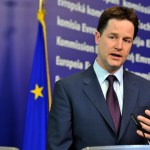
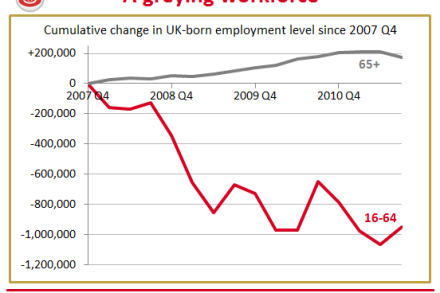
Nick Clegg’s interview in The Times today presages a major Lib Dem effort to try and promote policies to reduce youth unemployment. With figures out on Wednesday expected to show youth unemployment going over a million, the Lib Dem leader is keen to show that the government is acting. But as The Times reports, the quad—Cameron, Osborne, Clegg and Alexander—are divided on what to do about the matter. The Tories are keen to do Beecroft for young people, removing some of the employment protections that make firms so reluctant to hire new staff. But given how the Lib Dems have set themselves so firmly against the Beecroft review and its principal idea of replacing unfair dismissal with severance pay based on length of service, they won’t accept this.

Maude lends the unions a hand

Francis Maude presents himself as a man trying to help the unions out in today's Financial Times. Some unions say they have to go ahead with strikes on November 30 – even though negotiations on pension changes are still going on – or else they'd lose their mandate for any future strikes and have to conduct a whole new ballot. Wagging an almost parental finger, Maude tells the unions: 'You shouldn't have got yourself into this mess but we're willing to help you out because we want to protect the public. I can't imagine any employer in the public sector would say if you have a token strike of a quarter of an hour during the day which doesn't affect public services, you lose a day's pay.

Warsi: Tories will oppose plans for more state funding of political parties

In an interview in The Times today, Sayeeda Warsi makes clear that the Conservatives will oppose the idea of giving political parties three pounds of state funding for every vote they win. She says: 'I fundamentally disagree with that. At a time when the country is facing the current economic climate, for us to be thinking about putting £100 million, which could build 20 schools and give you thousands of operations on the NHS, into party political funding is wrong. I think people would be appalled by it. They would say, "That is not what I pay my taxes for".' This is a welcome intervention. State funding of parties based on the result of the last general election would be an appalling system.

Britain: a European pariah?

The British government has worked hard to counteract any perception that it is being marginalised in Europe. Before the election, the Tory party went around to different capitals to assuage any fears that may have existed. The message: despite the Conservative departure from the EPP, and their anti-Lisbon Treaty remonstrations, they would not be a problem. They would be businesslike. Once in power, David Cameron unleashed his charm, showcased his polyglot Deputy Prime Minister and sent William Hague out to make everyone feel that they had a partner not a pariah in London. Further, the energetic and amiable David Lidington replaced the combative Mark Francois as Europe Minister.

Remember the living | 11 November 2011

Every time a politician suggests a introducing a flag-waving British national day, the idea falls flat. We already have one: 11 November, Remembrance Day, where we remember our war dead and resolve to help the living. In my Daily Telegraph column today, I talk about how the government can better serve the tens of thousands who have come back from active service in Afghanistan and Iraq.   Britain is, for the first time since the post-war years, a nation with a large veteran community. And we’re still not quite sure how to handle it. The Americans are: they had Vietnam, and learnt the hard way about post-traumatic stress disorder (PTSD) and related conditions.

Britain: a safe haven?

The Bond Bubble is growing even larger over Britain, pushing 10-year yields down to 2.1 per cent. The FT splashes on it this morning, and uses the “safe haven” line, which is also being advocated by the Conservatives. Understandably. If I were George Osborne, I’d spin this as a standing ovation from the markets for my deficit reduction plan. In fact, it’s just a grim reflection of the fact that Britain’s low-growth, high-debt economy is less unattractive than Italy’s. But it does have another side effect, that people won’t quite admit to. Osborne’s cost of borrowing is going down (partly due to expectations of more QE) and since the Budget, ten-year yields are off about 130bp.

Murdoch denies all knowledge

https://www.youtube.com/watch?v=G0T0OVKIYog James Murdoch's great advantage today was that he didn't mind if people came away thinking he was a bit of an idiot. As various members of the Culture, Media and Sport select committee attempted to goad him into saying that he knew about this or that, Murdoch simply pleaded ignorance. Why was Murdoch ignorant of what was happening in the company of which he was executive chairman? Apparently becase he asked very few questions. Even the obvious ones about what the lawyers had said or why such large settlements were being made seem to have escaped him. Murdoch was also helped by Tom Watson's over the top invocation of the mafia.

Euro crisis knocks Salmond off course

A few years ago, SNP strategists coined the slogan 'independence in Europe'. They don't champion it too much now, for obvious reasons. To put it bluntly: they are in a pickle over Europe. Scotland's progress towards independence, which had seemed to be serene and almost unstoppable just a few months ago, has hit so much euro-induced turbulence over the last few days that it could be knocked off course for good. The First Minister had to fend off question and after question at Holyrood this afternoon as opposition leaders – including a notable first performance by the Tories' new Scottish leader Ruth Davidson – tried to get Salmond to answer two very simple questions.

Going soft

One of the greatest threats to British security is not whether the government opts for Tornadoes over Harriers, but whether we have credible, militarily-capable allies. So the fact that so many European countries have lost the will to fight — cutting defence budgets while the popular backing for ‘hard,’ as opposed to ‘soft,’ power declines — is a problem. To address this, Europeans need first and foremost to redevelop a narrative of power. In a new pamphlet, former MoD official Nick Witney tries to lay out the required narrative. He argues that Europe’s future security and prosperity now depends on success in a global competition.

Labour start attacking the NHS reforms – but did they need to?

So, the Labour Party has finally woken up to the idea that there might be some mileage in opposing the Government's health reforms. Throughout much of this year a predictable alliance of the perennially opposed – doctors, health unions, Liberal Democrats, among others – has maintained a barrage of malice and misinformation against the Health and Social Care Bill. Nothing in their tactics, from their arrogant assumption of a monopoly of concern for 'patients' to their endless whining about 'privatisation', has come as much surprise.  The only remotely unusual thing about their campaign has been Labour's near-total absence from it. Andy Burnham, who was made shadow health secretary last month, clearly wants to change this.

The return of Ed Nauseam

Hot summer, drippy autumn. Ed Miliband’s performances have declined steeply after the heady highs of July. He came to PMQs today badly needing to fight like a champion. Things looked rosy for him at the weekend. And they got better overnight. We learned that a pilot scheme to fast-track incoming tourists last summer had allowed Britain’s border controls to slip so far that visiting bombers and convicted sex-criminals were being greeted at Heathrow with high-fives, goody-bags and a slice of Theresa May’s blueberry tart. Or so it seemed. Worse still, a suspended UKBA official, Brodie Clark, had contradicted the Home Secretary’s statement and was threatening her with unfair dismissal proceedings. Useful stuff for Labour.