Tony blair

Tony Blair rallies the troops at Labour HQ

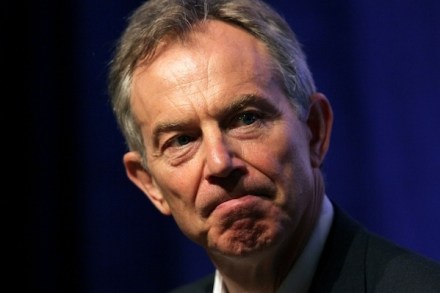
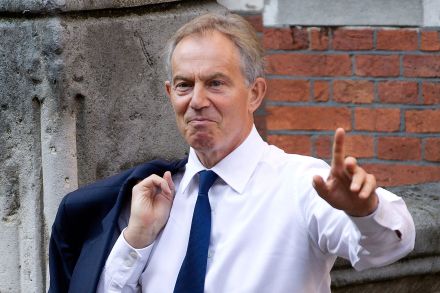
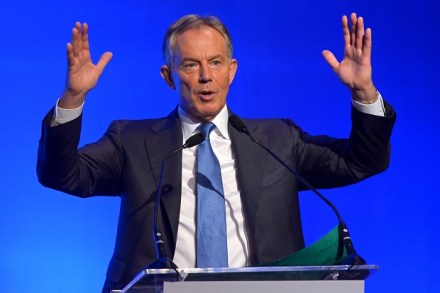
Tony Blair gave a speech at Labour HQ this afternoon, I understand, which rather puts paid to the claim that he was doing the very minimum required of the former Prime Minister to help his party. I hear from those present that it was a very upbeat address, in which Blair told Labourites he was optimistic about the party's chances in this election. He also reflected on his speech on Tuesday in which he warned of the dangers of a European referendum and described his party's outlook as a progressive internationalist one.
Ed Miliband couldn’t care less about education reform

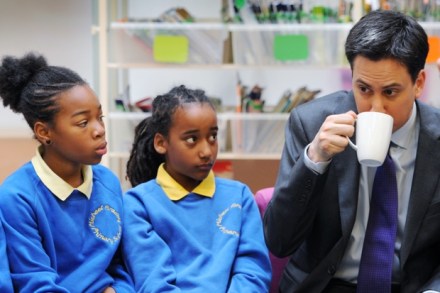
The editor of The Spectator isn’t the only person thinking about the prospect of Ed Miliband becoming the next Prime Minister. Eighty educationalists have signed a letter in the Daily Mail today warning about the danger of a future Labour government curtailing academy freedoms. They’re concerned about Ed Miliband’s pledge that Labour would reintroduce 'a proper local authority framework for all schools' – which sounds a lot like placing all taxpayer-funded schools back under local authority control. The letter-writers flag up two freedoms they are particularly concerned about: the freedom that academies and free schools have to set their own pay and conditions and the freedom they have over the curriculum. They’re right to be worried.

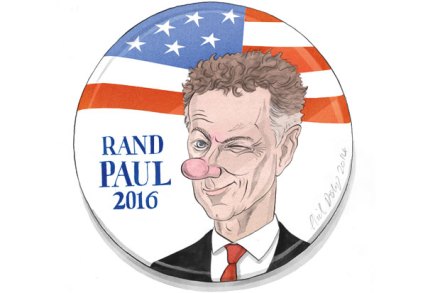
Rand Paul’s libertarian crusade will shake up the presidential race

Finally, the presidential race got interesting. The thought of Hillary Clinton vs Jeb Bush was too much of a rerun of the same old thing: big government liberal vs big government conservative arguing about how best to spend Americans’ money. And they both share a taste for military excursions – white boots marching in foreign lands. Well, now there’s a candidate officially in the race who stands for something completely different. Rand Paul’s libertarian crusade could be about the most exciting candidacy in my political lifetime. It won’t star the most exciting candidate. Senator Paul (Kentucky) wears the standard uniform of the college Republican: blue blazer, red tie, grey slacks. The voice could send you to sleep; the face is forgettable.

Journalists jeered for asking Tony Blair questions at Labour press conference

Labour have continued their bizarre war on the media with aplomb. As Mr S has reported in the past, pesky journalists that have the audacity to ask awkward questions are given the full hairdryer treatment from the audience at Labour’s set piece events. Today’s speech by Tony Blair was no different: This Tony Blair event very nostalgic. A member of the audience even called me "Tory scum" for asking a question. — James Landale (@BBCJLandale) April 7, 2015 Modern trait of crowd booing journalists who ask the most relevant questions. Expect more of it to come. #Blair — Chris Gibson (@ChrisGibsonNews) April 7, 2015 All stirred up by the party’s chief press-slayer Tom Watson: Tony Blair speech on Europe.

Campaign kick-off: 30 days to go

With the Easter break now over, the general election campaign will notch up a gear today as the political parties try to make the most of the last month of campaigning. To help guide you through the melée of stories and spin, we’ll be posting a summary every morning of the main events so you know what to expect from the day ahead. 1. Blair’s back — again After a series of cryptic interviews in which he appeared to complain about the direction of the Labour Party, Tony Blair has gone loyal for the campaign. The Guardian reports that the former Prime Minister will be speaking in his old Sedgefield constituency — alongside his wife Cherie — to warn of the ‘chaos’ David Cameron’s EU referendum would cause.

Max Hastings’s diary: The joys of middle age, and Prince Charles’s strange letters

I am living in rustic seclusion while writing a book. Our only cultural outing of the week was to Newbury cinema to see, transmitted from the National Theatre, Arthur Miller’s A View From the Bridge, object of rave reviews. We respected the piece but did not enjoy it. Granted, appreciation of all major works of art requires an effort by the viewer, listener, reader. But a pleasure of getting older is to be unafraid of waving the white flag. We resist modern-dress Shakespeare or worse, opera. We will cross continents to avoid the music of Harrison Birtwistle or the art of Damien Hirst. We are ardent Trollopeians, incorrigibly middlebrow.

In defence of Christianity

Jeremy Paxman was on great form last week, reminding us that when it comes to being rude to prime ministers he has no peers. Jeremy’s rudeness is, of course, magnificently bipartisan. However elegant the sneer he displayed when asking David Cameron about Stephen Green, it was as nothing compared to the pointed disdain with which he once asked Tony Blair about his faith. Was it true, Jeremy inquired, that he had prayed together with his fellow Christian George W. Bush? The question was asked in a tone of Old Malvernian hauteur which implied that spending time in religious contemplation was clearly deviant behaviour of the most disgusting kind.

Gordon Brown laments the ‘constitutional revolution’ of his own making

Given that Gordon Brown has hardly been seen in the Commons since losing power five years ago, it was a bit rich of him to say goodbye now. But the SNP uprising has started — it looks set to claim his own seat of Kirkcaldy — and so he's off. In his final speech to the House of Commons today, he lamented the gradual breaking apart of the UK which was, of course, started by his own party. After indulging in niceties towards Parliament as an institution, the Speaker and his constituents, Brown promised to devote his efforts away from Westminster to ‘the idea of Britain’ and attacked the Conservatives' plans to devolve powers to England: ‘I leave this house feeling a huge sense of gratitude, but also with some concern.

Lord Freud: the man who saved the welfare system

It was mid-October and Downing Street was in a panic. Lord Freud, the welfare minister, had been secretly recorded suggesting that disabled people could be paid less than the minimum wage. Labour demanded Freud should go. The No. 10 press office was briefing journalists that he would be out within hours. Craig Oliver, excitable Downing Street director of communications, advised the Prime Minister that Freud was finished. There was talk of the return of the nasty party, and days of dreadful headlines. In the end David Cameron stayed loyal. Within 48 hours the story was forgotten. Welfare reform is the coalition’s most important achievement. Universal Credit is at the heart of welfare reform.

Dominic Cummings (who ought to know) is not impressed by Michael Barber, Tony Blair’s former adviser and self-styled ‘delivery man’

In 2001, Tony Blair took Sir Michael Barber from his perch as special adviser in the Department for Education and brought him into Downing Street. Once there Barber set up Blair’s ‘Delivery Unit’ and oversaw his attempts to reform public services. He then moved to the McKinsey consultancy where he cloned his unit for governments around the world. He has now written a book, How to Run a Government, about what he calls ‘deliverology’ — an ‘emerging science of delivery’. It is part memoir and part a ‘how to’ manual describing ‘a set of processes that enables governments to deliver ambitious goals’.

Learn from Elizabeth I, Cameron: a named successor is a shroud

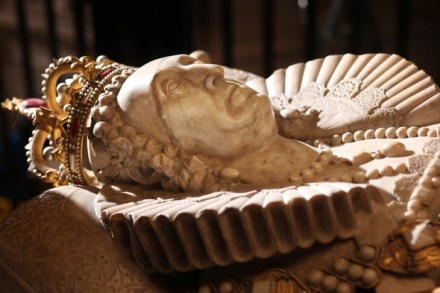
As Fraser Nelson says on this morning’s Spectator podcast, David Cameron will likely be regretting yesterday’s announcement for the rest of his premiership. He’s not a ripe watermelon; highlighting that he has a best before date won’t encourage anyone to eat him now, before he grows mould. Worse, he’s announced a shortlist of three possible successors: 'the Theresa Mays, and the George Osbornes, and the Boris Johnsons'. We all know the troubles a similar announcement caused Tony Blair, but even if Dave managed to sleep through the Blair-Brown years (from the opposite green benches), dipping into the biography of any pre-modern English monarch should have taught him of the dangers of naming a successor.

Wanted: Nigel Farage lookalike

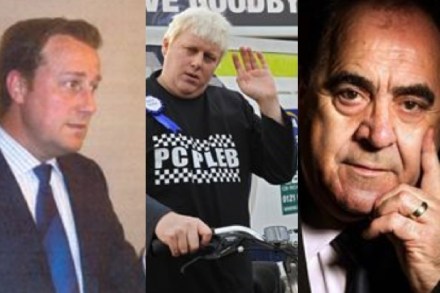
As the election approaches, politicians will find their diaries packed with various events. It's an equally busy time for those born with the gift of looking like a politician. ‘I’m lucky that I look like Boris,’ says Drew, a Mayor of London 'lookalike' who is on the books at the Susan Scott agency. ‘I often get stopped and while it’s not always pleasant, it’s nowhere near what a David Cameron lookalike I know gets.’ Alas, Boris won’t have Drew’s vote. ‘I may make money out of Boris, but I have never voted for him and that’s not going to change.’ With election party season on the horizon, Mr S has gathered a selection of his favourite lookalikes to invite to your own soirées.

The Labour party loves to hate Tony Blair

I’ve met people at political events who seem otherwise normal, and then Tony Blair’s name is mentioned and their eyes light up in a way that suggest a chemical reaction has taken place in their brain. Likewise whenever the former Labour prime minister is mentioned online, it’s like a hand grenade has been thrown into the loony pond. Up they all chirp on social media, announcing how the war criminal must be sent to the Hague one day. The most recent case was Tony Blair’s offer to fund Labour candidates at the election, and the decision by two of them to turn it down; in both constituencies, Northampton North and Dundee East, Labour are close behind an incumbent party and really need the money, especially as the election will be the closest in decades.

Tony Blair spotted fine dining in Burma following his ‘blood money’ Labour donation

This week Tony Blair donated £106,000 to the Labour Party, with £1,000 going to each Labour candidate fighting for a target seat. Ed Miliband has since faced flak for accepting the 'blood money' funds, due to unease over the source of the cash given Blair’s dealings with dictatorships such as Kazakhstan. Not that any of this is worrying Blair. Mr S hears that the former Labour leader has been busy sunning himself in Myanmar, where human rights are regarded as among the worst in the world. Blair, who has an estimated worth of nearly £100 million, was spied fine dining in the country's capital Naypyitaw. When a journalist inquired as to what he was doing there, they were told that he was in Burma for 'private meetings'.

Justin Forsyth has far more to apologise for than Tony Blair’s Save the Children award

You almost have to admire Justin Forsyth’s brass neck. He is a former Gordon Brown spin chief earning a Prime Ministerial £138,000 for running Save the Children. Or, rather, transforming it into Save the Labour Party with various attack ads claiming that kids need to be rescued from wicked Conservative austerity. Here's an example of its handiwork: https://www.youtube.com/watch?v=3eKJ972iZ-U You’d think that Forsyth would be rather embarrassed about abusing the charity’s resources in such a way, but last year Save the Children went one further and gave an award to Tony Blair. That really was too going far.

Alastair Campbell threatens a political comeback

It's probably not the news everyone wanted to hear, but Mr S feels a duty to let readers know that Alastair Campbell is considering a return to politics. Furthermore, this could involve the former Labour spinner standing as an MP. Speaking to India Knight for the April issue of Red magazine, he comments that a friend recently suggested he join parliament. His reply was: 'I’ll regret not doing it, but I know I’ll regret it if I do it as well… The size of the regrets will be big either way.

Why Putin is even less of a human than Stalin was

LBC likes to tell us it’s ‘Leading Britain’s Conversation’, though in the case of weekday pre-lunch presenter James O’Brien you’ll have to sit through a series of bombastic monologues from the host before any punters get a word in edgeways. O’Brien knows everything, and he doesn’t mind telling you. Still, I understand that running a talk show is no job for timid introverts who might burst into tears if callers start giving them a hard time. The trick is pretending to listen sympathetically while being ready to drop the guillotine without compunction (after all, these people aren’t your friends, they’re just statistics for the business plan).

Hunting may be banned, but the fight still goes on

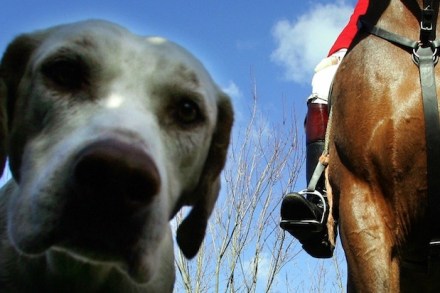
Ten years ago today, Tony Blair’s ban on hunting with dogs came into force. Rural communities had marched, Otis Ferry had stormed the Commons, but none of it made any difference, and anti-hunt campaigners rejoiced when hunting became a banned sport. But though the law has been in place for a decade, the fight for hunting still goes on. Many hunts, especially those based in more urban areas, are still plagued by hunt saboteurs, as was demonstrated just last month when Mike Lane, a Master of the Tedworth Hunt in Wiltshire, was attacked so savagely by saboteurs wielding iron bars that he was knocked out.

If this is a debate about animal welfare, we must repeal the Hunting Act and start again

Today marks ten years of a ban on hunting a wild mammal with hounds in England and Wales, except under certain exemptions. To understand what a fundamentally bad law the Hunting Act is, and why it must be repealed, it is best to start at the beginning with the original purpose of the ban. For all the talk of animal welfare the long battle over hunting legislation was not predominantly about foxes or other mammal species it was about class, politics and a gratuitous misrepresentation of hunting and the people who do it. This is not my interpretation, but the reality as admitted by many of those who promoted the ban.

Even the people who make political adverts aren’t sure they work

It is a common prejudice about modern politics that it is all focus groups and spin, all public relations and advertising. The rather heartening conclusion from Sam Delaney’s history of advertising in politics is that this is a calumny on the political trade. Delaney has spoken to everyone involved in political advertising since the phenomenon began in earnest with Wilson in 1964 and can hardly find a soul who is certain that advertising does anything more than varnish good ideas. Maurice Saatchi, for example, credited Margaret Thatcher’s proposals, rather than his talent for a pithy slogan, for her electoral victories. Chris Powell, a leading figure in Labour’s Shadow Communications Agency, also doubts whether advertising can really change popular opinion.