T.s. eliot

Letters: The limitations of a Covid vaccine

Still distant Sir: In James Forsyth’s analysis (‘Boris’s booster shot’, 14 November) he infers that a vaccine, if provided to the majority of the UK population, would deliver herd immunity from Covid-19, noting that ‘it seems increasingly probable that by the second half of next year, we will be emerging from this Covid nightmare’. I pray that he is right, though fear he may not be. In a recent Lancet editorial the view expressed was the exact opposite, as it notes that any vaccines are ‘unlikely’ to prevent transmission, though will reduce the severity of symptoms and likelihood of death.

Driven to distraction — the unhappy life of Vivien Eliot

Do you think your mother slept with T.S. Eliot? That was the question I needed to ask the 98-year-old in front of me. It wasn’t easy. I’d never met him before. After some preliminary chat, though, I realised this affable man knew exactly where our conversation was heading and had pondered the question a good deal himself. The barrister Jeremy Hutchinson — Baron Hutchinson of Lullington — was the son of Mary Hutchinson, Eliot’s close friend. Infatuated with the poet for a time, she had met ‘Tom’ and his wife Vivien before Vivien’s adultery with Bertrand Russell, and some years before the publication of The Waste Land in 1922.

We’re deep into Cats

From our US edition

After T.S. Eliot died in 1965, his second wife Valerie became notorious for not releasing his letters or unpublished verse, and for not licensing his published work for vulgar adaptation. This is why ‘The Love Song of J. Alfred Prufrock’ was never made into a musical with an opening number in which the protagonist jumps off an operating table as a female chorus come and go, talking of Michelangelo.

cats

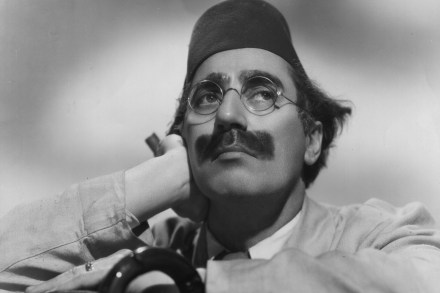
When Tom met Groucho

From our US edition

The man of distinction who longs to be acclaimed for something else is a recurring and quite endearing figure. A few years ago, I wrote a small book about the fraught relationship of Arthur Conan Doyle and Harry Houdini. The escapologist was driven by shame about his lack of formal education. He had dropped out of school at the age of 12 to support himself as a shoeshine boy before embarking on a career as an acrobat and magician. For Conan Doyle, the attainment of influence and wealth as the author of the Sherlock Holmes stories apparently never dispelled the vulnerability that dwelled inside the alcoholic’s son from a slum household in Edinburgh.

groucho marx

Poetry in motion | 30 May 2019

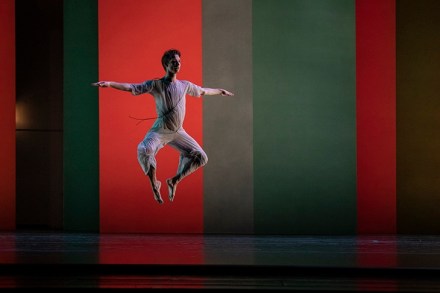
T.S. Eliot’s Four Quartets is full of music and movement. The players, such as they are, slip, slide, shake, tumble, wrestle, leap, kick, whirl, fold and kneel. There are lines like stage directions: ‘stillness’, ‘quick now’, ‘the dancers are all gone under the hill’. In her rendering of Four Quartets, the American choreographer Pam Tanowitz has denied reviewers the satisfaction of ‘Eliot in leotards’ jokes. Her dancers wear diaphanous ruched onesies. No Cats spandex here.

The House of Eliot

Like many a 20th-century publishing house, the fine old firm of Faber & Faber came about almost by accident. The inaugurating Faber — Geoffrey — was an All Souls don in search of a livelihood, who began his career in the post-Great War book trade by investing in the Scientific Press, publishers of the Nursing Mirror. There was trouble with the Gwyer family, owners of the original concern, who resisted the move into general books and disliked the poems of Faber’s brisk young protégé Mr Eliot, but by 1929 the sale of the Mirror for an eye-watering £190,000 (about £5 million at current values), allowed Geoffrey to buy them out and set up on his own.

Keeping up with the Joneses

To bleak, boarded-up Margate — and a salt-and-vinegar wind that leaves my face looking like Andy Warhol’s botched 1958 nose-peel — to see Journeys with ‘The Waste Land’ at Turner Contemporary. The exhibition has been organised by a group of local residents, who selected the exhibits, designed the layout, and wrote the exhibition texts. In ‘The Waste Land’, some of it written in the Nayland Rock seafront shelter, Eliot writes: ‘On Margate Sands./ I can connect/ Nothing with nothing.’ The local research group have connected Eliot’s text with everything — some duds, some successes.

Literary motorcycling

No seat belts. No airbags. Just air, and coming at you as fast as you like. Motorcycling shouldn’t be allowed, really, but thank God it is. Hanging on to an engine braced between two wheels as you travel through the countryside is worth any dose of mindfulness. The NHS should prescribe it. Even with the cost of broken bones and, alas, the occasional overheads of the mortuary, it would save money on mental health treatments. Your senses are stimulated in a way that is impossible in a car, with the force of movement intensifying an ordinary experience. Smells and temperature become suddenly distinct as you dip or rise, fly through conifer or broad leaf, past farmyards and bonfires. Other traffic on a good sweeping road becomes an irrelevance.

… trailing strands in all directions

Letters of Intent — letters of the intense. Keen readers of Cynthia Ozick (are there any other kind?) will of course already have copies of the books from which these often fiery essays have been selected. There’s a broad range of work represented here, from personal essays through to Ozick’s often rather profound philosophical enquiries into the meaning of art and religion — though the inclusion of no fewer than five essays on Henry James, two on Kafka, two on Virginia Woolf and two on Saul Bellow might make one wish for a little more breathing room, a little more room to roam. But this is a quibble. This is Cynthia Ozick, for goodness sake.

A man with an agenda

What’s this? An autobiography by Stuart Hall? Wasn’t he one of the guys who put the Eng. Lit. departments out to grass by arguing that it was senseless to talk about fictional characters as if they were real people when the truth was that real people were fictional constructs? Indeed he was; but don’t go thinking that just because Hall embarked, shortly before his death in 2014, on writing his life story, that he’d given up on the decentred subject. As he remarks early on in Familiar Stranger, despite our need to grasp our inner being, ‘we’ll never be ourselves’. It’s a nice line. It’s also a rare moment of clarity in a memoir that can be as cloudy and windy as a Turner sea study.

The Spectator’s Notes | 1 June 2017

At Mass on Sunday, we were issued with a letter from the Catholic Bishops’ Conference, entitled ‘The General Election 2017’. It set out questions which Catholics should ask candidates. These included the ‘uncertain future’ of EU citizens in Britain and British citizens in the EU, rehabilitation in prisons, immigration, overseas aid, welfare services. All important issues, of course. But it was striking what we were not invited to raise. Nothing about how high spending and taxation might burden poorer taxpayers. No subject in which the interests of UK citizens (who, after all, are the people for whom any British election takes place) come first.

Boxing clever

Thirty years ago, Russell Davies wrote a weekly sporting column in the New Statesman. It proved unsustainable and was soon discontinued, but not before Davies had described a boxer ‘genuflecting through the ropes’ — an image I have coveted ever since. Boxing is ‘a standing challenge to [a writer’s] powers of description’, according to Carlo Rotella and Michael Ezra in their preface to The Bittersweet Science. They are right. All physical action is a challenge to writers: YouTube can repair deficiencies, and is invoked several times in this anthology; but it is no substitute for writing, because writing adds focus to reality.

Passion indeed

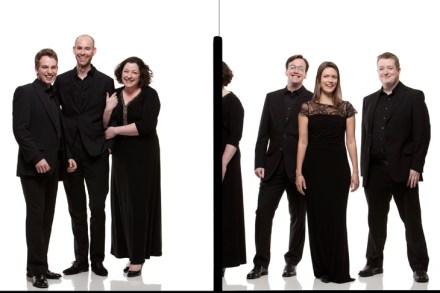
‘The dripping blood our only drink/ The bloody flesh our only food…/ Again, in spite of that, we call this Friday good.’ In spite of that. Anglo-Catholic convert T.S. Eliot knew a thing or two about Easter. The Passion story might end with resurrection and redemption, but it’s a celebration that we achieve in spite of agony, torture and abandonment, a tale whose root lies in the Latin ‘passio’, meaning suffering. Musical Passion settings are no different — or shouldn’t be. A performance of Bach’s St John or St Matthew Passion should disquiet, even distress, as much as it consoles.

A vintage that tastes of Old Possum

Eliot. After 50 years trying to make sense of his verse, and at the risk of admitting to rampant philistinism, I propose three conclusions. At his best, he is one of the finest poets in the language. Partly because he is straining language and thought to the uttermost — an analogy with the final Beethoven piano sonatas — he is sometimes incomprehensible: sometimes, indeed, falls into arrant pseudery. Finally, his anti--Semitism before the war, his rejection of Animal Farm after it: this great man and devout Christian was not exempt from original sin. Gerontion. ‘The Jew squats on the window sill, spawned in some estaminet of Antwerp.’ We turn our eye from the page in revulsion and pity.

An infinite spirit

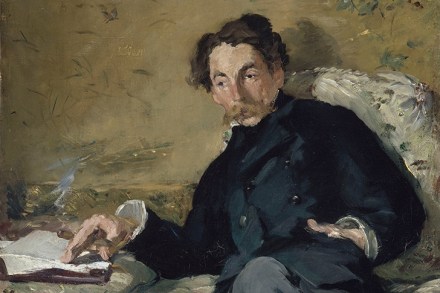
Can American publishers be dissuaded from foisting absurd, bombastic subtitles on their books as if readers are all Trumpers avid for tawdry, over-simplified stunts? Howard Bloch is a professor at Yale whose previous books have had medieval French literature, the Bayeux tapestry and medieval misogyny as their subject matter. He has taken an entertaining diversion in his career by writing a relaxed and accessible book about Mallarmé’s poem of 1897, ‘Un coup de dés jamais n’abolira le hasard’ (‘One toss of the dice will never abolish chance’) and its place in belle époque Paris. The professor’s erudition and light touch need no Barnum-style booming.

Joining the dots

A new website, radio.garden, lets us browse radio stations across the globe. Nothing new about that. That’s been a key feature of wireless since the days of valves and crystals. Turning a knob and stopping off at Hilversum, Motala, Ankara or Reykjavik, if and when short-wave reception was possible, is part of radio’s magic, listening in to life elsewhere without having to leave the house. Now, though, with radio.garden (developed in Amsterdam by Jonathan Puckey for the Netherlands Institute for Sound and Vision, and part-funded by the EU), it’s possible to turn the globe that appears on your computer screen as soon as you log on to the site and to sweep across India, Africa or Australia, stopping off wherever you find a green dot.

Order, order | 10 November 2016

The catalogue to Pallant House Gallery’s latest exhibition features a favourite anecdote. It is 1924 and a competition is being held to find the woman with the most pleasing vital statistics. As a paradigm, the judges choose the Venus de Milo. Thousands of women queue up to find out whether their measurements — not only bust, waist and hips, but thighs, calves, neck, wrists even —approximate closely enough to those of the ancient sculpture to earn them the prize of £5. No one thinks to mention that the Venus is missing both arms. Classical myth was all the rage after the first world war. When the world felt like chaos, it was only logical to go back to the beginning.

Behind the fringe

‘Sexual intercourse began / In nineteen sixty-three,’ Philip Larkin famously announced in his poem ‘Annus Mirabilis’, ‘Between the end of the Chatterley ban / And the Beatles’ first LP.’ But the key line is a far more private confession, caught in parentheses like a gloomy thought bubble: ‘(which was rather late for me)’. Few of Larkin’s contemporaries would have been more sympathetic than Alan Bennett.

The Spectator’s Notes | 6 October 2016

 Birmingham Checking in to my hotel room on the 18th floor, for the Conservative party conference here, I opened the door and bumped into a workman on a stepladder. ‘Sorry,’ he said, ‘They shouldn’t have let you in. All the water came through from the room upstairs.’ He was painting over the damage. Then he looked at me, recognised me and asked, ‘Hard or soft Brexit, then?’ I burbled slightly, not being happy with the distinction, but eventually said I thought ‘hard’ better described what was needed. The painter told me he read the Guardian and the Telegraph every day to ‘get both sides’. He reckoned ‘hard’, too: ‘It’s got to be divorce.

Estate agent

A big misunderstanding about art is that it excites serene meditation and transcendent bliss. But anyone who has worked in a public museum or a commercial gallery knows that this is untrue. The moral climate of the contemporary art world would embarrass the Borgias. Art excites peculation, speculation, back-stabbing, front-stabbing and avarice while fuelling nasty spats about attribution and ownership between heirs, relatives, executors and collectors. Nowhere is this more comically apparent than in the matter of artists’ estates. Once a private concern of family and lawyers, the ‘artist’s estate’ is becoming recognised as a tangible and valuable entity that needs professional management just like any other financial asset.