Switzerland

If British democracy worked, we would have had a referendum on the death penalty

Nice to know, isn’t it, that public attitudes are finally catching up with MPs’? It seems, from the Social Attitudes survey, that finally, half a century after parliament suspended the death penalty, 48 per cent of people no longer want the death penalty reintroduced. Opinion has been stubbornly in favour of it ever since 1965, and that was also true in 1998 when the Human Rights Act forbade capital punishment outright. In other words, until now, MPs have been wildly at odds with the opinion of most voters on an undeniably important issue. I’m unsure exactly where I stand on the issue myself, though I’ve always felt the guillotine would have been my own choice of method if it came to it.

Lord Green must answer for HSBC’s sins – but maybe it was always too big to manage

Stephen Green — the former trade minister Lord Green of Hurstpier-point, who became this week’s political punchbag— was always a rather Olympian, out-of-the-ordinary figure at HSBC. This was a bank that traditionally drew its top men from a corps of tough, non-intellectual, front-line overseas bankers typified by the chairmen before Green, Sir John Bond and Sir Willie Purves. As the dominant bank in Hong Kong and a market leader throughout Asia and the Middle East, it was habituated to dealing with customers who took big risks, hoarded cash when they had it, and did not necessarily regard paying tax as a civic duty.

At 78 years of age, I can’t keep up with the young shuss-boomers any longer

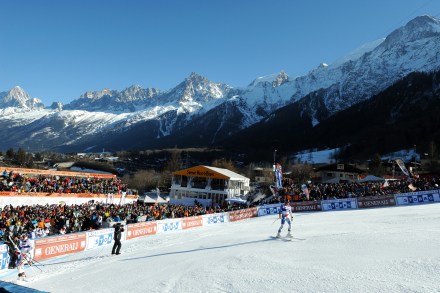
Gstaad Once upon a time clergymen saw mountain peaks as natural steeples leading them ever closer to God. Doctors considered mountains the best medicine for tuberculosis, while explorers saw them as rocks never before touched by humans. I thought of those good people while T-barring up the Eggli in way below freezing conditions but in bright sunshine. For some strange reason, whenever I’m really cold I try to think of the German 6th Army trapped in Stalingrad, numbed in body and mind by the cold, while Hitler sat toasty warm back home and ordered them to fight to the death. After that, skiing in subzero weather is easy. Nowadays most skiers wear helmets and ski masks, but at 78 years of age I refuse to look ridiculously like a boy racer — and to hell with safety.

Why Switzerland should have listened to Hong Kong on currency pegs

The Swiss National Bank usually ticks away as quietly as one of its nation’s more expensive timepieces, but when the cuckoo does occasionally burst out of the clock, all hell breaks loose. After a policy was introduced in September 2011 to depress the Swiss franc against the euro (as traumatised investors continued to pour money into safe-haven Switzerland), governor Philipp Hildebrand resigned when it came to light that his wife Kashya had sold a huge bundle of francs ahead of her husband’s market intervention, then bought them back at a handsome profit. Now, weeks after Hildebrand’s successor Thomas Jordan called the informal fixing of the franc at €1.

Even Switzerland is turning lefty. Am I going to have to move to Wyoming?

 Gstaad I am looking out of my window at the green landscape and forested mountains rising beyond, as peaceful a scene as there is in this troubled world, but this is Switzerland, a country that hasn’t fought a war in 700 years, resisting both Napoleon and Hitler through friendly persuasion and by having banks that don’t talk. No longer. The new big bully on the block, Uncle Sam, in cahoots with the vermin that is the EU, is forcing the Swiss to open up and spill the beans. What I don’t get is why the Swiss are lying down and playing dead. Sure, they have all sorts of referendums, but the government keeps signing treaties with the depraved bureaucrats of the most successful criminal enterprise invented by man, once upon a time known as the Common Market.

The EU is eroding Swiss exceptionalism

Even in Switzerland, the elites are sold on the European Union, though it remains outside. It has a virtually irresistible draw in all European countries for the people that Mr Gladstone disparaged as ‘the Upper Ten Thousand’ (who today probably add up to the Upper One Million). As a result, Switzerland is gradually allowing its exceptionalism — in tax and banking, for example — to be eroded. On the other hand, the Swiss people are stoutly sceptical and have become more so. In February, they voted for a referendum limiting the free movement of EU citizens into their country, and so their EU relationship is now in flux. In this remarkable country, only 5 per cent know the name of their president.

Sport: Serena is shining like never before

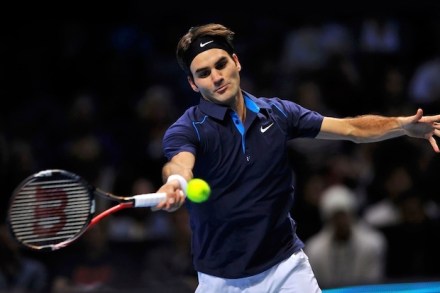
The comic book Asterix in Switzerland is full of joys, not least the many jokes about Swiss obsessions with tidiness and bureaucracy. Watching the Basel Open last week, the audience was a treat. Immaculate of course, with giant glasses, and cashmere V-necks looped over the shoulders, and doubtless trading assets between matches over hot chocolate and a strudel. But even his home-town crowd and all the UBS credit cards in the Alps couldn’t lift the greatest Swiss of all to take what would have been only his second title of the year. Roger Federer was outgunned in the final by Juan Martin del Potro, having just squeaked past a rangy young Canadian called Vasek Pospisil (no, me neither), ranked about 40, in the semis.

Notes on … Skiing in Switzerland

There’s a myth in the Spectator office, which I’ve never discouraged, that I’m Yorkshire’s answer to Franz Klammer — a veteran ski ace who likes nothing better than to have himself helicoptered to remote peaks in search of deep, virgin powder. But myth it is, I’m afraid: your business columnist is fat, 58 and was never fast on skis or any other form of self-propulsion, even in his youth. So you might think I’m the wrong man to be telling you about my favourite Swiss winter-sports station, which is the picture-book village of Wengen in the Bernese Oberland. This, after all, is the place where ski-racing was invented by British sportsmen in the 1920s, and is still home to the muscular Downhill Only Club.

Wandering eye

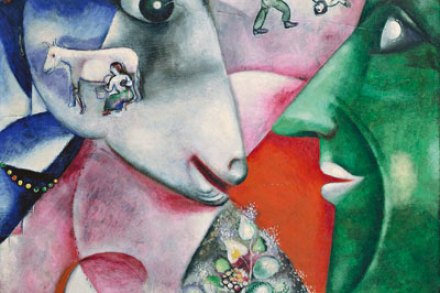
‘When Matisse dies,’ declared Picasso, ‘Chagall will be the only painter left who understands what colour really is.’ Wandering around this splendid show you can see exactly what he meant. Chagall never used colour for cheap effect, but to convey meaning and emotion. The effect of seeing so many of his works together is almost overwhelming — a symphony hung upon a wall. But these aren’t the romantic paintings of Chagall’s later years, the visions of young lovers floating over seas of flowers. These are the urgent artworks of his youth, made at a time of immense upheaval. By focusing on these early years, to the virtual exclusion of his later work, this fascinating retrospective casts Marc Chagall in an entirely different light.

Good News for Switzerland!

From France, that is: The Socialist favourite in France's presidential election, Francois Hollande, has said top earners should pay 75% of their income in tax. "Above 1m euros [£847,000; $1.3m], the tax rate should be 75% because it's not possible to have that level of income," he said. Speaking on prime time TV, he promised that if elected, he would undo tax breaks enacted by Nicolas Sarkozy. [...] Mr Hollande himself renewed his call on Tuesday, saying the 75% rate on people earning more than one million euros a year was "a patriotic act". "It's a signal that has been sent, a message of social cohesion, there is an effort to be made," he explained. "It is patriotic to agree to pay a supplementary tax to get the country back on its feet.

Britain, Scotland, Norway and Europe: lands of magical Sovereignty-Unicorns – Spectator Blogs

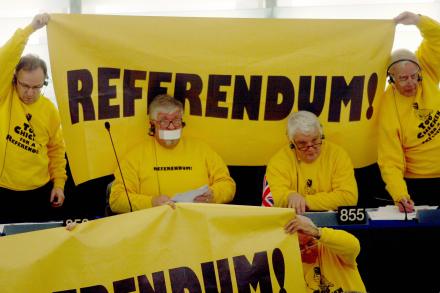
Even the cheapest, Poundland crystal ball will tell even a blind observer that Europe is pretty soon going to be a pretty hefty problem for almost all of Britain's political parties. Almost all, I say, because that includes the SNP* whose europhilia is, in some respects, a product of a time that no longer exists. Anyway, the odds of manifesto pledges promising an in-or-out referendum in the next parliament seem to be shortening all the time. I have no idea what this is supposed to achieve since, as best I understand the matter, neither the Conservative nor Labour parties wish Britain to leave the European Union. Asking the question necessarily increases the chances of receiving an answer you do not think sensible or in the national interest.

Rudd’s straw man argument about our EU membership

As the isolation hysteria over Cameron’s EU veto starts to fade, attention is now shifting to the more existential question of what kind of relationship the UK should have with Europe. In a piece for today's Times (£), the chairman of Business for New Europe, Roland Rudd — who, incidentally, used to argue passionately in favour of the UK joining the euro — takes aim at those who want Britain to replicate a Norway-style model of European cooperation. Arguing that Norway endures so-called ‘fax machine diplomacy’ — no influence over EU laws that it must nonetheless accept — Rudd says that ‘the choice now is to do what Norway does, or remain in the EU.

Osborne’s crusade

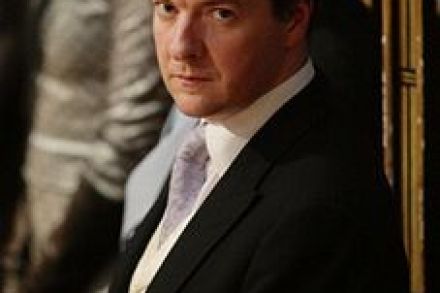
‘Tax evasion is morally repugnant. It's stealing from law-abiding people who face higher taxes to make good the lost revenue. Those who evade taxes, like benefit cheats, are leeches on society. And my message to those who try to hide their incomes from the Revenue in offshore bank accounts and false declarations is simple: we will find you and your money.’ That was written by George Osborne in today’s Observer. He promises that the deal with Switzerland is “just the start” of his campaign to close tax havens. The rest of the article then relates the coalition’s achievements at reducing tax avoidance by increasing charges on capital gains and non-domiciled taxpayers working in Britain.

Treasury agrees Swiss bank tax

First came the Germans and then came the Brits. The UK Treasury has secured an agreement with authorities in Zurich to tax the assets of UK citizens held in Swiss banks to reduce on tax avoidance and stamp out evasion. The deal will follow the lines of that which Switzerland made with Germany last month. The FT has details: 'Taxes on future income will be withheld at a rate of 48 per cent, corresponding to the top 50 per cent rate that now applies to Britain’s highest earners. A one-off levy of between 19 and 34 per cent will be applied to all Swiss accounts held by UK residents, with the exact percentage to be determined by the size of the deposit and how long it has been maintained.