Switzerland

Even the greatest tennis players need to be adored

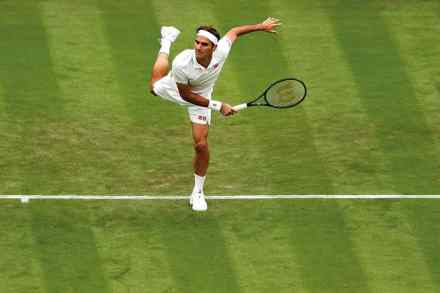
Louis MacNeice once wrote that if you want to know what chasing the Grail is like, ask Lancelot not Galahad. Because failure helps you see — the successful types are too busy succeeding. Two recent books on tennis put this theory to the test. The Master, by Christopher Clarey, long-time tennis correspondent for the NY Times, is about Roger Federer’s greatness. Clarey played for Williams College, where he ‘struggled and choked enough to understand just how difficult it can be to hit the shots that virtuosos like Federer make look routine’. Billie Jean King’s most recent autobiography, All In, is the second. She tells the story from Galahad’s point of view. King’s is harder to sum up: part coming-out memoir, part tennis journal and part polemic.
What Richard Scarry did all day

From our US edition

If you were lucky enough to know Richard Scarry, you might get a postcard from one of the world’s most successful and celebrated children’s book authors. If you were lucky enough to be Scarry’s friend, you might get a letter from Lowly Worm. If you were lucky enough to be a close friend and also a storyteller, you might get advice from the master storyteller himself. I was very lucky to be all three. I met Dick Scarry in 1959, when Dick bought a sailboat from my father in Westport, Connecticut. The two men had become friends based on a love of all things nautical. My father was an artist-illustrator and writer before he gave up the Madison Avenue rat race and opened a yacht brokerage and ship’s chandlery in Westport.

richard scarry

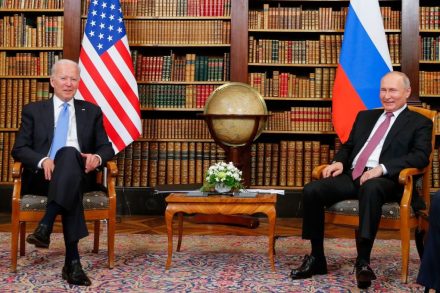
The Biden-Putin summit was a diplomatic nothingburger

From our US edition

There was a time when summit meetings between the presidents of Russia and the US were world-historical events on which the balance of world peace rested. Today — not so much. Joe Biden and Vladimir Putin didn’t even manage to fill the five hours allotted for their talks in Geneva today in large part because they simply didn’t have much to talk about. Russia today threatens no US vital interests, commands no alliances or strategic resources and remains a world power in only two areas, both inherited from the Cold War — its large nuclear arsenal and its UN Security Council veto.

biden putin

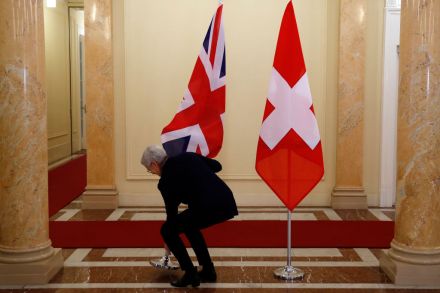
Brexit Britain can capitalise on the breakdown in EU-Swiss talks

It is a leading player in finance, and it's companies are giants in life sciences and consumer goods. There were already lots of similarities between the Swiss and British economies, except that they are quite a bit richer and more successful than we are. Now we have something else in common: we have both been frozen out of the European Union’s Single Market. But hold on. Isn’t there an opportunity there as well? In truth, this would be the perfect moment to offer the Swiss a deal that would work for both sides – a common market. The Swiss have always had a fractious relationship with the EU.

Can the Mayr diet work at home?

From our US edition

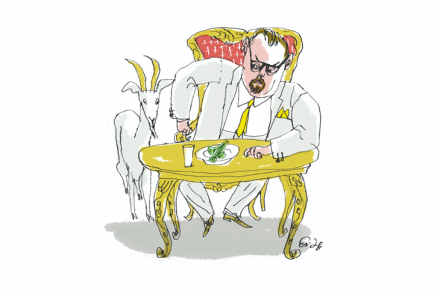
About five years ago, just after my 50th birthday, I noticed that I was extremely fat. Not ‘overweight’, not ‘heavy’, not ‘big-boned’, not possessed of a ‘good sense of humor’; fat is what it was. It was down to a long-undiagnosed medical condition and the attendant medication. It was also down to enjoying food a lot. What to do about it? Like a lot of men, I like a solution. I fundamentally believe that if you have a problem, you just need to find the right expert, who will lift the hood, run a few tests, give you a schedule to follow and it’ll be right as rain. ‘Go to the Mayr,’ a friend said. ‘They’ll put you right.’ And so it was. The Mayr Clinic is a celebrated health farm on the shores of the Wörthersee, a lake in eastern Austria.

mayr diet

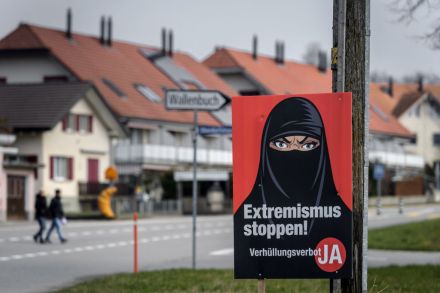
Are Switzerland and France really ‘Islamophobic’?

Is Switzerland 'Islamophobic'? Critics of the country's decision to outlaw face coverings think so. The 'Burqa ban', which passed into law this week as a result of a narrow vote in a referendum, applies to any form of face covering in a public gathering, unless worn for health reasons, at religious congregations, or carnivals. The legislation is not, at least directly, aimed at Muslims. And, what's more, very few Swiss Muslims wear a burqa or niqab: almost no-one in Switzerland wears a burka and only around 30 women wear the niqab, according to research by the University of Lucerne. But the condemnation has nonetheless been swift. It was 'a dark day' for Muslims, the Central Council of Muslims in Switzerland has said.

Enter the parallel universe that is the Lucerne Festival

There wasn’t going to be a Lucerne Festival this year. The annual month-long squillion-dollar international beano got cancelled, along with the rest of Europe’s musical life, round about the time that we were all starting to get bored of banana bread. Then suddenly, in late July, it was on again. The Swiss government authorised distanced and masked audiences of up to a thousand, and a series of nine concerts was rapidly improvised with locally available talent — which, when you have the determination, contacts and (crucially) bank balance of the Lucerne Festival, means people such as Cecilia Bartoli, Igor Levit and, for these opening concerts, Martha Argerich and Herbert Blomstedt, plus a scaled-down Lucerne Festival Orchestra.

I went to hell and back to meet my new granddaughter

Wolfsegg, Austria I have finally understood what’s wrong with the modern world: motorways. These dehumanising slabs of asphalt covering our continents are Prometheus-like chains that lure us into non-stop movement and uniformity. But before you start screaming that you’ve been isolated for months and would give up a night with Jennifer Lawrence to roar down a highway, let me explain. It all began when Alexandra and I decided to visit my daughter and the new baby in Austria. It was my idea to drive there, the Swiss-German-Austrian borders having opened that very day. When the wife suggested a chauffeur, I said no. When the son assured me that I’d get lost, I threatened financial repercussions that I can no longer enforce.

Swanky, stale and sullen, the summer music festival has had its day

‘Festival?’ said Nathan Milstein. ‘What is festival?’ I had naively asked the most immaculate of violinists where he used to play in the summer and he looked at me as if I had proposed an unnatural act. ‘Before the war,’ said Nathan, offering a glimpse of paradise lost, ‘Volodya and I would stay at Senar for six weeks with Rachmaninov.’ Volodya was Horowitz, his best friend. ‘In those days,’ he continued, ‘we liked to spend time with composers. A composer was someone you could talk to. He knew philosophy, literature, lepidoptery. Rachmaninov could name all the butterflies around Lake Lucerne. He liked me better than Volodya, maybe because I was not pianist.

Switzerland is now an enemy of the rich

Gstaad The staff are back and all is well, as they used to say long ago in faraway places. The gardener and the cleaner are Portuguese, and they greet me, with their inherent dignity, from afar. The Filipina maid and cook almost gets me in a headlock trying to thank me for keeping her on salary while she rested at home. I shoo her away. Who does she take me for, a lowlife cheapskate like Philip Green? I didn’t hesitate to send them all home. Mind you, I’ve taken such a shellacking on the stock market that I’ll soon be applying for a job myself, perhaps as an ageing gigolo to some fat old tart from Marienbad. I tango well and can waltz, so all I need to do is grow a pencil-thin moustache. But I’ll start with the bad news.

Have we been fighting a very different disease to China?

One of the great mysteries of coronavirus is how the epidemic has become much more severe in Europe and North America than in the Far East. A disease which appeared to be on the wane in China, South Korea and elsewhere in mid-February suddenly erupted with a vengeance in Europe in March, with death tolls quickly surpassing those in Wuhan. Various explanations have been offered: from the Chinese lying about the extent of cases and deaths to the difficulties of enforcing lockdowns and launching intrusive tracking and tracing strategies in western democracies. But then have we really been fighting the same disease?

High life | 7 March 2019

Gstaad   As everyone knows, the definition of serendipity is searching for a needle in a haystack, and instead finding a farmer’s daughter. Not so fast, as they say. I live among farmers and haystacks up here in the Alps, and I’ve yet to run into a farmer’s daughter who is worth the buckshot in the bottom. I was thinking of such matters all last week while skiing with my son and his two children. How happy I feel now, surrounded by wife and children and grandchildren — something I’ve avoided throughout my life while chasing daughters. Incidentally, the little turd Taki (just turned 13) is now so good a skier that the ‘race of the generations’ has been called off. He’s just too fast and I’m just too old and slow, so my son J.T.

High life | 7 February 2019

Gstaad   Here in Gstaad there is no worker alienation. Nor are the rich especially worried. The talk is about snow conditions, upcoming parties, the price of real estate, Brexit and, of course, socialism, a disease that strikes those far away from this Alpine resort, but has yet to infect any of the locals. I had a long chat with a friend of mine, born and bred up here, who makes his living teaching people how to ski and fixing their television sets after hours. ‘Don’t you ever mind when you see first hand how plush the new chalets are, especially of those like myself who made it the old-fashioned way, by inheriting it?’ Not a bit, was the answer, ‘Life’s like a casino, some win and some lose.

Davos Notebook

Somehow I had managed more than a quarter of a century in journalism without ever going to Davos. It had become almost a badge of honour, the one gathering of global nabobs I had been able to dodge year after year. But here I am in the mountains of Switzerland, a new boy amid the pilgrims come to worship at the altar of globalisation. I am international by profession and inclination — could a diplomatic correspondent be anything else? — but I can report that this annual meeting of the world’s great and good makes itself easy to lampoon.

High Life | 3 January 2019

Gstaad My annual end-of-year party in the Bagel was a bust. Too many people brought their friends and I ended up asking men and women to please leave both my bedroom and, especially, my bathroom. I had some very pretty young things drop in. Some even overstayed and — surprise, surprise — there were some items missing after the clean-up the next day. But that was then. I’m now in Gstaad for the duration. The good news for the nouveaux is that it rained like hell for three days, washing away all the snow. Skiing and new moolah don’t mix. Main Street now sounds a bit like Beirut — or should that be Athens? However it sounds, it’s not like the Helvetia of the good old days.

Where are the snows of yesteryear?

I like a book where you don’t think you’re going to be interested in the subject, but then find it’s so vigorously and engagingly written that you’re enchanted. This is one of those. I’m not a skier —I’m quickly bored when coffee-drinking mothers start recounting their children’s latest achievements on the piste — so I expected to have had enough by page five, as I set off across the blinding whiteness of this ‘biography’ of snow, written by a man who’s wearing ski-goggles in the jacket photo. But in Giles Whittell’s genial company, reading it was a great pleasure.

High life | 6 December 2018

New York At times I used to think the place was real. The New York of films, that is. The reality is an urban agglomeration of millions, most of whom have a disinclination to speak English. Then there’s the celluloid city of 42nd Street, Annie Hall, Dead End, Rear Window and King Kong. This is the dream city I keep writing about, the one that stabs you in the gut because it’s gone. And it gets worse when you accept that it never existed in the first place. Like the woman of your dreams who has lost her looks and your best friend tells you they were never there. And yet they must have been, because I lived them.

High life | 28 September 2017

I think this week marks my 40th anniversary as a Spectator columnist, but I’m not 100 per cent certain. All I know is that I was 39 or 40 years old when the column began, and that I’ve just had my 81st birthday. Keeping a record is not my strong point, and it’s also a double-edged sword. I once planned to publish my diary, but then I stopped keeping one. I’d found passages in it that were dishonest, written in the heat of the moment, most likely under the influence, and the result was a bum-clenching embarrassment. Now I don’t use any social media, certainly not Twitter, Facebook or Instagram, being a firm believer that Zuckerberg and Bezos should be locked up for life (Zuckerberg for not doing enough to tackle terrorist content).

Enemies of the people

Hardly a week goes by without someone applauding Thomas Carlyle’s objection to democracy: ‘I do not believe in the collective wisdom of individual ignorance.’ In other words, infinitely wise politicians should tell the unenlightened mob what to think, not vice versa. Such feelings have been common ever since the Athenians invented direct democracy in 508 BC, which lasted till 323 BC and handed to citizens in the assembly (the dêmos) the power to decide all Athenian policy. One anonymous writer described the dêmos as ‘ignorant, ill-disciplined and immoral’, ascribing it to their ‘poverty and lack of education’. The philosopher Plato thought a state could be well governed only by Platonic philosophers.

High life | 23 February 2017

From my chalet high up above the village, I look up at the immense, glistening mountain range of the Alps, and my spirit soars. Even youthful memories receding into sepia cannot bring me down from the high. Mountains, more than seas, can be exhilarating for the soul. Then I open the newspapers and the downer is as swift as the onset of an Alpine blizzard. Television is even more of a bummer.