Mats Persson

Rudd’s straw man argument about our EU membership

From our UK edition

As the isolation hysteria over Cameron’s EU veto starts to fade, attention is now shifting to the more existential question of what kind of relationship the UK should have with Europe. In a piece for today's Times (£), the chairman of Business for New Europe, Roland Rudd — who, incidentally, used to argue passionately in favour of the UK joining the euro — takes aim at those who want Britain to replicate a Norway-style model of European cooperation. Arguing that Norway endures so-called ‘fax machine diplomacy’ — no influence over EU laws that it must nonetheless accept — Rudd says that ‘the choice now is to do what Norway does, or remain in the EU.

26 versus 1 — really?

From our UK edition

Judging from much of the coverage in UK media, you would be forgiven for thinking that Britain is on the fast track to becoming the North Korea of Europe — eccentric and completely isolated from the rest of the world. Indeed, the media narrative over the past couple of days has largely treated the agreement reached at the summit as concrete, supported in full by everyone apart from Britain. Or ‘27-minus’, as Commission President Jose Manuel Barroso put it. The reality, of course, is quite different. Leaving aside whether Cameron could have played his cards better (he could have), as Gideon Rachman pointed out in yesterday’s FT, ‘the picture of an isolated Britain’ will become blurred as the rest of Europe grapples with the Merkozy deal.

Ten myths about Cameron’s EU veto

From our UK edition

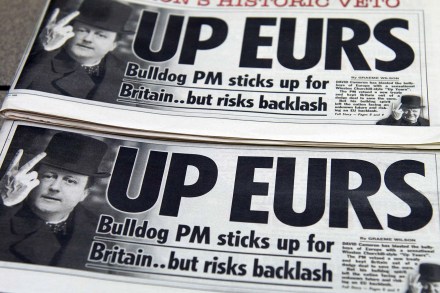
The EU veto that Cameron pulled in the early hours of Thursday morning has been widely misunderstood on all sides. Here are the 10 most common myths: 1. Because of Cameron’s veto, Britain lost a seat at the negotiating table. Not true. The UK was never itself going to take part in the Merkozy pact (and potentially be subject to EU sanctions), and therefore not in the monthly, parallel EU meetings that will begin in January, either. Even if he had approved the Treaty changes, Cameron still would not have had a seat at the table. Wider political challenges aside, the veto didn’t change anything structurally in terms of UK influence. 2. Cameron’s veto created a two-tier Europe.

Cameron may have more leverage in Europe than he thinks

From our UK edition

There's just over a week to go until the crunch EU summit on 8-9 December, so David Cameron has to decide how best to play his cards — and quick. The problem, as Daniel Korski has pointed out, is that Britain faces the risk of ‘structural isolation’ in Europe in the short-term. To counter this, Cameron effectively has two options. First, work with allies on both sides of the euro divide to seek political assurances — formal or informal — against the formation of a two-tier Europe with a more integrated eurozone in the driving seat. Or, second, press ahead with UK-specific carve-outs from the EU structure.

Europe, and the UK, should be much more proactive about Portugal

From our UK edition

As Portugal bites the dust – following Ireland and Greece in asking for an EU bail-out – the most important question is still not being asked by EU policy-makers, or by the British government for that matter: will a bail-out actually solve any of Portugal’s problems? The simple answer is, it won’t. Asking the European Central Bank to take on more junk bonds, or piling more taxpayer-backed loans on Portugal’s already heavily indebted economy is not a long term solution. Ireland and Greece have already sought to renegotiate their bail-out terms as they are struggling to grow fast enough to repay their EU/IMF loans (ECB rate increases like the one we saw yesterday are unlikely to help).

Cameron’s €4 billion Portuguese challenge

From our UK edition

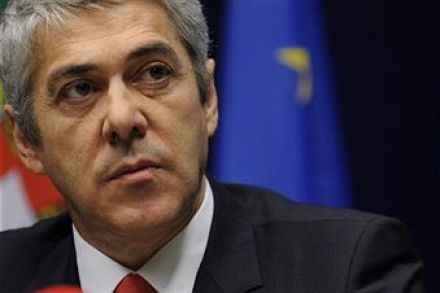
As if the budget and Libya weren’t enough, the UK Government woke up today with another major challenge on its hands – yet another flare-up in the eurozone debt crisis, which has been continuing to bubble away under the radar.   Yesterday, Portugal’s Prime Minister José Sócrates literally walked out of Parliament, during a debate on EU-backed austerity measures. The austerity package was subsequently voted down and shortly afterwards Sócrates announced his resignation. Portugal is now facing the prospect of being without a government for months, as its electoral rules require a 55 day break between the dissolution of Parliament and new elections.

The EU should impose sanctions on Gaddafi’s Libya

From our UK edition

The EU spends €460 million a year in operational costs alone on its new foreign policy department, the External Action Service, headed up by Catherine Ashton. This body - created by the Lisbon Treaty - was Europe’s ‘great white hope’ for the global stage, finally allowing it to speak with one voice and therefore giving it leverage where it previously had none.   It hasn’t quite worked out that way. Caught between Cairo and Tripoli, the EU has received yet another reminder that its bureaucracies and institutions cannot magically replace 27 individual foreign policies, as EU leaders continue their bickering over what to do.   The EU’s response to the turbulence in Libya has been fragmented at best, and contradictory at worst.

Remember this?

From our UK edition

“We will want to prevent EU judges gaining steadily greater control over our criminal justice system by negotiating an arrangement which would protect it. That will mean limiting the European Court of Justice’s jurisdiction over criminal law…” That was David Cameron a year ago when he presented the Tories’ EU policy ahead of the General Election. As we all know, much has changed since then. The pledge to ‘repatriate’ powers has been dropped, a victim of the Coalition deal. But despite this, MPs now have a huge opportunity to make good on pledges to regain control over EU justice laws, and even to repatriate powers should they want to – without having to change a single comma in the EU Treaties. How?

Opposing the EU Bill

From our UK edition

The EU Bill is back in parliament today, amid speculation that Cameron has a Europe-fuelled rebellion on his hands. Despite the talk, the chances are that the Bill will go through Parliament wholly unscathed in its first test.   Today’s debate is about the so-called ‘sovereignty clause’ – or Clause 18 – within the EU Bill. Of the Bill’s 17 pages, the clause only takes up four lines, but has still managed to cause the most fuss (the vast majority of the text relates to the EU ‘referendum lock’).

What Cameron should push for in Brussels

From our UK edition

As David Cameron stays in Brussels for his third European summit as PM, it’s becoming increasingly clear that the EU's approach to the eurozone crisis – put up short-term cash and pray – isn’t convincing anyone.   On Wednesday, Moody’s threatened to downgrade Spanish government bonds another notch, citing the fact that, between them, the country’s government and banks have to raise €290bn next year to keep the party going. And, across the eurozone, banks and governments face daunting refinancing targets in 2011, which begs the questions: at what cost? And what happens if they fail to meet them?

Britain may not be able to avoid bailing out the Irish

From our UK edition

This morning, it sounds as though Ireland has finally buckled to demands that they accept a bailout from the EU. Their central bank governor, Patrick Honohan, has said that he expects a "very substantal loan" from Europe – although the details, and debtees, are yet to be clarified. In the UK, of course, backbench MPs and others have been quick to condemn any move which would force British taxpayers to cough up cash under the EU’s various bail-out arrangements. Only problem is: the UK may not have a choice. The part of the eurozone bail-out package which Britain could be underwriting to the tune of £6-7 billion - the so-called European Financial Stability Mechanism – is not protected by a UK veto.

A wasted opportunity for EU reform?

From our UK edition

David Cameron made his statement on last week’s EU summit yesterday, answering a range of questions on the 2011 EU budget increase and future changes to the EU treaties. The Tory backbenchers appeared to be on their best behaviour, but Cameron did make an interesting admission. Asked by Ed Miliband if he would he be repatriating powers, he pointed to a reassurance that the UK’s opt out from economic sanctions remained intact, which was not really in question in the first place, and spoke of “progress on the EU budget”. It slipped through virtually unnoticed, but this second remark is actually quite worrying.

Cameron must play his cards well to win in Europe

From our UK edition

The British media woke up this week, realising that Europe still exists. As David Cameron travels to Brussels, questions loom over what, exactly, he can achieve in Europe – at this summit, and more importantly, moving forward.   Much of the commentary surrounding the summit has focussed on the increase to the EU’s 2011 budget, which Cameron is fighting.  And for good reason. It’s insane that Britain – or any other net contributing state – should be forced to accept any increase to the EU budget, at a time of tough austerity at home.   Cameron has spent considerable time talking up the negotiations on the budget increase, so he may have an ace up his sleeve to achieve a cash freeze tomorrow or in the coming weeks. But a 2.

Time for a new approach to the EU

From our UK edition

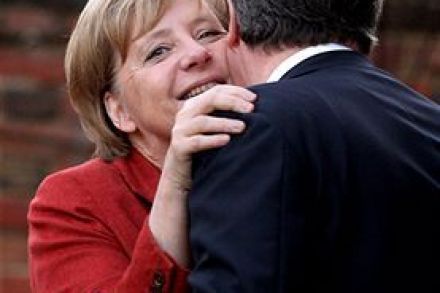
All eyes are on the spending review, but yesterday another potentially huge challenge landed in the Coalition’s in-tray: the prospect of a new EU treaty.   In the small town of Deauville in Lower Normandy, French President Nicolas Sarkozy and German Chancellor Angela Merkel struck another of those ‘Franco-German compromises’ that tend to set the EU agenda, and have too often left the UK on the back foot. Yesterday’s compromise will see Sarkozy backing German calls for a new EU Treaty to introduce new a mechanism that would enable countries within the euro area, such as Greece, to default.   And Merkel means business.

Finessing the coalition’s EU referendum lock

From our UK edition

The Coalition Government’s proposal for a 'referendum lock' on future transfers of powers to the EU has already been branded “worthless” by some Tory backbenchers . It’s easy to share their frustration at the Coalition’s lack of interest in EU reform so far. After all, the Government has chosen to opt in to the European Investigation Order; signed up for new EU financial supervisors; and chosen not to challenge the UK’s participation in the eurozone bailout (making British taxpayers potentially liable for up to £8 billion in loans to eurozone governments). However, the referendum lock is still significant. New crises, situations and politicians’ egos will always drive the need for another treaty and further integration.