Steve hilton

The Tory modernisers are Margaret Thatcher’s true heirs

Margaret Thatcher’s death has inevitably prompted intense reflection among Tories about what lessons the party should learn from her time in office. ‘We must finish the job’ is the refrain on the lips of Thatcherite ministers, and there are more of those today than there were a year ago. The experience of office has had a radicalising effect on the Cameroons. To be sure, today’s circumstances are not the same as those of 1979 or ’89. Her exact policy prescription is not what is required. This is something that Thatcher, a politician who relished fresh thinking, would have appreciated. But what the party does need is the spirit of Thatcherism, that understanding of what a centre-right party should be in the modern age.

The guru speaks

A Maggie-tastic jam-packed Spectator tomorrow. Amongst the tributes, the words of Steve Hilton stuck out: ‘I saw her as thrillingly anti-establishment; as much of a punk, and as brilliantly British, as Vivienne Westwood, who once impersonated her on the cover of Tatler. Margaret Thatcher had the virtues most valued in today’s culture: innovation, energy, daring. She was Steve Jobs, Richard Branson, and Lady Gaga all rolled into one — and a thousand times more consequential than any of them. In today’s techno-business jargon, she was the ultimate political disruptor: determined to shake things up, unleash competition, challenge and confront vested interests. To be transformative, being reasonable doesn’t get you very far.

Life imitating art

Twitter superstar @SteveHiltonGuru disappeared with his real life namesake - the departed Downing Street policy wonk; but he's back for one week only. After teasing Westminster for months, the brains behind the spoof account of the brains behind Dave, has written for this week’s Spectator about how he did it. @SteveHiltonGuru may be gone, but he was certainly not forgotten if the real Hilton’s departure bash is anything to go by: ‘At Hilton’s leaving party, I was delighted to hear Michael Gove’s speech based on the character I had created. Steve had been true to his Hungarian roots, the Education Secretary said: half-Buddha and half-pest. I wish I’d thought of that one.

Lord Ashcroft frozen out, again

The Tories’ shadowy donor-cum-puppetmaster has been given the cold shoulder, yet again. Taking full proprietor privileges at ConservativeHome, he’s taken aim at young Dave’s departed brain, Steve Hilton. It seems that the guru has left the Lord of Belize off his Republican National Convention party guest list: ‘Apparently, the event to be seen at is to be hosted by none other than Steve Hilton. Unreliable rumour has it that he has taken for the occasion an enormous house on Tampa Bay's prestigious Harbour Island. What can he be up to? Clearly he is keeping his hand in. Unfortunately my invitation has not arrived so I can report no further for the time being.

Slashing and burning the civil service, or just skimming off the top?

Are Francis Maude's £5.5bn savings in central government spending a significant step forward in his battle to shrink the public sector? In today's Telegraph, the Cabinet Office minister explains the beneficiaries and sources of the latest cutbacks: Today I can announce that in 2011-12 we saved £5.5 billion. This is the equivalent of around £500 for each working household in Britain or enough money to fund 1.6 million primary school places. How did we make these savings? Within the first days of this Government we introduced tough temporary spending controls. These limited expenditure on IT contracts, property, marketing, temporary staff and consultancy. While civil service spending has steadily decreased — £3.

Overhauling the Rolls Royce

‘I was sceptical [about civil service reform] until I read that unreadable column.’ This was the response of a Westminster type who I spoke to earlier about Francis Maude and Sir Bob Kerslake’s joint article on civil service reform in today’s Telegraph. Having re-read the jargon-ridden piece, I see what he means. Take this passage: ‘The Civil Service has to have a culture which is pacier, more innovative, less hierarchical and focused on outcomes not process. We also need sharper accountability, in particular from permanent secretaries and those leading major projects, and we need more digital services, better data and management information and for policy and implementation to be linked seamlessly together.

The strains on the Cameron-Hilton relationship

I suspect that ‘Weekend secrets of the “chillaxing” Prime Minister’ (£) is one of the last headlines that Number 10 wanted to see this Saturday. It is acutely sensitive about the idea that Cameron doesn’t work hard enough, a charge that it thinks is as unfair as it is damaging. But perhaps more interesting than the details of the Prime Minister’s Sunday routine — a ‘crap film’ and a few glasses of wine at lunch — is what Francis Elliott and James Hanning reveal about the Cameron-Hilton relationship.

Mid-term blues or something more serious?

The argument in the Cameron circle about what the government needs to do to get back on course has been the story of this week. As I say in the political column, there’s a divide between those who think that this month’s events have been little more than a bit of mid-term blues, and those who worry that they have revealed serious, structural problems that needs addressing if they are not to cripple the government. At a meeting of Conservative Cabinet ministers on Wednesday lunchtime, this divide came clearly into sight.

Reeves resignation is bad news for Clegg

The departure of his senior aide Richard Reeves is a major blow to Nick Clegg. Reeves, a relative newcomer to the Lib Dems, was far less focused on party structures than many of those in Clegg’s circle and instead concentrated on the party’s long term electoral prospects. Reeves’s view was that there was a space in British politics for a party that was classically liberal on economics and socially liberal on other matters. He wanted to turn the Lib Dems into a party that was as comfortable in government as in opposition. There will be those who want to read something political into Reeves’s departure.

Hilton’s return hinges on Cameron’s radicalism

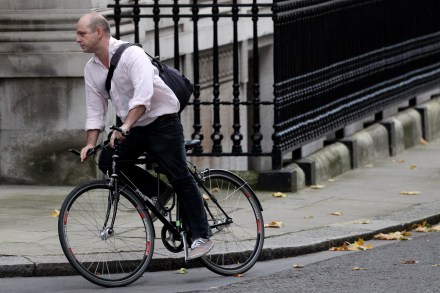
It is a sign of the influence that Steve Hilton has on the Cameron project that there have been more column inches devoted to his departure from Downing Street than there would be to most Cabinet resignations. But even after he heads to California in May, Hilton will still be part of the Cameron brains trust. He is already scheduled to work on the Prime Minister’s conference speech. Hilton has, I understand, been mulling the idea of taking a sabbatical since last summer. His decision to go ahead and take next year off seems to have been motivated by a variety of factors. But those closest to him stress that family reasons genuinely were key. This is not to say that Hilton is not frustrated.

After Hilton

Perhaps, the greatest testament to Steve Hilton’s influence in Downing Street is that everyone chuckles when you ask if anyone will replace him. His role in Number 10 as the senior adviser was one he had carved out for himself so that he could work on what he wanted to. It is deliberately designed not to fit on any ‘org chart’, the kind of document that the post-bureaucratic Hilton has little patience for. Hilton was for years caricatured as being not really right-wing. But, in reality, the opposite is true — he was, in some ways, the most right-wing man in Downing Street. Few matched him on subjects like 50p tax and labour market regulation. The Lib Dems were right when they called him ‘Thatcher in a t-shirt’.

25 February 2009: They wish we all could be Californian: the new Tory

With the news that Steve Hilton is heading back to the West Coast, we've dug up this piece from 2009 by Fraser Nelson. He discusses the last time Hilton decamped to California and the culture changes he could bring back to the Tories in Westminster. Once every fortnight or so, David Cameron’s chief strategist lands at San Francisco airport and returns to his own version of Paradise. Steve Hilton has spent just six months living in this self-imposed exile — but his friends joke that, inside his head, he has always been in California. Look at it this way: this is the place on Earth which fuses everything the Cameroons most like in life, where hard-headed businessmen drink fruit smoothies and walk around in recycled trainers.

Steve Hilton to leave Downing St

The Prime Minister's strategy chief is heading to California to teach for a one year sabbatical, we learn. But who takes a one-year sabbatical in the middle of what's supposed to be a five-year fight to save Britain? He did this before in Opposition, and came back. But this time, I doubt he'll be back. He's joining Stanford University as a visiting scholar, presumably to spend more time with his wife Rachel Whetstone who is communications chief for Google. Hilton's friends say that, in his head, he never quite came back from California — his aversion to shoes (and sometimes manners) has led to much mockery. But overall, he is — and has been — a force for good in No.10. David Cameron's government will be more timid without him. Since Hilton arrived at No.

Uncivil service

Political cultures differ. In Iran, for example, hyperbole is expected in all political conversations. So slogans always call for ‘Death to the US’, and nothing less. In Britain, of course, the use of language is more even-tempered, but other rules apply. Blaming the civil service for failure is considered OK, but charging an individual official, even a Permanent Secretary, for the same is considered off-limits. If a minister were to try it, then he'd be accused of trying to pass the buck on towards defenceless officials. But, as Camilla Cavendish points out in today's Times (£), failure is often also the fault of senior officials who, despite problems in the past, move seamlessly from job to job and from Department to Department.

Lansley stakes his claim on the post-2015 budget

Look slightly to the left, CoffeeHousers, and what you'll see is the cover image to this week's Christmas double issue of The Spectator — a brilliant send-up of Bruegel's ‘The Hunters in the Snow’ by Peter Brookes. You're now able to buy your own copy, but we thought we'd pull out an intriguing little snippet from James Forsyth's interview with Andrew Lansley, by way of a taster. The Health Secretary, it seems, isn't just determined to see health spending rise in real terms in this parliament, but beyond that too: ‘I ask him whether, despite the ramifications of the autumn statement, the NHS budget will still be immune from cuts.

Back to square one | 6 December 2011

Benedict Brogan has some bad news from the engine room of public service reform. ‘I'm told Downing Street is starting all over again on public service reform. Will Cavendish, one of the key people guiding policy in No10, has been put in charge and told to assemble a new team of officials that will put together what effectively is a response to the white paper. The last 18 months, according to those close to the debate, were a waste of time. We'll have to see whether the principles Mr Cameron set out 10 months ago still apply.’ Those principles are that the ‘state will have to justify why should it ever operate a monopoly’ on public services, as Cameron once put it.

Improving the health of the nation

Britain’s future prosperity, we are frequently told, lies in scientific discovery, so it's odd that David Cameron has not given a major speech on it as prime minister until now. He will talk later today about the need to deregulate pharmaceutical licensing to encourage private investment in public health. He views the life sciences sector as a vital source of future economic growth. The PM will announce four new initiatives.

Miliband’s opportunity in the economic debate

Political debate is going to be dominated by the economy between now and the autumn statement. Ed Miliband is trying to use this moment to persuade the public that the Coalition's economic policies have failed. By contrast, the Tories want to highlight how much deeper trouble the country would be in if it did not have the confidence of the bond markets. The Tories hope that this 'stay close to nurse for fear of something worse' approach will eventually deliver an election victory for them in 2015, given how hard Labour is finding it to regain credibility on the economy. As Ben Brogan wrote the other day, this strategy worked for them in 1992 — the campaign on which both Cameron and Hilton cut their political teeth.

Cameron stamps on the SpAds

David Cameron summoned all Tory special advisers to Downing Street for a meeting this afternoon. He wanted, I understand, to warn them that too much of the coalition's internal workings were being briefed out to journalists. He made it clear that he wants an end to process stories appearing in the papers.   Downing Street has been infuriated by recent reports of tensions between Steve Hilton, Cameron’s senior adviser, and George Osborne and is keen to stamp on anything that keeps this — rather misleading — story going. There are also worries about the party being seen as divided again, a return to the old Tory wars stories of the 1990s.    Interestingly, Cameron said that he did not think that many leaks came from officials.

Whitehall could use some Google thinking

Today's New York Times has a fun piece about Google X, the secret lab where Google is working on its special projects. The ideas are, suitability, far out. They are, apparently, looking at connecting household appliances to the internet and creating a robot that could go to the office so you don't have to. It would be tempting to laugh if not for what Google has already pulled off. Indeed, the NYT reports that Google's driverless car might soon go into production. But in political terms what struck me about the article is that this is the culture that Steve Hilton embraces. Remember that when Hilton was working from California, he had a desk at Google. To someone from this mindset, the ideas that the Lib Dems are so keen to mock are not so crazy.