Steve hilton

Hilton: Brexit would be the crowning achievement of Tory modernisation

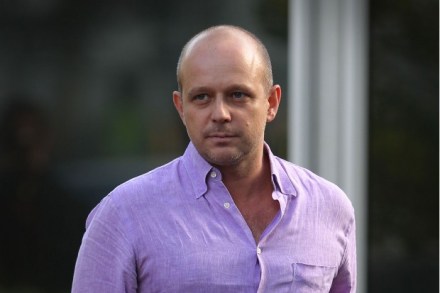
In a speech to Policy Exchange today, Steve Hilton—David Cameron’s former senior adviser—will make the case that ‘any intellectual rigorous examination makes it impossible for a Tory moderniser to support staying in the EU’. He argues that Tory modernisation was about trusting people, and that the EU does not; that modernisation was about localism, and that the EU is inherently centralising; and that the EU helps the rich and not the rest. I think there’s much to be said for Hilton’s analysis. (Though, of course, it should be recognised that there are Tory modernisers on both sides of the argument.) But where Hilton is surely right is that the EU is not the future, it is an idea of its time—the late 20th century.
On the EU campaign trail with Boris

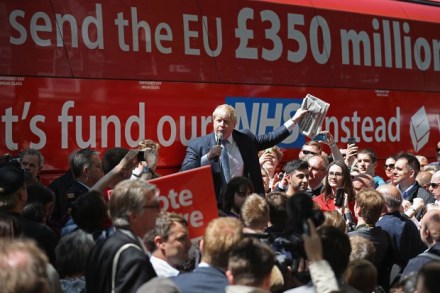
Boris Johnson is on the Vote Leave campaign trail in York this morning, and has just addressed a medium-sized crowd in the city centre. Unlike some of the election rallies that we saw last year, there were some real members of the public attending - and a chap who had turned up to egg he former Mayor, but didn't manage to. Boris turns to the chap who had brought an egg to throw at him and tells him people are going hungry pic.twitter.com/z6Wfl7eRwD— Isabel Hardman (@IsabelHardman) May 23, 2016 Afterwards, the failed egger claimed he had never intended to throw the egg, but had just brought it along to 'cause a scene', which rather made it sound as though the egg itself had been threatening to run amok in the square.

David Cameron’s former adviser Steve Hilton backs Brexit

Although David Cameron is keen to suggest of late that the dubious bunch backing Brexit includes Vladimir Putin and Isis, he may have more trouble brushing aside the latest figure to support Leave. The Prime Ministers former director of strategy Steve Hilton has penned an article for the Daily Mail in which he reveals why Britain 'must' quit the EU. Hilton -- who is one of Cameron's closest friends -- says the UK is ‘literally ungovernable’ as a democracy while it remains in the EU: ‘I believe it is [about] taking back power from arrogant, unaccountable, hubristic elites and putting it where it belongs – in people’s hands.’ Hilton also takes aim at the results of Cameron's renegotiation.

What ‘stinking cesspit of corporate corruption’? Steve Hilton refuses to say he backs Brexit

In More Human, Steve Hilton describes the EU as 'a stinking cesspit of corporate corruption gussied up in the garb of idealistic internationalism'. So given his strong words on the issue, in theory it would seem that David Cameron's former director of strategy -- who is also one of the Prime Minister's closest friends -- has all the makings of a Brexiteer. However, speaking on Today to launch his new website Crowdpac -- which aims to show which candidates match your priorities -- Hilton appeared to get cold feet on the issue. When Sarah Montague asked him if he was backing Out, Hilton attempted to avoid the question several times: SH: Well Sarah, I'm not going to get into that today. Other than to say it's many peoples' experience on both sides of the argument.

Watch: Steve Hilton on Donald Trump – ‘exactly what people want’

This week Donald Trump surged ahead in the race to be the Republican candidate in the US presidential election following Super Tuesday. Since then, there has been a lot of negative press surrounding Trump -- with naysayers worrying about his plans to build a wall between America and Mexico, and ban Muslims from entering the country. While Piers Morgan attempted to defend Trump's honour on Wednesday, the American businessman now has a new champion in the shape of a former staffer at No.10. David Cameron's good friend  -- and former director of strategy -- Steve Hilton appeared on Newsnight last night to discuss the rise of Trump in America: 'It's precisely his character that people are responding to. The idea that he is not some smooth talking politician.

Steve Hilton takes a swipe at the Tories over China

Chinese President Xi Jinping arrives in Britain today to embark on his official state visit. While the visit aims to build on George Osborne's own trip to China to reinforce trade relations, Jeremy Corbyn is expected to ruffle feathers by bringing up the country's bad track record on human rights when he meets the president this week. Government figures are hoping Corbyn will spare them blushes by using a private meeting with the president for the conversation rather than Tuesday's state banquet, with China's ambassador to the UK warning that he expected British people to know how to behave at the dinner. However, should Corbyn give off a frosty demeanor at the lavish do, he will find an unlikely supporter in David Cameron's former head of strategy Steve Hilton.

Podcast special: David Cameron’s conference speech

It's been a good week for the Conservatives, topped off by one of the best speeches   David Cameron has ever given. James Forsyth, Isabel Hardman and I discuss the Prime Minister's keynote address in this View from 22 podcast special — looking the new policies and themes he has laid out, the direction we can expect to see the Tories heading in and his strong attacks on Jeremy Corbyn. Can Steve Hilton's influence be seen in the text? And does this mark a new era for Cameron's leadership?

Exclusive: Steve Hilton jetting in to help with Cameron’s conference speech

Steve Hilton is, I understand, returning to help with David Cameron’s conference speech. Cameron’s one time political guru is now based in California, where he has launched the US political fundraising website Crowdpac. But he has made a point of returning each year to work on Cameron’s conference speech before heading back to the US. The decision to invite him to help out this year is particularly interesting given his view that Jeremy Corbyn is being underestimated. Hilton tweeted a few days ago that ‘cynical, pompous Westminster bubble trashes #Corbyn first week because he can't play their game. not a pretty sight’.

Letters | 25 June 2015

Free trade with Africa Sir: Nicholas Farrell suggests that a naval blockade is the only solution to Italy’s immigration crisis (‘The invasion of Italy’, 20 June). Examining the causes of the situation might identify other measures. Since the European Union effectively closed its borders to trade with Africa to protect European farmers from lower food prices, the agricultural economies of most African countries have been in decline. Of course there is another reason for Africa’s decline. About 60 years ago, the Europeans found it convenient to convince themselves that in Africa self-government was better than good government. It followed that aid would be a convenient substitute for the risks or inconveniences of free trade.

Elysian fields

There is a phrase that has been fashionable for years in wonkland — places like the upper echelons of the civil service and high-end think tanks. The phrase is ‘evidence-based policy-making’. There, I bet that’s got you going. When I was a citizen of wonkland and heard those words from the Sir Humphreys and Lady Susans I would typically roll my eyes or head for the door, because you can generally gather whatever evidence you want to justify whatever policy you want. In the end, you have to believe in something. Have the courage of your convictions and be judged by the results.

What can modern politics learn from Thatcher? Charles Moore will tell us

The first volume of Charles Moore’s biography of Margaret Thatcher is one of the finest political books of recent times. With the second volume due out in October, Charles, a columnist for both the Telegraph and this magazine, has agreed to also become a visiting scholar at the think tank Policy Exchange where he will work on what lessons contemporary politics can learn from Margaret Thatcher’s career. Policy Exchange has long been the favourite think tank of the Tory modernisers. With Charles and Steve Hilton’s arrival, it will be at the centre of the debate about where the Tory party should go next. For a flavour of the discussions to come, do watch Charles interview Hilton about his new book.

Letters | 28 May 2015

Why we don’t need mayors Sir: There are a number of arguments against Steve Hilton’s call for more than 10,000 mayors (‘We need 10,000 mayors’, 23 May). One is that such an idea ruptures the whole tradition of British municipal administration, under which a system of elected councils is maintained to which executive officers are answerable. Another is that it may be doubted whether there is enough administrative talent available to exercise a substituent mayoral system effectively and efficiently. Politics will always get in the way, for one thing — a factor that our present system of councils takes into account. Form is not so far encouraging, either. Mr Hilton might like to ‘jet’ over to mayoral Bristol and see a bad idea in action.

Alan Yentob admits he inspired W1A bicycle plotline

With the BBC's self satire W1A proving to be one of the corporation's most popular shows, much has been made of whether the comedy is too close for comfort given that they are up for charter renewal next year. [caption id="attachment_9136782" align="alignright" width="267"] Jamie Byng and Jude Law[/caption] Indeed Alan Yentob was mocked in March after he was photographed with a bike which bore a striking resemblance to the one owned by Ian Fletcher – Hugh Bonneville's fictional BBC ‘Head of Values’ character. Then, in the most recent episode, Fletcher sported a newer model of fold-up bike, which bore an even closer likeness to Yentob's own £1,000 Brompton bike.

Steve Hilton talks Cameron, Crosby and Vincecablefreude at book launch

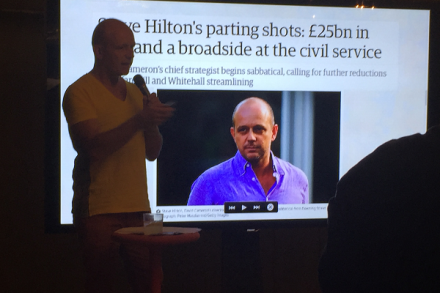
David Cameron's former director of strategy Steve Hilton is in town this week to promote his new book More Human. Mr S was a guest at the book launch in East London where Cameron was serenaded by a violinist while George Osborne and Ed Vaizey raised a glass in celebration of the tome. In his speech, Hilton couldn't help but offer his own verdict on the election, making sure to pay tribute to his former boss: 'I am very happy to say welcome Prime Minister. I think the real reason this book is helpful to the Prime Minister is that he can actually say "see, see what I had to put up with all those years".

Steve Hilton returns to the British political scene

In 2012, Steve Hilton quit his role as David Cameron’s senior adviser in frustration at the compromises of coalition and the slow pace of reform. Since then, he has maintained an almost total vow of silence on British politics. He had no desire to say anything that could be turned into a tricky headline for the Tories. But with the Tories having won the election—and with a majority—Hilton is dipping his toe back in the British political water. As well as doing various events to promote his new book More Human, he is also joining the Cameroon think tank Policy Exchange as a visiting scholar.

Dominic Cummings (who ought to know) is not impressed by Michael Barber, Tony Blair’s former adviser and self-styled ‘delivery man’

In 2001, Tony Blair took Sir Michael Barber from his perch as special adviser in the Department for Education and brought him into Downing Street. Once there Barber set up Blair’s ‘Delivery Unit’ and oversaw his attempts to reform public services. He then moved to the McKinsey consultancy where he cloned his unit for governments around the world. He has now written a book, How to Run a Government, about what he calls ‘deliverology’ — an ‘emerging science of delivery’. It is part memoir and part a ‘how to’ manual describing ‘a set of processes that enables governments to deliver ambitious goals’.

Farewell WebCameron, and the legacy of Steve Hilton

The Tories’ attempts to erase their own online history are wider than first thought. After ‘cleaning up’ their website by hiding pre-2010 speeches and announcements, The Guardian’s Alex Hern reveals that the WebCameron videos have been made private on YouTube: ‘Now it has emerged that every video on the Conservatives' YouTube page that dates from before 2010 has been removed or marked as private. Videos such as Ask David Cameron: Shared ownership, EU referendum, PMQs are now marked as unavailable on YouTube. Others, such as Boris Johnson at the pre-election rally in Swindon, and David Cameron down on the farm, are now unlisted, ensuring that only users with a direct link can see them.

Look who’s back: Steve Hilton returns to help with Cameron’s conference speech

When Steve Hilton left Downing Street he regarded his friend David Cameron’s premiership as a disappointment. As Matt d’Ancona reports, Hilton regarded Cameron as ‘reactive not transformative’. When he didn’t return at the end of his sabbatical, it was thought that was that. But for the last few days, Hilton has been back. When Cameron asked him to come and help on his conference speech, their old friendship kicked in and Hilton flew back from California. He was one of five people who hunkered down with Cameron at Chequers from Tuesday to Wednesday evening to work out how the Tory leader should respond to Miliband.

Frank Field interview: Labour needs to do something dramatic to win back its lost working class voters

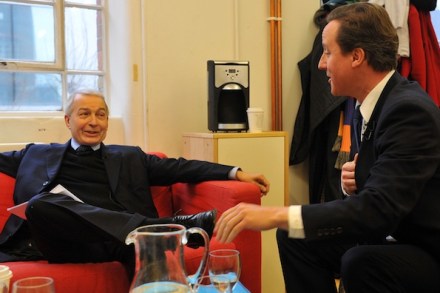
There's one government adviser who still feels Steve Hilton's absence very keenly indeed. 'He was always thinking ahead, how do we set the debate rather than endlessly react to it, that was why he was such a delight to work for. All the time he was racing ahead. It was difficult to keep up with him. I just thought he was brilliant, he was just wonderful.' But it's not a Tory MP or spinner who is missing the Prime Minister's 'blue-sky' guru: this adviser is Labour MP Frank Field, appointed by the government when it formed to work with David Cameron on how to tackle poverty. He suspects that it was Hilton's departure that led to the review that he painstakingly compiled gathering dust on a Number 10 shelf, allegedly unread.

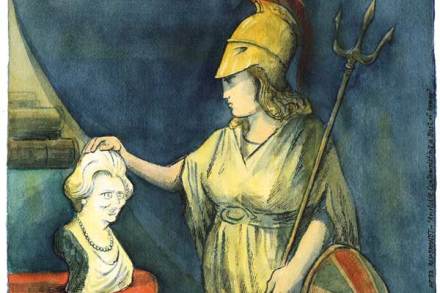
Cecil Parkinson, Charles Powell, John Simpson and Steve Hilton remember Margaret Thatcher

Cecil Parkinson: Underestimated – but unbowed Even among Mrs Thatcher’s original shadow Cabinet, there were those who simply did not believe that she would be capable of dealing with the problems of a declining country. To a man they were wrong. Each underestimated the determination of Margaret Thatcher. She did not regard the manifesto on which she had been elected as a set of pledges designed merely to win an election and to be abandoned when the going got tough. She intended to honour hers: to reduce the role of the state; to transfer power to the people. Trade union members were given the right to elect their leaders at regular intervals and to vote before being called out on strike.