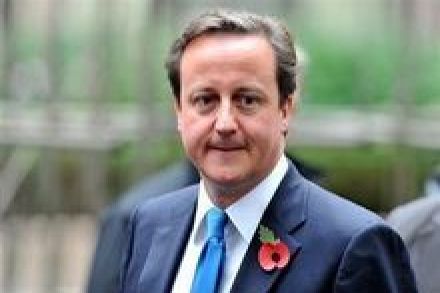
Steve hilton

Exclusive: The BBC to apologise for wronging Tyrie

Here's one for newswatchers: a lesser spotted on-air apology from the BBC. During the Conservative Party conference, you may remember, they purported to show footage of Steve Hilton taking Andrew Tyrie into a corner to persuade him of the government's line. But they are about to publicly admit, during the 5pm bulletin on the BBC News Channel, that they misrepresented what actually happened — and they're sorry about it. Peter Oborne detailed the misrepresentation in his column last week; drawing attention to the clarifying blog post that the BBC's James Landale graciously wrote on the matter, two weeks ago.

Tory Policy Refresh Strategy Unveiled

Courtesy of Ian Martin and Steve Hilton Stewart Pearson from The Thick of It. All too plausible: Monday Lock-in with the Weather Guys, our team of digital analysts plotting cultural climate change. Useful prep for the forthcoming Media Policy Refresh. Aiming to roll this out after Christmas, when everyone's more receptive to notions of shrinkage, frugality, Less Is More etc. Rethinking points already emerging. The Quango is dead. Long live The Hub. Out: "public consultation". In: "forward niche matrixing". Goodbye, tropegeist. Hello, Pixelated Society. Quick fruit lunch, then we're back on the synapse highway. More rethinking points: triangulations, forecasts, aftercasts, podcasts. Now we're mantra-sifting: Sympathise, Empathise, Synthesise, Synergise. Synergy?

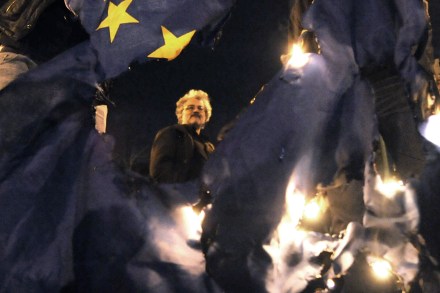
Europe’s new battlefield

The long flight from Australia should give David Cameron plenty time to think about Europe, and how it just won't go away. He didn't want this battle — not now, not ever. But in the Daily Telegraph today, the first in what will be a weekly column, I lay out the battlefield that awaits him on his return. First, this bailout is not the end. A trillion Euros needs to come from somewhere, and today the Chinese are being tapped up — God knows what we'll agree to in return. But that doesn't address what is, as Mervyn King has said, a solvency issue rather than a liquidity issue. And the tighter these Eurozone countries squeeze together, the more tension we can expect.

The Live Aid Tories

If one hype video was weird, the other shown to delegates in Manchester this afternoon (but designed to be seen on blogs and Facebook and so on) was good politics in the service of a good cause. Or, if you really must, vice versa. As Matt d'Ancona tweeted, the Cameroons aren't just Maggie's children, they're  Live Aid kids as well...

Steve Hilton is still in the building…

I'm not sure I'm sure what this video, shown to the party conference waiting for David Cameron's speech this afternoon, is actually about but it's not the kind of thing you'd have seen in the Lady's day. That is the point of it and it's supposed, I suppose, to be posted on blogs and social media and so on to remind people that the Cameroons aren't your daddy's Tories. It's probably a post-riots thing too. Or something. There was an appeal for aid to famine-struk East Africa too. Again, the point of this is to allow the Tories to move right in other areas.

The romance isn’t dead on Downing Street

Westminster, today, is all a-titter about an anecdote contained within this FT article about Steve Hilton. It is, it must be said, a good 'un: "Mr Hilton’s crusade against employment legislation also saw him suggest that Mr Cameron just ignore European labour regulations on temporary workers, prompting an exasperated exchange with Jeremy Heywood, Downing Street’s permanent secretary. 'Steve asked why the PM had to obey the law,' said one Whitehall insider of a meeting in March to discuss the government’s growth strategy. 'Jeremy had to explain that if David Cameron breaks the law he could be put in prison.

Roadblocked to death?

You may doubt that Downing Street is doing much politics beyond the phone hacking saga at the moment — but it is. The coming week will see the launch of the long-awaited, much-delayed public services White Paper, which is intended to set the framework for more or less every service we receive from the state. You may remember that Cameron heralded it with an article for the Telegraph back in February. Then, he suggested that private and charitable providers would be as privileged as state ones, writing both that, "we will create a new presumption that public services should be open to a range of providers competing to offer a better service," and that, "the state will have to justify why it should ever operate a monopoly.

Hague has been vindicated on the euro

The Foreign Secretary finds himself in the rather unique position today of trying to deal with the consequences of a crisis that he largely predicted. In May 1998, William Hague gave a speech warning that the single currency would lead to social unrest as governments tried to cope with one size fits all interest rates. It is a reminder of how much Hague was swimming against the tide of bien-pensant opinion that Michael Heseltine claimed this prediction was so extreme as to drive the Tories off the centre ground. But what is, perhaps, more interesting than Hague’s vindicated view that the euro, in a crisis, would be the ‘economic equivalent of a burning building with no exits’ is his view on how European governments would resolve the problem.

Our politicians need to look beyond Europe

In Britain, public sector strikes always bring with them the whiff of national decline. They are a reminder of a time when the country was becoming less and less competitive and the civil service regarded its job as the management of decline, a mindset only broken by the Thatcher government.   But today Britain faces a choice almost as acute as the one it faced in the late 1970s. Is this country content with declining slightly less quickly than the continent of Europe as a whole, or does it want to equip itself for a new world in which economic power is moving east?   It is in this context that the debate about the EU needs to be seen.

Hilton will probably ride it out

Not for the first time, a throwaway line in a Spectator article by James Forsyth has been picked up by Fleet St and set the hares running. It's about Steve Hilton, Cameron's best friend and chief strategist, and whether he'll quit. Hilton is a man in a hurry — rightly, in my view, as the Tories are not incapable of blowing the next election. So he wants things transformed, and — for all his faults — acutely feels the sense of urgency and tries to communicate it through government. The Whitehall machine (and, more specifically, the permanent secretary of No.10) does not share this urgency and waters down change. It poses a grave risk. Cameron's mission to change Britain could be over, before it begins.

Milburn withdraws the Blairite seal of approval

Alan Milburn's article for the Telegraph this morning is a rhetorical blitzkreig against the coalition and their NHS reforms. From its opening shot that "The Government health reforms are the biggest car crash in NHS history," to its closing call for Labour to "restake its claim to be the party of progressive, radical reform," it is searing stuff. And no-one is spared, least of all Andrew Lansley and his "foolish bout of policy-wonking". Such fierce language is unusual, even by the standards of cross-party rough 'n' tumble. What makes it extraordinary is that Milburn is employed by the government to work on their social mobility agenda. The coalition's last report on the matter even expanded and prolonged his role.

Lansley’s original reforms are off the table

Nick Clegg’s speech on the NHS this morning was not as bad as many feared it would be. It recognised that there is a role for competition in the NHS, something that the Lib Dems were questioning last weekend, and that the NHS needs to be opened up to any qualified provider. But, on the other hand, the idea that any willing provider should be able to deliver NHS services — an idea which was in the manifesto of all three parties — will now only be introduced at a glacial pace. There’ll also be a two-tier NHS for the foreseeable future with some areas having GP-led commissioning, while NHS managers continue to do it in other parts of the country. And Monitor will not be able to enforce competition.

Calamity may lead to concessions for Clegg

If the expected happens today, the political debate will rapidly move to whether Cameron should offer some concessions to Clegg to bolster his position. I hear there are two camps in Downing Street on this question with Steve Hilton a particularly ardent advocate of the no more concessions line.   Hilton’s position may surprise some but makes sense when you consider how his public service reform programme has, as Ben Brogan writes today, already been diluted for political reasons.    My current expectation is that there won’t be many concessions to Clegg. One well placed Tory told me last night that "Clegg picked the question and the date. He can have no complaints.

Cameron’s back is against the wall – now he must fight

Given that David Cameron will have a tougher fight than perhaps any postwar Prime Minister other than Thatcher, it’s a bit unfortunate that his team doesn’t like political combat. Losing to Rachel Johnson over forests last week exposed major weaknesses, and sent a message to the government’s enemies: that these guys have pretty poor political combat skills. Now word is out, the cuts protests in Liverpool today will be the first in a series of challenges. Cameron, too, is stung by the avoidable mistakes of the last few weeks – and is reshaping No.10 to account for them. Some changes are great, some less so, others downright worrying. Here's my overview: 1. The Big Society. Cameron has started from first principles.

The big-society counter-offensive

Last week Steve Hilton set up a war room in Downing Street. In daily meetings, Hilton plotted the ‘big society’ fight-back that started today with Cameron’s op-ed in The Observer. Hilton, who is predominant in Downing Street at the moment, knows that Cameron will never u-turn on the big society. It is what the Prime Minister thinks defines him as a politician. Cameron is desperate to be seen as more than a deficit hawk and the big society is what he wants to be his legacy. The big society is sailing into quite a headwind.

Body blow for the Big Society

A major setback has befallen David Cameron’s Big Society. One of the four pilot schemes opened by Cameron as the ‘vanguard of the Big Society’ last autumn has fallen under a barrage of government cuts. Using unaffordable start-up costs as an excuse (although unidentified structural impediments were also mentioned), senior councillors of Labour controlled Liverpool Council have insisted that the scheme be curtailed immediately. Courtesy of Andrew Sparrow, the Liverpool Echo has the story. To dismiss the council’s decision as politically motivated would be transparent. Naturally, politics lurks behind the scenes; but this is an acute embarrassment for the Prime Minister.

Sizing up the runners and riders to replace Coulson

I suspect the identity of the Prime Minister's next director of communications is of far more interest to those who work in Westminster than those in the country at large. But the identity of Coulson's successor will reveal something about the balance of power in the coalition and at the Cameron court. I'm told that the Tories are in no rush to make the appointment, they'd rather take their time and try and find the right person. Despite what Nick Clegg said on Marr this morning, I'm informed that this will be very much a Tory-run selection process. Those in the know say that as with the Coulson appointment, George Osborne will play the crucial role.

Why Coulson’s departure matters

Courtesy of the ConHome tag team of Paul Goodman and Tim Montgomerie, two articles that are worth adding to your Saturday reading list. Both capture why Andy Coulson's resignation matters, if not to the general swell of British politics, at least to internal operations in Coalitionville. The wider argument of Paul's article for the Guardian is captured by its headline: "Andy Couslon had a nose for the view of the aspirational voter." But it also homes in on the point that Coulson's departure tilts No.10 in favour of Steve Hilton – something that, rightly or wrongly, will bother the Tory right far more than it does Lib Dems of any persuasion. The obvious question is whether David Cameron will choose to correct than tilt, or maintain it.

Stop dreaming of Leo McGarry

The West Wing has an amazing hold over Fleet Street. The TV series has not only taught a generation of British reporters about US politics but even influenced the way that they see the workings of Westminster. Every time centre-right writers think David Cameron is seen as having made a mistake - mistreated his back-benchers, hired a personal photographer or made a foreign policy gaffe - they trot out the same refrain: No 10 needs a powerful Leo McGarry-type chief of staff who can bring the various parts of the operation together from Steve Hilton's work to Andy Coulson' operation. An enforcer, a puller-togetherer. I have three arguments against a British Leo McGarry.

Cameron the optimist

Is David Cameron just too nice? There are worse accusations to levy at a politician, but it's one I have heard suggested quite a lot recently - and I have written about it in my News of the World column today. He seems to have adopted the politics of wishful thinking. There is a "zip-a-dee-do-dah strategy" and precious little contingency if things go wrong. He makes defence cuts, because he doesn't intend to go on a massive deployment (neither did Woodrow Wilson). He will make prison cuts, because he thinks - bless him - that it won't increase crime. He signs a deal with French for military co-operation, thinking they will dump the habit of 500-years and actually agree with Britain on the next major foreign policy dispute.