Spain

Down Santiago way

From our US edition

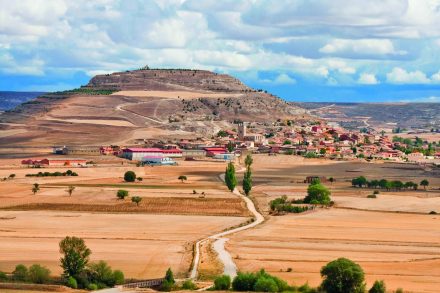
Hiking toward the Spanish border on my second day after setting off from Bayonne, I set down my backpack on a grassy patch beside a beach. It was bloody hot — August in the southwest of France — and the sight of beachgoers taking a shower had a cooling appeal. I stripped to my underwear and enjoyed the bracing shower burst. Then I looked down. Water was cascading over what looked like leprosy, breaking out over the right side of my chest. Feeling self-conscious, I got dressed and plodded on. Twenty-five miles later, at the sparkling city of San Sebastián, the pain proved too much. I lifted my shirt to two Portuguese pharmacists — and they pointed me toward the nearest hospital. I had herpes zoster, commonly known as shingles.
Camino

Sweet and sour: Barcelona Dreaming, by Rupert Thomson, reviewed

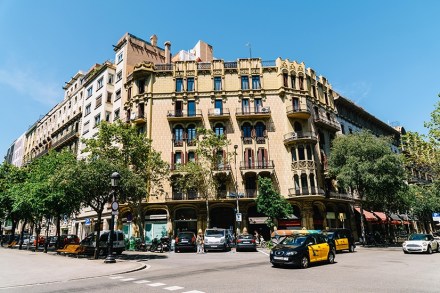
I’ve never been to Barcelona, but Rupert Thomson makes it feel like an old friend. The hot, airless nights and the car engines, ‘exhaust fumes mingled with frangipani’ and beneath the smell of jasmine ‘the stale, slightly medieval smell of drains’. Cafés con leche and jugs of caipirinha with wedges of lime and crushed ice. The clutter of pink-and-white buildings and the port, ‘the masts of boats swaying and clicking in the offshore breeze, the sunlight glassy, dazzling’. In places, those buildings give way to dusty wastelands — ‘areas like this were common in Barcelona’.

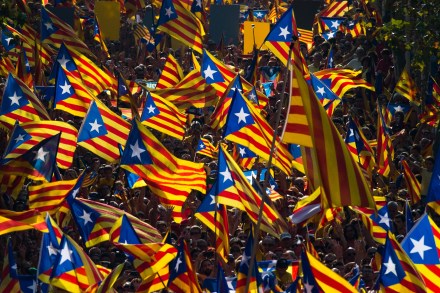
Spain’s pardoning of Catalan separatists may backfire

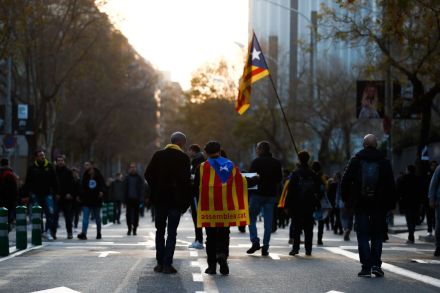
In one of his adventures on the highways of 17th-century Spain, Don Quixote encounters a gang of prisoners ‘manacled and strung together by the neck, like beads, on a great iron chain'. Undeterred by Sancho’s protestations that these are criminals on their way to serve as galley slaves in just punishment for their crimes, Don Quixote, declaring that it is his duty as a knight errant to provide ‘succour for the wretched’, fights off the guards and frees them. In something of the same spirit, Spain’s prime minister has just announced a pardon for Catalan separatist leaders. Nine politicians, serving sentences of up to 13 years for offences including sedition, are now to be released after almost four years in jail.

Gibraltar rocks on

From our US edition

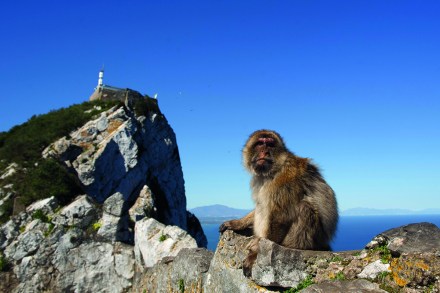
Tourists take the cable car to the Top of the Rock to pester the monkeys that live at the summit, but the best thing about this clifftop arena is the view. Standing on the cliff edge, gazing down at the big ships traversing the busy strait below, you realize what makes Gibraltar so important. Spain lies behind you, Morocco lies ahead. To your left is the Mediterranean and, on your right, the wild Atlantic. This is the bridgehead between Africa and Europe, the gateway between the Old World and the New. No wonder Britain has always been so determined to hold onto it. Whoever controls the Rock controls this narrow strait and all the traffic that passes through it, about a quarter of the world’s shipping.

gibraltar

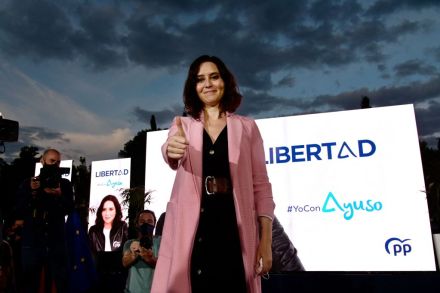
Is this a new dawn for the Spanish right?

In Tuesday’s regional elections in Madrid, the right-wing Partido Popular emerged as by far the most successful party, more than doubling its representation to win 65 of the 136 seats in the assembly. Isabel Díaz Ayuso, the 42-year-old local Partido Popular leader who was seeking re-election, won more seats than the three left-wing parties combined. Vox (13 seats), the most right-wing party on the Spanish political spectrum, has already promised Ayuso the support she needs in order to govern. Despite not quite delivering an outright majority, Ayuso’s bold decision to call the snap election has clearly paid off.

How I became Hispanic

From our US edition

Several years ago I applied for a teaching position in an American university. In response I received a lot of forms to fill out, including one that required me to identify my ‘ethnicity or race’. I hate to tell this to those of my liberal friends who relish historical analogies from 1930s Europe, but when I noted how black Americans were classified in the form —‘You are defined as Black even if only one of your parents was an African American’—the Nuremberg Race Laws came to mind. When I look at myself in the mirror, I see, even with a summer tan, a very white man. So I assumed it would be a waste of time to fill in the part about race on the form the university had sent me.

hispanic

Can Spain’s Europhilism last?

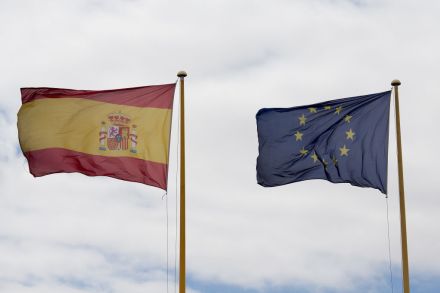
'Suppose a man be carried, whilst fast asleep, into a room where there is a person he longs to see and speak with; and be there locked fast in ... he awakes, and is glad to find himself in so desirable company, which he stays willingly in ... I ask, is not this stay voluntary? I think nobody will doubt it: and yet, being locked fast in, it is evident ... he has not freedom to be gone.' Happy in a room he cannot leave, the man John Locke imagined during his musings on free will might almost be a metaphor for contemporary Spain in the European Union. Awakening from the long sleep of Franco’s dictatorship, the Spanish people were delighted to find themselves in the EU where they had always wanted to be and where their country is now locked fast into the Eurozone.

Under the skin of Seville

From our US edition

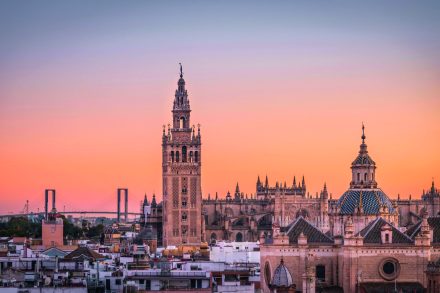
It was night when I arrived in Seville. A taxi took me through a maze of winding backstreets then came to an abrupt halt at the head of a pedestrian-only lane. ‘You’ll have to walk from here,’ said the driver. Uncertainly I dragged my suitcase down one dark alley after another, then suddenly came out onto a plaza lined with orange trees. Soaring above me, spotlit against the black sky, was the cathedral steeple. It was a breathtaking sight with its delicately latticed walls of golden stone, so tall I had to tip my head back to see the spire at the top. The cathedral stretched beside it, filling an entire block. Four hundred years have passed since Seville was the greatest and most glamorous city on earth, as glittering and alluring as New York City is today.

seville

MEPs have missed their chance to protect human rights

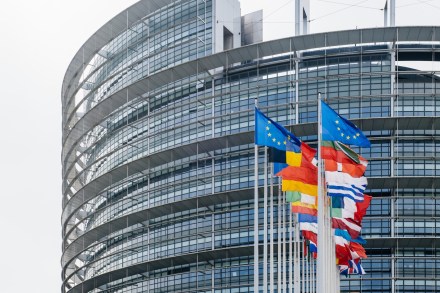
The European Parliament is always eager to lecture the world about human rights. To a degree, this annoys the world's despots and we should, of course, never underestimate how ‘sunlight is the best disinfectant’. But the Parliament’s overall influence on foreign affairs is still limited. On Tuesday, however, MEPs received an opportunity to actually make a difference when it came to protecting human rights. The European Parliament had to decide whether to lift the immunity of three Catalan nationalist MEPs – former Catalan government leader Carles Puigdemont and former ministers Antoni Comín and Clara Ponsatí – that are facing criminal charges in Spain for their roles in organising an independence referendum in 2017.

Spain’s anarchists are rioting

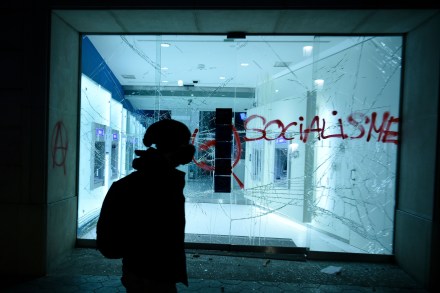
Michael Bakunin, the 19th century revolutionary Russian anarchist, identified Spain as the place where his creed was most likely to take root. In 1868, to get the ball rolling, Bakunin dispatched his disciple, Giuseppi Fanelli, to Spain. After some difficulty in raising the money for his train fare, Fanelli finally arrived in Madrid where he was introduced to a small group of printers who attended a working-class educational institute. Although Fanelli spoke only Italian and French and most of the print workers spoke only Spanish, his address made a dramatic impact. A shortage of money meant Fanelli could not stay long but he left behind copies of Bakunin's speeches. These were carefully studied and enthusiasm for anarchy was soon spreading like wild-fire through Spain.

Catalonia’s grievance culture

‘Scotland,’ declared the Times in 1856, is ‘manifestly a country in want of a grievance.’ The same could be said of Catalonia, which held regional elections this week. Catalonia spent much of the nineteenth century adding to its store of grievances. In 1885 a deputation of politicians travelled to Madrid in a fruitless attempt to interest Spain’s government in a comprehensive list of their region’s ‘greuges’ (Catalan for grievances). A century later the post-Franco democratic settlement for Catalonia attempted to right these historical wrongs once and for all by granting the region unprecedented powers of self-government. Since then Catalonia’s autonomy has increased even further.

Brexit Britain should take a stand on Venezuela

The United Kingdom has an opportunity to become a more significant player in Latin America while setting an example for other European countries. Venezuela is an important test case of how truly 'global' post-Brexit Britain wants to be. Latin America has not seen a meaningful British presence in over 100 years. In colonial times, Britain was one of the leading powers with interests, particularly in the West Indies. In the 1820s, it supported the independence movements from Spain and built trading relationships with the newly formed countries. After most British business interests were sold to fund the country’s efforts in world war one, Britain largely disappeared as a major player, with only occasional spikes in interest, such as the 1982 Falklands war.

Can Spain’s faith in the EU survive Covid?

According to ancient Moorish legend, when the world was created each land was given five wishes. Spain’s first four wishes – for clear skies, seas full of fish, good fruit, and beautiful women – were all granted, but the fifth, for good government, was denied on the grounds that to grant that too would create a paradise on earth. Certainly over the last couple of centuries, good government in Spain has tended to be conspicuous by its absence. Philosopher Ortega y Gasset summed up Spain’s tragic history and its desire to become more like the liberal democratic European countries in his famous phrase: 'Spain is the problem and Europe the solution.' It seems that many Spaniards agree: the European Union is widely regarded as an unquestionably good thing for Spain.

Spain’s transgender wars are turning nasty

Lidia Falcón O’Neill is a legendary figure in Spanish politics. Half a century ago, she stood up to Franco as head of a cell in the communist Unified Socialist Party of Catalonia. In 1974, this opposition led to her being brutally tortured: 'When she fainted they untied her and laid her on the ground. They woke her up with a bucket of water. … She stayed on the ground, wet, for hours, until they took her down to the cell. … On the sixth day, the torturers could not continue with the same sessions. They could no longer hang her on the wall because she was rapidly losing consciousness because of it. So, when she woke up, she kept getting punched and kicked while lying on the ground.

Will Spain’s nation of rogues comply with the curfew?

A few years ago, when I was in the queue to catch a plane, a Spanish lady caught me watching her as she surreptitiously removed a sticker from her hand luggage, which meant it would have been stored in the hold. ‘Los españoles somos muy pícaros’ (we Spaniards are real rogues) she told me with a smile of complicity and a rueful shake of the head. Spaniards sometimes point out with a touch of pride that it was their country which pioneered the picaresque novel – a literary genre which tells the story of an ingenious rascal who lives by his wits, sometimes on the wrong side of the law. My own experience is that Spaniards are no more rascally than other nationalities – but some of them like to think they are.

Is this the start of the lockdown rebellions?

We are frequently reminded of polls that show the majority of Brits supporting lockdown measures. In fact, often the public wants the government to go further than it has done. Local officials tend to reflect this sentiment. Mayors of two of the UK’s largest cities — London's Sadiq Khan and Manchester's Andy Burnham — have repeatedly accused the government of not going far enough with its Covid restrictions. But are attitudes starting to shift? While there’s little data available about the public’s adherence to Covid rules, some evidence is starting to build. A comprehensive study from UCL and Kings College London found that only a fraction of people who said they would self-isolate if required have actually done so.

The lockdown battle of Marseilles is a warning for Boris

From the vantage point of Downing Street, Boris Johnson may feel reassured that the further measures against Covid-19 he imposed this week, along with the extraordinary fines with which he has decided to enforce restrictions across the country, appear to have public support. Indeed, one poll suggested that upwards of 60 per cent of the population believe the government did not go far enough last week when it ordered pubs to close at 10 p.m. But the Prime Minister should not be fooled by that apparent backing. Before he commits himself to any further action he needs to look to Marseilles, where President Emmanuel Macron has come unstuck after trying to impose similar measures.

The finest Rioja in all of Spain

It had been a long and no doubt fractious sea voyage. The crew would have signed up for a variety of reasons: pay, adventure, escape from domestic ties — in some cases, no doubt, escape from the authorities. After ten weeks at sea, some of them would have doubted their judgment, if not indeed their very sanity. Then came the lookout’s cry: the Spanish for ‘Land ho’. Christopher Columbus had set forth to find a passage to China. Instead, he had discovered America, a new world, large parts of which would soon be known as New Spain. The 12th of October 1492, when that forgotten sailor announced that the world had moved on its axis, was one of the most important days in history.

Does Catalonia really want independence?

In 1714, after a long siege, Spain managed to regain control of Barcelona after the War of Spanish Succession. Catalan nationalists point to the day Barcelona fell, 11 September 1714, as the point when Madrid began to strip their homeland of its ancient privileges, and three centuries of subjugation and repression began. To remind everyone of the importance of the year 1714, Barcelona fans chant in favour of independence for Catalonia when the Camp Nou football stadium clock shows that 17 minutes and 14 seconds of a match have passed. Meanwhile the day itself, 11 September, is commemorated every year as La Diada (‘The Day’), Catalonia’s national day.

Why poetry matters

Juan Carlos, ex-King of Spain, behaved foolishly in relation to money and sex, and so his decision to leave Spain is sad, but justified. That seems to be the view of most moderate people outside Spain who are not ill-disposed to the monarchy. But it is it right? Certainly Juan Carlos’s foolishness was real, but his imposed exile (it is not really voluntary) to the Dominican Republic is not a punishment for a crime: there has never been any legal process. It is a partisan political act which is bad for the unity of Spain. Juan Carlos’s exile was forced on the current King, his son Felipe VI, by a weak prime minister, the Socialist Pedro Sanchez.