Spain

A middle-aged man in crisis: How to Make a Bomb, by Rupert Thomson, reviewed

Philip Notman is going through what looks like a midlife crisis. Travelling home from an academic conference, he feels sick and disoriented to the point where he is barely able to function. Back in London, he can’t quite explain to his wife Anya, or indeed to himself, what’s ailing him. Is it just me, he wonders, or is everything unbearably toxic? Instead of working on his next book during a sabbatical, he sets off on a journey in search of a remedy. Rupert Thomson’s new novel has no full stops. In their place are paragraph breaks, with sentences abandoned on the page, increasing the sense of dislocation: Everything sick, he thought Everything in pain Starting from the title, the atmosphere grows increasingly ominous.

Do we really want to bring back the wolf?

Near our house on the Derbyshire-Staffordshire border is a place called Wolf Edge. It is a raven-haunted slope set to the sounds of curlew song in high spring and I visit it regularly, not least because I imagine that within the deep peat soil there is some remembrance of the site’s eponymous predator, and the thought thrills me. A similar emotion appears to have gripped Derek Gow, and has led him to locate, over several decades, as many references to British and Irish wolves as possible.

The rise of the ‘workation’

The biggest single driver of last year’s property boom was the surge in working from home. For many, the commute went from daily chore to occasional concern, enabling them to move to areas that previously seemed beyond reach, from the Cotswolds to Cornwall. But others have gone further still – swapping ‘work from home’ for ‘work from anywhere’. These digital nomads typically ditch the nine-to-five or find flexible employers to enable them to decamp to sunnier climes in the greyest months of the year. And during a winter of high energy bills and soaring living costs at home, the trend has been growing.

The divine Dalí and his ‘Christ’

From our US edition

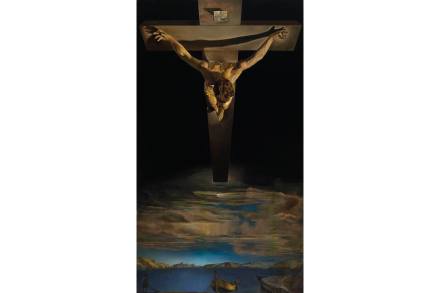
I arrived in the city of Figueres early one January morning to visit one of the most popular, and bizarre, art museums in the world, the Teatre-Museu Gala Salvador Dalí. It houses a dreamlike picture that, for the first time since it left over seventy years ago, has made a temporary return journey to Spain. Originally simply titled “The Christ,” the 1951 canvas depicting the giant figure of a man on a cross, shown at an overhead angle hovering over a moody seascape, was painted by the most famous son of Figueres, Salvador Dalí. Through April 30, it forms the centerpiece of a show exploring its creation, history, local connections and symbolism.

Dalí

A culinary tour of southern France and northern Spain

From our US edition

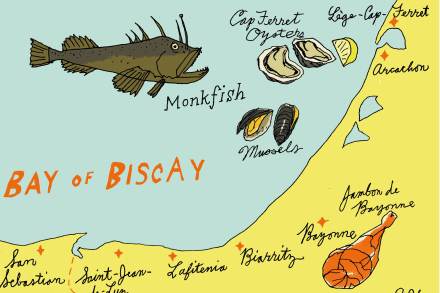
If I’d known what a whole monkfish looks like, I would never have ordered it. It was only weeks later that I saw a picture of the horrid creature: small, wicked eyes, prehistoric head, skin like rusty medieval armor and a gaping mouth overflowing with jagged teeth. Truly the stuff of nightmares. We’d popped over the border from France into San Sebastián, Spain, for a bite of dinner, selecting a spot a stone’s throw from the Baroque exuberance of Santa Maria del Coro. The daily special was monkfish, and for some reason — perhaps an excess of sun that day — the image that came to mind was, inaccurately, that of the innocent red mullet. The daily special in a fishing town is bound to be fresh, so it seemed fair to give it a try.

france

A fairytale wedding in Mallorca

From our US edition

“You are Kevin?” “Pardon?” Embarking on a solo week driving around Mallorca, then losing my drivers license in transit? Not my finest hour. A fairytale wedding near the citrus grove-laden seaside town of Sollér brought me to the largest island of the Baleriacs. A chest infection, some big deadlines and three hotels to review an hour’s drive south of the venue inspired me to hire a car, so I could pootle around at my own pace. I realized my problem in Barcelona, waiting for my connecting flight. Paying for a coffee, I spotted my license was missing. I’d booked via OMIO (a journey planning site that pulls together trains, planes, ferries and coaches — I love that thing), which I quickly consulted to confirm the dearth of public transport on the island.

vida mallorca

Portrait of the week: Dorries finally quits, Braverman cracks down on crime and Prigozhin is confirmed dead

Home Suella Braverman, the Home Secretary, told police that they must investigate every theft and follow all reasonable leads to catch criminals; the Police Federation of England and Wales said forces were already ‘stretched beyond human limits’. Home Office figures showed that only 3.9 per cent of residential burglaries resulted in someone being charged, and for thefts from the person it was 0.9 per cent. Hartwig Fischer resigned as the director of the British Museum and Jonathan Williams stepped aside as his deputy when it became clear that information about 1,500 or so missing objects had been wrongly dismissed; police continued investigations.

England need to look alive to have a shot at the Rugby World Cup

So the end is near... or it certainly will be soon if England’s rugby players carry on trying to do it their way. One thing we can be certain about: England are not going to win the World Cup. There is a chance they might not get out of their group; Argentina are properly good and Samoa will be hard to beat. Even Japan could give England the run-around, though they are not the team they were. At this rate, England might finish up even lower than eighth – their current position in the rankings – come the end of the tournament. Time for rugby’s answer to ‘Bazball’. Not to go and smash everything and everyone they see, but to play with freedom and joy. Pass the ball, look for space, play tricks, play fast, play without a care in the world.

The demands and joys of contemporary art 

From our US edition

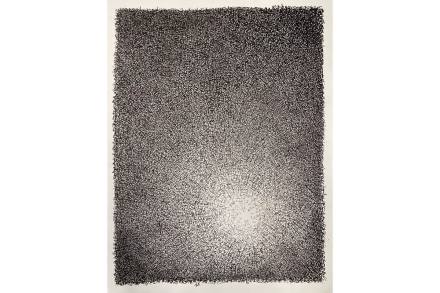
The career of artist Alberto Guerrero has been driven by an overarching desire to look for what is behind everything that we merely, and only dimly, perceive at present. The work of the forty-something Madrid-based Guerrero ranges from abstract, highly textured canvases and three-dimensional images which he calls “spherical paintings” to realistic presentations of daily life — such as his illustrated book Diary of a Quarantine showing life in the Guerrero household during Covid — and deeply reflective images of sacred art. There are few contemporary artists who have such a broad range and vision.

Guerrero

The ‘historic’ national dishes which turn out to be artful PR exercises

In 1889, Raffaele Esposito, the owner of a pizzeria on the edge of Naples’s Spanish Quarter, delivered three pizzas to Queen Margherita, including one of his own invention with tomatoes, mozzarella and basil, their colours taken together resembling the Tricolore. The Italian queen loved the pizza, and Esposito duly named it after her. In that restaurant today hangs a document from the royal household, dated 1889, declaring the pizzas made by Esposito to be found excellent by the queen. And so was born the Pizza Margherita, a dish now synonymous with Naples. The queen’s seal of approval in the wake of Italian unification, which had proved difficult for Naples, came to represent the embracing by the governing royal family of an impoverished city by way of their cheapest street food.

How to survive summer in Andalusia

Early on in his biography of the novelist Kingsley Amis, Zachary Leader quotes a hilariously misanthropic letter Amis wrote to the poet Philip Larkin, one of his closest friends. Amis, at the time in his early thirties, was complaining about a three-month stint he and his family – including his son Martin, then five years old - spent abroad, as required by the terms of the Somerset Maugham Prize, which he won in 1955 for his first novel, Lucky Jim (Martin would also win it in 1973 for his debut, The Rachel Papers).

Is Amber Heard staging a subtle comeback?

From our US edition

In just one short year, Amber Heard has transformed from arguably the most hated woman on the planet to some kind of new and improved Spanish celebrity. Amber moved to Madrid months after she was sued by her ex-husband, Johnny Depp, for defamation. In a viral TikTok video, Heard answers questions from reporters, saying in Spanish, "I love Spain so much."  When they asked if she plans on staying, she replied, "Yes, I hope so. Yes, I love living here." After being asked if she has movie projects on the horizon, she says yes and adds, "I move on. That's life." It turns out that exiling yourself to a new country for privacy can be an effective PR strategy. Take note, Harry and Meghan.

depp amber heard

A dispatch from the olive oil capital of the world

From our US edition

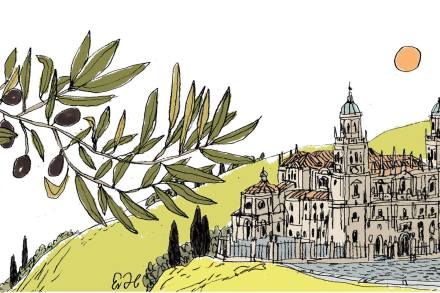
It was an extraordinary sight. For three days, and about seventy kilometers of hiking, there were just endless olive trees covering the fields, hills and mountains stretching to the horizon of the small Spanish province of Jaén. Tucked away in the southern region of Andalusia, this is the country’s powerhouse of olive-oil production. Many people assume Italy or Greece are the largest producers of olive oil. That’s a result of good branding and name recognition, a Jaén-based olive grower told me. After he pulled up alongside me in his dusty car, we walked through the endless olive groves as I was given a tutorial on olive oil production. Spain is the world’s top producer of olive oil.

olive oil

The Franco-Prussian war changed the map of Europe – so why are we so ignorant about it?

Is there a single major European conflict of the past 200 years that gets so little attention in this country as the Franco-Prussian War of 1870-71? In 1961 Michael Howard brought out his history of the war, but Howard and the odd battlefield tourist apart, Rachel Chrastil’s bibliography – strong on contemporary memoirs, strong in fact on everything from the miraculous appearances of the Virgin Mary and the cult of St Radegund to the transmission of smallpox – is curiously thin when it comes to British interest.

Tinta de Toro: the Spanish red that helped Columbus make waves

I am assured that this is not a legend. But a few years ago, an Irishman’s life was twice saved by a raging bull. The Irish fellow was running with the bulls at a town near Pamplona. He tripped and was virtually impaled. The bull’s horn went into one side of the chap’s stomach and out of the other. He was rushed to a neighbouring hospital, which was accustomed to bull wounds, and the surgeons saved his life. While they were doing so, the aeroplane that he should have been catching took off. There were no survivors. Fifteen years later, the Irishman developed gut rot. One doctor wondered whether scar tissue from the horn wound might be causing the problem. So the patient was opened up. Scar tissue was indeed present and was excised, as was pancreatic cancer at a very early stage.

The other side of flamenco

When you hear the word flamenco you probably think of a lady dancing in a polka-dot dress, stomping her feet, accompanied by guitars and singing. And in the fair capital of Andalucía, Seville, you would have no problem finding such a sight. All across the old town, around the cathedral and in the lee of its 12-century minaret turned cathedral bell-tower, glamorous flamenco dancers are busy at it, stirring up passion on the cobbled streets and in the city-centre tourist shows. There’s no denying such flamenco demonstrations will raise your pulse and the tourists, not surprisingly, love them.

When Salvador Dalí met Alice Cooper

From our US edition

It was the ultimate summit between the two kings of pop-art camp, and one of the weirdest celebrity encounters even by the standards of 1970s New York. Salvador Dalí might have been the century’s most notorious modernist, but by the spring of 1973, when he was turning sixty-nine, his reign as the high priest of surrealism had descended into self-parody. Paintings such as his 1931 “The Persistence of Memory,” with its array of limp watches set in a barren landscape, had once sharply polarized critical opinion. For years, people saw Dalí either as a beacon of intellectual and emotional freedom, or as a madman who was more interested in money than art.

salvador dalí alice cooper

Drinking with Picasso

From our US edition

In February 1900, a critically acclaimed art exhibition went up at a Barcelona café called Els Quatre Gats. It was neither the first nor the last show mounted at the establishment, a popular drinking spot for avant-garde artists, writers and others. It was, however, the very first solo outing for one of the café’s regular patrons: a brash nineteen-year-old local art student named Pablo Ruiz Picasso. It has now been fifty years since Picasso died, on April 8, 1973, and even as that anniversary is being commemorated worldwide with new exhibitions and publications, he has never really faded from public consciousness. His art and even personal objects associated with him are avidly collected, and he continues to inspire filmmakers, musicians and other artists.

picasso

There’s a sherry for everyone

From our US edition

On cold nights, a zesty margarita just isn’t going to cut it. You need a bolder tipple: a glass of sherry, the fortified wine favored by retired generals, members of the Diogenes Club and Ordinariate priests swotting up on Thomas Aquinas for the next Sunday sermon. It’s an appropriate drink with which to reflect on the complexity of life itself. You can go from the crispest blanco sherry, through a series of progressively richer flavors, to the most moreish dulce rum-colored sherry. When I passed through Jerez de la Frontera in southern Spain’s Andalucía region, every bar was jammed with great quantities and varieties of sherry. I had stumbled — literally, as I was hiking a hundred miles of the Camino from the coastal city of Cádiz to Seville — upon the Mecca of sherry.

The unique style of Seville

If you want to feel scruffy, head to Seville, the outrageously attractive capital city of southern Spain’s Andalucia region. It’s not just the abundant exquisite architecture – the city has one of the largest historic ‘old towns’ in Europe, with every bar, café and restaurant looking tiptop – but also the sartorial elegance that abounds among the local population, made even more striking by it coexisting in apparent easygoing harmony with the often plain awful turnout of us tourists and visitors. If Santiago de Compostela in north-western Spain is the city of rucksacks and walking sticks, then Seville – currently Google’s most searched-for flight-only destination – is the city of smart shirts.