Spain

The Ceuta crisis isn’t over

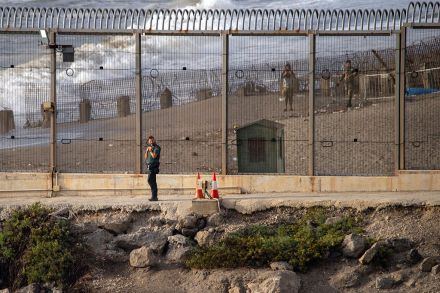
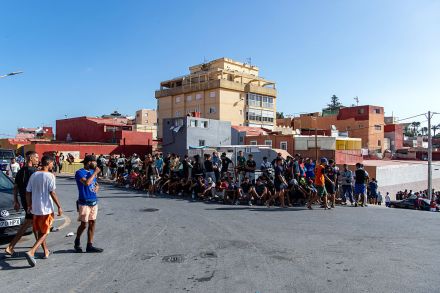
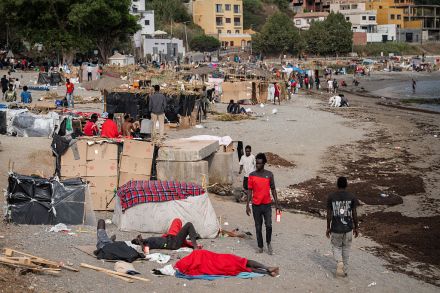
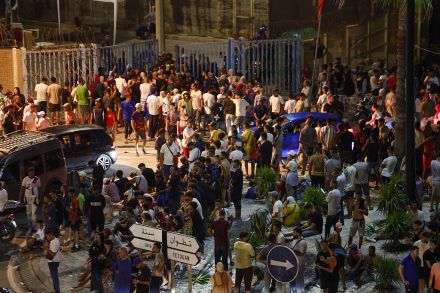
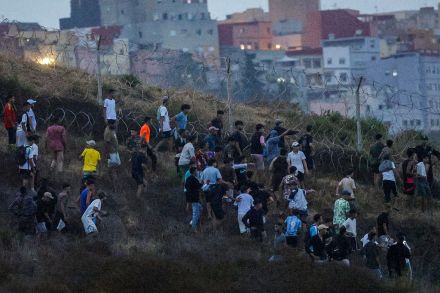
On July 30 and 31 around 80,000 migrants entered Ceuta from Morocco, according to the Spanish government’s latest estimate. Roughly 90 percent have since gone back. But, according to the government’s estimate, somewhere between 7,000 and 9,000 remain in the Spanish city whose normal population is 83,000. Ceuta’s authorities believe the figure may be as high as 11,000. At least 83 bodies connected with the crossing have been recovered on the Spanish side of the border. Morocco officially acknowledges another 14 deaths but humanitarian organizations have estimated that in total more than 140 people have died since the border was breached.

ceuta

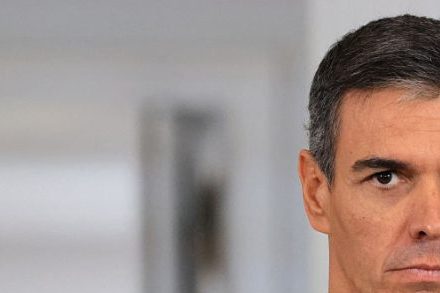
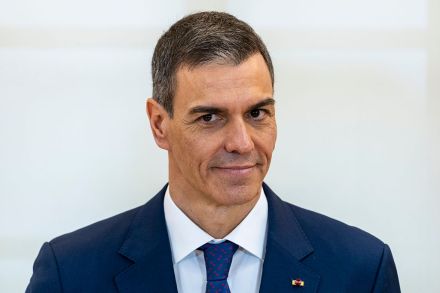
Pedro Sánchez is stubbornly clinging on to power

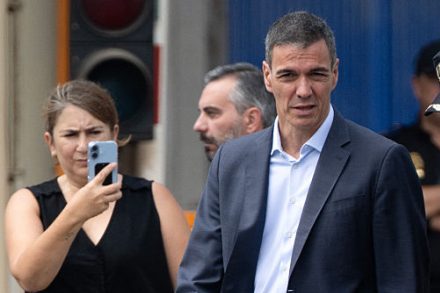
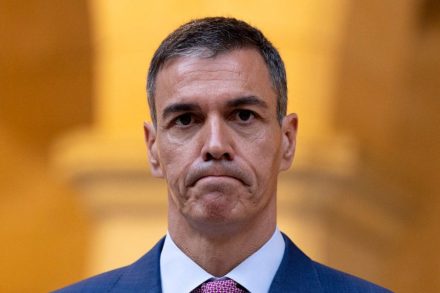
With Spain still reeling from the extraordinary scenes in Ceuta, the country's Socialist Prime Minister Pedro Sánchez has decamped to La Mareta, the government’s palatial retreat on Lanzarote. Before beginning his holiday, he made a brief visit to the exclave, where, according to Madrid, some 72,000 migrants crossed from Morocco and the local authorities say 88 bodies were recovered. Nearly a week later, Ceuta’s government says 3,000 to 5,000 migrants remain; Madrid puts the figure at 2,500. Around 400 are still living on El Trampolín beach, sheltering under blankets and makeshift structures. Food and water are now being distributed, but provision has been patchy: some say they went up to five days without food. Sanitation remains rudimentary.

pedro sánchez

Portrait of the week: Drought declared, Manchester elects new mayor and 70,000 enter Ceuta 

Home In 19 English counties 1mm or less rain fell in July. Tom Bradshaw, the president of the National Farmers’ Union, said that yields of wheat and oats were ‘very, very poor’. Fire affected 375 acres of Suffolk at Dunwich Heath. Shell agreed to sell its European onshore renewables arm, including solar farms, to France’s TotalEnergies. BP’s profits rose to the highest since 2022, after the war in the Middle East pushed up oil prices. BP put its UK offshore oil and gas business up for sale. A trial by researchers at King’s College London started recruiting 220 children aged 11 to 16 to assess puberty blockers after the High Court rejected a legal challenge.

Europe should not learn the wrong lessons from Ceuta

Europe risks learning precisely the wrong lessons from the latest crisis in Ceuta.What unfolded on Spain’s North African border was not one crisis but two. They are closely connected, yet fundamentally different. Failing to distinguish between them risks misunderstanding both, and, ultimately, repeating them. The first concerns Morocco’s long-established use of migration as an instrument of political coercion against Spain. The second concerns the Spanish government’s own approach to immigration and the wider consequences that approach may have for the European Union. Only by separating these two issues can Europe hope to address either successfully.

We should call the Ceuta border breach an invasion

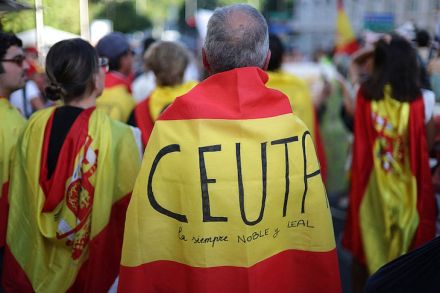
Spain was invaded yesterday. There is no other way to put it. Close to 50,000 foreigners, mostly men, swarmed into Spanish territory and laughed and jeered as they went. Every generation before ours would have called that an invasion, and we should too. The era of euphemism is over. The left’s house of lies has fallen. We can all now see with our own eyes that our nations are being overwhelmed by cocky, often hostile men from afar. It isn’t only Spain’s sovereign integrity that lies in tatters following the storming of Ceuta – so does the tyranny of euphemism we’ve all been forced to labor under these past few years The footage from Ceuta is extraordinary – throngs of foreigners, mostly men from Morocco, gatecrashed an enclave of the Spanish kingdom.

ceuta

Spain’s response to wildfires has been infuriating

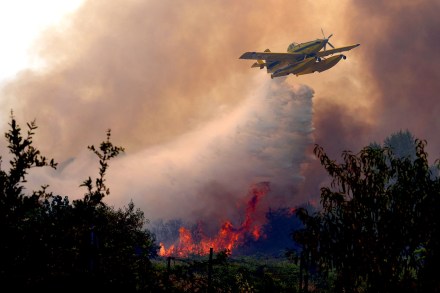
From my home in Ávila I usually have a splendid view of the ancient town’s medieval walls. But yesterday morning the wind changed direction and they were largely obscured by a pall of wildfire smoke. The town hall issued health advice and recommended closing windows. But I’m among the fortunate. Everyone in Burgohondo, 25 miles south of Ávila, has been evacuated. It is the village my wife’s family comes from, and where the fire started. Across the region, tens of thousands have already been forced to leave their homes. And the forecast is ominous. Last year I suggested that Spain’s summer fires are made so frequent and destructive by long, hot, dry summers and by rural depopulation, with the resulting abandonment of farming and grazing.

spain wildfires

Celebrating American independence… in Cuba

From our US edition

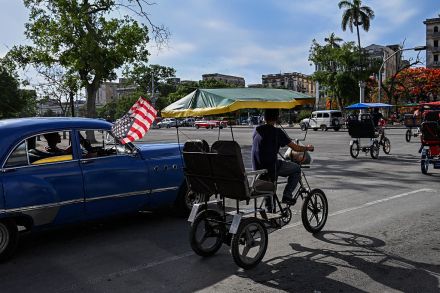
The US ambassador’s residence in Havana has a beautiful garden that steps down past a blue fountain to a hole in the hedge containing an eagle with spread wings. It’s a lovely place for a party. The trouble is, given the current state of relations between Cuba and the US, cocktails have become a continuation of politics by other means. The embassy invites people who disagree with Cuba’s communist government, and Cuba’s interior ministry stops them from coming. The eagle is pertinent. It once stood atop the monument to the USS Maine, a warship that blew up in Havana harbor in 1898, killing 266 sailors. It seems to have been a terrible accident, but the then-assistant navy secretary, Teddy Roosevelt, blamed Cuba’s then-colonial master, Spain.

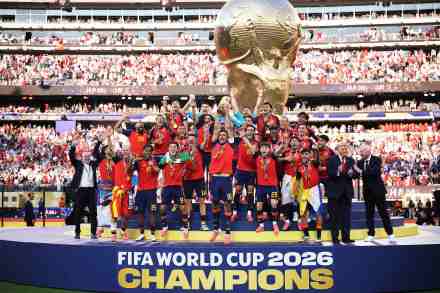
Spain has reinvented soccer

There is something intimidating about sporting royalty in the stands. At many great clubs, retired legends seem almost gargoyle-like, perched high above the pitch, judging those sent to inherit their legacy. Manchester United have long played beneath the watchful gaze of Sir Alex Ferguson; other clubs have their own ghosts. Spain’s World Cup triumph offered a different spectacle. As the Spanish greats of the past – from David Villa to Iker Casillas – watched Lamine Yamal, Rodri and co defeat reigning champions Argentina, they resembled something more saintly; a reassuring reminder of Spanish supremacy. It was a far cry from the shaking head of Ronaldo watching yet another Brazilian disappointment or protestations of England’s World Cup alumni.

spain

Spain has reinvented football

There is something intimidating about sporting royalty in the stands. At many great clubs, retired legends seem almost gargoyle-like, perched high above the pitch, judging those sent to inherit their legacy. Manchester United have long played beneath the watchful gaze of Sir Alex Ferguson; other clubs have their own ghosts. Spain’s World Cup triumph offered a different spectacle. As the Spanish greats of the past – from David Villa to Iker Casillas – watched Lamine Yamal, Rodri and co defeat reigning champions Argentina, they resembled something more saintly; a reassuring reminder of Spanish supremacy. It was a far cry from the shaking head of Ronaldo watching yet another Brazilian disappointment or protestations of England’s World Cup alumni.

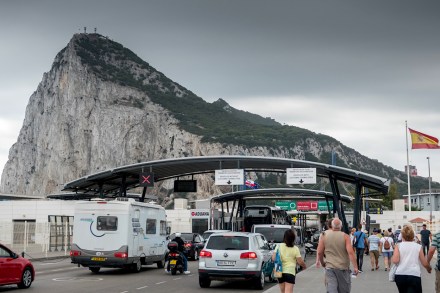
Could Gibraltar fall to Spain?

Key parts of the post-Brexit treaty that provides for a fluid border between Gibraltar and Spain will come into provisional effect today. Running to over a thousand pages, the treaty took far longer to negotiate than the entire Brexit Withdrawal Agreement. It has still to be ratified by the House of Commons and the EU parliament. The treaty effectively makes Gibraltar part of the EU’s passport-free Schengen area. Both Spain and Gibraltar were anxious to avoid long waits at the border: the 15,000 Spaniards who cross every day are half of Gibraltar’s work force and they are also an estimated 25 percent of the wage earners in the adjacent region – one of the poorest parts of Spain.

gibraltar

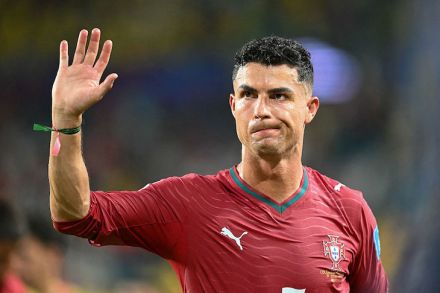
The tragedy of Cristiano Ronaldo

At 41 years old, Cristiano Ronaldo is a shadow of the once brilliant player he was. Everyone can see it, except the great man himself. The five-time Ballon d’Or winner is now focused on chasing the stupendous milestone of 1,000 career goals, which would be yet another achievement for a footballer obsessed with breaking personal records in a team sport. The 2026 World Cup marks yet another milestone achievement – the sixth time he has played in the tournament. It is a lot of soccer, and at the highest level, yet Father Time waits for no one, not even someone as rich and famous as Ronaldo. Portugal’s manager Roberto Martinez must take a fair share of the blame. Why does he persist in picking Ronaldo? This once supreme athlete is now a drag on the Portugal team.

cristiano ronaldo

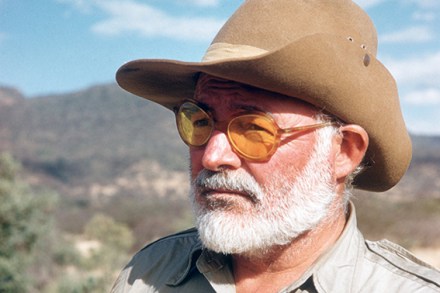
The Sun Also Rises is still a great American novel

From our US edition

To pinpoint the precise moment Ernest Hemingway came up with the idea for his first novel, The Sun Also Rises, which is celebrating its centenary this year, is not difficult. All we have to do is follow the trail back to Pamplona. In 1925, after a cold winter in Paris, a 25-year-old Hemingway was keen to return to the San Fermín bullfighting festival in the Basque town of Pamplona, near the northern coast of Spain. He had yet to make his mark as a writer, although he was surrounded by some of the heavyweights of expatriate literature: Ezra Pound, F. Scott Fitzgerald, Gertrude Stein and Ford Madox Ford, all of whom believed Hem had a future as a novelist.

The genius of Zurbaran – and why he vanished

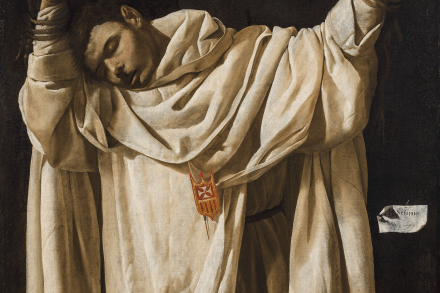
A pious Caravaggio JASPREET SINGH BOPARAI The Spanish painter Francisco de Zurbaran is sometimes thought of as a pious equivalent to Caravaggio – a Caravaggio without the bad temper, brutal vices or criminal record. But it seems difficult to argue that Caravaggio had any direct influence on his work. After all, he died when Zurbaran was 11 and a half years old. Since Zurbaran never left Spain, he could not have seen any of Caravaggio’s paintings with his own eyes. Indeed, he might never have even heard the artist’s name. Still, there are unavoidable similarities between the two men’s work. Zurbaran shared Caravaggio’s sense of drama and his love of shadows broken up by patches of strong light.

Is it wise for Spain to goad Donald Trump?

Spain’s refusal to allow the United States to use its military bases at Morón de la Frontera (Seville) and Rota (Cádiz) for its war on Iran, arguing that the US-Israeli attacks are "unilateral military actions outside the United Nations charter" has brought the simmering conflict between Pedro Sanchez, Spain’s socialist Prime Minister and President Trump to a head.   Sanchez’s carefully calculated strategy has been to position himself as one of Trump’s leading opponents on the world stage On Wednesday Sanchez followed up by delivering a stunning rebuke to Trump. Speaking for ten minutes on national television, he said that his government's position could be summed up in four words: "No a la guerra" (No to war).

Was Picasso a Catholic artist?

There’s a new exhibition on Picasso which is actually transgressive: Picasso and the Bible. That promises to stir things up among worshippers of the great man, who was known for being Republican, Communist and atheist.   The premise of the exhibition – which was opened this week with great fanfare at Burgos Cathedral in Spain – is that an artist can leave the Church, but the Church never really leaves him. The real theme of the exhibition isn’t Picasso and the Bible; it’s Picasso and Catholicism, a more explosive subject.

What Spain’s social media ban gets wrong

Spain’s Socialist prime minister Pedro Sánchez is proposing a ban on under-16s using social media, following the example set by Australia last year. Speaking at the World Government Summit in Dubai earlier this week, Sánchez said: "Today our children are exposed to a space they were never meant to navigate alone… We will protect [them] from the digital Wild West." The Spanish premier’s announcement comes at a time when several other European nations are also attempting to combat the harmful effects of social media on children. France’s ban on under-15s using social media is expected to become law later this year, while Greece, Portugal and Denmark have signaled their intention to enact similar legislation.

What Spain’s social media ban gets wrong

Spain’s Socialist prime minister Pedro Sánchez is proposing a ban on under-16s using social media, following the example set by Australia last year. Speaking at the World Government Summit in Dubai earlier this week, Sánchez said: ‘Today our children are exposed to a space they were never meant to navigate alone… We will protect [them] from the digital Wild West.’ The Spanish premier’s announcement comes at a time when several other European nations are also attempting to combat the harmful effects of social media on children. France’s ban on under-15s using social media is expected to become law later this year, while Greece, Portugal and Denmark have signalled their intention to enact similar legislation.

The long history of kidnapping Latin American chieftains

One of the few benefits of being an anthropologist is the uncanny exhilaration one feels watching novel current events as re-runs from previous episodes in the history of mankind. Donald Trump’s capture of Nicolás Maduro, President of Venezuela, is no exception. Kidnapping Latin American emperors is a continental tradition. It’s simply the most practical method for breaking the chain of command in the region. It triggers succession chaos, enables the extraction of resources and keeps the rest of the hierarchy more or less intact. In earlier centuries, it was Spain and Portugal. Today, it’s the United States. In the colonial era, the objective was to secure enough gold to beat European rivals.

latin american

Why Christmas comes early for thousands in Spain

Every time I hear about someone winning ten million pounds/euros/dollars in a lottery, I think (and I’m sure I’m not alone in this): ‘Yeah, but… wouldn’t it have been better if ten people had won one million?’ Well, that’s more or less what happens in Spain. Tomorrow nearly 2,000 people will share the first prize in the Christmas lottery, each winning €400,000 (£350,000). The same number stand to share the second (€125,000 each) and third (€50,000 each) prizes. So in total almost 6,000 Spanish households will suddenly be looking forward to a much better life. No wonder there are such explosions of joy the length and breadth of Spain every year on 22 December.

I met Jesus – and he’s an old Spanish gardener

From our US edition

As the old Jewish proverb goes, “Man plans and God laughs.” But nothing, in my experience, makes Him clutch His sides quite like hearing about my Mediterranean gardening ambitions. Every winter, my horticultural memory performs a factory reset. I somehow forget the summer mornings when the thermometer climbs past 90°F by 8 a.m. and the plants wilt by noon. The brutal, arid wind that strips moisture from the leaves faster than I can water? Erased from my mind. What blight? And the way perfect fruit splits overnight after a thunderstorm? Never happened. Come spring, I’m suddenly possessed, clicking “add to cart” on tomato varieties with names like 1980s cocktail bars: Pink Jazz, Green Zebra, Cosmic Eclipse.

jesus garden