Snp

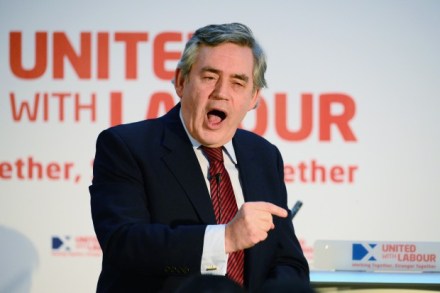
Can Ed Miliband save the Union?

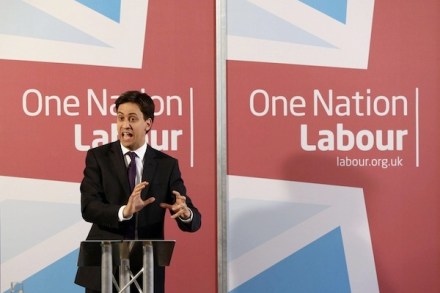
When Ed Miliband goes to Scotland and declares that ‘It is Labour that’s got to win this referendum’ it is a statement of political reality as much as it is braggadocio. The Tories have only one MP north of the border and the Liberal Democrats are the fourth party in the Scottish parliament. If this vote is to be won, Labour—as by far the largest Unionist party—will have to get the No camp over the line. Ed Miliband’s decision to take the entire shadow Cabinet to Glasgow last week was meant to show that UK Labour is now engaging fully in this battle. Miliband himself thinks that he has come up with an argument for the Union that is distinctly Labour.
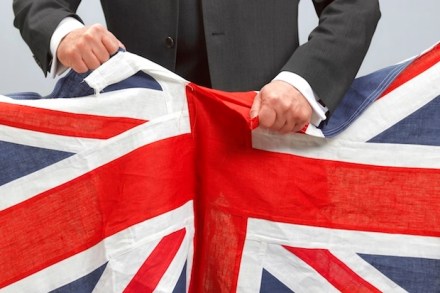
How to lose Scotland

[audioplayer src="http://traffic.libsyn.com/spectator/TheViewFrom22_24_April_2014_v4.mp3" title="James Forsyth and Alex Massie explain why we need more optimism in Scotland and Westminster" startat=1538] Listen [/audioplayer]For centuries, the possibility of Scottish independence seemed so remote as to be laughable. Until recently the nationalists seemed quixotic, rather than menacing. Now, however, we are facing the very real prospect of a ‘yes’ vote in the Scottish referendum in September, which would in all probability result in the resignation of David Cameron as Prime Minister. An ICM survey published at the weekend found that 48 per cent of voters who have made up their minds intend to vote for separation. The stakes are terribly high.

As the Yes side rises in the polls, Scotland prepares for a Neverendum

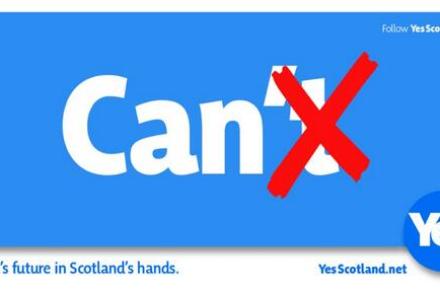
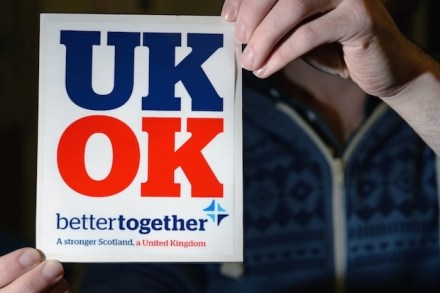
I suspect I might be one of the Scottish journalists Iain Martin considers keen to make a melodrama from the independence referendum. Ten weeks ago I warned in this magazine that Alex Salmond could well lead Scotland to independence. Stuff and nonsense some folk said then. Well, perhaps. But nothing that has happened since has persuaded me I was wrong.  Sure, the polls still show the No side leading but the general picture is clear: the Yes side are closing the gap. Of course there's no law demanding that current trends continue indefinitely but, nevertheless, these are nervous times for the Unionist cause. And for good reason. Consider the poster at the top of this post. It's by far the best advertisement released by either side. Clear, simple, powerful.

A new poll shows Scotland on the brink of independence. Time for the ‘no’ side to panic

Politicians always manage to take some crumbs of comfort from opinion polls but, if you are Alistair Darling, it would be difficult to find anything positive in the dramatic new poll published by Scotland on Sunday this morning. According to the poll, by ICM, the No camp’s lead has shrunk to either three or four percentage points – depending on whether the ‘don’t knows’ are counted. Ladbrokes has responded by cutting its odds on Scottish independence to 9/4, the shortest in its history. The overall ICM/SoS figures are No 42 per cent (down four points on last month), Yes 39 per cent (unchanged on last month) and ‘don’t knows’ 19 per cent, up four on last month.

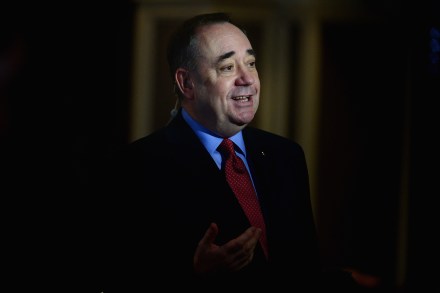
Alex Salmond’s message to Labour supporters: vote ‘yes’ to escape the Tories

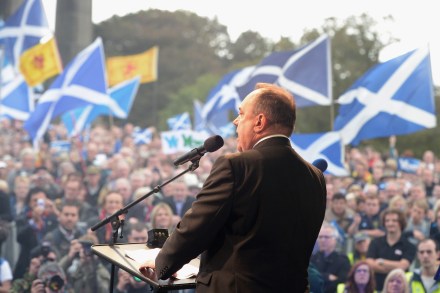
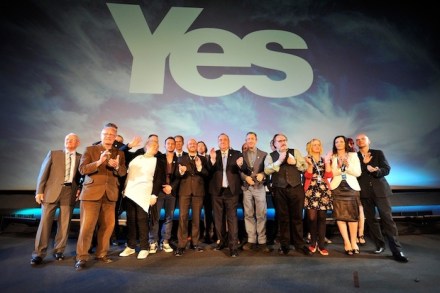
When is a conference not a conference? When it’s a rally. Sitting in the hall listening to Alex Salmond this afternoon, it was hard to ignore the feeling that this SNP Spring Conference was about as far away from a party conference as it was possible to get. It really was a political rally – and quite a scary one too. The warm-up acts for the Scottish First Minister consisted of folk singers from the Hebrides singing ‘it’s our country’ and a group of shouty actors putting on extracts from a pro-independence play which will premiere in Edinburgh this summer.

Podcast: Can William Shakespeare save the union, plus Maria Miller’s resignation

Did William Shakespeare invent Britain and can he save it? On this week’s View from 22 podcast, Fraser Nelson debates this week’s Spectator cover feature with the SNP’s Westminster leader Angus Robertson. Do the English and Scots have many cultural values in common? Are there any other countries contemplating splitting up who are so similar? Is there a political disconnect between the two countries, or is the ‘No’ campaign simply losing the debate? James Forsyth and Isabel Hardman also discuss Maria Miller’s resignation and what it means for David Cameron. Was she pushed out of her job or did she jump? Has the Prime Minister's reputation and judgment been damaged by supporting her for too long? Will there be any long-term effects for the government?

Scots and English are the same people, with different accents. Why pretend otherwise?

[audioplayer src="http://traffic.libsyn.com/spectator/TheViewFrom22_10_April_2014_v4.mp3" title="Fraser Nelson and Angus Robertson debate Scottish independence" startat=32] Listen [/audioplayer]Sometimes it is easy to understand why countries break up. Some founder on the rocks of their internal contradictions. Others are historical conveniences that have simply run their course. Czechoslovakia was an artificial construct, a country with two languages and cultures, which split soon after the Iron Curtain fell. The division of Cyprus in 1974 marked the end of the fraternity between the island’s Turks and Greeks. The partition of India was driven by trouble between its Hindus and Muslims.

Scottish independence: an exemplary or cautionary foreign policy Rorschach Test?

The eyes of the world are upon us. Or so Scottish Nationalists like to say. Whae's like us? There is some truth to this even if you think unseemly all the boasting we heard about the number of foreign journalists attending, say, the launch of the Scottish Government's White Paper on independence. It's all a bit Sally Field for me. A kind of cringe, if you will. What's less frequently said is that almost all foreign governments would prefer Scotland to vote No. "We all prefer the status quo" one western diplomat told me recently. "That's just the way states operate." Known things are preferable to unknown things, even if the unknown things might be fine. Which brings me to Lord Robertson of Port Ellen's speech to the Brookings Institute yesterday.

The Scottish Tories have a chance to make themselves relevant at last. Will they be bold enough to take it?

Like everyone else, I've often been mean about the Scottish Conservative and Unionist party. I recall suggesting they were the worst, most useless political party in the world. Fushionless and quite possibly beyond redemption. But hark this shipmates, something is afoot and there are, titter ye not, modest grounds for modest optimism in Tory circles. After what was, I think it fair to say, a steep learning curve in her early days as leader Ruth Davidson is coming into her own. She has a poise and a stature that was not apparent even a year ago. The party's recent conference in Edinburgh was a success and her speech her best since becoming leader. Why, the Tory vote has even been nudging upwards in local council by-elections.

Enough complacency. Enough bitching. The No camp needs to fight to save the Union

Look up complacency in the dictionary and the chances are you will find a picture of a Scottish unionist next to it. For months – no, make that years – politicians at the sharp end of the fight against Scottish Nationalism have been warning about the dangers of complacency. But they might as well have been mumbling platitudes about the weather for all the effect it has had. The unionist side has been complacent, there is no doubt about that. Many in the anti-independence camp seem to have forgotten what this cause means to Alex Salmond and the SNP. They seem to have forgotten that this is all the Nats care about. It is what they have working for all their lives. They are believers, more than that they are evangelists.

Without Scotland, the UK would be poorer both culturally and spiritually

If Alex Salmond gets his way, this country will be rendered asunder. Once you cross the Tweed, you'll be in a foreign land. The fact that Salmond is so keen to suggest that even after independence there'll still be a 'social union' between Scotland and the rest of the United Kingdom suggests that he knows that people are disturbed by this idea. But one of the puzzles of the Scottish referendum campaign is how reluctant politicians have been to make the emotional case for the Union. Instead, Better Together and the government have chosen to concentrate on a series of technocratic argument. This is why Nick Watt's story about a senior government minister conceding that there would be a currency union if Scotland went independent has been so damaging to the No campaign.

Alex Salmond is not a Nazi. He’s not even a Fascist.

Every so often you come across an article so bizarre it forces you to re-examine long-held certainties on a subject about which you happen to be tolerably well-informed. This year that's Scotland and her independence referendum and this time the article in question is Simon Winder's epistle in the latest edition of Standpoint. Having duly re-examined everything I conclude that it is the maddest article I've read this year. So bonkers - really, not too strong a term - that you wonder what the magazine's editors were thinking when they agreed to publish it. They have every right to do so, of course, and publication does not equal endorsement. But still. No-one paused to say 'hang on, this is laughable'. I am getting ahead of myself.

It is not surprising that the polls on Scottish independence are tightening…

There are some pollsters who believe nothing has changed since 2011. All the storm and blast, bluff and bluster about Scottish independence has had no impact at all. The settled will of the Scottish people remains settles: more power for Edinburgh but no to independence. Oddly YouGov's Peter Kellner is one of these pollsters. Oddly because, as the chart above shows, his own polling organisation's reports show that the race is, as long expected, tightening. There is a small but definite drift to Yes. True, at its present rate it will not be enough to prevail come September. But it is quite possible that the drift towards a Yes vote will become stronger, not weaker, as the referendum day approaches. You would expect it to say so. The Yes campaign enjoys many advantages, after all.

Ruth Davidson gives the Scottish Tories grounds for hope. At last.

Because I spent the weekend moving house and being depressed by events in Cardiff I did not attend the Scottish Conservative's spring conference in Edinburgh. A dereliction of journalistic duty, perhaps, but also, well, life takes over sometimes. In truth, I didn't worry about missing the conference. Attending these things can be dangerous. Like journalism, politics attracts a grim number of copper-bottomed, ocean-going shits but also, like journalism again, a greater number of decent, public-spirited, optimistic folk than you might imagine. Most politicians, most of the time, are in the game for most of the right reasons. Speaking to these people has its uses but, also, its dangers. Before you know it you end up liking them.

Yes, of course the BBC is biased against you

And it doesn't matter who you are. Conservative, Labour, Liberal, Nationalist, Green or UKIP it's all the same. The BBC is hopelessly prejudiced against you. As it should be. Why only this morning we see Owen Jones complaining that, contrary to what the Daily Mail would have you believe, the BBC is instinctively biased against the left and Lesley Riddoch suggesting  the corporation is reflexively biased against the very idea, let alone the prospect, of Scottish independence. Well, up to a point. But asking whether the BBC is inclined to the left or right is the wrong question. It is a kind of category error. Adding up the number of (presumed) right-of-centre - or Unionist - journalists or presenters on the BBC and supposing this "proves" anything is a fool's mistake.

The British constitution has never made sense or been fair. Why expect it to do so now?

Well, yes, Hamish Macdonell is correct. A coherent devo-max option could win the referendum for Unionists. Some of us, ahem, have been arguing that for years. There were, of course, good reasons for insisting that the referendum vote be a simple Yes/No affair. A single question cuts to the heart of the issue and, notionally, should produce a clear outcome. Nevertheless it also greatly increased the risk - or prospect, if you prefer - of a Yes vote. A multi-option referendum would have killed a Yes vote. But if Hamish is correct I am not, alas, so sure the same can be said of Comrades Forsyth and Nelson. James writes that: The lesson of devolution is that we tamper with the constitutional framework of the United Kingdom at our peril.

Alex Salmond’s taxing realism: Scotland cannot afford socialist dreams

Alex Salmond ventured south last night to lecture inform the citizens of what he termed Britain's 'Dark Star' of his latest plans. You can read his New Statesman lecture here. The most telling moment of the evening came, however, when George Eaton asked if Salmond favoured raising taxes on the wealthiest Scots. Specifically, did he find the notion of raising the top rate of income tax to 50 per cent attractive? No. Or as the First Minister put it: 'We don't have proposals for changing taxation. We certainly are not going to put ourselves at a tax disadvantage with the rest of the UK.' It's not quite read my lips, no new taxes but it's not far from it. This should not surprise long-term readers.

When it comes to working dogs, sometimes tail docking is the kindest option

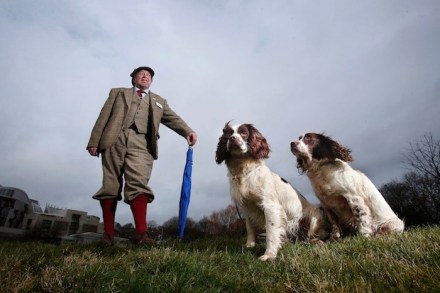
Imagine you’re a dog with a long, silky tail that you like to wag. The problem is, you spend your days running across moorland, through prickly undergrowth, which makes your tail hurt and bleed. Might you wish that someone had made it a little bit shorter when you were a puppy? Many people – and especially those with working dogs – argue that docking is by far the kindest option. This is why it is odd that Scotland is the only country in the UK with a complete ban on tail docking. England, Wales and Northern Ireland all have exemptions for working dogs, as long as they are docked when very young. But not in Scotland. This is why the Scottish Gamekeepers Association has presented their Environment Secretary, Richard Lochhead, with a petition to reverse the ban.

Standard Life intervention in independence debate suggests business nerves about chance Scotland could vote ‘yes’

The Yes campaign's response so far to the story that Standard Life would consider transferring some of its operations to England from Scotland in the event of a 'Yes' vote has been to argue that what the company wants is 'exactly what the Scottish government has proposed'. Some Nats think this is another example of bullying from 'monied elites', but so far the official campaign has wisely blamed the 'No' campaign for creating uncertainty for businesses. After weeks of arguing about bullying and 'campaign rhetoric' from Westminster politicians, perhaps the SNP realises that making the same accusation of a business for setting out contingency plans would be going overboard (but you never know).

Jim Murphy takes Union fight offline

‘The cyber-nat activity is disgraceful. They will trash anyone who disagrees with them. Their intention is to make people keep their heads down. Salmond could stop it, but he doesn't choose to,’ said Alistair Darling, leader of the Better Together campaign, last month. Supporters of Scottish nationalism have dominated the web for the last five years, slinging abuse and hatred at anyone who dares to speak in favour of the Union. They began in the Scottish newspapers’ online comment sections, honed their craft via email and found full voice with the advent of social media. Twitter is the cesspool of choice for the ‘cyber-nat’ community.