Snp

David Cameron’s ‘unremittingly positive’ case for the Union

David Cameron says he wants the case that he makes for the Union and against Scottish independence to be 'unremittingly positive'. Is it? In an interview with BBC News, the Prime Minister said: 'That’s my whole argument, which is go back to the big picture, and I think this family of nations is better off together. Not just is better off in the United Kingdom, but we in the rest of the United Kingdom think we’re better off with Scotland that we want you to stay. That argument is one that is unremittingly positive about the success of this family of nations and how we should keep this family together.
The Etonian, the SNP and the Black, Black Oil

You will recall that, according to the greatest account of England's history, every time the English thought they had solved the Irish Question, the Irish changed the Question.  Something similar afflicts David Cameron's grapplings with the Scottish Question. The poor man is damned if he does and equally damned if he doesn't. The other week he was lambasted for his effrontery in giving a speech about Scotland in, of all places, London. Today he is lambasted for bringing his cabinet to Aberdeen. How dare he lecture us from afar; how dare he venture north like some touring proconsul! The optics, as the pros say, are not very good for the Prime Minister. The cabinet very rarely comes to Scotland. Drawing attention to that fact may not help Mr Cameron's cause.

Any other business: The friends of Putin taking home gold from the Sochi Olympics

Imagine if the BBC’s excitable commentators had been asked to cover the building of Sochi’s facilities, rather than the Winter Olympics themselves. ‘Yeesss!!’ Ed Leigh might have yelled, ‘That’s the 21st construction contract for the big lad from St Petersburg, Arkady Rotenberg. Seven point four billion dollars’ worth, a new Olympic record — more than the entire cost of the 2010 Vancouver Games! How cool is that for the 62-year-old who was Vladimir Putin’s boyhood judo partner? Up next, the $9.

It’s time that Scotland’s timid posh folk spoke out

I took part in a documentary about Scottishness a few weeks ago, and it wasn’t bad at all. I mused, mainly, on my own border-hopping, fretful-about-independence Scottish-Britishness, and a decent number of people got in touch afterwards to say I’d been speaking for them, too. Others were more cross, but interestingly so. One thing about the whole experience bugs me, though. That was the way they had me sit in a swanky Scottish restaurant in Belgravia and made out like I belonged there. It’s not that you don’t get Scots in Belgravia. Most will probably own castles back in Scotland, too, though. When they move to Belgravia, they do so in a manner similar to the way that orthodox Jews move to Israel; to finally be among their own. This is not my world.

Who are the real bullies in the Scottish independence debate?

Stewart Hosie, the SNP's finance spokesman at Westminster, said something unwittingly revealing last night. Taking part in the latest of BBC Scotland's referendum debates (you can catch it here), he observed that: There is a plan from the Scottish government and the Yes side… What we don't have is a plan a from the No people about what happens in the event of a No vote. So I want them to explain to you today when are they going to cut £4bn from Scotland's budget? [...] There is precisely nothing from the No camp to explain what they're going to do to Scotland in the event of a no vote. Give Hosie marks for honesty. You don't often get it as clear as this. I don't think Hosie mis-spoke here. Not when he's inventing a phantom threat to the Scottish block grant.

Alex Salmond attacks ‘campaign rhetoric’ with a ‘George Tax’

After a couple of weeks of something frightening and bad called 'campaign rhetoric' from Westminster politicians, Alex Salmond today tried to reassure Scots that everything would be OK if they did vote for independence. 'The rest of the UK will never be foreign' to an independent Scotland, he insisted, sounding rather in favour of another aspect of the Union (alongside the Queen, the pound and so on). And this 'campaign rhetoric' about the currency union was wrong - and dangerous to the rest of the UK, said Salmond.

Now Scots know: an independent Scotland won’t be Salmond’s ‘same-but-slightly-different’ vision

Personally, I’m now waiting for the Queen to get involved. After all, there’s not much left of Alex Salmond’s independence-but-not-independence blueprint that is left intact. First it was his ‘we’re going to share the pound in a Sterling zone’ claim. That was ruled out by George Osborne (and Ed Balls and Danny Alexander) last week. Then it was his ‘independence in Europe’ claim, and that was dismantled by Jose Manuel Barroso today. The only pillar of Salmond’s grand ‘everything’s-going-to-remain-the-same-only-different’ scheme which remains in place is a shared monarchy. So it can’t be long before Her Majesty also intervenes and says: 'Do you know what?

Jose Manuel Barroso: “Extremely difficult, if not impossible” for a separate Scotland to join the EU

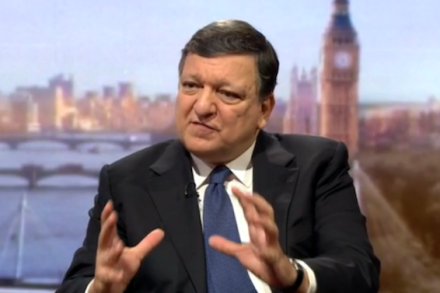
Jose Manuel Barroso has said before that Scotland would have to apply separately to join the EU if it became independent. But his remarks today on the Andrew Marr Show were far more pessimistic about the prospects of that application being successful. After the three main Westminster parties blew a hole in the reassuring argument that Alex Salmond has been making so far that Scotland could keep the pound, Barroso effectively reminded Scots this morning that a 'Yes' vote won't just mean 'Yes' to independence, it will mean 'Yes' to leaving the EU too. He said: 'First of all, I don’t want now to go into hypothetical questions.

What is Alex Salmond’s plan for the currency now?

Alex Salmond is now a man without a plan. He is offering Scots a future of uncertainty and instability. Threats of a debt default leaving Scotland and Scots with a bad credit rating. No idea which currency we would be transitioning to. By contrast if Scots want to know the benefit of remaining in the UK, they need only reach into their pockets and pull out a pound coin. We have one of the most trusted, secure currencies in the world. We have the financial back up of being part of one of the biggest economies in the world. The pound means more jobs, smaller mortgage repayments, cheaper credit card bills and lower prices in the supermarket. Why would we gamble that for an unknown currency? This morning’s interview with Alex Salmond on BBC Radio Scotland was instructive.

Spectator letters: Fears for Scotland, and John Cornwell answers Melanie McDonagh

Save our Scotland Sir: Matthew Parris is quite right to praise Lord Lang’s speech in the Lords on Scottish independence 9 (‘The End of Britain’, 8 February) and there were other notable contributions, especially from Lord Kerr, on the European dimension, and Lord Robertson, the former secretary-general of Nato. But is anyone listening? The debate got virtually no coverage in the Scottish editions — and I suspect even less in the English ones. Meanwhile the SNP publicity machine rolls on here and is now promising an annual ‘Indy bonus’ of £600 for every man, woman and child in Scotland, exceeding the £500 threshold at which (as Alex Massie pointed out in the same issue) surveys suggest the average Scotsman will sell his British soul.

Portrait of the week: as the waters continue to rise

Home Floods grew worse in the West Country. The village of Moorland, Somerset, was abandoned. Then the Thames flooded, from above Oxford to Teddington. Eventually, David Cameron, the Prime Minister, declared from Downing Street: ‘Money is no object in this relief effort.’ Some 1,600 troops were deployed. By midweek 1,000 houses had been evacuated. A storm had broken the rail line from Cornwall at Dawlish, which would take months to mend, as would the broken line from Barmouth to Criccieth. Landslides closed lines between Tonbridge and Hastings, between Machynlleth and Welshpool, and from Portsmouth via Eastleigh. Villagers at Wraysbury, Berkshire, complained of looting of abandoned houses.

Osborne nixes currency union; Salmond hops around claiming it’s only a flesh wound

An interesting day, then. As I suggested yesterday, George Osborne has ventured across the border on a punitive raid. Nothing like a spot of rough wooing to get you through the winter. The reaction from Scottish nationalists has been interesting, to say the least. Some seem most affronted. Who the hell does George Osborne think he is, anyway? He'll no be telling us what currency we may use. Perhaps not but he - or Ed Balls - is certainly entitled to set out his view of what may be in the best interests of the rest of the United Kingdom. And if that view differs from the Scottish view then tough. Be that as it may, it never ceases to amaze me that nationalists, having declared war upon the British state, are so shocked or appalled when the British state fights back.

Westminster attack on Scottish currency union shows jitters about referendum result

It might be bullying but, I suspect, it will be effective. The Tories, Labour and the Liberal Democrats ruling out Scotland sharing sterling after independence—as Nick Watt reported this morning — is designed to hole below the waterline the SNP's attempt to reassure voters that even after independence they could still share a currency union with the rest of the Union. (Alex Massie does a very good job of taking apart the SNP's response). The potency of this argument is a reminder of what a disaster the Eurozone crisis has been for the SNP. It has made the Euro a far less attractive alternative currency than it was a decade ago and it has alerted everyone to the dangers of currency unions that aren't accompanied by political union.

Britain is doomed – even if Salmond loses September’s independence referendum

Last Thursday’s cover story makes alarming reading, Alex Massie arguing that Alex Salmond may come close to achieving victory in September’s vote. Alex wrote: ‘It is beginning to be appreciated, even in London, that Alex Salmond might just win his independence referendum in September. The break-up of Britain will have begun, David Cameron will have to contemplate being Prime Minister of a rump country — and HMS Britannia will be sunk, not with a bang but a whimper. It will be due as much to English indifference as Scottish agitation.’ I would still put my pound sterling on a No vote, and current odds for independence are around 7/2; but I suspect that ultimate victory will probably go to the SNP. There a number of reasons why the union is doomed.

David Cameron’s tricky role in the fight against Scottish independence

David Cameron will tell Scots this morning that the UK wants Scotland to stay a part of the Union. That he's giving this speech at all is being read in some quarters as a sign that he's at least underwhelmed by the show put on so far by Better Together leader Alistair Darling. The PM's intervention certainly marks a change of tone from the most recent speeches, particularly Mark Carney's, which George Osborne praised as a very good 'technical' speech. Thus far the 'no' campaign has relied more on the technical argument which Alex Salmond has brushed away as minor objections to the great principle of independence. So Cameron is making the emotional case.

How Alex Salmond could lose his referendum and still wreck the United Kingdom

[audioplayer src='http://traffic.libsyn.com/spectator/TheViewFrom22_6_February_2014_v4.mp3' title='Matthew Parris and Alex Massie discuss how Alex Salmond could wreck the Union even if he loses' startat=55] Listen [/audioplayer]From a kind of torpor about this year’s Scottish referendum, Lord Lang of Monkton has roused me. You may remember Lord Lang as Ian Lang, a Scot who as MP for Galloway served Margaret Thatcher and John Major as a minister, under the latter both as Scottish Secretary and then President of the Board of Trade. A pleasant, steady and notably capable man, it was possible to imagine him as a potential Tory leader, but he stuck with John Major throughout.

With friends like these the Union has no need for enemies

[audioplayer src='http://traffic.libsyn.com/spectator/TheViewFrom22_6_February_2014_v4.mp3' title='Alex Massie and Matthew Parris discuss why the Union is in peril' startat=55] Listen[/audioplayer]In the cover story for this week's edition of the magazine (subscribe, by the way!) I write that "The battle for Britain is being conducted on a wavelength which unionist politicians in London struggle to pick up." As if to prove my point, consider this story from today's Financial Times in which it is revealed that government ministers in London have been pressuring defence companies to "highlight potential job losses and disruption if Scotland splits from the UK".

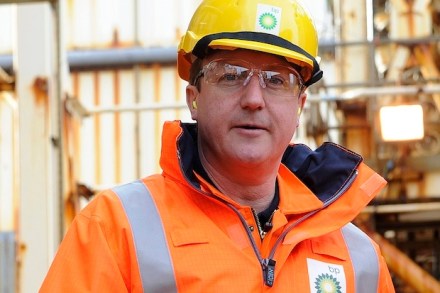
Relax, you can safely ignore BP’s “warnings” about the impact of Scottish independence

Why, a Tory grandee asked me recently, won't more businesses come out against Scottish independence? It was, in his view, axiomatic that independence would be bad for businesses north and south of the border. So why the silence? Perhaps, or at least in part perhaps, because when businesses do raise their concerns they often contrive to present themselves as hopeless chumps. I am sure Bob Dudley, chief of BP, is personally committed to Britain but the idea, as expressed in an interview with the BBC, that Scottish independence creates "big uncertainties" for his business is poppycock. Well, a kind of poppycock anyway. It would require BP to operate in another country and I can see why the petroleum giant would be happy to stick with the familiar status quo.

Imagine the uproar if a Tory minister proposed a “do-it-yourself” NHS?

Consider these two stories. In the first the government approves new proposals to overhaul hospital outpatient care. For once there isn't even much of a pretence that this will improve healthcare. It's simply a question of saving money. Assuming the new proposals are implemented, many outpatients who had hitherto enjoyed (or endured) hospital appointments will be told to stay at home. Indeed they will be advised to "treat themselves". What contact they have with a consultant will be of the "virtual" kind. Perhaps a quick telephone call if they are lucky. More likely, they will be told to download an app to their phone which will tell them how to manage their condition or affliction. In other words, a DIY NHS. Or, if you prefer, some real privatisation.

The Battle for Threadneedle Street

I thought it obvious that Mark Carney's trip to Scotland yesterday was a bad day for Alex Salmond and the Scottish nationalists. Sure, the governor of the Bank of England said, a currency union between Scotland the the rump UK could happen and be made to work but it would be fraught with difficulty and sacrifice too. Do you really want to do that? How lucky do you feel? Carney, being a Canadian and therefore a man crippled by politeness, did not add "punk". In response the SNP were reduced to pushing a meaningless poll which found 70% of Britons favouring a currency union after independence. That is, 70% of the 97% of people who have not thought much about this or who know nothing about it favour the status quo. Perhaps that sounds harsh or insulting; it isn't meant to be.