Snp

The right-wing case for Scottish independence

Chuckle not, it exists. Wealthy Nation, a new grouplet formed by the eminent historian Michael Fry, is making the case that Scotland can be an admirably prosperous little country after independence provided, that is, she casts off the soft-left Caledonian consensus that remains wearily orthodox thinking north of the Tweed and Solway. Fry, whose new history of Scotland from Waterloo to Mons I commend to you without reservation, set out his case in The Scotsman earlier this month. If Scotland is to be free, she must be rich and she will not be rich unless her politics moves to the right.
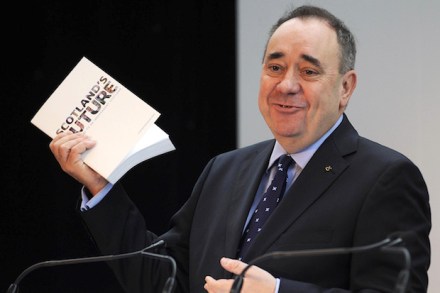
Alex Salmond writes a cheque – in pounds sterling – he cannot honour

As I type this, Alex Salmond and Mark Carney are chowing over porridge at Bute House, the First Minister's official residence in Edinburgh. There is always the risk of exaggerating the importance of these things but this morning's meeting with the Governor of the Bank of England may be the most important encounter Alex Salmond has this year. The question is simple: will an independent Scotland be able to forge a currency union with the rump United Kingdom? The answers, for all the First Minister's bland assurances that such a union is in everyone's interests, are not so simple. Like poker players, politicians often have a "tell". When Salmond offers a kind of breezy emollience he's often holding weaker cards than he wants you to think.

Poll shows Yes camp are within striking distance of victory

'It has given us a good, old-fashioned kick up the backside,' said one member of the 'No' camp yesterday. He was being charitable. It could end up being an awful lot worse than that. The ‘it’ in question was the new ICM poll which, suddenly and unexpectedly, has put the Yes campaign right back in the hunt for Scottish independence. At a stroke, all those complacent certainties about the No camp wiping the floor with the Nationalists have been discarded and, this morning at Holyrood, the talk is of little else. 'It is game on,' said one Nationalist with a smile. Just to emphasise how important this new poll for The Scotsman newspapers is, here are the figures: Yes 37 per cent (up from 32 per cent in September) No 44 per cent, down from 49 per cent in September.

Europe will affect the Scots referendum, but not in the way everyone expects

With William Hague in Glasgow this morning, the Scottish independence debate has swung round to Europe once again. Europe is indeed going to be important as we head towards the referendum, but perhaps not in the way everyone expects. The Foreign Secretary spent this morning warning that Scots would be worse off if they left the UK and then joined Europe as a separate country – without the UK’s rebate. This will rumble on until the September 18 poll, with claim and counter claim from both sides and neither able to prove anything definitively. Hague’s visit, though, has overshadowed one intriguing piece of polling data which could prove to be highly significant later in the year.

Mugabe envy in Scotland

Who owns Scotland? The people who most commonly ask this question believe that the land has been wrested from ordinary Scots by evil lairds and rich foreigners (by which they chiefly mean the English). Now the Scottish government is bringing out a report on how to correct this alleged injustice. It may recommend extending community ‘right to buy’ powers and allowing tenants to buy their holdings even if the owners do not want to sell.  This would have the unintended effect of ending all new tenancies. But the SNP’s misunderstanding of the situation is even more radical than that. It believes that big Scottish landowners are rich because they own the land. For a long time now, it has been the other way round. They own the land because they are rich.

The SNP school Labour in politics. Again.

Alex Salmond might not wish to be compared to Gordon Brown but there is one sense in which the two dominant Scottish political personalities of the age are more alike than either would care to acknowledge: they each love a good dividing line. In Edinburgh yesterday Salmond announced that all pupils in their first three years of primary school would henceforth be entitled to a free school lunch. This, he claimed, would save parents £330 a year per child. A useful benefit for those parents whose offspring do not currently qualify for free meals; a means of ending, the First Minister suggested, the stigma presently endured by those children who do rely on free meals. Labour voted against the proposal. Cue much celebration in Natland. Another dividing line has been established.

SNP turns to God for help with independence referendum

It turns out that Alex Salmond needn't worry too much about the re-emergence of that pesky row about advice on an independent Scotland's membership of the European Union. He's got arguments that are far more powerful than all that to convince Scots of the value of independence. In the latest issue of Idea, a magazine produced by the Evangelical Alliance, two Christian MSPs set out their arguments in favour of and against independence. Both accept that there isn't one Christian position on the subject, but the SNP MSP for Glasgow Shettleston John Mason does suggest that the Bible might have some wisdom on the matter - and it's from as far back as the book of Genesis. He writes: 'But does the Bible have nothing to say on all this?

Scottish or British? The identity debate the SNP does not want to have

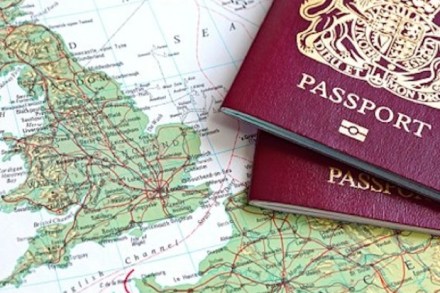
Earlier on today, I was asked by Angus MacNeil, a Scottish National Party MP if I would choose a Scottish or a British passport should they win the referendum. As he knows, the choice is anathema to those of us who are proud to be both Scottish and British and don’t see any antagonism that needs to be resolved by separation. SNP politicians, in my experience, are some of the nicest people in politics on either side of the border. Moderate, friendly, intelligent, open-minded, gentle: such decent types that you can end up being blinded to their agenda. Which is to destroy Britain, to force people to choose between being Scottish or British, to advocate a narrow-minded nationalism that involves putting up borders when the rest of Europe has been taking them down.

What is David Cameron for?

A mischievous question, I know, but one prompted by Janan Ganesh's latest Financial Times column. It is eight years since David Cameron became leader of the Conservative party and three and a half since he became Prime Minister. He may only have 18 months left in either post. We know - or think we know - a lot about Cameron. He is what he seems to be. Decent fellow, capable in a crisis, unruffled. A better-than-average product of his class and background. Thought he should be Prime Minister because he reckoned he'd "be good at it". And yet the thought nags: what is he for? What is Cameron's ministry about? As Ganesh says, the Prime Minister lacks a project. The economy is George Osborne's infant, education belongs to Michael Gove.

2013 has been the year of the insurgent party

When you look ahead to 2014, it is hard to escape the conclusion that two insurgent parties are making the political weather. The two big votes of the year are the European Elections, where Ukip may well top the poll, and the Scottish independence referendum, a product of the SNP’s Holyrood majority. The SNP and Ukip are both nationalist parties but they come from very different parts of the political spectrum. But what they have in common is that they have no desire to be part of a ‘consensus’ or be lauded as ‘responsible and respectable’. Instead, they stand passionately for what they believe in, unbothered—energised, even—by the contempt in which they are held by the other parties.

James Forsyth: Insurgents are remaking British politics

Next year will decide the fate of the United Kingdom. The Scottish independence referendum on the 18th of September could destroy the Union, and when we sit down to Christmas lunch in 2014, it could be to the background of independence negotiations. We may all be waiting to see what the Queen says about the end of the Union in her Christmas message. Too much of England is still struggling to take the prospect seriously. The Scottish government’s independence white paper struggled to make it onto the front pages of the next day’s London papers. Why? Because there is an assumption — based on remarkably steady opinion polls — that the Scots will vote no.

Scottish Nationalism’s Dangerous Cult of Victimhood

Danny Finkelstein's column in the Times today is characteristically elegant and incisive. In politics as in life he writes, "whatever apparent power and temptation lies with the adoption of the identity of victimhood it is ultimately destructive". Since Finkelstein is pondering lessons that may be drawn from the life of Nelson Mandela it may not be immediately obvious that the conclusion he reaches has some relevance to the campaign for Scottish independence. I better elaborate, then. Much has been said about how and why Unionists need a better "narrative" when making the case for Scotland as part of the United Kingdom. This is true. There is a need for a positive, optimistic, case for the Union. This is also true.

A choice for Tories: Goldman Sachs or UKIP?

Hats-off to James Kirkup for noticing that Goldman Sachs have suggested they would "drastically" cut their UK workforce (and operations) should Britain decide to leave the European Union. That is the view of Michael Sherwood, the fellow responsible for running Goldman's european operations. I am sure eurosceptics will dismiss this as the usual scaremongering just as Scottish nationalists dismiss warnings that some businesses (RBS?) might shift their operations south in the event Scotland votes for independence next year. This is but one of the many ways in which the european and Scottish questions overlap or dovetail with one another. Perhaps it is only scaremongering! But what if it isn't?

Tory attacks on Alistair Darling show that WMD Unionism is MAD

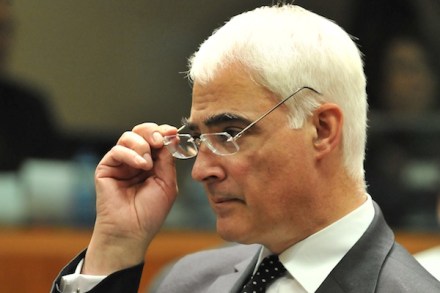
I don't really understand why politicians spend so much time talking to journalists. Most of the time little good can come from doing so. Of course, from a personal or professional perspective, this is fine and adds greatly to the gaiety of trade and nation. Nevertheless... Take, for instance, the reports in today's Financial Times and Daily Mail in which "senior" government sources stick their shivs into Alistair Darling. The leader of the Unionist campaign fighting next year's referendum on Scottish independence is, we are informed, "comatose most of the time". A different (I think) Downing Street figure complains that Darling is a "dreary figurehead". Meanwhile in the Mail, Gerri Peev finds another "senior parliamentary figure" who complains that Darling is "useless".

Salmond is stuck in the ‘Yes2AV’ trap

'When in the course of human events, it becomes necessary to one people to dissolve the political bands which have connected them with another', the best way of going about it probably isn't to write a 670-page document and then snarkily deride journalists who point out the obvious holes in it. As an old romantic, vaguely sympathetic to the dream of Scottish independence, I have long suspected that the SNP leadership are the greatest hindrance to the separatist cause. Alex Salmond's off-form, dull, dreary performance this morning only served to reconfirm that feeling. While separation is unlikely and potentially dangerous, increased devolution shouldn't be dismissed out of hand.

Scottish independence is a little more likely today than it was yesterday

The argument about Scottish independence which, it should be said, is not a new one is best understood in terms of the Overton Window. James Overton, an American political scientist, suggested that the general public is only prepared to contemplate a relatively narrow range of political opinions and policies. Those that fall outwith this window of plausibility are discounted; the task for politicians and other advocates is to shift the window so that ideas once considered heretical now appear orthodox common-sense. Overton suggested there were six phases to this process. A idea would move from being unthinkable to radical to acceptable to sensible to popular before, finally, becoming policy. Scottish independence is currently somewhere between acceptable and sensible.

A funny argument for independence

Is today's Scottish independence White Paper really an argument for independence? I ask only because the section on currency and monetary policy is essentially arguing for the union. It says: 'The Commission's analysis shows that it will not only be in Scotland's interests to retain Sterling but that - post independence - this will also benefit the rest of the UK. 'Under such an arrangement, monetary policy will be set according to economic conditions across the Sterling Area with ownership and governance of the Bank of England undertaken on a shareholder basis.

Detail vs emotion in the Scottish independence debate

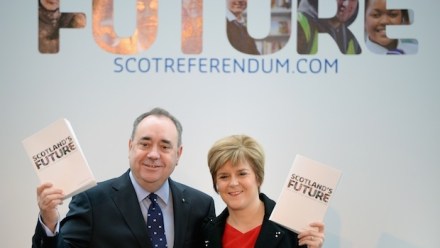
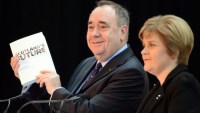
The Scottish government will unveil its case for independence at 10am today. Already the Treasury is warning that voting 'yes' next autumn would cost the average basic rate tax payer an additional £1,000 in tax increases. Danny Alexander is also trying to undermine the SNP's claim that fiscal problems initially experienced by a newly independent Scotland would be overcome through increased growth. In a letter to Alex Salmond, Alexander writes: 'I was surprised to hear that the very next day the Scottish government proposed cuts to tax rates in the event of independence. Your Finance Secretary explained that an independent Scotland's fiscal problems would be fixed through additional growth.

Is Boris Johnson the Man to Save the Union?

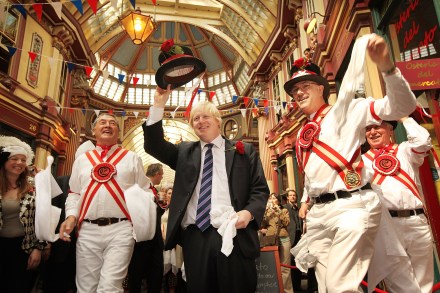
This is not as obviously a Question to Which the Answer is No as it may initially seem. The Mayor of London is, in fact, well-placed to play a significant part in the campaign to persuade Scots their interests still lie within the United Kingdom. In the first place, as the titular leader of europe's greatest city he has no obvious or immediate dog in the fight. Neither Boris's reputation nor his future will be dented by a Scottish vote for independence. His Prime Ministerial plans - for we all still assume he has such plans - will not suffer if Alex Salmond wins next year's referendum. They might even benefit from such a result, not least because David Cameron's reputation - and legacy - will be crippled by a Yes vote.