Snp

Yes or No, the little white rose of Scotland will bloom again

And so our watch is all but over. Who knows what comes tomorrow but at least and at last the final reckoning is upon us. It is choosing time and there's no escape. Few people would wish the campaign any longer. Many voters tired of it some time ago. Their minds were made-up and would not change and they just wanted to move on to the next story. Whatever it may be. But I can't agree with the people who fret that this has been a nasty and divisive and awful experience. It hasn't. I mean, of course it's been divisive and of course passions have been running high but that's because it matters. You can't have a non-divisive referendum. This is a good thing I think and I think this is an argument we've needed to have. If not now, when?
Scotland could never prosper under the SNP, because they don’t understand business

No-nonsense businesspeople will be very much what’s needed in the aftermath of the Scottish Catastrophe, as it will surely come to be known whichever way the vote has fallen. No nation, independent or semi-autonomous, can hope to prosper on the basis of the wild welfare promises of the SNP, unsupported by any plan to attract investment and stimulate growth. Only a resurgent private sector can drag Scotland out of the tax-and-spend peat bog into which this referendum has driven it deeper than ever — and that will take quite some grit on the part of entrepreneurs, given the fundamental hostility of both the SNP and Scottish Labour. But grit —even granite ruthlessness — is a characteristic shared by the outstanding Scottish business builders of the past.

Is Scotland confident enough to vote No?

We hold this truth to be self-evident: we are not an oppressed people. We have some liberty to chart our own course. We are, after all, choosing our path this week. We do not crave self-determination because we have always had that power. And many others besides that significant liberty. We are a free people. This is obvious yet also something worth recalling in these final hours. I have my own reasons for voting No on Thursday and, in truth, they have little to do with very much that has been said by the official Better Together campaign. But this kind of choice, this kind of referendum, inevitably prods one towards endorsing one team or the other. It is Rangers or Celtic and, in the end, there's no room for Partick Thistle or Queens Park or anyone else.

Who will revive Scottish Labour?

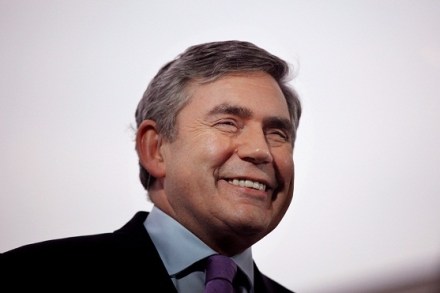
George Galloway announced his support for Gordon Brown as First Minister of Scotland last night. Galloway’s endorsement came as Brown turned up at an event at Usher Hall in Edinburgh that Galloway was compering. The endorsement was met with a broad grin by Brown. But behind the humour, there is a serious point, Scottish Labour knows that it has given Salmond and the SNP far too easy a ride at Holyrood. As the former Labour Minister Brian Wilson acknowledged at last night's event, this referendum is happening because the SNP managed to win a majority in the Scottish Parliament and Labour must take some of the blame for that. That this referendum is so close is also because so many traditional Labour voters are now backing independence.

Jim Sillars’ threat of a ‘day of reckoning’ exposes the darker side of nationalism

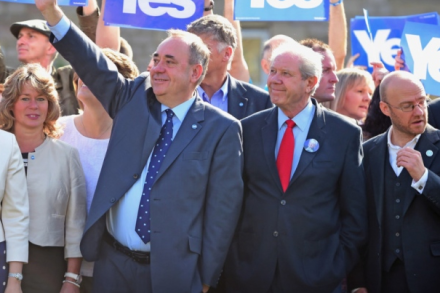
Only yesterday, Jim Sillars was being paraded by Alex Salmond as a nationalist heavyweight who has been taken back into the fold. He had once fallen out with the Alex Salmond but the two were, apparently, good friends again. A photoshoot, above, consummated this reconcilliation. Sillars is a former SNP deputy leader but now not part of the apparatus-  so he can speak freely. All too freely, as it turns out. Here’s what he has said today. “This referendum is about power, and when we get a Yes majority, we will use that power for a day of reckoning with BP and the banks. The heads of these companies are rich men, in cahoots with a rich English Tory Prime Minister, to keep Scotland’s poor, poorer through lies and distortions.

One week to save Britain

[audioplayer src="http://traffic.libsyn.com/spectator/TheViewFrom22_11_Sept_2014_v4.mp3" title="Fraser Nelson, Tom Holland and Leah McLaren discuss how we can still save the Union" startat=50] Listen [/audioplayer]Next week, the most important vote in recent British history will be held. Indeed, it may well turn out to be one of the last ballots in British history. Seven months ago, this magazine devoted its front page to warning that the United Kingdom was at grave risk of dissolution. The unionist apparatus had decayed, argued Alex Massie, and Alex Salmond was the best late-stage campaigner in Europe. The SNP deployed the language of nationhood and destiny, while the ‘no’ campaign droned on about the Barnett Formula. The conditions for calamity were in place.

Why I am voting No

[audioplayer src="http://traffic.libsyn.com/spectator/TheViewFrom22_11_Sept_2014_v4.mp3" title="Fraser Nelson, Tom Holland and Leah McLaren discuss how we can still save the Union" startat=50] Listen [/audioplayer]Once upon a time, a long while ago, I lived in Dublin. It was a time when everything seemed possible and not just because I was younger then. The country was stirring too. When I arrived it was still the case that a visa to work in the United States was just about the most valuable possession any young Irishman or woman could own; within a fistful of years that was no longer the case. Ireland was changing. These were the years in which the Celtic Tiger was born. They were happy years of surprising possibility. Years later I lived in the United States and my perspective changed.

The irresponsibility of Andy Burnham

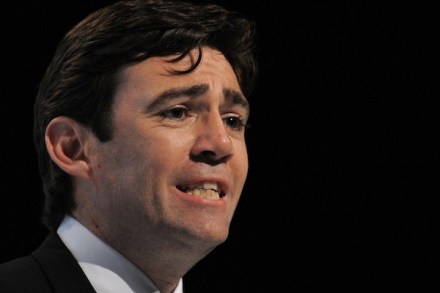
Nothing matters more in British politics right now than keeping the country together. The polls in Scotland show that no one can be complacent about the result on the 18th of September. One thing that has helped the Nationalists to close the gap in Scotland is a serious of alarmist predictions about the NHS. They have seized on some of Andy Burnham’s overblown rhetoric to claim that the NHS south of the border is about to be privatised and that this will have a knock-on effect on Scotland. Given this, a period of silence on Mr Burnham’s part until after the referendum would be most welcome.

Letters: Andrew Roberts on Cameron, and a defence of Kate Bush

Advice for Cameron Sir: David Cameron once saved my life from a school of Portuguese man o’ war jellyfish, so now’s the time for me to save his political life with this advice: to do nothing. The British people are a fair-minded lot; they will give him another term in office because he and George Osborne have delivered the best growth rates in Europe despite the monstrous overspending and boom-bust of the Blair-Brown years. Every newly incoming ministry since the war has been re-elected — except Ted Heath’s, which broke all the rules anyhow — and this one will be too. Douglas Carswell is an intelligent man who has made a stupid mistake.

The surprise winners from the referendum? Scotland. Politics. Big ideas are back at last

[audioplayer src="http://traffic.libsyn.com/spectator/TheViewFrom22_4_Sept_2014_v4.mp3" title="Isabel Hardman, Fraser Nelson and Hamish Macdonell discuss the referendum" startat=700] Listen [/audioplayer]Let us take a trip to America in 1976. The unelected incumbent president, Gerald Ford, is being challenged for the Republican party’s nomination by Ronald Reagan — and does not take it seriously. Sure, Reagan may have served as governor of California but, still, come on, is this Grand Old Party really going to choose a two-bit B-movie actor as its standard-bearer? And isn’t he the candidate of fruitcakes and loonies? Say what you will about Gerry Ford but you know where you stand with him. But not everyone sees it that way. Reagan is winning in places he shouldn’t have a chance.

Jim Murphy laments the ‘energy of nationalism’. Where’s the energy of unionism?

“It’s part of the energy of nationalism,” sighed Jim Murphy on Newsnight. “They’re never knocked down.” He’s right, and that that is why the Scottish referendum polls show the gap between the two narrowing - YouGov has that gap at 6 points, down from 22 last month. If even Labour’s Jim Murphy accepts that the momentum is with the nationalists – and says that the momentum is with them because they are nationalists – then it’s a rather depressing state of affairs. Where is the passion and energy of the campaign to save the United Kingdom?

The SNP’s ‘cybernats’ are a modern political scourge – with the zeal of converts

The first ‘yes’ campaign volunteer knocked on my door towards the end of last year. She was a member of the Scottish Socialist Party. I glanced at her dog-eared tally sheet — in my old block of 40 flats, only three residents had said they would vote no. In this neglected pocket of Edinburgh there are men who roll up their tracksuit bottoms to show off their prison tags. It is made up of decaying towers and pebble-dashed tenements. The people here are going to vote for change. Who can blame them? Now that I have moved to a more genteel suburb outside of the city, a further three yes activists have attempted doorstep conversions. I have heard appeals to my head, my heart and my wallet from nationalists who are as dogged as Jehovah’s Witnesses.

Salmond finally works out how to wind up Darling

One of the many blows landed by Alex Salmond during last night’s debate centred on Alistair Darling’s criticism of the Office of Budget Responsibility, set up in 2010 by George Osborne to provide independent economic forecasts for the Treasury. The OBR’s numbers have been key to the Better Together's onslaught on the numerical black holes at the heart of the Yes campaign. Yet Darling was left spluttering that he was ‘taken out of context’ and ‘misquoted’ when Salmond pulled up criticism the Better Together boss had made of the OBR, with a more partisan hat on.

Not Tonight, Darling

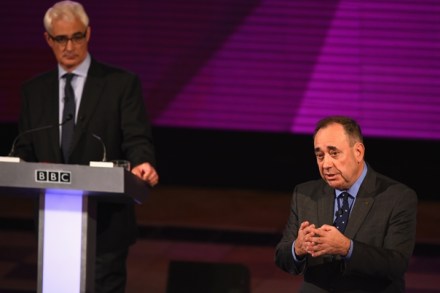
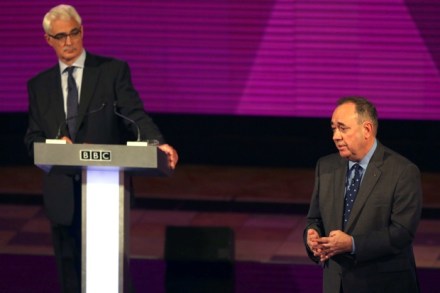
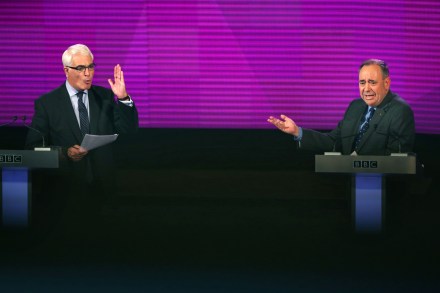
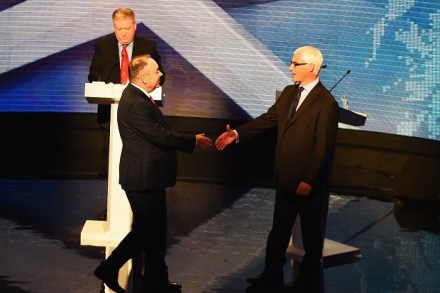
Well that was a gubbing. No doubt about it. Alex Salmond won last night's debate against Alistair Darling just as thoroughly as he'd lost their first encounter. Sure, some Unionists tried to put a cheerful spin on it - "We'll take that" one senior Labour figure told me - but don't you believe any of it. Salmond, as predicted, was much better than he had been in the first debate. Darling, as predicted, was much worse. File this encounter in the drawer marked reversion to the mean. Darling had many problems last night but among the greatest was the fact he's not a Tory. Time and time again Salmond stuck him with the "in bed with the Tories" jibe and took great pleasure in seeing Darling squeal and wriggle. It's not fair! Well, tough.

English voters send a message to Scotland: we can’t go on living like this

Way back in the olden days, Scottish Labour won the 1999 elections to the Scottish parliament, at least in part, on the back of the slogan Divorce is an Expensive Business. (The SNP's promise to raise income tax - the naffly named 'Penny for Scotland' - helped too. The Nationalists have never since risked making an overt case for higher taxes.) Anyway, these costs run both ways. That's made clear by new polling from England in which the extent of the oft-threatened, never-yet-delivered, English backlash to devolution is revealed. It makes depressing reading for Unionists. True, only 19% of those surveyed think the UK would be better off without the troublesome, whining, Jocks.

After Scotland, whither Britain? Divorce is a costly business.

If, like me, you missed Andrew Neil's BBC programme exploring What the Hell Happens to the United Kingdom if Scotland Votes for Independence Next Month you might be interested to know that it remains available on the BBC iPlayer here. Prudently, dear reader, I liked it. It's a film best viewed as a companion piece to James Forsyth's Spectator cover story published last month. A call to arms to England - and Westminster in particular - to ponder the consequences and implications of Scottish independence. There is little sign that much thought has been devoted to these issues.

Why is the SNP endorsing Israel haters?

Regular readers will have noticed that I don’t like Islamic fundamentalists. Nor — though this is perhaps less often on display — do I much like Scottish Nationalists. Not just because their primary cause is to break up one of the two most successful political unions in history, but because so many of their secondary causes are so rancid as well. Take this poster advertising a ‘Women for Gaza’ rally in Glasgow this Saturday. The headline speaker is Nicola Sturgeon MSP. She is the Deputy First Minister of Scotland and leading light of the Scottish Nationalist Party (SNP). And one of the two other scheduled speakers is Yvonne Ridley — the notorious convert nutcase with whom I have had cross words before.

Alex Salmond remains trapped in a currency quagmire with no way out in sight

It has not been a happy few days for supporters of Scottish independence. It remains too soon to say whether - unusually - last week's debate between Alistair Darling and Alex Salmond has had any long-term impact on the race but the short-term impact has certainly been bad for the nationalists. Not just because the tone - and detail! - of the press coverage has reinforced the idea that Darling won the debate (an idea bolstered by the fact it's true) but because every day that passes in this fashion is another day in which the Yes campaign is not getting its message across.  Every day that's spent talking about the things your opponents want to talk is another day not spent talking about the things you want to talk about.

Alex Salmond fails to land the blow he desperately needed

Many people, I’m sure, will already be calling the first TV debate in Alistair Darling’s favour. That is a fair point to make but it was not quite as straightforward as that. I think a truer reflection would be this: Darling won on substance but lost on style, while Alex Salmond won on style but lost on substance. That may seem a bit pedantic, but it matters. First, the question of style: Salmond was – as we knew he would be – calm, composed and articulate. Darling was – as many in his camp feared he would be – anxious, shouty and irritable. The former Chancellor looked nervous. He had trouble getting his message across. Indeed, even his eyebrows kept darting up and down as if constantly looking for a way out.